Sep 3, 2026 10:44 AM
In Memoriam: Cassandra Wilson, 1955–2026
Cassandra Wilson, a singer, songwriter and producer who was one of the most acclaimed and successful jazz vocalists of…


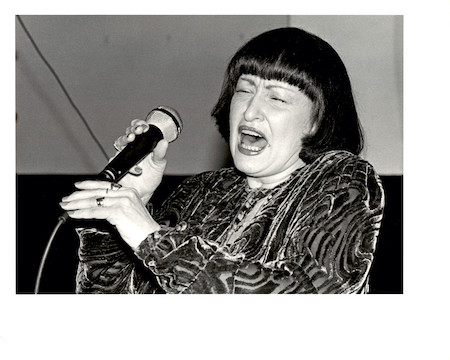
Sheila Jordan was one of the first vocalists to fully internalize the language of bebop and transform Charlie Parker’s pioneering musical ideas into a vocal art form all her own.
(Photo: Andy Freeberg)As a singer, Sheila Jordan stood at the vanguard of jazz revolution: She was one of the first to fully internalize the language of bebop and transform Charlie Parker’s pioneering musical ideas into a vocal art form all her own. When she passed away last year at age 96, she had been sharing this musical gift with global audiences and new generations of singers for more than seven decades. This year she enters the DownBeat Hall of Fame for her peerless contributions to vocal jazz.
Jordan was born Sheila Jeanette Dawson in Detroit on Nov. 18, 1928. Her early upbringing was tough on her: Her father had abandoned her and her mother, and as a young girl, she was sent to live with relatives in the small town of Summerhill, Pennsylvania. Many of Jordan’s caregivers struggled with alcoholism, and she was often mocked by peers — both for her impoverished family situation and her unusual, high-pitched singing voice. But Jordan already had a keen musical mind, and she would escape into singing. By 8, she was singing publicly on amateur radio shows and at local events.
In her teens, Jordan rejoined her mother in the racially diverse Detroit — landing at the center of one of America’s most vibrant jazz communities. She came of age listening to recordings from the emerging bebop movement, held rapt by the complex musicianship of horn players like Charlie Parker and Dizzy Gillespie.
Parker’s influence would become crucial to Jordan’s artistic development, and she soon began to work with the musicians in his orbit. These associations eventually brought her close enough to sing for Parker, on one of his own tunes. “You have got million-dollar ears, kid,” he remarked. The praise remained a touchstone throughout her life.
By the time Jordan first sang for Parker, she was working in a vocal trio with Leroy Mitchell and Skeeter Spight. Together, these vocalists were expanding ideas about what jazz singers could do, as they handily crafted sophisticated scats to match instrumentalists’ solos and wrote their own lyrics to popular bebop heads.
In the early 1950s, longing to immerse herself more in Parker’s exciting musical world, Jordan moved to New York. It was there that she married Parker’s pianist, Duke Jordan, and in 1955, their daughter Tracey was born. A few months later, Duke, struggling with heroin addiction, left his new family, and by 1962, he and Jordan had divorced. Forced into working part-time at an office job, Jordan still managed to maintain a solid gigging schedule, and her reputation continued to grow among New York’s top jazz musicians. Even so, widespread recognition eluded her.
Her career got an important boost in 1962 with the release of her first solo album, Portrait Of Sheila (Blue Note), a project developed with significant input from composer and jazz theorist George Russell. This record captured the earliest full statement of Jordan’s talent: her advanced phrasing, precise intonation and deeply emotive way with a lyric. And while she didn’t scat on the album, its quiet, confident spontaneity reveals how fully she had absorbed the language of the horn players she idolized.
Her debut was an artistic success. It’s considered a classic today, but at the time, Portrait Of Sheila did not bring commercial reward, and it would be 13 years before Jordan would release another solo album.
Jordan’s profile rose significantly in the 1970s. Increasingly, critics and musicians cited her as one of the most authentic voices connected to the original bebop tradition, and by the time she released her second album — 1975’s Confirmation (East Wind) — Jordan had become a prominent figure in New York’s creative jazz community.
By the end of the ’70s, Jordan had established significant collaborations with major artists such as Steve Kuhn, Lee Konitz and Roswell Rudd. She had appeared as a lead or guest singer on several seminal bop albums. And she had claimed the rarely heard bass-voice duo as her signature style, playing in this exposed configuration most often with bassists Harvie Swartz (aka Harvie S), Arild Andersen and Cameron Brown.
Jordan also emerged as one of the few singers to teach vocal jazz as a solo art form. Her work as an educator began with a small vocal jazz workshop at City College of New York in 1978, but demand for her teaching grew over the years, and by the time of her passing, she had become a leading figure in jazz pedagogy.
However, it wasn’t until the new millennium that Jordan’s accomplishments received the highest institutional honors. In 2007 she received the International Association for Jazz Education Humanitarian Award, in 2008 the Mary Lou Williams Award for a Lifetime of Service to Jazz and in 2012 an NEA Jazz Masters Fellowship. She was named Female Vocalist of the Year in the 1963 DownBeat Critics Poll and went on to receive nine more DB Critics Poll awards for Talent Deserving Wider Recognition.
Jordan may be best remembered as one of Parker’s foremost protégés. But her greater achievement was in proving that bebop could be a singer’s language, too. As she told biographer Ellen Johnson, “I just want to show you how I learned jazz, how it came into my life, and how important it is for me. ... I just want to keep this music alive by inspiring other people to love it as much as I do.” DB
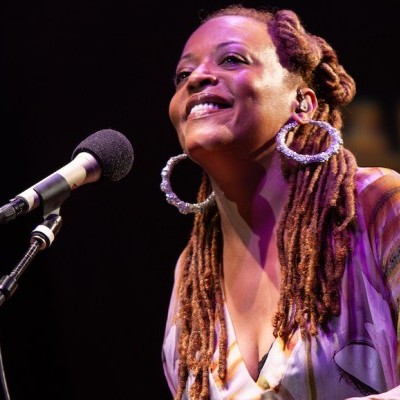
Wilson’s ability to connect to audiences helped her to win two Grammy awards and multiple other accolades. She was named an NEA Jazz Master in 2022.
Sep 3, 2026 10:44 AM
Cassandra Wilson, a singer, songwriter and producer who was one of the most acclaimed and successful jazz vocalists of…
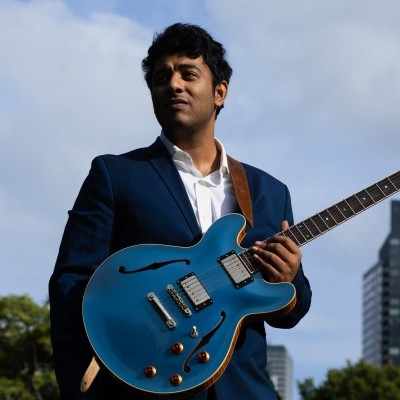
“The love from the jazz and music community restored my faith in humanity,” Walia wrote in an online post upon his release from detention at an ICE facility.
Aug 18, 2026 2:15 PM
Indian jazz guitarist and composer Pritesh Walia has been released after being unexpectedly detained by ICE and taken…
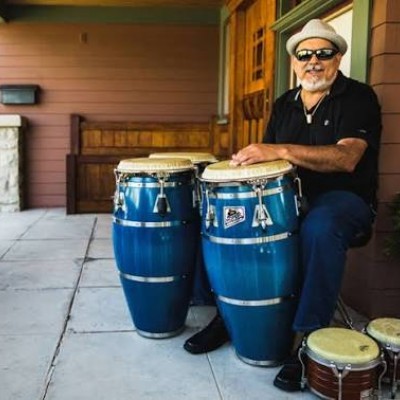
Percussionist Poncho Sanchez was among the artists scheduled to perform at the now-canceled inaugural LA Jazz Festival.
Aug 11, 2026 12:53 PM
The inaugural LA Jazz Festival, originally scheduled to run Aug. 7–23 with dozens of events across Los Angeles’…
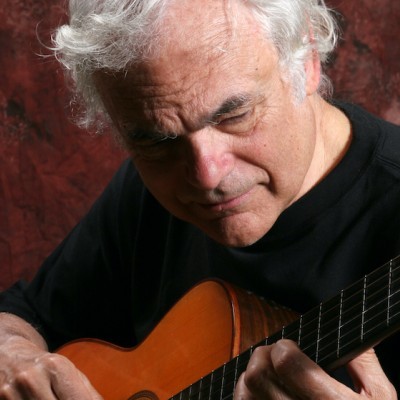
Bertoncini was a specialist and advocate for the nylon-string acoustic guitar, turning down high-profile opportunities that were unsuited to the sound and techniques that he used with that instrument.
Sep 1, 2026 11:06 AM
Gene Bertoncini, an esteemed jazz guitarist, composer, arranger and educator, died Aug. 29 at the Lillian Booth Actors…
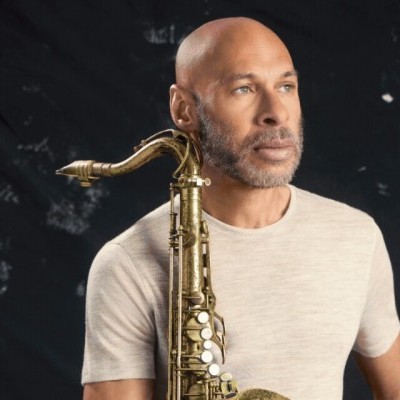
A solo concert by saxophonist Joshua Redman will close the first night of the Hyde Park Jazz Festival on Sept. 26.
Sep 22, 2026 12:26 PM
The Hyde Park Jazz Festival will take place for the 20th time on the final weekend of September 2026. Beginning half…