Sep 3, 2026 10:44 AM
In Memoriam: Cassandra Wilson, 1955–2026
Cassandra Wilson, a singer, songwriter and producer who was one of the most acclaimed and successful jazz vocalists of…


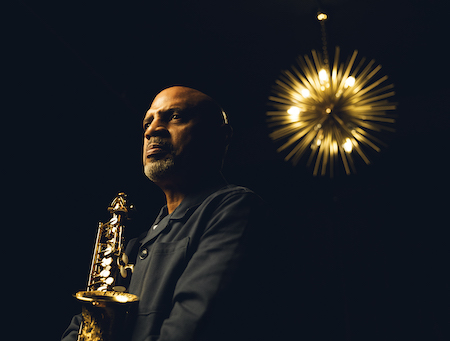
“I feel a little lost in our pop music world today where the art of melody has been lost,” says Steve Wilson. “Hopefully we can get that back.”
(Photo: Kevin Scanlon)The primary exploration in saxophonist/flutist Steve Wilson’s creative evolution amounts to what he calls, “Melody keeps you very honest.” As one of the hardest working musicians in jazz, one who has played with an array of top-tier artists from Chick Corea to Billy Childs, he knows the terrain for soulful expression well.
Seeking out simplicity in lieu of complexity represents the core of his musicality, and that mindset is in full flourish on his gem Enduring Sonance (Smoke Sessions). An eight-song collection of indelible melodies that have influenced Wilson over the years, the recording radiates a flavor reminiscent of the tradition with passionate staying power to the future.
“Seeking out the great melodies like George Cables’ ‘Helen’s Song’ is the thread that runs through this album,” says the soft-spoken Wilson, who has been the director of jazz studies and professor at New York’s City College for the last 13 years. “That song is so beautiful and has so much meaning since he wrote it for his wife. Hearing it stops you. I played a special duo show with George last year, and of course we played that.”
Enduring Sonance arranger Renee Rosnes, who contributes piano and Fender Rhodes to the recording, says, “This piece has so much optimism and joy in it, and feels like a much-needed antidote to what’s going on in our world today.”
“I didn’t want to make Enduring Sonance too complex, but simply played with a lot of depth,” Wilson says. “I feel a little lost in our pop music world today where the art of melody has been lost. Hopefully we can get that back. There’s an innovative evolution among young musicians, especially with rhythm and harmony. Some are so brilliant that it’s scary. But not so much melody. Enduring Sonance reflects where I am in this arc of my life. I understand that it’s harder to pare down a tune to a simple melody than to make it more complex.”
Originally conceived as a ballads album, Wilson shifted gears when the concept of a lyrical soundscape came into vision. “The program goes as far back as 50 years,” says the resident of Kew Gardens, a neighborhood in Queens, New York. “And then there are more modern tunes by supreme composers like Billy Childs and Eliane Elias that have had a lasting impression. I always like to go off the beaten path in choosing deeply felt jazz material. There’s a reservoir of music out there, but I wanted to do tunes that are not done that often.”
Born and raised in Hampton, Virginia, Wilson grew up with a wealth of listening opportunities, tuning in to his father’s eclectic record collection (Miles Davis, Sly and the Family Stone, Mario Lanza, Gino Vanelli, the Beatles, James Brown, Motown). “Growing up in the ’60s and ’70s, I was hearing everything that was out there,” he says. “I was a radio head in those days. The FM station at the Hampton Institute played jazz, r&b, ’70s Blue Note recordings, the CTI catalog. In junior high and high school, I was a huge George Duke fan. I was a Dukey, catching his music on the German label MPS, and then I was totally into him playing with [Frank] Zappa.”
Wilson’s father, a member of an all-gospel spiritual choir, took his son out to see live jazz, most notably in 1968 when George Wein set up a jazz touring circuit that included Hampton Institute. He was awed by artists such as Cannonball Adderley and Rashaan Roland Kirk. He was hooked. At home, he fell in love with two of his dad’s new albums: 1969’s Swiss Movement by Eddie Harris and Les McCann, which jettisoned the soul-jazz tune “Compared To What” onto the radio waves; and Quincy Jones’ 1969 album Walking In Space, which featured Benny Golson’s classic “Killer Joe.”
At one stretch, Wilson dreamed of becoming a drummer. He started his formal music studies in junior high when he was 12. Even though his jazz saxophone studies were his passion, he was also focusing on mastering the oboe and playing drums in various r&b and funk bands. In high school, a friend of the family suggested he listen to Charlie Parker records, which led him to embrace the alto. At the time, he had to decide whether he wanted to play in the classical symphony or as a part of the symphonic wind band. It was a training ground for college when Wilson focused on alto saxophone even though he was majoring in oboe and later gravitated to English horn. One teacher in college introduced him to Duke Ellington’s music, where he discovered another hero, Johnny Hodges.
In the ’80s, a jazz program with artists in residence started in Richmond. That’s where Wilson met the Heath Brothers and Benny Carter, among others, which planted the seed for going to New York. In 1984, he was a member of the band for the local run of the Ellington music revue Sophisticated Ladies, which is where he met and became friends with Kenny Garrett. Not long after, Garrett called him and offered him the alto saxophone chair in Out of the Blue, formed in 1984 by Blue Note Records to introduce the label’s burgeoning jazz stars. Garrett was leaving to join Art Blakey and later Miles Davis. “That facilitated my move to New York,” Wilson says. “I was hearing different people who were sharing the taste and love of the same music.”
Not only did the rookie New Yorker get deserved attention, but with Out of the Blue, Wilson met Rosnes, which grew into a close friendship and musical collaboration.
“Steve and I have been dear friends and musical colleagues since the late ’80s,” says the recent Juno Award winner for Crossing Paths (Solo Jazz Album of the Year). “After OTB, we worked together in numerous contexts, especially on my albums For The Moment on Blue Note along with Joe Henderson, Ira Coleman and Billy Drummond, and Written In The Rocks on Smoke Sessions with Steve, Peter Washington and Bill Stewart. Steve has one of those instantly recognizable sounds, whether he’s playing alto saxophone, soprano or flute. After a few notes, you know it’s him. He’s grounded in the tradition but plays with the spirit of an explorer: always searching for new ways to approach the music.”
Wilson became the go-to sideman early in his New York days, teaming up with musicians looking to solidify their bands with saxophone power and beauty. In addition to session work, he played a role in the Mingus Big Band and the Smithsonian Jazz Masterworks Orchestra and supported such all-stars as Lionel Hampton and Dave Holland. He was featured in a 1996 New York Times story, “A Sideman’s Life.” And, from 1998 to 2001, he became a member of Chick Corea’s Origin band. “Chick gave me so much encouragement to explore,” Wilson says. “He’d say to not be afraid to explore and find something new each night. He had the uncanny sense of knowing how to take you out of your comfort zone into the place of discovery.”
Even while his prowess as a support player became firmly established, he had also started stretching out as leader with his 1991 debut, New York Summit (Criss Cross), followed by 1993’s Blues For Marcus, which included two of his future duo collaborators, pianist Bruce Barth and drummer Lewis Nash. This led to Wilson becoming a noteworthy jazz leader. It was recognized by the Wall Street Journal in the 2010 profile “The Sideman Becomes the Star.” And fuller recognition came that year when Wilson celebrated his 50th birthday with a six-night showcase at the Jazz Standard featuring a range of collaborators. With a new band each night, he welcomed pianists Mulgrew Miller and Bruce Barth, bassists Christian McBride and Linda May Han Oh, drummers Lewis Nash and Jeff “Tain” Watts and singers Karrin Allyson and Carla Cook, among others.
Since then he formed his adventurous swinging, post-bop quartet Wilsonian’s Grain, consisting of Orrin Evans, Ugonna Okegwo and Bill Stewart. At the same time, he continued touring with the Maria Schneider Orchestra, the Buster Williams Quartet and two of Christian McBride’s groups — Inside Straight and the Big Band — in addition to recording as a special guest soloist with Miho Hazama on Journey To Journey (Verve). He also co-led a chamber jazz trio with Rosnes and bassist Peter Washington.
It was this longtime chemistry with Rosnes that brought her aboard for Enduring Sonance as arranger. “When I started thinking about the album, I immediately thought of Renee and her ability to arrange,” Wilson says. “I knew she could do it better than I could. I told her about the program, and she was very gracious and excited by it. I told her there are no limits, to make use of the different combinations of instruments and textures. I told her that these songs weren’t meant to be used to blow over. I wanted this album to be for everyone with our personalities coming through.”
“When Steve told me about the concept for this recording and the repertoire he was considering, and asked if I’d be interested in arranging the music, I was thrilled,” says Rosnes. “Not only did the repertoire resonate with me, but Steve’s choice of sidemen immediately sparked my imagination. I could hear the possibilities of bringing that particular material and group of players together. His only direction was to allow the beauty of the melodies to come through, which felt intuitive to me. From the very beginning, this felt like a project where everything lined up musically and spiritually.”
As for band members, Wilson says, “The program is dictated by the personnel. As the tunes came into focus, I was intuitively hearing different people.” Vibraphonist Joe Locke was an early choice. They had known each other for a long time and shared a taste and love for the same kinds of music. “I knew his love for lyricism, so I knew he would love this program,” Wilson says. “I was hearing his sound. He plays beautiful textures in his four-mallet playing.”
Wilson knew Jay Anderson from their association in Schneider’s orchestra. “Jay is an amazing contrapuntal melody player as an accompanist,” he says. “There’s a lot of motion in his playing. I like to think of him as bringing the secret sauce to Maria’s music to keep the orchestra moving.”
As for the drums, Wilson was very particular. “I’m a drummer at heart,” he says. “So I needed someone who went beyond playing great time and groove. I was thinking of a drummer who could orchestrate his music. That’s when I thought of Kendrick Scott. The way he paints in the scope of the work with his own groups, I knew he’s the guy.”
“This recording has been an exploration for me,” says Scott, who drums with an inventive, textural imagination. “It’s been incredible playing with Steve, who has been there with all my heroes, from Chick to Joe Henderson. Every musical giant has his own language. His music is beautifully complex in its simplicity. We don’t have to play a million notes to get you to feel. Everyone in the band has that same kind of energy to go deep. From start to finish, the music has Steve’s signature.”
On two tracks, the virtuoso French horn player Kevin Newton from Imani Winds contributes. “Renee’s and my only regret was that we didn’t use him on more of the music,” Wilson says. “He came in on the second day of our recording, and he was so great. I told him, we’ll work together again.” One of the tracks Newton played on was Milton Nascimento’s soaring “Francisco,” a tune Rosnes had recommended for the session. (Wilson had another Nascimento tune in mind, too.)
With all systems ready to go, Wilson and company began their journey of sonance (the obsolete word meaning the aliveness of resonant sound that harkens back to Jackie McLean’s 1962 album A Fickle Sonance). Composed by Michel Legrand, “Pieces Of Dreams” shines. Wilson may have been familiar with Stanley Turrentine’s version of the tune, but he was stunned by Johnny Mathis singing it on Johnny Carson’s The Tonight Show. “Steve shapes the melody with a singer’s sensibility, and it carries real emotional weight,” says Rosnes.
Wilson also found melodic favor in Eliane Elias’ song “A Volta” from her 2002 album Kissed By Nature. “That tune just stuck in my head,” he says. “But I could never find any sheet music for it. I was surprised no one else had recorded it.” He mentioned this to Rosnes, who got in communication with Elias’ husband, bassist Marc Johnson. He sent her the music, and she went to work on the arrangement. She gave the tune a sophisticated harmonic progression and then adapted some background vocal lines from the original recording for the vibes.
Another song that with special meaning for Wilson is Canadian pop singer Gino Vanelli’s “The Surest Things Can Change.” It’s a tune that Freddie Hubbard recorded instrumentally on his 1978 album Super Blue. “We do a slightly different version that is closer to Gino’s song,” says Wilson.
Wilson embraces the melody almost magically on the Bill Lee tune “How Long,” which appeared in his son Spike’s film Do The Right Thing. Another tune that comes from a cinematic view is “The Eyes Of Love” from Quincy Jones’ 1973 album You Got It Bad Girl, a recording that also included the theme song from the TV comedy Sanford And Son. “I watched Sanford And Son every Friday night with my family,” Wilson says. “So I bought the album with the theme song on it. I was just starting formal lessons, so I studied this album attentively. I learned it by ear. It’s the melody of Quincy’s ballad ‘The Eyes Of Love’ that I still hear. I knew that had to be on this album.”
The highlight of the album is the leadoff lyrical gem “Quiet Girl,” composed by Wilson’s close friend and collaborator Billy Childs. They’ve played several duo concerts, and for the last 10 years, Wilson has been in Childs’ quartet. “It’s a haunting melody,” says Wilson. “I liked the tune so much that I always wanted to do a version of my own. The song harmonically is very deep, the melody is lush. I always played soprano on it, but I started to hear the English horn, and then when we had Kevin’s French horn and Joe’s vibes, it worked. Everyone in the studio said that’s the track that introduces the rest of the album. It speaks to the enduring concept.”
It’s certainly a triumphant soundtrack-of-my-life moment for Wilson, but he’s already moving on to his next endeavor: building a library of symphonic wind orchestra music. “It’s been an idea I’ve had for several years that comes from my symphonic wind band experience in high school,” he says. “A few years ago I commissioned Billy to compose a 15-minute-long classical/jazz hybrid piece that had room for improvisation. We premiered it last April at West Chester University just outside of Philly. And to come full circle, we’ve recently performed it at my alma mater, now called Virginia Commonwealth.”
Wilson started a 15-school consortium to feature this kind of music by commissioning composers to write new pieces. “The conductors have loved this because there’s enough room for players’ personal sounds,” he says. “We’re exploring new vistas to build new audiences. There are new composers in the wind band world who are chomping at the bit to get their music heard and played. There’s no shortage to that, so I believe the future for this kind of jazz-informed music is bright.”
And if that’s not enough, he also has hope for future genre-defying collaborations with Imani Winds and also the Sirius Quartet. He’s unstoppable in his creative pursuits. DB
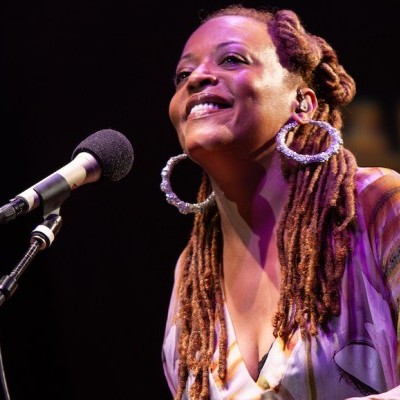
Wilson’s ability to connect to audiences helped her to win two Grammy awards and multiple other accolades. She was named an NEA Jazz Master in 2022.
Sep 3, 2026 10:44 AM
Cassandra Wilson, a singer, songwriter and producer who was one of the most acclaimed and successful jazz vocalists of…
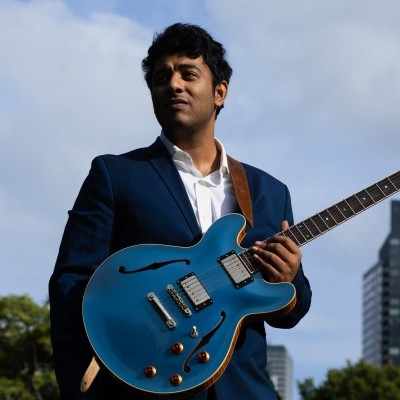
“The love from the jazz and music community restored my faith in humanity,” Walia wrote in an online post upon his release from detention at an ICE facility.
Aug 18, 2026 2:15 PM
Indian jazz guitarist and composer Pritesh Walia has been released after being unexpectedly detained by ICE and taken…
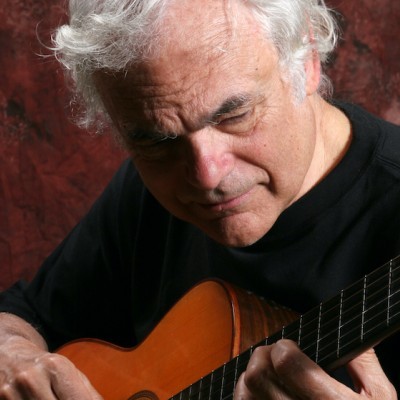
Bertoncini was a specialist and advocate for the nylon-string acoustic guitar, turning down high-profile opportunities that were unsuited to the sound and techniques that he used with that instrument.
Sep 1, 2026 11:06 AM
Gene Bertoncini, an esteemed jazz guitarist, composer, arranger and educator, died Aug. 29 at the Lillian Booth Actors…
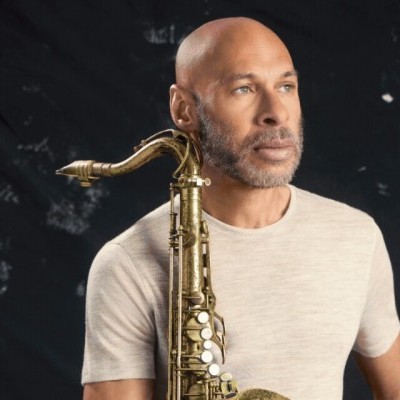
A solo concert by saxophonist Joshua Redman will close the first night of the Hyde Park Jazz Festival on Sept. 26.
Sep 22, 2026 12:26 PM
The Hyde Park Jazz Festival will take place for the 20th time on the final weekend of September 2026. Beginning half…
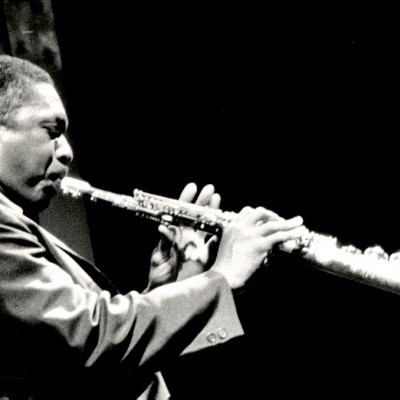
“It was just that suddenly … I could hear it,” Ravi Coltrane said of an epiphany he experienced during his late teens regarding his father’s music. “And it was almost like a calling, like something saying, ‘Hey, man, come on. It’s time to get serious.’ And the first time you really tune in and dial in and focus like that, it can be very life-changing.”
Sep 22, 2026 1:39 PM
Editor’s Note: Tomorrow, Sept. 23, is the 100th anniversary of John Coltrane’s birth. In honor of the tenor and…