Sep 3, 2026 10:44 AM
In Memoriam: Cassandra Wilson, 1955–2026
Cassandra Wilson, a singer, songwriter and producer who was one of the most acclaimed and successful jazz vocalists of…


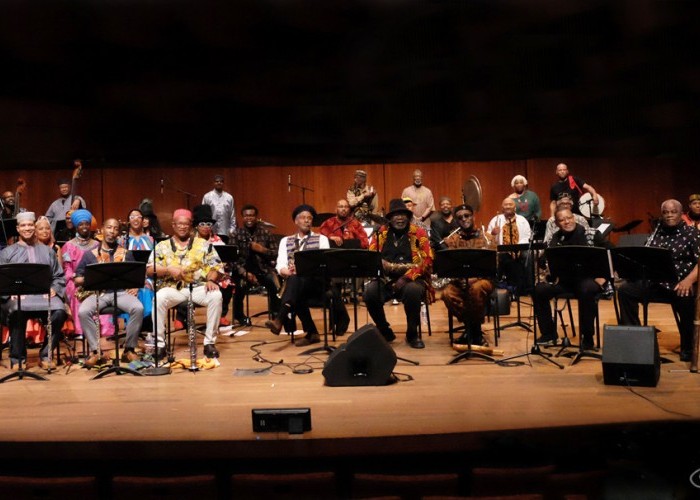
The Chicago AACM Great Black Music Ensemble’s 60th anniversary concert, held at the Logan Center in May.
(Photo: Lauren Deutsch)Group celebrations and individual artists’ achievements galore mark this year’s 60th anniversary of the birth of the Association for the Advancement of Creative Musicians. The artists-run collective, with approximately 100 distinctly individualistic members across independent chapters based in Chicago and New York, is known in connection with some of the most original, provocative American musical art of the past half-century-plus. As an arts organization it continues to have inestimable impact, producing ambitious concert series, education projects, promotion of members’ activities and ever-expanding circles of unique yet intersecting projects.
Such depth and breadth is central to the AACM, as its launch was based on musicians’ determination to take their careers into their own hands and pursue their own visions, in mutual support and dialogue. Muhal Richard Abrams, the AACM’s late eminence, with Fred Anderson, Thurman Barker, Lester Bowie, Anthony Braxton, Leroy Jenkins, Roscoe Mitchell, Amina Claudine Myers, Wadada Leo Smith and Henry Threadgill among many others were experienced with jazz, blues, church, theater and circus music. Most had formal training and were exposed to contemporary “classical” compositions. They respected the Ayler-Coleman-Coltrane-Taylor avant garde, but delved into their own unconventional uses of dynamics and energy, open structures, unusual instrumentation, systemic interactivity, solo performances, graphic notation, intellect and passion.
Those attributes have been sustained by successive waves of AACM artists, saxophonist Chico Freeman, pianist Adegoke and vocalist Iqua Colson, multimedia reedist Douglas Ewart, composer-scholar-trombonist George E. Lewis, drummer Reggie Nicholson among those who became Chicago expatriates but retain ties and AACM memberships (a non-profit corporation, the AACM is supported by members’ dues and various grants). Staying in Chicago, emerging over decades: Dee Alexander, saxophonists Mwata Bowden, Ari Brown, Isaiah Collier, Ernest Dawkins, Greg Ward and Edward Wilkerson, pianists Alexis Lombre and Justin Dillard, cornetist Ben LaMar Gay, flutists Nicole Mitchell and Adam Zanolini, flutist-harpist Maia, cellist Tomeka Reid, guitarist Jeff Parker, sitarist Shanta Nurullah, drummers Hamid Drake, Avreeayl Ra, Mike Reed and Dushon Mosley, “disco-poet” Khari B, bassist Junius Paul, percussionists including JoVia Armstrong, Art “Turk” Burton, Coco Elysses and Kahil El’Zabar.
This is a pretty big coterie. Many of them, plus 84-year-old Roscoe Mitchell, were in the 46-strong Chicago AACM Great Black Music Ensemble’s 60th anniversary concert, held at the Logan Center in Hyde Park last May. Convened only for special occasions, the Great Black Music Ensemble represents the AACM’s heritage and its evolution.
Said Mwata Bowden, its current director, “We’ve always wanted to keep a big band happening, a band we can include all the musicians in. That came out of Muhal, who started the AACM’s Experimental Band,” the legendary ensemble convened weekly in the late ’60s to try out AACM members’ works on the bandstands of South Side venues including 63rd Street Beach on Sunday afternoons, the community space Lincoln Center and neighborhood lounges.
“Muhal wanted everybody to perform with their own groups, but also have a place where he could bring everybody together under one umbrella,” Bowden continued. “The big ensemble is designed for us to play collectively, as a unit, and also as an outlet for those who want to write and compose and conduct. But we decided, I think during AACM Chicago’s 50th anniversary, that it wasn’t all experimental anymore. We’d developed our own rhetoric, history, ways of playing and ideas. So we renamed the big band after the Art Ensemble of Chicago’s motto “Great Black Music – Ancient to the Future.” (AACM New York still follows the dictum Muhal espoused in 1965: “The AACM is A Power Stronger Than Itself,” and members contiunue to hone originality.)
About “Great Black Music,” The AACM has always been a Black-identified association, but not quite exclusively so. Its audiences, students, promoters and critics have always been mixed, like the population. AACM members have routinely reached across racial lines for collaborations, if usually outside AACM auspices.
Uniquely for an artists-run collective, the AACM has never dictated an aesthetic beyond requiring members envision their own. Those visions are expected to be serious, artistically intended “Creative Music,” as is explicit in the association’s name. The group’s assertion of high purpose made a vital statement at a time when Black musicians were routinely blocked from “legitimate” employment opportunities and too often met with ambient bigotry. The AACM’s struggles with these issues are recounted in Lewis’ book (named for Muhal’s slogan) A Power Stronger Than Itself: The AACM and American Experimental Music and dramatized in Lewis’ two-act Afterword: The AACM (as) Opera.
Now the AACM’s legacy is arguably more secure. Henry Threadgill won a Pulitzer Prize, several AACM members are NEA Jazz Masters and/or have received Doris Duke Awards as well as Guggenheim, MacArthur and Mellon fellows. Several are professors or emeritus faculty at esteemed schools, and holders of degrees and honorary doctorates from prestigious universities. Some run their own outposts, and produce fests. AACM members have been commissioned, have composed, performed, experimented and taught across genres, identifying as “creative musicians” all the while.
“Collaborating with all kinds of people stretches all of us,” said AACM-Chicago interim chair Renee Baker, who took on responsibilities last October (new elections are expected this winter). To celebrate the 60th anniversary, she instituted a series of nearly weekly concerts at a new AACM home in the First Presbyterian Church in Chicago’s Woodlawn neighborhood.
Baker is a prime example of “stretching.” For 26 years she was principal violist and personnel manager of Chicago Sinfonietta. Mentored by late composer Coleridge Taylor-Perkinson (who also played piano with Max Roach), she has composed and conducted opera, orchestral and chamber works and film scores and founded the Chicago Modern Orchestra Project. Baker came late, though, to the practices of improvisation and spontaneous composition taken as fundamentals by many AACM members. She was introduced to the group by Nicole Mitchell, who Taylor-Perkinson had insisted she meet.
“I was a typical classical snob and never dreamed of anything else, but meeting AACM people like Nicole, Tomeka Reid and Mike Reed, and the bassist Josh Abrams — so many — I had to figure out how do I understand this music that’s so foreign to what I’d learned. And they were encouraging. They said to me, ‘You’ve got the spirit. We think you’d be good over here in … well, at the time I called it ‘nutty cuckoo-land’ because sometimes the music struck me as absolutely bizarre.
“But it started to make so much sense to me. Exploring the voices of ancestors, elders, these players currently doing it … my ears adjusted. I’ve never fully left classical music, of course, but in order for me to learn the vernacular of a composer inside creative music, I had to go back to school.”
An actual AACM-Chicago School launched by Muhal in the ’60s, long ongoing and held online during the pandemic, has restarted at the First Presbyterian Church.
Stretching goes both ways, as AACM-New York composers demonstrated last March, when the Colsons, Barker and Nicholson collaborated with the International Contemporary Ensemble (George E. Lewis, artistic director) in a program titled “Composing While Black.”
Another extension of AACM New York’s 60th Anniversary is Celebration of the Legacy of Dr. Muhal Richard Abrams as Czech-born, ultra-modernist Petr Kotik conducted the Orchestra of the S.E.M. Ensemble in rarely heard scores by Abrams (who first invited Kotik’s engagement with the AACM in 1995), with Amina Myers, bassist Leonard E. Jones, Adegoke Colson, Nicholson and Barker at the opening concert of its 60th anniversary series at DiMenna Center for Classical Music in Manhattan on Oct. 18. Cuban-born pianist David Virelles appeared with Colson and Myers’ trio on Oct. 25. Bassist Mark Helias joined Colson’s quartet on Nov. 15 for AACM-NY.
“What Muhal wrote still rings true today,” said Peggy Abrams, his widow, in an email. Peggy, titled “administrator/secretary” of the AACM-New York, has been at the heart of the literal AACM family (the Abrams’ daughter Richarda is today AACM Mistress of Ceremonies, director of Publicity and Advertising) since the first discussions Muhal held in their home with pianist Jodie Christian, multi-instrumentalist Kelan Phil Cohran and drummer Steve McCall in 1965. She’s been a constant throughout the AACM decades of meetings, struggles, successes, travels, performances, Muhal’s personal career and the emergence of an inestimable bounty of AACM-influenced art.
Peggy went on: “Muhal always said the AACM is a power stronger than itself. He never considered the idea of being famous. He was just creating music and teaching others how to do the same. But what he didn’t know is how many lives he would touch in the process. If he were here today, he would be so proud of all of the members’ work, and he would continue getting up every day practicing/composing at the piano, composing on the computer, creating new paintings and studying books about this business of music.”
There’s a key lesson for artist organizations — AACM members don’t stop. This year has seen Braxton’s 80th birthday celebration and now entry into the DownBeat Hall of Fame, Threadgill retrospectives at Big Ears Festival, new releases and and a world premiere at Roulette; new albums from AACM-NY Acting President Amina Myers (disclosure: I wrote liner notes for one), Wadada and Roscoe Mitchell, among the surviving founding members. And the archives collected by the Colsons were acquired by Northwestern University.
AACM-Chicago members do their own things — annual blasts like Dawkins’ Englewood Jazz Festival (Which celebrated the AACM’s 60th on Sept. 18–20), Tomeka Reid’s String Summit, Mike Reed’s Constellation and Hungry Brain presentations and the newly christened, multi-venue Sound & Gravity fest, while the organization itself has made run-outs to Madison, Wisconsin (associate Hanah Jon Taylor has an arts space there), Minneapolis–St. Paul and Durham, North Carolina, where Nicole Mitchell lives, teaching at University of Virginia, as does her AACM sponsoree JoVia Armstrong.
A percussionist who trained at Cass Institute (Detroit) to play timpani in orchestra, Armstrong now holds a Ph.D. from the Integrated Composition, Improvisation and Technology program at the University of California–Irvine. She records, performs, scores films and installs sound art using software and hardware, she said, using “MAXX, guitar pedals, synths, multi-channel systems.” She’d met Mitchell and like-minded musicians at jam sessions around 2000 while studying at Columbia College and freelancing around town.
“The AACM itself is about freedom and liberation,” she said. “The people in it are open to new ideas, so I feel confident I’m not going to do anything wrong. It’s all about the concept of experimentation. I wanted to get over that, over my classical background, and I did. What music speaks to you? In the AACM, I found what music makes me happy.”
As significant as happiness is, Henry Threadgill cites another aspect that is foundational — commitment.
“Commitment to the idea of fostering original creative music was the root that galvanized the group philosophically,” messaged this Pulitzer Prize winner. “This idea is still what we in the AACM ascribe to without variance; it has proven to be the highest goal of achievement. There are no ifs, ands or buts about commitment. Those who are committed are those who are still standing.”
AACM-New York and AACM-Chicago, like trees, stand tall. Long may they thrive. DB
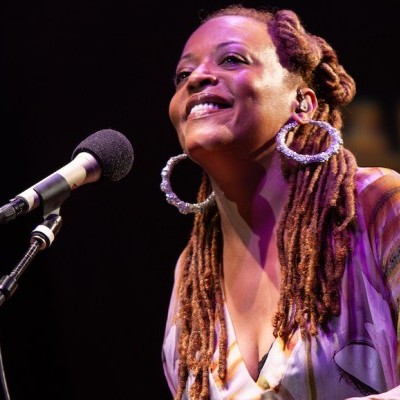
Wilson’s ability to connect to audiences helped her to win two Grammy awards and multiple other accolades. She was named an NEA Jazz Master in 2022.
Sep 3, 2026 10:44 AM
Cassandra Wilson, a singer, songwriter and producer who was one of the most acclaimed and successful jazz vocalists of…
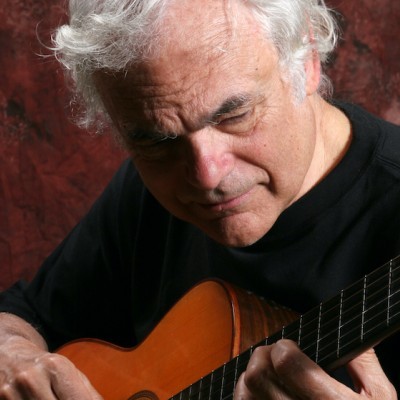
Bertoncini was a specialist and advocate for the nylon-string acoustic guitar, turning down high-profile opportunities that were unsuited to the sound and techniques that he used with that instrument.
Sep 1, 2026 11:06 AM
Gene Bertoncini, an esteemed jazz guitarist, composer, arranger and educator, died Aug. 29 at the Lillian Booth Actors…
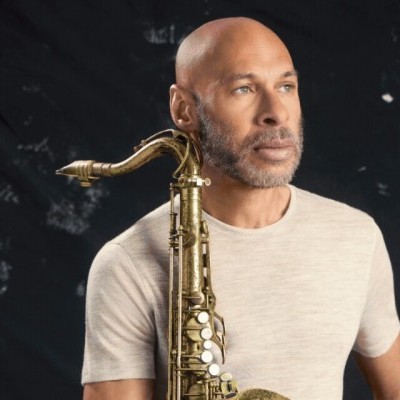
A solo concert by saxophonist Joshua Redman will close the first night of the Hyde Park Jazz Festival on Sept. 26.
Sep 22, 2026 12:26 PM
The Hyde Park Jazz Festival will take place for the 20th time on the final weekend of September 2026. Beginning half…
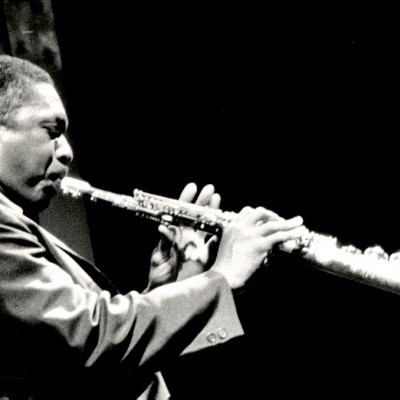
“It was just that suddenly … I could hear it,” Ravi Coltrane said of an epiphany he experienced during his late teens regarding his father’s music. “And it was almost like a calling, like something saying, ‘Hey, man, come on. It’s time to get serious.’ And the first time you really tune in and dial in and focus like that, it can be very life-changing.”
Sep 22, 2026 1:39 PM
Editor’s Note: Tomorrow, Sept. 23, is the 100th anniversary of John Coltrane’s birth. In honor of the tenor and…
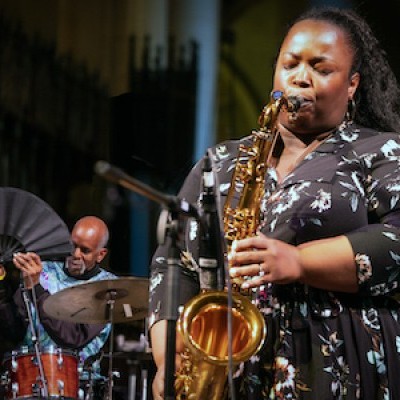
Camille Thurman took to the stage alongside bassist Kenny Davis and drummer Tommy Campbell for a rendition of Johnny Mercer’s “I’m An Old Cowhand” that recalled Rollins’ epochal 1957 trio outing Way Out West.
Oct 6, 2026 1:33 PM
As emcee Mark Ruffin noted at the commencement of an epic tribute to saxophonist Sonny Rollins at the Cathedral of…