Sep 3, 2026 10:44 AM
In Memoriam: Cassandra Wilson, 1955–2026
Cassandra Wilson, a singer, songwriter and producer who was one of the most acclaimed and successful jazz vocalists of…



“I was afraid of not being able to catch up so I began practicing eight hours a day for years,” says Emma Rawicz of starting on the saxophone as a teenager. “It was unhinged, but it fulfilled a purpose.”
(Photo: Gregor Hohenberg)The past three years have seen a meteoric rise for 23-year-old Emma Rawicz. In 2022, the British saxophonist was busy studying for her undergraduate degree in jazz at the Royal Academy of Music in London while preparing to self-release her debut album and tour a handful of pubs and small venues around the U.K.
Like many up-and-coming musicians, her career was independently self-managed and slowly growing. By the start of 2025, however, Rawicz had graduated, signed to German label ACT and released her second album, Chroma. She amassed close to 50,000 followers on her Instagram page, won the Parliamentary Jazz Award for Newcomer of the Year and played over 100 dates in 12 months around the U.K. and Europe.
“In a couple of years I’ve gone from being a normal university student to suddenly being on international stages, playing four countries in four days and being at home hardly any of the time,” Rawicz says over a video call from her Berlin apartment. “It happened suddenly, and it still feels crazy to be living this life. I’ve always struggled with impostor syndrome but I’m slowly getting better at processing it all.”
Remarkably prolific and possessed of a startlingly mature sound, Rawicz’s catalog, to date, includes 2022’s debut quintet record Incantation, 2023’s sextet debut Chroma (ACT), 2025’s duo album Big Visit with pianist Gwilym Simcock, several performances with her 20-piece Emma Rawicz Jazz Orchestra and a forthcoming second record for ACT, Inkyra. While her compositions veer from the interlocking melodic interplay of her duets with Simcock to the Brazilian-influenced rhythms and harmonic maximalism of the Jazz Orchestra, the prog rock electric guitar tones of Chroma and the deep-rooted swing of Incantation, the unifying force throughout is the clarity of Rawicz’s tenor saxophone tone. At turns nimble-footed and fleeting or full-throated and expressive, frenetic and irrepressibly energetic or languorous and tender, Rawicz’s wide-ranging sound is consistently confident.
Nowhere is this freewheeling self-belief more apparent than on her latest release, Inkyra. Across the record’s 10 tracks Rawicz harnesses the energy of a new sextet into arrangements that span the knotty synth soloing of “Earthrise,” the contrasting melodic quietude and distorted rock screeching of “Moondrawn (Dreaming),” the spirited, soaring saxophone soloing of “A Portrait Of Today,” the lively Latin rhythms of “Marshmallow Tree” and the new age ambience of “A Long Goodbye.”
“I felt such confidence in these musicians, since they were all people I had long wanted to play with, and that meant I wasn’t shy about including all of my influences on the album, from rock to prog, Brazilian music, synth experiments and jazz,” Rawicz says. “I knew they were so versatile and open-minded that there was room for everything and we would find a way to make it all work and cohere together.”
Featuring Rawicz’s former Royal Academy teacher Gareth Lockrane on flute, David Preston on guitar, Scottie Thompson on keys, Kevin Glasgow on bass and Jamie Murray on drums, the album’s material first took shape during a summer residency at a small live venue in West London.
“We began this weekly residency in 2022 at a really odd space,” Rawicz says. “It was a tiny club with a standing audience full of people who might have walked in off the street — many of whom were not jazz fans. Sometimes the sound onstage was awful. But since it was so loose, we felt free to throw everything at it each week, and that delivered some really far-out experiences that pushed the boundaries of this music.”
Bringing a new composition to each gig, Rawicz and her band began workshopping arrangements and fine-tuning elements based on crowd responses and the feel onstage. Between gigs the band would also sporadically meet up to rehearse — an unusual occurrence in a jazz scene where most musicians are too busy touring to consistently convene for rehearsal on the same material — and by early 2024 when they had booked two days in the studio to lay down the tracks, each composition had developed into its own intricate constellation of sound.
“It’s rare to have a sextet spending so much time with the music, and that really impacted how it sounds,” Rawicz says. “I was listening to a lot of Joni Mitchell at the time and became influenced by her universe of alternate tunings, while tracks like ‘Marshmallow Tree’ started in a different time signature before landing on a Brazilian vibe, ‘Moondrawn’ became more proggy than I had expected and ‘Portrait Of Today’ was so detailed and intricate we’d spend time talking about changing phrases from dotted quavers to quintuplets. Every tune has changed since it was first brought to the group and we’ve all been able to take ownership of it.”
Growing up in Devon, England, Rawicz took an early interest in classical music and began learning the violin from age 6. Developing her ear for composition and a regular practice routine, Rawicz soon added clarinet, piano and vocal lessons before hearing a saxophone for the first time at 12 and discovering a new musical direction.
“I saw a big band play while I was at a musical summer camp and the saxophone blew me away,” she says. “I begged my parents to let me learn a fifth instrument, and when I finally got an alto at 15 everything slotted into place. The saxophone just felt so natural in my hands, and it was a whirlwind from starting lessons to switching to tenor at 16 and then finding ways to try and make it my life.”
Attending the Junior Guildhall School in London, Rawicz was introduced to jazz and ensemble playing. Her early influences included Joe Henderson’s 1995 album Double Rainbow, featuring the American tenor player interpreting the works of Brazilian composer Antonio Carlos Jobim, before swiftly moving on to transcribing compositions from the likes of Dexter Gordon, Joshua Redman, Michael Brecker, Chris Potter and Wayne Shorter, who Rawicz all still counts as erstwhile musical heroes.
Switching to Cheatham’s School of Music in Manchester before being enrolled in the prestigious jazz course at the Royal Academy of Music at 18, Rawicz entered what she playfully labels her “panic shedding phase.”
“I always felt behind my peers who had been playing their instruments for a lot longer than me and seemed like they already knew everything about jazz,” she says. “I was afraid of not being able to catch up so I began practicing eight hours a day for years. It was unhinged, but it fulfilled a purpose.”
Once the COVID lockdowns arrived in 2020, Rawicz began documenting some of this practice time on her Instagram page and soon started drawing followers who were taken with the playful honesty of her posts. “I started my little account because I grew up in a rural area in Devon and didn’t know any other people my age who were into music, and I wanted to meet them,” she says. “Suddenly I had a few thousand followers because I was posting so much during COVID and people seemed to like how I was documenting my mistakes and sharing the things I couldn’t do. It started helping me in my career as I got a few gig offers, and it subsequently allowed me to crowdfund my first album as well as connect with the musicians who are all featured on that record.”
Balancing her studies with a burgeoning career following the release of Incantation, Rawicz soon found social media becoming more of a burden than a beneficial tool. “As I transitioned into what I call my real-life career, rather than just making videos, I started to realize how unhappy social media was making me,” she says. “It drains us from any sense of being in the world we’re in, and I don’t see a healthy future that includes us being online like we are. We have to be present with each other as human beings, and especially since jazz is about being present in a room with people as you play, scrolling on my phone all the time feels damaging.”
It’s an impressively mature perspective from the 23-year-old and one that reflects a wider commitment to her mental health during her rapid rise in recent years. After independently recording Chroma and garnering interest from ACT to release and sign her projects, Rawicz has seen her international touring schedule ramp up to playing larger venues in a far more varied selection of countries.
“I’ve been to 18 or so countries in the past year, going from playing the back rooms of pubs in small towns in the U.K. to festival stages in front of thousands in continental Europe,” she says. “It’s a bizarre way to live, traveling so much and always meeting so many new people, and I’ve had to learn how to live like this and implement boundaries to protect my well-being.”
Rawicz’s current coping strategies include scrutinizing her schedule to ensure there aren’t multiple dates in a row where she might burn out from playing consecutive shows, traveling each night and only getting minimal sleep. She is also a keen weightlifter and makes time to clear her head at the gym. She regularly journals to process the often overwhelming events of her days.
“This kind of self-care becomes just as important as your practice routine, and I think it’s increasingly important that musicians talk about it,” she says. “I love seeing idols of mine like Joshua Redman running half marathons, as it shows me he takes his well-being seriously and has a life and interests outside of music that helps his playing in turn.”
As much as touring can take its toll, Rawicz emphasises it is something she also finds creatively nourishing and enlivening. “The music grows and develops when you’re together with the band on the road, and it can only happen when you’re so close for so long,” she says. “It becomes quite addictive being on the road because we live in such an unfocused, overstimulated world that I find the slightly tiring one-directional thing of touring exciting as you’re only thinking about getting to the next place and playing.”
In order to make her touring life easier, Rawicz has recently relocated from London to Berlin in an effort to reduce the number of flights she might take to travel around Europe. As well as being a convenient transport hub, she has also found Berlin to be a new source of inspiration.
“Berlin is really interesting because it’s a scene that rewards people for being who they are and expressing what they want to express. It’s not like that in London because it’s so expensive to live there and so no one has the luxury of just doing one thing,” she says. “There is a thriving free-jazz scene here and being in the presence of that and seeing an audience for it has been brilliant. It’s made me much more resolute in my intention to play how I want to, and it’s meant I’ve written more music in this flat than I did in the last year I was living in London.”
Among the varied new projects she is currently working on are new compositions for her Jazz Orchestra, as well as a 2026 commission to work with the prestigious German public broadcasting ensemble the WDR Big Band. “I don’t quite know what will happen next, but that’s what’s so exciting,” she says with a smile. “I’m also writing for strings and piano, and I would love to record something with my quartet as that’s such a classic jazz format. One of the great things about signing with ACT is that they’re such a stylistically diverse label, I never feel under pressure to fit into one box with my music.”
Rawicz also has her eye on playing in the U.S. and Asia for the first time, as well as reaching out to potential collaborators from further afield that she has long admired. “I’m keen to work more with international musicians but I want it to happen organically,” she says. “That is how my career has happened so far and that is how I would like it to continue, although I have no intention of slowing down or stopping writing.”
Indeed, it has been a whirlwind few years for the British bandleader, but it only seems that the pace will continue to increase. Rawicz has only just begun. DB
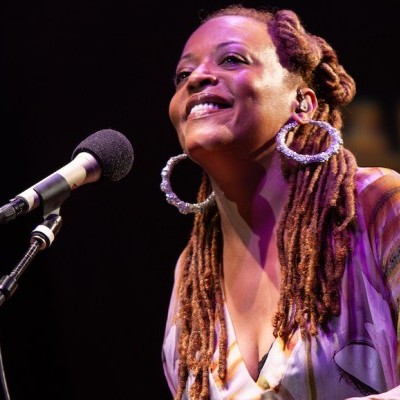
Wilson’s ability to connect to audiences helped her to win two Grammy awards and multiple other accolades. She was named an NEA Jazz Master in 2022.
Sep 3, 2026 10:44 AM
Cassandra Wilson, a singer, songwriter and producer who was one of the most acclaimed and successful jazz vocalists of…
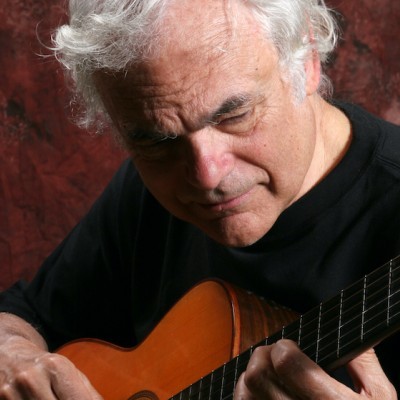
Bertoncini was a specialist and advocate for the nylon-string acoustic guitar, turning down high-profile opportunities that were unsuited to the sound and techniques that he used with that instrument.
Sep 1, 2026 11:06 AM
Gene Bertoncini, an esteemed jazz guitarist, composer, arranger and educator, died Aug. 29 at the Lillian Booth Actors…
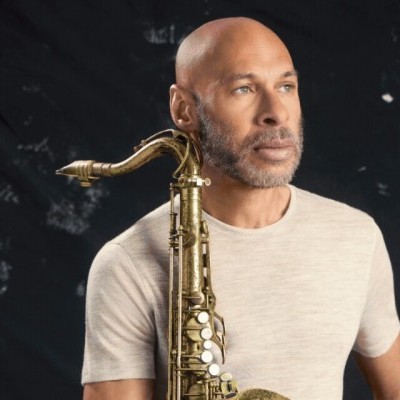
A solo concert by saxophonist Joshua Redman will close the first night of the Hyde Park Jazz Festival on Sept. 26.
Sep 22, 2026 12:26 PM
The Hyde Park Jazz Festival will take place for the 20th time on the final weekend of September 2026. Beginning half…
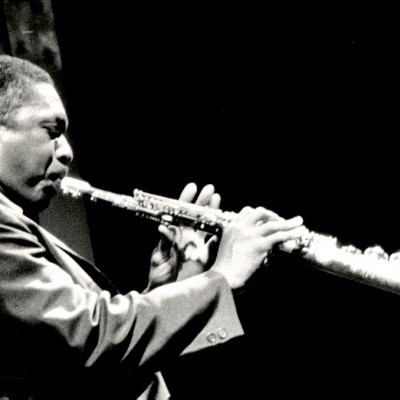
“It was just that suddenly … I could hear it,” Ravi Coltrane said of an epiphany he experienced during his late teens regarding his father’s music. “And it was almost like a calling, like something saying, ‘Hey, man, come on. It’s time to get serious.’ And the first time you really tune in and dial in and focus like that, it can be very life-changing.”
Sep 22, 2026 1:39 PM
Editor’s Note: Tomorrow, Sept. 23, is the 100th anniversary of John Coltrane’s birth. In honor of the tenor and…
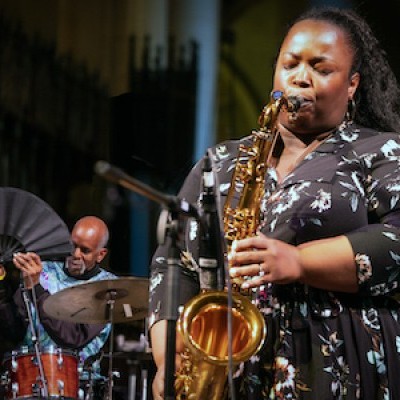
Camille Thurman took to the stage alongside bassist Kenny Davis and drummer Tommy Campbell for a rendition of Johnny Mercer’s “I’m An Old Cowhand” that recalled Rollins’ epochal 1957 trio outing Way Out West.
Oct 6, 2026 1:33 PM
As emcee Mark Ruffin noted at the commencement of an epic tribute to saxophonist Sonny Rollins at the Cathedral of…