Sep 3, 2026 10:44 AM
In Memoriam: Cassandra Wilson, 1955–2026
Cassandra Wilson, a singer, songwriter and producer who was one of the most acclaimed and successful jazz vocalists of…


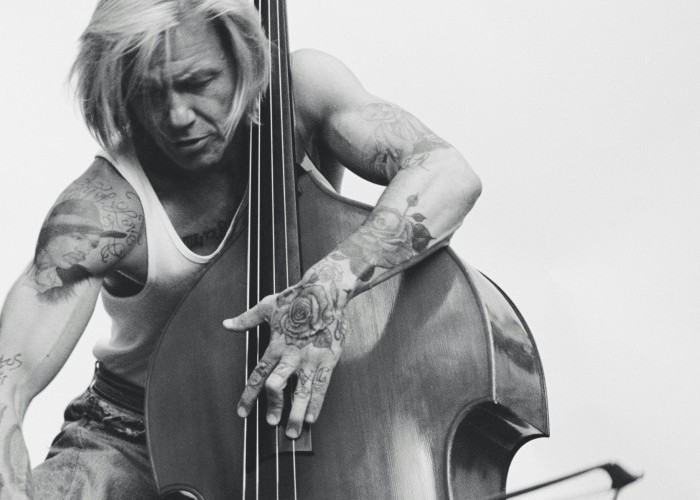
“To go solo is a balancing act because on one hand you need to stand your ground but on the other you’re stepping into a realm of extreme honesty,” Wojtek Mazolewski says.
(Photo: Jacek Domanski)Over the past two decades, 49-year-old Polish bassist and composer Mazolewski has made his signature the restless pursuit of the ever-changing creative instinct. First coming to prominence in the early ’90s as part of the avant-garde, free-jazz influenced “yass” scene in his hometown of Gdansk, Poland, Mazolewski has since formed Pink Freud — an electronic and punk rock-influenced improvising group; seen the Wojtek Mazolewski Quintet’s 2014 record Polka go platinum in Poland and rank among DownBeat’s top albums of the year; and played in the Tryp Tych Tryo with British jazz artists Tamar Osborn and Sarathy Korwar. With his latest album, Solo, he has now found an aspect of his creativity he has never explored before: playing alone.
Initially conceptualized as a bass score to accompany a theater show, Mazolewski decided to workshop his ideas during a series of solo concerts. Yet, while he was on stage he became so taken with the freeing sensation of individual improvisation that it blossomed into a distinct project of its own. “In order to bring something new to all of my bands, from time to time I need to disappear and make things on my own,” he says over a call from his Warsaw home. “I decided I should try playing solo and once I started, it was an epiphany. After those first shows the music was flowing to me from every direction and I couldn’t stop writing.”
Influenced by solo records from the likes of Peter Brötzmann and Evan Parker, as well as the solo bass presence of Polish instrumentalist Helmut Nadolski — who Mazolewski describes as “a Viking of a man, the personification of a masculine creative energy” — Mazolewski enlisted producer Wojtek Urbanski and headed to the studio. As they worked their way through Mazolewski’s mass of written compositions for bass, however, they began to hear other instrumentation embellishing his emotive melodies and eventually expanded the concept of a solo album to include double bass as well as electronics, flute, guitar and harp courtesy of featured artist Marysia Osu.
The result is the deeply moving, genre-breaking 12 tracks of Solo. Opening number “Monada” sets the tone with its scraping, eerie bowing and guttural vocalizations over rattling shaker to evoke a sense of hypnotic ritual music, while tracks like “La Cancion De La Liberation” and “Rodeo Spirit” move into more expansive, cinematic territory that evoke the vast, flat terrain of the Midwest. Other numbers “Sylfy” and “Dark Ecology” sink into the metallic rhythms of drum machines as Mazolewski’s muscular bass playing becomes its own form of percussion, and on “Home Of The Warrior–Sil Daw Ban Yu Wa” Mazolewski pays tribute to the melismatic combination of harp and double bass produced by the likes of Charlie Haden and Alice Coltrane with London-based Polish harpist Osu.
Rather than use the unadorned largely solo bass format of the album to make an ego-driven display of virtuosity, on Solo, Mazolewski instead places emotive melody at the forefront, creating imaginative soundscapes where his instrumentation simply serves to allow the listener to dream.
Nowhere is this impressionistic intention clearer than on album highlight “My Works Of Art,” where Mazolewski pairs sparse bass plucking with a yearning spoken-word poem on the enduring force of his creativity. It marks another first for the record as it is the first time he has written a poem to accompany his music. “Poetry can make us bigger and better people and it has a huge potential to change society,” he explains. “For years we have drifted from it in our fast-paced capitalistic world, but three or four years ago, for my own well-being, I started reading three poems every morning out loud, before I touched my phone or did anything. I read Patti Smith, Bob Dylan, Fernando Pessoa, Hiromi Ito, Pablo Neruda — they are all writers who have since changed my life for the better. That was the reason I found courage to express myself in words on this album, because until now I only thought I could express myself through music. It was another epiphany.”
Mazolewski grew up playing multiple instruments while immersing himself in Poland’s punk scene and formed his first band, Iwan Groźny (Ivan the Terrible), at the age of 11. “When Poland was under Soviet rule there was no jazz or Western art allowed in the country, but once the Russians left in the early ’90s, suddenly there was a flood of art coming in,” he says. “I was 13 or 14 and buzzing at the chance to respond to this music. I became a part of the ‘yass’ revolution where mostly non-jazz players were bringing a new sound to the genre. The gigs were really crazy. Sometimes we’d improvise for six hours straight while people screamed and danced, and it gave us the feeling that music is a great force that is able to change the world.”
Those freeform gigs coalesced into a distinct identity for Polish jazz, one that encompassed everything from the complex arrangements of composer Krystof Komeda to hip-hop and electronics, ultimately creating a scene that today thrives through genre-crossing groups like Bloto and EABS. “We kicked the door down and now young people feel free to play jazz every way they want to, which is really exciting,” Mazolewski says. “It’s total freedom, and for me that has meant more recently going from a dynamic, free-jazz style to pursuing melody.”
It’s a journey that is reflected on the luscious melodies of Solo as well as in Mazolewski’s forthcoming projects, including new records with Tryp Tych Trio and Pink Freud, as well as a Japanese jazz collaboration as Tokyo Spirit Band and new work with South African drummer Asher Gamedze. “I keep busy because I love my work,” he laughs. “I’m always pursuing improvisation because it is truth. You go out there in front of people and you can’t tell what’s going to happen. You simply walk into it without hesitation, without looking back.” Whether he’s solo or not, for Mazolewski it seems the only way is forward. DB
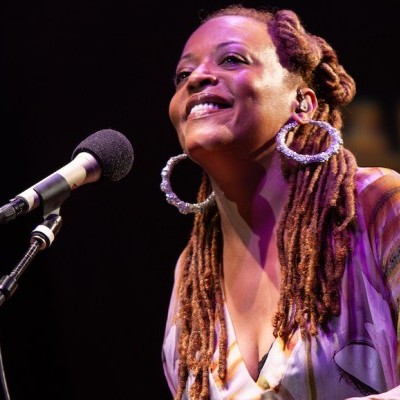
Wilson’s ability to connect to audiences helped her to win two Grammy awards and multiple other accolades. She was named an NEA Jazz Master in 2022.
Sep 3, 2026 10:44 AM
Cassandra Wilson, a singer, songwriter and producer who was one of the most acclaimed and successful jazz vocalists of…
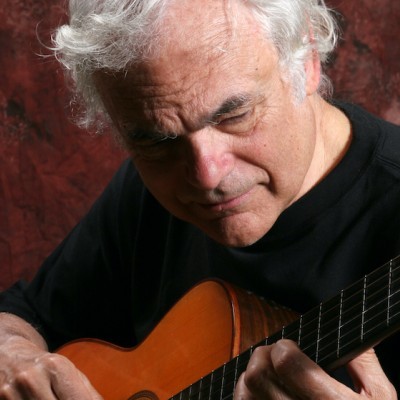
Bertoncini was a specialist and advocate for the nylon-string acoustic guitar, turning down high-profile opportunities that were unsuited to the sound and techniques that he used with that instrument.
Sep 1, 2026 11:06 AM
Gene Bertoncini, an esteemed jazz guitarist, composer, arranger and educator, died Aug. 29 at the Lillian Booth Actors…
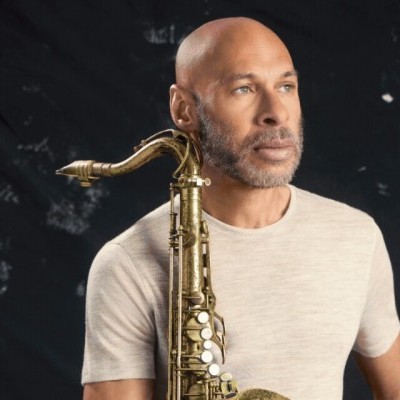
A solo concert by saxophonist Joshua Redman will close the first night of the Hyde Park Jazz Festival on Sept. 26.
Sep 22, 2026 12:26 PM
The Hyde Park Jazz Festival will take place for the 20th time on the final weekend of September 2026. Beginning half…
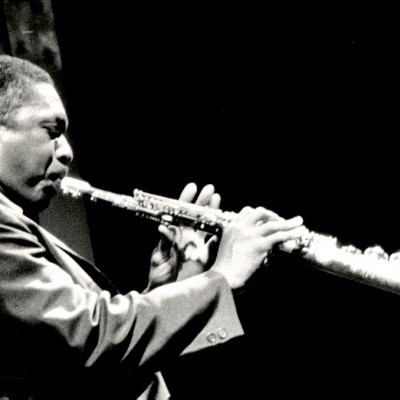
“It was just that suddenly … I could hear it,” Ravi Coltrane said of an epiphany he experienced during his late teens regarding his father’s music. “And it was almost like a calling, like something saying, ‘Hey, man, come on. It’s time to get serious.’ And the first time you really tune in and dial in and focus like that, it can be very life-changing.”
Sep 22, 2026 1:39 PM
Editor’s Note: Tomorrow, Sept. 23, is the 100th anniversary of John Coltrane’s birth. In honor of the tenor and…
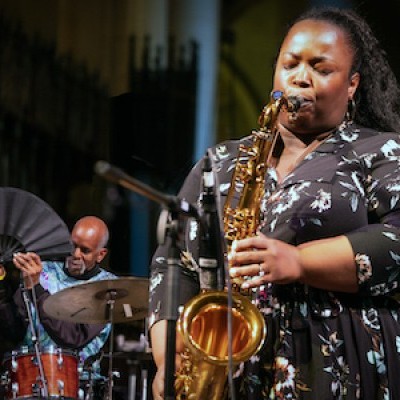
Camille Thurman took to the stage alongside bassist Kenny Davis and drummer Tommy Campbell for a rendition of Johnny Mercer’s “I’m An Old Cowhand” that recalled Rollins’ epochal 1957 trio outing Way Out West.
Oct 6, 2026 1:33 PM
As emcee Mark Ruffin noted at the commencement of an epic tribute to saxophonist Sonny Rollins at the Cathedral of…