Sep 3, 2026 10:44 AM
In Memoriam: Cassandra Wilson, 1955–2026
Cassandra Wilson, a singer, songwriter and producer who was one of the most acclaimed and successful jazz vocalists of…


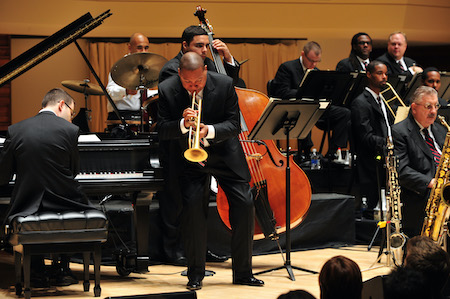
Marsalis will, if he chooses to use it, have a strong voice in perpetuating his vision through a role in choosing his successors.
(Photo: Frank Stewart)For the better part of a year, rumors have been swirling that Wynton Marsalis was going to step down as artistic and managing director of Jazz at Lincoln Center. On Jan. 29, those rumors were confirmed as the JALC board of directors announced a two-and-a-half-year “phased transition plan” under which new leadership would be installed.
According to the announcement, Marsalis will continue as JALC artistic director during the 2026–’27 season — one being planned as a tribute to him — and then serve in an “advisory capacity” through the end of his contract in June 2028. A new artistic director will be identified by this fall. Meanwhile, a new executive director will replace the resigning Greg Scholl, who reports to Marsalis. The new directors will report to the board, representing a shift away from a unitary leader.
The announcement carries great symbolic weight. Marsalis founded the organization and has been its driving force, starting in 1987 (when his jazz programming at Lincoln Center consisted of a summer concert series) and continuing to this day (when Jazz at Lincoln Center, as a full constituent of the arts complex, has three major stages, an in-house orchestra comparable in structure and prestige to its co-constituent The New York Philharmonic, and a physical and digital reach around the world).
Given the rumors, the announcement was not a total surprise. Marsalis was already foreshadowing a reduced role last March, deferring to the “younger generation” when DownBeat asked him for specifics on long-term programming. But in view of Marsalis’ outsize reputation, it remains to be seen how easy a substantive transfer of authority will be. Even as he might be ready to hand over day-to-day control, he will hardly be riding into the sunset.
“I always have ideas,” he said. “They’re endless.”
Marsalis will, according to the board, have a seat on that body “in perpetuity” and “continue to play a role in shaping JALC’s artistic direction and operational strategy.” Though in the interview he declined to talk long-term specifics, he said the broad vision animating the House of Swing should remain rooted in improvisation based on chord changes and adherence to form — “actual jazz.”
He has advanced that vision from his chair in the Jazz at Lincoln Center Orchestra trumpet section; as a composer of works that expand the social boundaries of swing; and as a hands-on bandleader. As director of the JLCO — the band made the identity-affirming name change from Lincoln Center Jazz Orchestra nearly 20 years ago — he has shaped an aesthetic and organizational profile with a powerful pull.
Marsalis will, if he chooses to use it, have a strong voice in perpetuating his vision through a role in choosing his successors. A committee, the board said, has been appointed “to collaborate with Mr. Marsalis on identifying the next generation of JALC’s artistic leadership, including future artistic director candidates.”
Marsalis, who is 64 years old, started programming Lincoln Center jazz when he was just 26. Mirroring that model, Marsalis, asked who might play an important role in the organization’s future, quickly invoked musicians in their 20s and early 30s. Among them were saxophonists Chris Lewis, Abdias Armenteros and Alexa Tarantino — all full-time JLCO members — and drummer Domo Branch, a sometime sub.
While Marsalis has exercised strategic oversight, at times he has delegated programming authority to others, those in Gen Z included. Lewis, whom Marsalis praised for his prodigious intellect and Philadelphia soul, last month co-directed, along with Tarantino, “Duke in Africa” — an Ellington-themed concert in Rose Theater. The coveted assignment, Lewis said, reflected Marsalis’ generous spirit and generational focus: “He’s empowered everybody, especially young musicians.”
If Marsalis kept relatively close tabs on that concert’s planning — Ellington remains a subject of singular import — he has generally professed a hands-off approach, with an eye on post-tenure continuity. “Very little do I veto,” he said. “I don’t want it to be one person’s vision, autocratic. So when I’m no longer doing this, it’s not going to be that much of a strain. Everything will be basically the same.”
Maintaining continuity would be a priority for Lewis. Asked how, in theory, he might seek to guide JALC programming, Lewis said that the music, writ large, would include the core components of its tradition: “Something that’s swinging. You’ve got to have the blues.” At the same time, his list of preferred artists was varied, and included Armenteros’ outside trio, New Jazz Underground, which incorporates hip-hop in its sonic mix. Generational change might yet bring a version of that genre to Frederick P. Rose Hall.
To be sure, the role of artistic director might fall to a mid-career musician. One name being floated is JLCO bassist Carlos Henriquez. Now in his 40s, Henriquez, a Bronx native, was part of a high school band that won first place in JALC’s Essentially Ellington competition. A member of the JLCO (and its predecessor) since 1998, he has contributed some of its most striking works. Onstage, he has anchored some of its most ambitious arrangements. In rehearsals at which Marsalis has not been present, he has demonstrated leadership qualities.
In a conversation after one such rehearsal last year, a duly humble Henriquez played down the prospect of his assuming the artistic director’s role. Rather, he said, he had discussed a parallel role as the director of what would be a new JALC venture: a Latin-jazz orchestra that would have its own concert series in which he would function as a kind of ambassador to “urban” communities, extending the organization’s reach to underserved populations.
For Marsalis, extending the organization’s reach and fashioning a framework for succeeding generations has been a running theme. “It’s what we did, the board of directors, myself, the orchestra members,” he said. “We went on the road, we raised money for it, we talked about it. We taught education shows, did radio shows, played halls. We started the [Blue Engine] record label, built up the library of records. We have Jazz Live, our [streaming] platform.
“We put a lot of infrastructure in place. How it’s used and what’s done to maintain it is really up to them.” DB
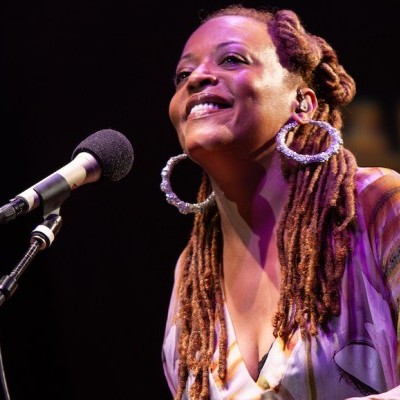
Wilson’s ability to connect to audiences helped her to win two Grammy awards and multiple other accolades. She was named an NEA Jazz Master in 2022.
Sep 3, 2026 10:44 AM
Cassandra Wilson, a singer, songwriter and producer who was one of the most acclaimed and successful jazz vocalists of…
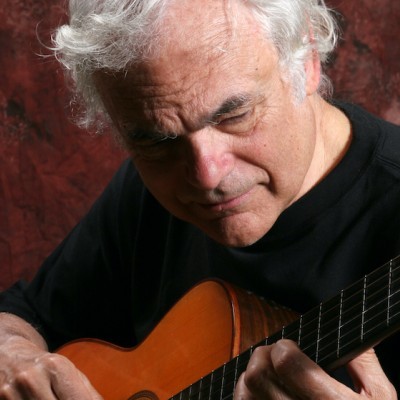
Bertoncini was a specialist and advocate for the nylon-string acoustic guitar, turning down high-profile opportunities that were unsuited to the sound and techniques that he used with that instrument.
Sep 1, 2026 11:06 AM
Gene Bertoncini, an esteemed jazz guitarist, composer, arranger and educator, died Aug. 29 at the Lillian Booth Actors…
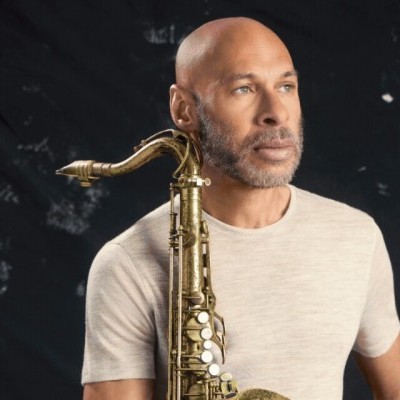
A solo concert by saxophonist Joshua Redman will close the first night of the Hyde Park Jazz Festival on Sept. 26.
Sep 22, 2026 12:26 PM
The Hyde Park Jazz Festival will take place for the 20th time on the final weekend of September 2026. Beginning half…
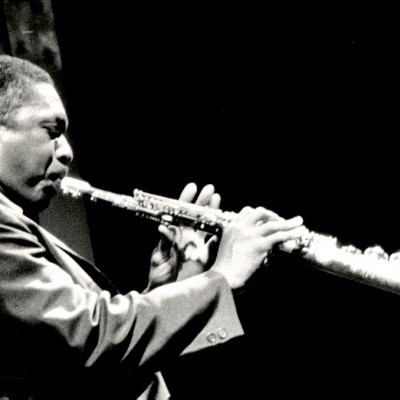
“It was just that suddenly … I could hear it,” Ravi Coltrane said of an epiphany he experienced during his late teens regarding his father’s music. “And it was almost like a calling, like something saying, ‘Hey, man, come on. It’s time to get serious.’ And the first time you really tune in and dial in and focus like that, it can be very life-changing.”
Sep 22, 2026 1:39 PM
Editor’s Note: Tomorrow, Sept. 23, is the 100th anniversary of John Coltrane’s birth. In honor of the tenor and…
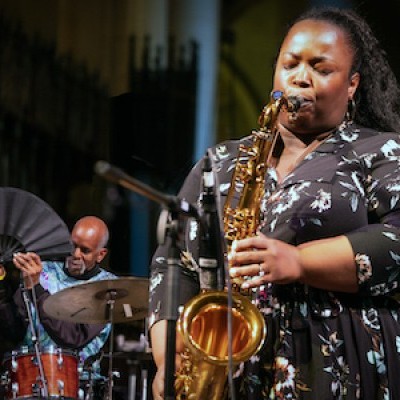
Camille Thurman took to the stage alongside bassist Kenny Davis and drummer Tommy Campbell for a rendition of Johnny Mercer’s “I’m An Old Cowhand” that recalled Rollins’ epochal 1957 trio outing Way Out West.
Oct 6, 2026 1:33 PM
As emcee Mark Ruffin noted at the commencement of an epic tribute to saxophonist Sonny Rollins at the Cathedral of…