Sep 3, 2026 10:44 AM
In Memoriam: Cassandra Wilson, 1955–2026
Cassandra Wilson, a singer, songwriter and producer who was one of the most acclaimed and successful jazz vocalists of…


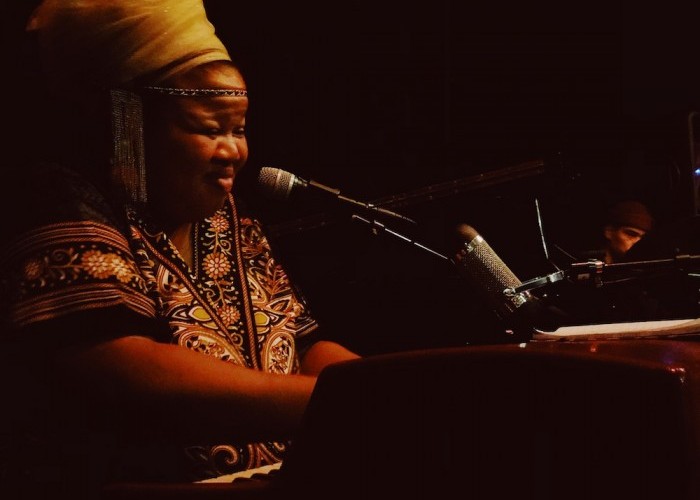
Angel Bat Dawid’s The Oracle splices together sonic fragments, spoken word and more.
(Photo: Alejandro Ayala)Angel Bat Dawid, a Chicago-based avant-garde composer, improviser and multi-instrumentalist, hails from seven generations of ministers, and her approach to music never loses sight of the spiritual.
As she puts it: “My music, sometimes, it’s just something comes over me, and then something pours out—that’s all improvisation really is. You go with the sound and then it’ll tell you to trust that the next thing you’re gonna play is right—and it always is.”
Most of her artful creations arise during serendipitous moments, and her new album, The Oracle (International Anthem), shares a Sun Ra-infused mixture of samples, sonic fragments and spoken word—somehow austere and lush, simultaneously—built upon elements drawn from poems by Yusef Lateef and Margaret Burroughs, with Bat Dawid’s clarinet brilliantly soaring and swooping to mimic vocal lines. It’s a fierce one-woman show, with Bat Dawid playing every instrument on the album (save for Asher Simiso Gamedze’s drumming on “Cape Town”), singing and completing the mix herself.
The 39-year-old artist’s compositional style emerged over time as she recorded various pieces so The Brotherhood, her ensemble, could be kept appraised of new works. But Bat Dawid, a self-professed vinyl addict, also brought a background in hip-hop production to the proceedings.
The Oracle unites a series of influences from her singular background, including time spent living in Kenya as a child of minister parents, who later “discovered their identity as ‘Hebrew,’” or Black Hebrew Israelites. She describes her earliest experiences learning music as being centered in spiritual spaces and churches, and took her name—which translates to “Daughter of David”—from the Old Testament David, whom she admires for his ecstatic musicality and passion.
Returning to the States as an adolescent, Bat Dawid recalled feeling out of place, and found comfort in music, particularly Mozart’s clarinet concertos. But during her early 20s, Bat Dawid’s life was interrupted by a serious health condition, and upon recovery from surgery to address a benign brain tumor, she sought to explore the healing powers of music.
The entirety of the composer’s past finds its way into The Oracle, an album shuttled into life through the use of a multitrack recording app on her phone, along with collections of sounds from traveling, as well as jams in London and South Africa. Bat Dawid, who refers to herself a “sonic archaeologist,” seeks to find the sonic imprint of past events on physical spaces, incorporating them into her own music.
To collect these “vibes,” she’s taken her horn to spaces in Chicago’s Cottage Grove neighborhood—including a lot where the Pershing Hotel, which hosted pianist Ahmad Jamal in 1958 as he recorded At The Pershing: But Not For Me, once stood—to gather the feeling of what’s there, and use it to influence and inspire her instantaneous compositions.
As part of her constant search to find the undercurrent of the African Diaspora’s spiritual practices, she titled “Impepho,” a cut off the new album, for a plant that, when burnt, is said to enable contact with one’s ancestors and with the divine. She’s also introduced the music of South Africa into the song, finding inspiration in a 21st-century electronic music called gqom, joking that “‘Impepho’ is like an out-jazz version” of the genre.
On some level, Bat Dawid continued, she thinks of her music as following her family’s legacy of ministry: “Some of my favorite composers and artists have been my best friends during rough times. ... I prayed over each and every song I did, and I meditated that it would bring peace and harmony, and all those good things. I [make] intentionally good music—there’s a lot that’s intentionally perverse and weird out there. So, I’m like, well, if they can go hard on that, I should be able to go hard on doing something that can heal people.” DB
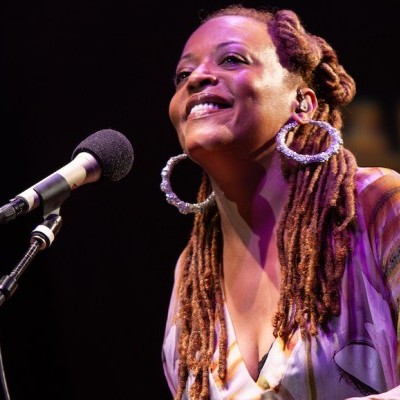
Wilson’s ability to connect to audiences helped her to win two Grammy awards and multiple other accolades. She was named an NEA Jazz Master in 2022.
Sep 3, 2026 10:44 AM
Cassandra Wilson, a singer, songwriter and producer who was one of the most acclaimed and successful jazz vocalists of…
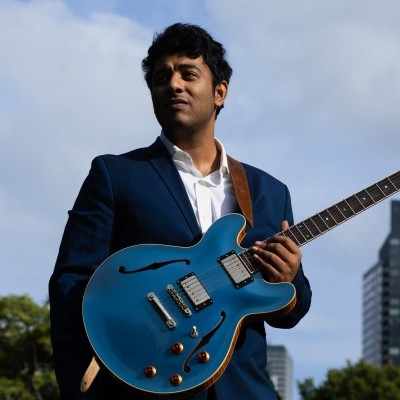
“The love from the jazz and music community restored my faith in humanity,” Walia wrote in an online post upon his release from detention at an ICE facility.
Aug 18, 2026 2:15 PM
Indian jazz guitarist and composer Pritesh Walia has been released after being unexpectedly detained by ICE and taken…
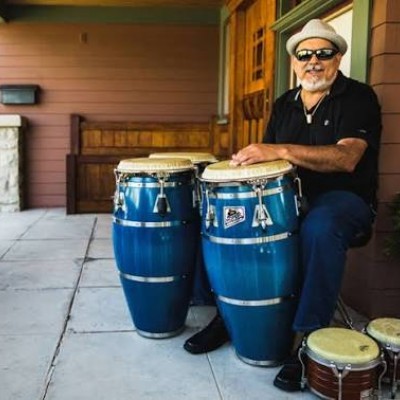
Percussionist Poncho Sanchez was among the artists scheduled to perform at the now-canceled inaugural LA Jazz Festival.
Aug 11, 2026 12:53 PM
The inaugural LA Jazz Festival, originally scheduled to run Aug. 7–23 with dozens of events across Los Angeles’…
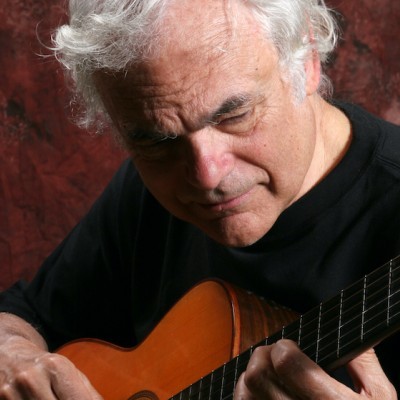
Bertoncini was a specialist and advocate for the nylon-string acoustic guitar, turning down high-profile opportunities that were unsuited to the sound and techniques that he used with that instrument.
Sep 1, 2026 11:06 AM
Gene Bertoncini, an esteemed jazz guitarist, composer, arranger and educator, died Aug. 29 at the Lillian Booth Actors…
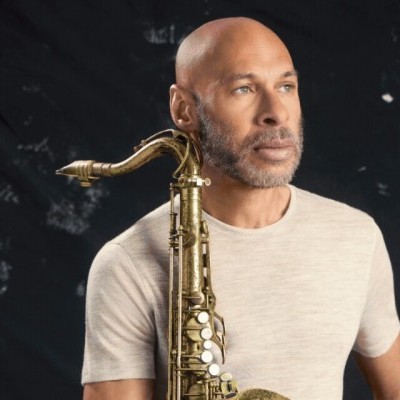
A solo concert by saxophonist Joshua Redman will close the first night of the Hyde Park Jazz Festival on Sept. 26.
Sep 22, 2026 12:26 PM
The Hyde Park Jazz Festival will take place for the 20th time on the final weekend of September 2026. Beginning half…