Sep 3, 2026 10:44 AM
In Memoriam: Cassandra Wilson, 1955–2026
Cassandra Wilson, a singer, songwriter and producer who was one of the most acclaimed and successful jazz vocalists of…



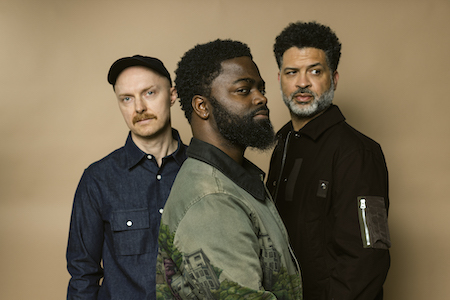
Blank For.ms, Marcus Gilmore and Jason Moran discuss their new release, Shards.
(Photo: Anna Yatskevich)Perhaps the most interesting thing about the concept of a loop is that it is a line that connects to itself. What once had a beginning and an end now has neither; a cycle of consecutive events that swirls inexorably to infinity, each rotation another opportunity to relive, reflect or relearn, doomed to repeat forever yet propelled by the hope or myth of progress. Or maybe one loop eventually intersects with another, a consequential intertwining generating a transcendental disruption that diverts the preordained path, breaking the unyielding chain, releasing its captives onto the next strain.
Tyler Gilmore has been fascinated by loops for the better part of the last decade. Specifically, he works with tape loops. When asked to describe how one makes a tape loop, he holds up a cassette, the same kind people carried around by the dozens loaded with music they could play in their car or on their Sony Walkmans way back when.
“You do a little surgery,” Gilmore says, detailing how to remove the tape from the cassette, cutting just a small strip of it and threading it back into the cassette, taping the ends together with Scotch tape.
No longer anchored to the spool, the loop of tape could run indefinitely. Gilmore continues, “I think of each [tape loop] like a canvas that brings its own flavor. The length of the loop is gonna be dictated by how long the tape is and how fast you play it. … And maybe you left some stuff on the tape, or you folded it accidentally a little bit, or intentionally. And they all sound a little bit different and imperfect in different ways.”
Gilmore’s preferred musical medium has ushered him to the forefront of a well-established subculture of experimental electronic music as the artist Blank For.ms. He has nearly 100,000 followers on his Instagram page: an endless scroll of unique sounds played on unique devices and analog tape run through modern digital effects. Six posts down there is a flyer for the May 1 album release show of Shards (Red Hook), the second collaborative album from Blank For.ms with pianist Jason Moran and drummer Marcus Gilmore (no relation). The back story tying these three artists together is a remarkable tale spun over many years from some seemingly disparate threads.
Jason Moran is on his morning walk, traversing a circuit through the overcast streets of Harlem. It’s been over three decades since he moved there from his hometown of Houston. He recently paid homage to another bandleader who once lived there with 2023’s From The Dancehall To The Battlefield (Yes), Moran’s reimagining of the music of James Reese Europe and his military band regiment, the Harlem Hellfighters. Moran’s recordings and performances are often thematic, theatrical and/or historical, which, à la chicken-and-egg loop, could be either the reason for or the result of his succession of the good doctor and pianist Billy Taylor in 2014 as artistic director for Jazz at the Kennedy Center in Washington, D.C. Moran left that position last year, part of the tragic undoing of that austere and beloved arts organization under the current federal administration.
Has Moran reallocated the many hours he once spent in his curatorial role at the Kennedy Center to other pursuits?
“Always. Come on,” he chides, grinning into his phone as he strolls. “It’s a zillion things people know and there’s even more that people don’t know about.” Moran for most of his career has maintained a wide diversity of projects that could be misconstrued as a random sampling of everything between the orbits of the sun, moon and Earth.
Moran categorically rejects that thought. “It’s definitely not random. Once I had kids, nothing could be random. These things [I do] I believe in, and I feel like I had examples of people who believed in their ability to move freely, which is what liberation is supposed to show to people. Muhal Richard Abrams painted every day just as much as he composed. Henry Threadgill has a total visual practice, you know? Ornette Coleman had a tattoo artist on stage with him during a concert. Sorry, these people have been out here doing crazy shit for a while. Maybe the further I got in my career, [the more] I wanted to find intersection moments rather than just ‘this is the pathway that I want to be on.’ That increasingly becomes more important to me.”
What is most important for him when considering a new project?
“Do I like you,” he answers simply. “Personal, for real. I’m not dealing with people that … sitting across the table in front of you, we can’t just have a normal conversation. I don’t think I attract those kinds of people anymore, anyway. Where I am now, it’s just: I like you, do I want to make some music with you? And if I have the time. It really starts right there.”
One of those people Moran has liked and had time for is Tyler Gilmore, who was once a student of Moran at the New England Conservatory, where Moran has been on faculty since 2010. Gilmore came to Boston from a small town in Wyoming after his undergraduate studies at the University of Northern Colorado. Back then, he was a trumpeter and budding jazz composer and arranger who wrote for big band. He studied with Maria Schneider and was also influenced by Vince Mendoza and John Hollenbeck. “And since then,” he qualifies, “I’ve kind of gone back in history. It’s like I skipped the historical understanding, and now I mostly listen to Duke Ellington and Thad Jones.”
But by the time Gilmore met Moran at NEC, he was in a bit of an identity crisis. He had taken a keen interest in electronic music and was searching for ways to make his big band writing reflect that. He muses, “With traditional big band music, it’s sort of a challenge to get away from the archetypes of melody, chordal structure and rhythm. I was fumbling my way towards that, but I never quite got there until I was able to explore with electronic tools.”
In their lessons, Gilmore presented his dilemma to Moran, and they discussed that along with many other things.
“A lot of times,” he remembers, “we would talk about music a lot. And I would get to the end of the lessons and feel like he had learned more than I had. But it’s not because I hadn’t learned much, but because he tends to enter every situation very open to receiving. He does not walk into things with a hardened ego at all, [even] with as much as he’s done at this point.”
Those talks ultimately helped Gilmore to fully embrace his passion and interest in electronic music. But he also began working as a jazz arranger for Moran, orchestrating some music for larger ensembles for a number of Moran’s live performances. Then, a different opportunity presented itself when Sun Chung, a former producer for ECM and founder of the forward-leaning Red Hook Records, discovered Blank For.ms through trumpeter John Raymond and reached out to Gilmore about doing an album for his label.
“Sun reached out when the label was just a baby,” Gilmore remembers. “He had one record out at [that] point. And he seemed like a good guy doing the right stuff for the right reasons and making quality work. So, we started cooking up ideas.”
Chung’s first recorded endeavor for Red Hook was a trio with trumpeter Wadada Leo Smith, drummer Andrew Cyrille and drummer and synthesizer artist Qasim Naqvi, pairing the two avant-creative veterans with a younger artist who had a grasp on modern electronic technology.
“Maybe since my fourth or fifth year working at ECM, I started to develop this interest in putting master improvisers in sonic situations that they might not necessarily be familiar with and see how they would react to the sound,” Chung explains. “And what I realized is they’re not just master musicians, they’re master listeners, master reactors to sound, and they just complement in the best imaginable way whatever sound comes at them.” Chung is referring to Moran, Tyler and Marcus as much as he is Wadada, Cyrille and Naqvi.
Gilmore and Chung agreed upon a collaboration with Moran, along with Marcus, who had messaged Tyler after discovering Blank For.ms on Instagram. Marcus still has the DMs.
“He would post a lot of videos of things that he was working on, which I always thought were really cool in terms of sound design and with what he was doing with tapes,” the drummer says over video from his home in Queens while scrolling through those messages on his phone. “Looking at the dates, I can see it now. We were talking about working together, and then a year or so late, he messaged that he had a recording project coming up and wanted to see if I’d be into it. And I was like, ‘Yeah, let’s do it.’”
It was a strong endorsement of Tyler Gilmore, his tape-loop namesake, because Marcus Gilmore can afford to be selective as one of the greatest drummers of his generation. An ordinary day, for instance, has the drummer playing later that night at the Village Vanguard with guitarist Jakob Bro, pianist Gerald Clayton, saxophonist Mark Turner and a second drummer named Brian Blade, and he’d be back there again later that month with guitarist Gilad Hekselman and pianist Brad Mehldau.
In addition to the two Gilmores getting a chance to work together, it was also an opportunity for Marcus Gilmore to reconnect with Moran. They had first worked together 23 years ago (“almost to the day,” Gilmore realizes) when they recorded with Steve Coleman in a trio — saxophone, piano and drums, no bass. Gilmore was a junior in high school. Since then, they have shared the bandstand a handful of times but hadn’t worked closely on a collaborative project until now.
Even so, the pianist and drummer share a deeper connection through Milford Graves, the late drummer and avant-garde pioneer who is credited with liberating the drums from its traditional role as timekeeper, and he was also an explorer of many other disciplines including visual arts, martial arts, gardening and biology. Graves also lived in Queens, becoming Marcus’ boyhood mentor.
“The time that I spent with Milford Graves was very special and dear to me,” says Marcus. “The way he was able to connect dots through different mediums was really incredible. And the creative spirit that he approached in the music, it seemed like he used that same creative spirit to approach the sciences.”
Moran, who played duo concerts with Graves towards the end of his life, recalls going to Graves’ house and being hooked up to a device to record his heartbeat.
“He would then take the heartbeat, and he would feed it to his computer, which would then make a melody from it.” Moran says, “Milford was very highly attuned to the possibility of the body creating melodies and finding out what they were. And he was trying to make — not trying, he was making the technology to support these findings … and the electronic music he made was crazy shit.”
When Tyler, Marcus and Moran got together to record their first album for Red Hook, 2023’s Refract, Tyler brought some actual compositions along with a bunch of tape loops he had made beforehand, which became the basis for many of the tracks that made it onto the album. “But a lot of the improvised stuff had a lot of magic to it, so we used a lot of that,” he explains. “And on this second record, we started a little more in that direction, and again, things kind of blossomed when it was fully improvised. So that’s basically what we ended up using.”
Take the first track on Shards, appropriately titled “Shard 1.” It fades in as the band is realizing something interesting they happened to fall into.
“Yeah, we sure did,” affirms Tyler Gilmore. “Sometimes we’ll sort of search for a while and find [such] a place. I’m looking for interesting bits to take and refract, for lack of a better term. Marcus and Jason will kind of recede and end whatever they were doing, and I’ll be able to bring what I’ve created forward. And then it’s the improvisations from that point forward, where they’re reacting to their own sound, but rebuilt by me, that sort of leads us into the most interesting aspect of what this band can do.”
Moran also appreciates this process of initiation, reaction and counterreaction.
“The piano is a tricky instrument because so much of it demands control, you know? I’ve been saying to people who I work with, like DJs: I want to lose [control]. I don’t want control. I need something to get in my way. Get in the way of the ideas. And I just thought [Tyler] was like the perfect entryway … that once I press the key, I don’t know what it’s gonna sound like anymore. Now I’m responding to how all the processing was taking control, to a degree.”
Moran continues, “You have to have people with you who improve on the possibility of believing in improvisation. I don’t want to spread it out too far because I always want to do that, but to just pull back off of music for a moment: There’s just something that happens when improvisers get together, and the best thing that they display to each other maybe isn’t even the sound. It’s the trust. And I’d say in a lot of society, right now especially, what’s getting promoted is distrust.”
Gilmore recalls something Moran said to an audience member after they had performed in the fall of 2024 at the Monterey Jazz Festival. “Somebody asked Jason backstage about what this music is, and he described it as a broken mirror and sometimes the pieces are falling, or something like that. And that’s actually the inspiration for the name of the album and all the songs: shards of the broken mirror, falling.”
Four months after they played Monterey, the band performed at the Kennedy Center. It was one of the last jazz events to happen at that historic theater in Moran’s final season there. “And this show was incredible,” says Moran, his voice tinged with a mixture of pride and prejudice. “I think [it’s] because we knew that the place was falling apart, as we literally were playing this show. All this tension was in the air around what was the future of this place going to be. And I’ve got to say, that set we put on display is just like going through their life cycle … but we kind of condensed that time lapse in a show.”
Tyler affirms, “Yeah, people were shell shocked. It was a vibe.”
“The people that came and played that final season, it was mostly based on free improvisation,” adds Moran. “And I trusted everybody to do the right decision for whatever they felt their impulse would be. And so, believe me, we showed up at a moment where, whew, it was very heavy — and we don’t even have to [talk] about what it is now. I also think that’s an important thing to be on display. It’s kind of like why you want to go see a really good comedian when the world is all fucked up, because you want to hear, how are [they] processing this? I felt like our show, during that time, February of 2025, the writing was on the walls. And the music definitely represented that. [Those of us in] the arts, often because we’re so close to the ground, we end up being that warning signal of what else is to come.”
To Moran, this moment loops back to another tumultuous time.
“As an educator, I started having to recontextualize why was John Coltrane making the kind of work he was making throughout his very fast career? How did he get from God to interstellar space in a span of three to four years? What was happening in the world that he was living in, in the ’60s, that was pushing all these ideas that he couldn’t contain and had to put them on record? And maybe that’s why you go see live performances. How is that music hitting the day? How is it hitting your day? That’s where the reveal is.”
Revealed also within countless loops — of music, relationships, circumstance, history. How Tyler Gilmore moved away from jazz and circled back to it via an old friendship with Jason Moran and new ones with Marcus Gilmore and Sun Chung. How Moran and Marcus Gilmore connected directly years ago but circuitously through Milford Graves, who tied technology to music decades before Blank For.ms. How analog tape technology has found new life in the digital music age. How younger artists can disrupt the rituals of older ones to ultimately make modern ancient music. How the political upheaval symbolized by the final stage of the life cycle of a once and recently glorious venue harkens back to the Civil Rights Era. How artists then and now continue to struggle to make sense of it all. The innumerable refractions of our imperfect world through the falling shards of a broken mirror.
Perhaps the most interesting thing about the concept of a loop is that it is a line that connects to itself. What once had a beginning and an end now has neither; a cycle of consecutive events that swirl inexorably to infinity, each rotation another opportunity to relive, reflect or relearn, doomed to repeat forever yet propelled by the hope or myth of progress. Or maybe one loop eventually intersects with another, a consequential intertwining generating a transcendental disruption that diverts the preordained path, breaking the unyielding chain, releasing its captives onto the next strain. DB
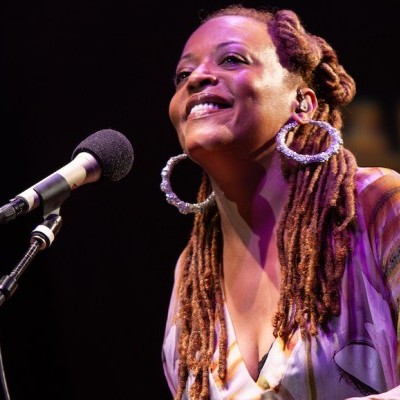
Wilson’s ability to connect to audiences helped her to win two Grammy awards and multiple other accolades. She was named an NEA Jazz Master in 2022.
Sep 3, 2026 10:44 AM
Cassandra Wilson, a singer, songwriter and producer who was one of the most acclaimed and successful jazz vocalists of…
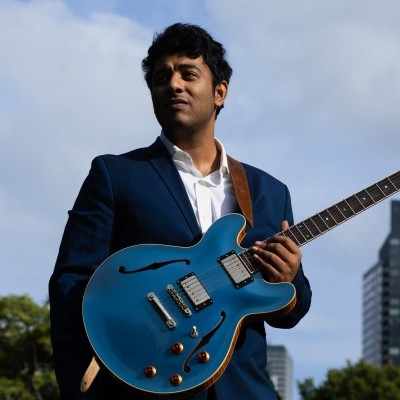
“The love from the jazz and music community restored my faith in humanity,” Walia wrote in an online post upon his release from detention at an ICE facility.
Aug 18, 2026 2:15 PM
Indian jazz guitarist and composer Pritesh Walia has been released after being unexpectedly detained by ICE and taken…

Bertoncini was a specialist and advocate for the nylon-string acoustic guitar, turning down high-profile opportunities that were unsuited to the sound and techniques that he used with that instrument.
Sep 1, 2026 11:06 AM
Gene Bertoncini, an esteemed jazz guitarist, composer, arranger and educator, died Aug. 29 at the Lillian Booth Actors…
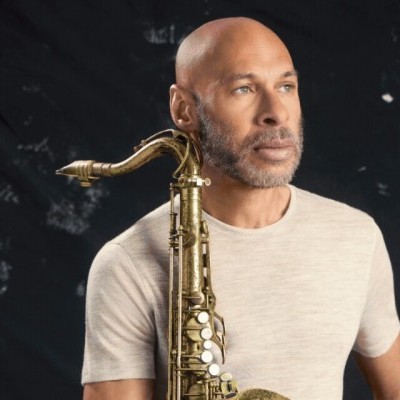
A solo concert by saxophonist Joshua Redman will close the first night of the Hyde Park Jazz Festival on Sept. 26.
Sep 22, 2026 12:26 PM
The Hyde Park Jazz Festival will take place for the 20th time on the final weekend of September 2026. Beginning half…
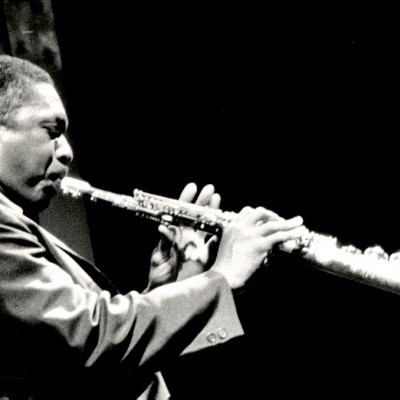
“It was just that suddenly … I could hear it,” Ravi Coltrane said of an epiphany he experienced during his late teens regarding his father’s music. “And it was almost like a calling, like something saying, ‘Hey, man, come on. It’s time to get serious.’ And the first time you really tune in and dial in and focus like that, it can be very life-changing.”
Sep 22, 2026 1:39 PM
Editor’s Note: Tomorrow, Sept. 23, is the 100th anniversary of John Coltrane’s birth. In honor of the tenor and…