Sep 3, 2026 10:44 AM
In Memoriam: Cassandra Wilson, 1955–2026
Cassandra Wilson, a singer, songwriter and producer who was one of the most acclaimed and successful jazz vocalists of…


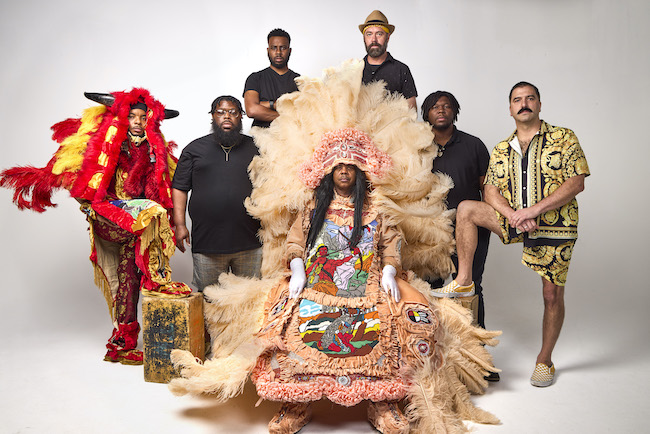
Cha Wa’s album Rise Up makes a joyful noise of redemption and freedom that propels the band on to the world stage.
(Photo: Rachel Brennecke)Four years in the making, Rise Up, the latest album from the Afro-Indigenous funk collective Cha Wa, was released on Aug. 29, a date forever seared into the memory of their home city of New Orleans. Did the band always intend to release the album on this profoundly significant day?
“It was in the cards once we got to this year,” says Cha Wa drummer and musical director Joe Gelini, a transplant from Berklee College of Music who quickly went native when he moved to New Orleans. “The whole album is about redemption, resiliency and hope. It embodies all of the things about New Orleans that were so special about surviving Katrina.”
Aug. 29 is also forever seared into the memory of Cha Wa frontman Spyboy “Honey” Banister of the Golden Sioux tribe.
“We evacuated,” Banister recalls of the historic day when Hurricane Katrina made landfall on the U.S. Gulf Coast in 2005, “and when we left all the traffic was going out. We were over the Bonnet Carré spillway when lightning hit a car in La Place and everyone panicked, running into each other trying to get off the interstate. That was scary. I’ve never seen the water that high.” But unlike many evacuees, he didn’t head to Houston or Lake Charles.
“I went to Baton Rouge, where I knew I could still get some crawfish and red beans and rice. And we had Indian practice in Baton Rouge. People came from all over, wherever they were displaced from, and every Sunday we had Indian practice.” But though they were able to hold practice, the locals didn’t know quite what to make of them.
“Baton Rouge is only 80 miles from New Orleans, and half the people are completely out of touch with what we do in New Orleans,” notes Banister. “When I tried to get on a bus from Baton Rouge to New Orleans, I had my crown in my hand with all the feathers. And the bus driver refused to let me on the bus and called the police. They didn’t know anything about Mardi Gras Indians. Because the feathers were two different colors, they thought it was from a flamingo. They thought I had killed a flamingo.” [laughs]
Banister eventually came home, but “I didn’t watch the news for about six, seven months. When the Saints played, and they opened the Superdome up, I couldn’t watch it. I didn’t hear brass band music for a whole year.”
That’s hard to imagine now, since brass bands are such an integral part of Cha Wa’s sound. Highlighted by guest appearances by musical royalty, including soul queen Irma Thomas and John Boutté, Rise Up makes a joyful noise of redemption and freedom that propels the band on to the world stage. From the moment Cha Wa announces its arrival with “Here We Come” — which namechecks everything they love about New Orleans — the album pulsates with the rhythm of Mardi Gras Indian culture.
During a spirited conversation with Gelini and Banister, they discussed everything from Banister’s nickname to the evolution of an album mixed and recorded at several different studios over the course of four years.
Cree McCree: Where did you get your nickname, Honey? Does it have anything to do with the Golden Sioux tribe?
Banister: My grandmother used to call me that when I was a baby. It’s from that Four Tops song “Sugar Pie, Honey Bunch.” She cut out “Sugar Pie” and “Bunch” and started calling me Honey when she was rocking me to sleep. That’s what my mama said.
McCree: I think you should capitalize on that and actually put out some Golden Sioux Honey for the tribe. It’s like a natural trademark.
Gelini: Not a bad idea. Maybe you should be our manager. [laughs]
McCree: You have quite a track record already, but Rise Up heralds your emergence on to a larger world stage, right?
Gelini: We hope so. You gotta manifest it, baby. This is our best work to date. It’s literally four years in the making.
McCree: It’s like a cast of thousands were involved in this album, and so many different studios.
Gelini: We were lucky because our producer Dave Trumfio lives in L.A., but he came out for the initial tracking at Dockside Studio. He arrived Mardi Gras Day, and we all went into the studio right after Mardi Gras, and stayed at Dockside. It’s right on the Red River, with apartments upstairs and a big pool house. And spring had just sprung and all the leaves were starting to bud, so it felt like a real spiritual experience. We also got to record Irma Thomas and John Boutté, here in New Orleans.
McCree: What’s it like working with the great Irma Thomas?
Gelini: She lives up to her reputation as a consummate artist. She said. “I want you to produce me, and give me notes and feedback if I’m doing this the way you want it.” And I was kinda like, gulp. [laughs] So we gave her some feedback and she was absolutely on the ball. She’s 84, and she can sing like nobody’s business still.
McCree: “Here We Come” talks about New Orleans being the Eighth Wonder of the World. And you do a checklist of everything New Orleans in that song.
Banister: When I went to Southern University, I took an architecture course and the Superdome was known then as the Eighth Wonder of the World because no other dome is structured like that. So it stayed in my mind. And when I heard the beat, the first thing I said was, welcome to New Orleans, home to the Eighth Wonder of the World. The Louisiana, the Mercedes, excuse me, the Caesar Superdome. [laughs] Somebody gimme a Hubig’s Pie. A Big Shot Cola, right? Creole gumbo.
We started off with that, and Joe really tricked me into it. The band was playing, and Joe put the microphone in front of me and just walked off. And immediately, he knew how I would react, and what would come out. We did this song a lot of different ways, but kept the original one that came straight up outta my head. Bury me in the backyard and have a crawfish barbecue. That’s what I want.
McCree: “Music Is My Medicine” addresses your recovery from addiction, Joe, right?
Gelini: Yeah. I’ve been sober for 15 years. And within several weeks after I first got sober, I was playing a gig, and I felt this feeling of euphoria. The same feeling I had when I was 15 years old playing drums in a band. That’s where that song came from.
McCree: What about “Freedom Of The City,” Honey?
Banister: Since 1970, I’ve been masking Indian, and “Freedom Of The City” talks about St. Joseph’s Night. We don’t have no permit. We don’t have no band. We come out as soon as it gets dark and stay out all night. That’s our most sacred night. People come out searching for Indians, and that’s how it’s supposed to be. Not Indians posing.
McCree: “Elijah Rock” is a traditional gospel song. Was that recorded in a church?
Gelini: No, it was recorded partially at Esplanade Studios, which is a former church. I wanted to put a traditional spiritual on the record and “Elijah Rock” is one of my favorite Mahalia Jackson performances.
McCree: The other gospel song is “Revival,” featuring John Boutté. It also has a sociological meaning about coming from poverty and a broken home, and being able to escape that.
Gelini: We wanted to talk about kids in New Orleans who get indoctrinated into these gangs and get involved in selling drugs, and how they can rise up out of that.
McCree: And there’s no better person to preach that gospel than John Boutté. What would you most like people to take away from listening to Rise Up?
Banister: Something from our album is going to grab you, and touch you to where you can see it. We want you to walk away with that, with people being happy. Enjoying life. DB
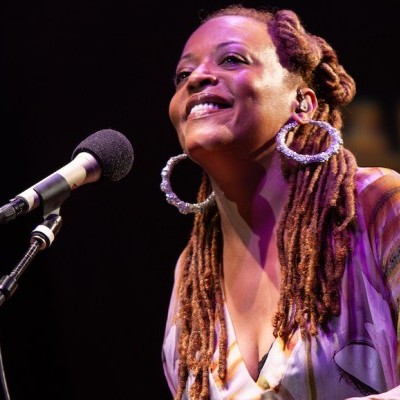
Wilson’s ability to connect to audiences helped her to win two Grammy awards and multiple other accolades. She was named an NEA Jazz Master in 2022.
Sep 3, 2026 10:44 AM
Cassandra Wilson, a singer, songwriter and producer who was one of the most acclaimed and successful jazz vocalists of…
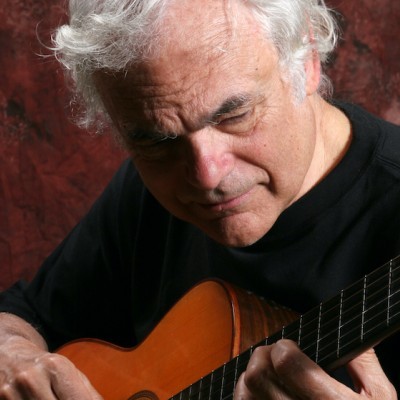
Bertoncini was a specialist and advocate for the nylon-string acoustic guitar, turning down high-profile opportunities that were unsuited to the sound and techniques that he used with that instrument.
Sep 1, 2026 11:06 AM
Gene Bertoncini, an esteemed jazz guitarist, composer, arranger and educator, died Aug. 29 at the Lillian Booth Actors…
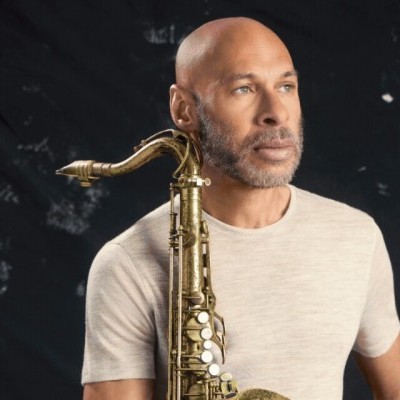
A solo concert by saxophonist Joshua Redman will close the first night of the Hyde Park Jazz Festival on Sept. 26.
Sep 22, 2026 12:26 PM
The Hyde Park Jazz Festival will take place for the 20th time on the final weekend of September 2026. Beginning half…
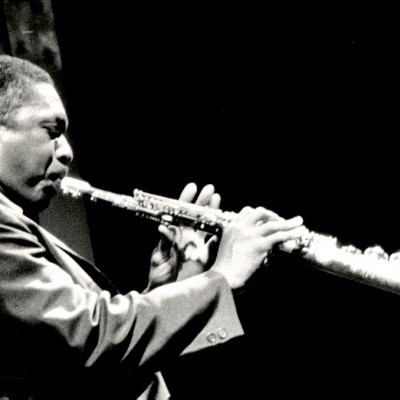
“It was just that suddenly … I could hear it,” Ravi Coltrane said of an epiphany he experienced during his late teens regarding his father’s music. “And it was almost like a calling, like something saying, ‘Hey, man, come on. It’s time to get serious.’ And the first time you really tune in and dial in and focus like that, it can be very life-changing.”
Sep 22, 2026 1:39 PM
Editor’s Note: Tomorrow, Sept. 23, is the 100th anniversary of John Coltrane’s birth. In honor of the tenor and…
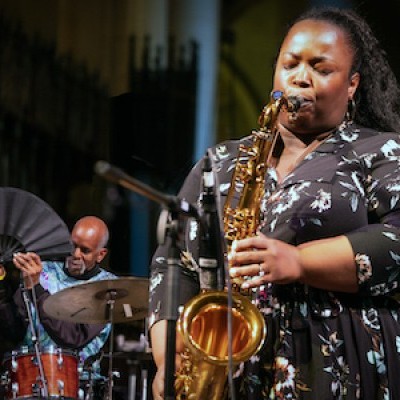
Camille Thurman took to the stage alongside bassist Kenny Davis and drummer Tommy Campbell for a rendition of Johnny Mercer’s “I’m An Old Cowhand” that recalled Rollins’ epochal 1957 trio outing Way Out West.
Oct 6, 2026 1:33 PM
As emcee Mark Ruffin noted at the commencement of an epic tribute to saxophonist Sonny Rollins at the Cathedral of…