Sep 3, 2026 10:44 AM
In Memoriam: Cassandra Wilson, 1955–2026
Cassandra Wilson, a singer, songwriter and producer who was one of the most acclaimed and successful jazz vocalists of…


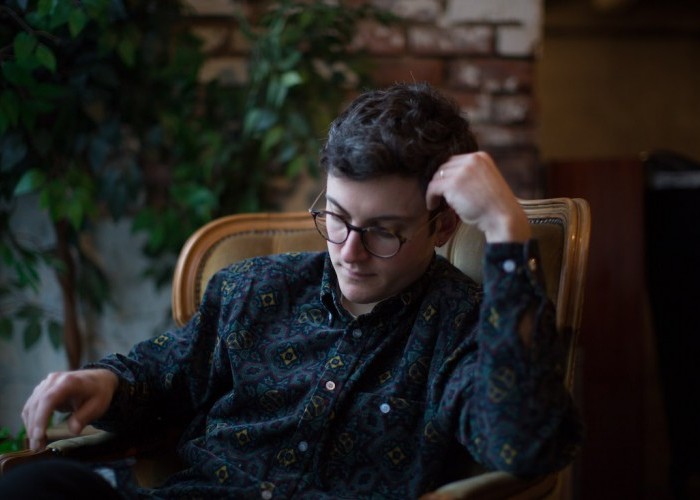
“From as early as I can remember, I’ve been experimenting with how many different sounds you can get out of a piano,” Elliot Galvin said.
(Photo: Dave Stapleton)London keyboardist Elliot Galvin is a musician of implacable, nonchalant curiosity. Since emerging at the start of this decade as a member of the springy, lushly melodic fusion quartet Dinosaur, he’s followed his interests this way and that, toggling from groove-oriented jams with trumpeter Emma-Jean Thackray to woolly free improvisation with drummer Mark Sanders, with innumerable stops in between.
No single ensemble conveys Galvin’s personality as much as his agile trio with drummer Corrie Dick and bassist Tom McCredie, which is as wildly inventive as it is effervescently fun. On the group’s third album, last year’s The Influencing Machine (Edition), its penchant for delightfully corkscrewing mechanisms achieved its apotheosis. The leader’s crisp grand piano figures were complemented by all manner of electronic accents, toy piano licks and playful smears of spoken word on a cassette, sped up and reversed, to say nothing of McCredie doubling on electric guitar. A collision of Bach-like counterpoint and post-bop propulsion might hit a wall and suddenly bounce off into a new tangent, all of its schizophrenic mayhem achieved with pop-like concision.
There’s little doubt that the trio had absorbed some valuable lessons from The Bad Plus, but it also refused to stick to that particular script—or any other. Galvin’s peripatetic tendencies looked like they were going to push his nimble combo in a radically different direction.
“I had been making more and more music with a lot of electronic instruments and I was becoming a bit disengaged with making acoustic music,” said Galvin, 28. But then he caught a solo concert by pianist Jason Moran at the 2018 Montreux Jazz Festival, and it stopped him in his tracks: “It reminded me why I loved making jazz and acoustic music. It was so immediate and human.”
With the trio’s superb new album, Modern Times (Edition), he pared things down to the bone. “I wanted to make something very honest and stripped back,” he said.
Indeed, the trio recorded each side of the album direct to vinyl in two uninterrupted stretches, with zero post-production, that “felt like a quiet act of rebellion in a world of increasingly commodified music.” The new record retains Galvin’s idiosyncratic, indelible compositional style, and the trio still shifts easily between disparate episodes. But the bells and whistles are gone, letting the listener connect directly with the music’s essential core.
Galvin hardly has gone conservative, though. Earlier this year, he dropped Ex Nihilo (Byrd Out), an engrossing duo album with saxophonist Binker Golding (half of Binker and Moses) where the pianist reveals his free improvisation chops, as well as showing off his facility with extended techniques—hammering, scraping and damping strings inside of his instrument in a dazzling onslaught.
“From as early as I can remember, I’ve been experimenting with how many different sounds you can get out of a piano,” he said, citing musicians as diverse as Jon Balke, Helmut Lachenmann and Huw Warren as influences. But he also credits his mother with instilling an interest in the avant-garde from a young age. “She had read somewhere that if you didn’t expose a child to dissonant music before the age of 7 then they would never appreciate it,” so he was immersed in it. “Apparently when I was about 5, I refused to go to bed because I wanted to stay up and watch a Harrison Birtwistle opera on TV.”
In fact, Galvin has become increasingly interested in writing for classical ensembles—he’s already composed music for the London Sinfonietta and Ligeti Quartet. But ultimately he rejects any urge to categorize his work.
“I try to only play music I like and not be too compartmentalized about it,” he explained. “The best ideas are sometimes when you take something from one context and place it in another. In any given setting, I try and just respond with a sound I think will work, rather than analyzing it too much and limiting my options by placing them in a box.” DB
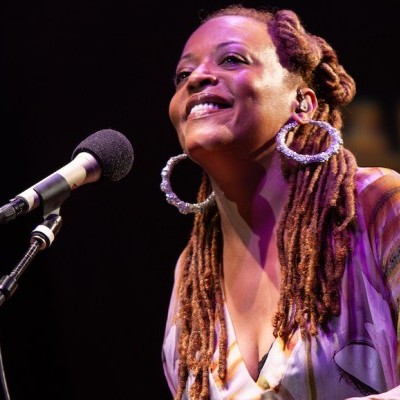
Wilson’s ability to connect to audiences helped her to win two Grammy awards and multiple other accolades. She was named an NEA Jazz Master in 2022.
Sep 3, 2026 10:44 AM
Cassandra Wilson, a singer, songwriter and producer who was one of the most acclaimed and successful jazz vocalists of…
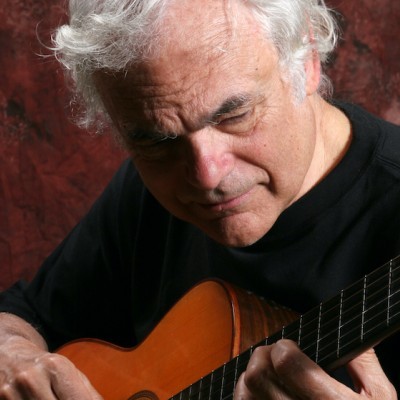
Bertoncini was a specialist and advocate for the nylon-string acoustic guitar, turning down high-profile opportunities that were unsuited to the sound and techniques that he used with that instrument.
Sep 1, 2026 11:06 AM
Gene Bertoncini, an esteemed jazz guitarist, composer, arranger and educator, died Aug. 29 at the Lillian Booth Actors…
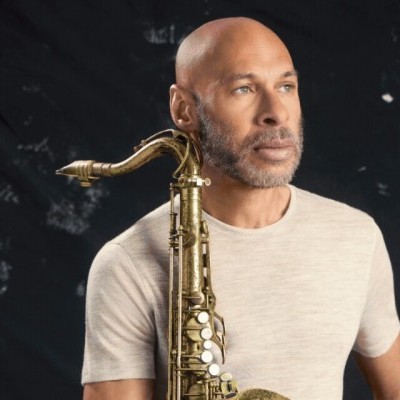
A solo concert by saxophonist Joshua Redman will close the first night of the Hyde Park Jazz Festival on Sept. 26.
Sep 22, 2026 12:26 PM
The Hyde Park Jazz Festival will take place for the 20th time on the final weekend of September 2026. Beginning half…
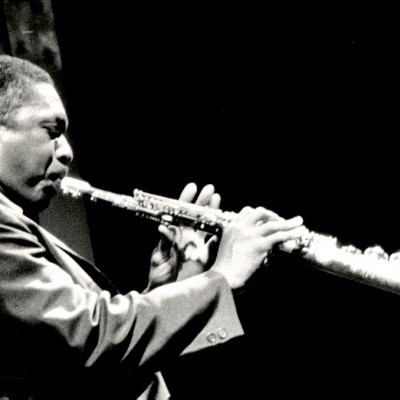
“It was just that suddenly … I could hear it,” Ravi Coltrane said of an epiphany he experienced during his late teens regarding his father’s music. “And it was almost like a calling, like something saying, ‘Hey, man, come on. It’s time to get serious.’ And the first time you really tune in and dial in and focus like that, it can be very life-changing.”
Sep 22, 2026 1:39 PM
Editor’s Note: Tomorrow, Sept. 23, is the 100th anniversary of John Coltrane’s birth. In honor of the tenor and…
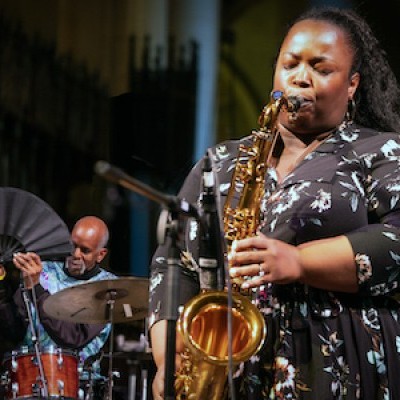
Camille Thurman took to the stage alongside bassist Kenny Davis and drummer Tommy Campbell for a rendition of Johnny Mercer’s “I’m An Old Cowhand” that recalled Rollins’ epochal 1957 trio outing Way Out West.
Oct 6, 2026 1:33 PM
As emcee Mark Ruffin noted at the commencement of an epic tribute to saxophonist Sonny Rollins at the Cathedral of…