Sep 3, 2026 10:44 AM
In Memoriam: Cassandra Wilson, 1955–2026
Cassandra Wilson, a singer, songwriter and producer who was one of the most acclaimed and successful jazz vocalists of…


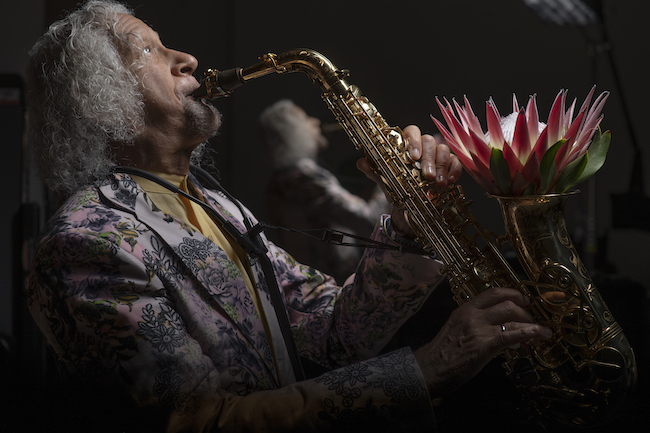
“Miles could hear so well that he could hear the future,” Bartz said..
(Photo: Brian (B+) Cross)Resplendent in a shimmering gold jacket, his long gray locks kissed by the evening breeze, Gary Bartz was floating untethered in the Charlie Parker zone. Physically, he was at its ground zero: onstage at the Charlie Parker Jazz Festival, a late-August affair held annually in Manhattan’s Tompkins Square Park near the stretch of Avenue B on which Bartz’s alto-sax-playing predecessor once lived.
More to the point, perhaps, Bartz was inhabiting a spiritual zone in which Parker as pacesetter might comfortably have played. Defying convention, Bartz was repurposing Parker’s two-chorus recorded solo as a unison melody on his “Cherokee” contrafact “Ko Ko.”
The move, abetted by Bartz’s longtime guitarist Paul Bollenback, raised a few eyebrows among Parker aficionados in the crowd. But the brilliance of the gambit was so readily apparent that doubters were quickly swayed. The sound, quite simply, raised the bebop ante — and plumbed its very soul.
“Charlie Parker was my introduction to the religion of music,” Bartz said. “And so he’s always with me.”
The NEA Jazz Master offered this comment in an hours-long conversation amid the faintly lit lobby of his hotel a day before the concert. Dressed down and projecting a quiet intensity, he traced his mystical bond with Parker — and the instrument for which they both shared a passion — to a moment when, as a 6-year-old at Sunday lunch in his grandmother’s home on Druid Hill Avenue in his native Baltimore, he heard his first Parker record.
“I didn’t know what it was,” he said. “But it was the most beautiful thing I had ever heard. I don’t even know what song it was. It didn’t matter. What was coming out of that recorder gave me a life.”
That life has played out in phases of self-discovery, from his first solo, at age 12, rendering “I Believe” in a local Baptist Church; to his first serious encounter with the Western classics, at 17, at the Juilliard School; to trial-by-fire stints, all by age 30, with Art Blakey, Max Roach, Charles Mingus, McCoy Tyner and, in 1970, the electrified Miles Davis, who, in delivering him to the unforgiving masses from the Isle of Wight to the Cellar Door, freed him to find his voice.
“Miles could hear so well that he could hear the future,” he said. “That’s the job of an artist, a musician. When you can find out how you hear, nobody can sound like that. As much as I love Charlie Parker, I could never sound like him because I’m not him.”
Bartz’s approach to sound and its social uses is, as much as any musician’s, one of inspiration more than imitation. While the approach had been germinating since his youth in segregated Baltimore, it fully emerged in the period surrounding the Davis crucible. With war and racial strife tearing at the nation’s fabric, he formed what he hoped would be his go-to vehicle for stitching things up: NTU Troop.
Taking its name from the Bantu, in which it signifies the unity of all things, the group broke down barriers and burnished the African diaspora’s role in American culture. At its launch in the early 1970s, its musical method and social message were intertwined in stylistically sweeping, politically charged albums like the two-volume Harlem Bush Music. Dedicated to Malcolm X and John Coltrane, filled with protest songs like “Vietcong” and “Uhuru Sasa,” the project gained notice as one of its day’s most trenchant critiques.
Since that time, NTU has, in one form or another, been an ongoing enterprise. Bartz played under its banner at the Parker festival. And it is the name under which Bartz has embarked on a late-in-life trilogy, The Eternal Tenure Of Sound, whose first installment, Damage Control (OYO), speaks as directly to the danger of the current moment as Harlem Bush Music did to the peril of its day.
“I see the same thing that happened in World War II when the Nazis wanted to exterminate Jewish people,” he said. “I think the people here want to exterminate African descendants. They’ve always had a problem with us because they didn’t know what to do with us. I see that coming. It’s very scary.”
Bartz said he has never felt safe in the United States. If the situation has grown scarier since the new album was recorded, over 35 days in 2023 and 2024 — and in Bartz’s blunt assessment, “it’s getting worse” — any musical response has grown more urgent.
The album — out on Sept. 26, Bartz’s 85th birthday — proffers what on the face of it is a measured attempt to control the damage with a salve for the collective psyche, including his. It does so in takes on 10 popular or pop-adjacent tunes to which Bartz periodically — and, in tense times, increasingly — returns for a dose of comfort.
“Whenever I feel anxious, that’s what I do,” he said. “I’ll sit down and play those songs. That’s how that album came about.”
Pianist Barney McAll, who has collaborated with Bartz since 1996, drafted the new album’s arrangements and functioned as a kind of ringleader on what was, by all accounts, a wild few weeks of recording. Speaking by phone from Melbourne, Australia, he said he felt the album represented “an outpouring of love in a damaged world.”
But as with all things Bartz, means and motives are multilayered. The choice of tunes was not predicated merely on their ameliorative qualities. In contrast with Coltrane’s Ballads, the 1962 quartet album that Bartz said was on his mind as he made Damage Control, he draws on material from artists who embody the African-American experience. The tunes range from Earth, Wind and Fire’s “Fantasy” to Patti LaBelle’s “If Only You Knew” to a medley based on Tyner’s collaboration with singer Phyllis Hyman that includes “In Search Of My Heart” and “Love Surrounds Us Everywhere.”
“Trane used songs that were from Broadway and Irving Berlin,” Bartz said. “I wanted to use songs more from my community.”
In choosing popular songs from his community, Bartz was making a statement of solidarity consistent with his disdain for a conceptual framework — expressed in the use of terms like “jazz” and “improvisation” — that embraces what he sees as tools of categorization used to both capitalize on and marginalize that community’s cultural contribution.
“I don’t see genres,” he said. “I never have.”
As for improvisation, he said, the word itself connotes a lack of study or preparation: “I don’t use that term. I’m not doing that. It’s an insult. I’ve studied, I’m prepared. Some people are improvising because they’re not thinking compositionally. I’m thinking compositionally because that’s where the whole concept of this thing happened that they call jazz — it came from playing off the melody.”
Informed by his conservatory experience, Bartz’s vision of performance crosses continents and dates back centuries. It is one in which the distinguished figures of Black American music in the modern era — he invoked the saxophone lineage of Lester Young, Parker, Coltrane and Ornette Coleman — have parallels in the Europeans who practiced spontaneous composition (his preferred term of art) with regularity.
“They’re no different from Bach or Beethoven,” he said.
Given Bartz’s take on genre ghettoization, it would be disingenuous for him not to consider a broad range of artistic sensibilities when assembling his musical palette, according to Kassa Overall, who plays drums on the new album. He likened Bartz’s breadth of vision to that of an author, and the album to a literary venture with an extra-literary objective.
“He’s writing a poem,” Overall said, speaking from Seattle. “By mixing that with this and this with that and playing a McCoy song, but a McCoy song that was one of his pop songs, he’s creating a poem of maybe the desire, not only for him but for his whole musical community, to be seen as an integrated whole.”
Such expansive views, Overall noted, once invited blowback from purists: “Gary got criticized pretty heavily at times. But the era we’re living in today, it does feel a little bit like an ‘I told you so’ moment because it’s not really revolutionary to do an Earth, Wind and Fire tune where some of it’s grooving and some of it’s swinging. We’ve made so many musical smoothies at this point.”
As the target of critics, Bartz was in good company. Some labeled Davis a sellout for electrifying and adopting trappings associated with that change. In fact, Bartz, whose pre-Davis experience had largely been an acoustic one, at first had doubts about working in an electric environment. He wondered why the bandleader hadn’t summoned him earlier.
“I knew every song in his book, from ‘Stablemates’ to you name it,” Bartz said. “So when he called me, and I knew what we were doing, I wasn’t into that, necessarily. But I couldn’t turn down a Miles Davis gig. In my mind I said, ‘I’ll give it a couple of weeks. See what happens.’ And once I started, I saw I didn’t have to do anything different — just listen and play.”
The resulting jams, anchored by bassist Michael Henderson and captured on Davis’ 1971 album Live-Evil, represent some of the deepest grooves and most dazzling interplay of the period, with Bartz at his incendiary peak. So it is not surprising that, when asked whether he, Davis or his minions absorbed the criticism, Bartz offered a dismissive wave of the hand.
“I don’t think any of us did,” he said.
More than a half-century later, reports of his mellowing may be premature. True, his concerts, which he likens to religious services, invariably end with his chant-like singing of a musical mantra on a meditative hymn to inclusiveness, “The Song Of Loving Kindness.” Yet, on his instrumental journeys, he remains a freedom rider challenging his musicians to follow him as he trippingly stretches form and builds lines with fealty to little more than his powerful compositional instinct and basic charts fashioned to exploit his affinity for the Coltrane-associated cycle-of-thirds harmonic device.
McAll recalled first working the device with Bartz around the turn of the century, when they were preparing the music that would belatedly be released on Bartz’s album of mostly Coltrane originals, Coltrane Rules – Tao Of A Musical Warrior: “We started sort of weaving them in and out of all sorts of things. That was the seed of what Damage Control has just in terms of its harmonizations.”
The new album has a texture of spontaneity that reflects both Bartz’s natural disposition and the atmosphere of the recording sessions, which he described as a “party.” The scene, in a North Hollywood hub run by producer Om’Mas Keith, was open and filled with a riot of strategically placed visual and aural aids — as well as a few mind-and-body stimulants — intended to spur creativity. The flow of visitors drawn by Bartz’s gravitational pull was constant.
But the studio hang was only part of the picture. A short drive away, in Echo Park, Bartz, McAll and Overall had rented a bed and breakfast, where the adrenalin kept pumping after hours. Even after months of preparatory back-and-forth between McAll and Bartz, a steady churn of new thoughts demanded new charts. McAll, working on an old upright piano, would create them and present them to Bartz, who would offer suggestions. After his morning bath-and-singing session, they would head to the studio for tracking.
“Luckily,” McAll said, “I was on Australian time so I could stay up until 4 or 5 no problem. But Gary doesn’t sleep. He just wants to keep going. For me, as a composer-arranger, it was just a really fun time to bounce off Gary’s very evolved compositional and musical ideas and try to make his vision clear.”
While some tunes did not easily lend themselves to realizing that vision, others, like “If Only You Knew,” were a dream. Its harmonic properties, McAll said, easily adapted to step-wise movement of the Coltrane changes they were working with: “I just kept unfolding it as the changes dictated and did some maneuvering, and it became this beautiful thing where it’s moving through all these tonalities but feels natural.
“The long and short of it is I did put some of the Coltrane movements in because Gary loves to play over them, obviously, and it sort of set the pop songs apart from [run-of-the-mill] pop songs in the sense that it gives the improvising musicians something to chew on.”
The guest artists, a wide spectrum of personalities, were all storytellers. Rapper Shelley FKA DRAM, whom Bartz did not even know, popped in to offer a sultry, earthbound take on Babyface’s “Slow Jam.” Saxophonists Kamasi Washington and Terrace Martin fashioned more stratospheric narratives on the Tyner medley, while trumpeters Theo Croker and Keyon Harrold, among others, told their tales. But it was Bartz — and his all-embracing aura — who tied the strands together.
“I’ll probably never do that again,” Bartz said with a half-smile, obviously happy with the musical outcome but bemoaning the paperwork necessary to gain permissions for the artists to participate.
With that album under their belts, Bartz and McAll have turned to the trilogy’s second installment. Unlike the all-covers Damage Control, it will largely consist of new Bartz originals and a reframing of his early “hits,” among them the anthemic “Music Is My Sanctuary” (the title tune from a 1977 album) as well as “Celestial Blues” and “Rise” (both from Harlem Bush Music). For the reframing, Bartz traveled to Australia and collaborated with McAll and Hiatus Kaiyote, a stylistically agnostic ensemble with a decided edge.
“It’s wonderful to put Gary’s ideas through this distillery,” McAll said.
Endlessly curious, Bartz, whose music has been widely sampled, is willing to engage in a range of projects. Some have a political overlay, like Croker’s “Jazz Is Dead,” a hip-hop-inflected takedown of genre labeling to which Bartz offered an unplanned and strangely beguiling vocal. Whether such commentary figures in the final Hiatus Kaiyote package remains to be seen, apparently by Bartz as well.
“I’m looking forward to seeing how that works,” he said.
While that album is in post-production, the trilogy’s final installment is just taking shape. Tunes are being chosen from the 26 tracks that, in addition to the 10 that appear on Damage Control, were laid down in the North Hollywood sessions. All are Bartz originals, some co-written. All told, he said, the project will reveal something of the man, his music and his musical life.
“It’s me,” he said, emphasizing the object pronoun, pausing and adding a characteristically generous, undoubtedly justified shout-out to his chief collaborator on the project. “It’s Barney, too.”
At Bartz’s age, any work he produces will be seen in retrospective terms. But as long as he maintains his regimen of wheatgrass, yoga and saxophone practice — this is a man who, together with Pharoah Sanders, routinely blew the hell out of his horn for hours along New York’s West Side Highway — his valedictory may be a long way off.
Meanwhile, he said, his ears remain open and he is trying as hard as ever to hear the future: “What’s going to be next?”
Given his druthers, he said, next on the agenda would be a return to the Parker zone with a note-for-note recreation of the 1950 double album Charlie Parker With Strings. Moving forward on that would be more than an aesthetic or business decision. It would, in Bartz’s terms, be political as well — elevating the solos from the marginalized realm of mere improvisation.
“Bird’s solos are some of the greatest compositions I’ll ever hear,” Bartz said. DB
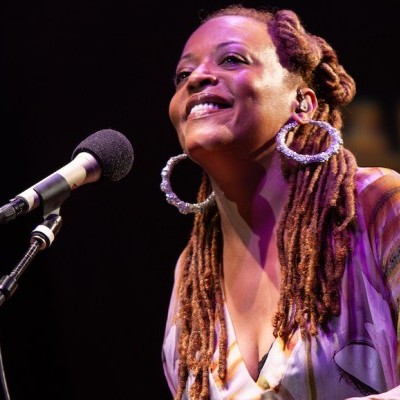
Wilson’s ability to connect to audiences helped her to win two Grammy awards and multiple other accolades. She was named an NEA Jazz Master in 2022.
Sep 3, 2026 10:44 AM
Cassandra Wilson, a singer, songwriter and producer who was one of the most acclaimed and successful jazz vocalists of…
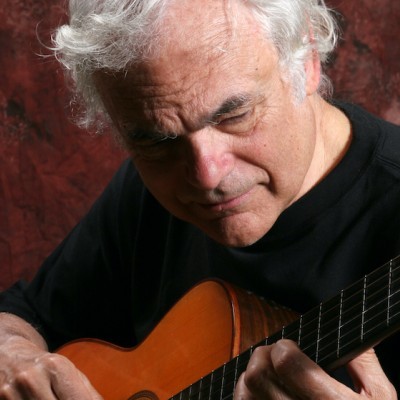
Bertoncini was a specialist and advocate for the nylon-string acoustic guitar, turning down high-profile opportunities that were unsuited to the sound and techniques that he used with that instrument.
Sep 1, 2026 11:06 AM
Gene Bertoncini, an esteemed jazz guitarist, composer, arranger and educator, died Aug. 29 at the Lillian Booth Actors…
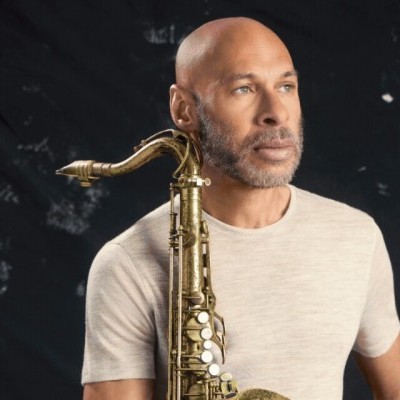
A solo concert by saxophonist Joshua Redman will close the first night of the Hyde Park Jazz Festival on Sept. 26.
Sep 22, 2026 12:26 PM
The Hyde Park Jazz Festival will take place for the 20th time on the final weekend of September 2026. Beginning half…
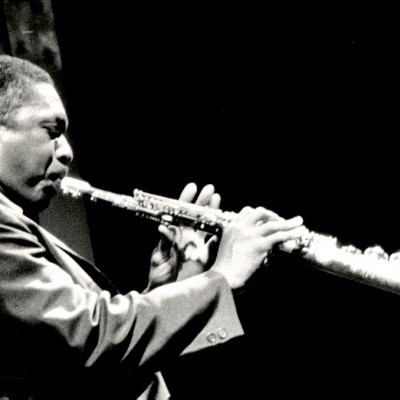
“It was just that suddenly … I could hear it,” Ravi Coltrane said of an epiphany he experienced during his late teens regarding his father’s music. “And it was almost like a calling, like something saying, ‘Hey, man, come on. It’s time to get serious.’ And the first time you really tune in and dial in and focus like that, it can be very life-changing.”
Sep 22, 2026 1:39 PM
Editor’s Note: Tomorrow, Sept. 23, is the 100th anniversary of John Coltrane’s birth. In honor of the tenor and…
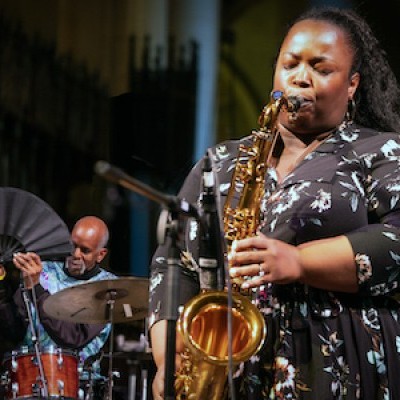
Camille Thurman took to the stage alongside bassist Kenny Davis and drummer Tommy Campbell for a rendition of Johnny Mercer’s “I’m An Old Cowhand” that recalled Rollins’ epochal 1957 trio outing Way Out West.
Oct 6, 2026 1:33 PM
As emcee Mark Ruffin noted at the commencement of an epic tribute to saxophonist Sonny Rollins at the Cathedral of…