Sep 3, 2026 10:44 AM
In Memoriam: Cassandra Wilson, 1955–2026
Cassandra Wilson, a singer, songwriter and producer who was one of the most acclaimed and successful jazz vocalists of…


Michel Petrucciani breathes fire on 1987’s Kuumbwa.
(Photo: Deborah Feingold)On this short list of new/old releases, the item of greatest historical importance is undoubtedly the revelatory unburied treasure that is Thelonious Monk’s Live In Paris 1967, Vol. 1 (Rhythm-a-Ning; ★★★★½ 46:39), the first of two albums from a classic archival cachet, elevated from the former bootleg ghetto into pristine restoration by the Monk Estate. We know and love the tunes: ”Epistrophy,” “Evidence,” the glowsome ballad “Ruby, My Dear” and the angular dance “We See,” heard in a rambling 14-minute epic version. But this familiar material springs to life and triangulates in new ways in the hands of minimalist Monk, his allies Charlie Rouse on tenor saxophone, drummer Ben Riley and bassist Larry Gales, as well as eager Monk-loving guests then in Europe: Johnny Griffin (who had played in Monk’s group before Rouse), alto saxist Phil Woods and trombonist Jimmy Cleveland. It adds up to a distinctive lovefest/Monkfest, capturing a moment in time and place previously untapped — at least legally and in due, proper clarity.
Ordering info: theloniousmonk.store
When the late, great French jazz piano phenom Michel Petrucciani performed at the historically vital — and still active — Kuumbwa venue in Santa Cruz in 1987, he was only five years out from having veritably helped lure Charles Lloyd out of semi-reclusion in Big Sur, just down the coast highway from Santa Cruz. The new archival rescue mission that is Kuumbwa (Elemental; ★★★★ 1:54:09), curated by jazz detective Zev Feldman from Kuumbwa director Tim Jackson’s taped trove, celebrates a passionate, ever-on-his-feet virtuoso at work, with a power trio completed by bassist Dave Holland and the pianist’s regular drummer, Eliot Zigmund. Opening with Wayne Shorter’s “Limbo,” Petrucciani boldly wends through rich, energized takes on the standards “All The Things” and “Stella By Starlight,” makes graceful turns on ballads “The Prayer” and “Morning Blues” (with a lustrous solo from Holland) and revisits Lloyd’s Monk-juiced “Sweet Georgia Bright.” Even given a less-than-pristine piano to work with, Petrucciani’s literate life force as a jazz titan shines through on this gem of a set.
Ordering info: elemental-music.com
A certain historical turning point is represented by Brian Auger’s Oblivion Express (Strut; ★★★½ 40:12): the point, in 1970, when British keyboardist Auger was lured from his more soul-influenced style towards a more pointedly jazz-rock fusion base, partly inspired by his friend John McLaughlin’s Devotion album. The six-track sequence of Oblivion Express is framed by two of the project’s signature instrumental ravers, a version of John McLaughlin’s “Dragon Song” fueled by sidewinding riffs and “Oblivion Express,” which juggles tough-guy attitudes and a playful, carnival-evoking chromatic descending line. The vocals tracks in the mix of songs, sung in Auger’s serviceable journeyman style, range from the restless prog rock of “The Light” to the smartened-up boogie rock of “On The Road,” also a showcase for Auger’s nimble-fingered B-3 work. Guitarist Jim Mullen plays in an edgy style yoking closer to a rock mode than the harmonic and dynamic sensitivity of jazz, as such. But that approach stays true to the pivotal rock part of Auger’s jazz-rock — or rock-jazz — chemistry.
Ordering info: strut-records.co.uk
Denman Maroney’s Mean Times (Cuneiform; ★★★★½ 1:04:10) was recorded in 1995 at the Knitting Factory, and its bristling qualities of adventurism and freedom speak well for the musical powers of its relatively all-star cast — trumpeter Herb Robertson, tenor saxophonist Ellery Eskelin, bassist Mark Dresser and drummer Phil Haynes — as well as the innate brave spirit embodied in the historic Knitting Factory sensibility. Maroney supplied the glue and the guiding principle for the six-section “Mean Times” (so named not necessarily for the temper of the times in the ’90s, but the musical meantime temperament, symbolic of intermediary), as composer and an interwoven sonic palette on “sampled hyperpiano.” But, Maroney’s central role notwithstanding, this is very much an ensemble outing, with a tapestry-like blend of freedom and skeletal melodic and structural elements, sometimes in kinship with the Art Ensemble of Chicago’s operations. Addressing this project, Maroney writes that “Oscar Wilde said all art is quite useless. I disagree.” Here lies some proof of his argument. DB
Ordering info: cuneiformrecords.com
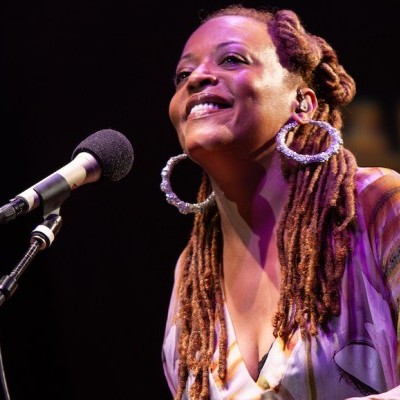
Wilson’s ability to connect to audiences helped her to win two Grammy awards and multiple other accolades. She was named an NEA Jazz Master in 2022.
Sep 3, 2026 10:44 AM
Cassandra Wilson, a singer, songwriter and producer who was one of the most acclaimed and successful jazz vocalists of…
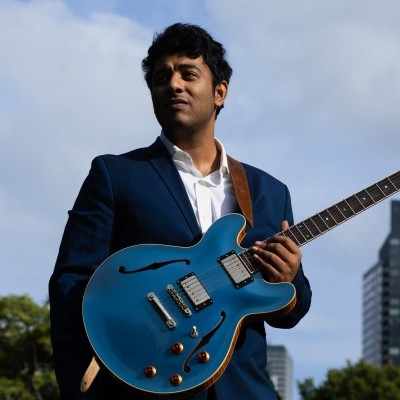
“The love from the jazz and music community restored my faith in humanity,” Walia wrote in an online post upon his release from detention at an ICE facility.
Aug 18, 2026 2:15 PM
Indian jazz guitarist and composer Pritesh Walia has been released after being unexpectedly detained by ICE and taken…
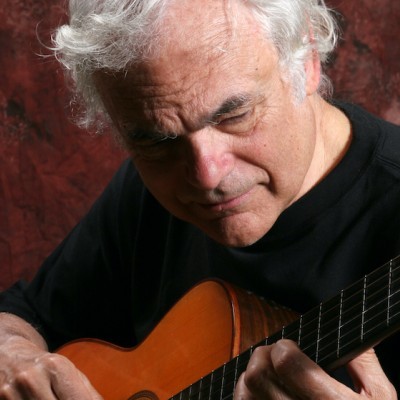
Bertoncini was a specialist and advocate for the nylon-string acoustic guitar, turning down high-profile opportunities that were unsuited to the sound and techniques that he used with that instrument.
Sep 1, 2026 11:06 AM
Gene Bertoncini, an esteemed jazz guitarist, composer, arranger and educator, died Aug. 29 at the Lillian Booth Actors…
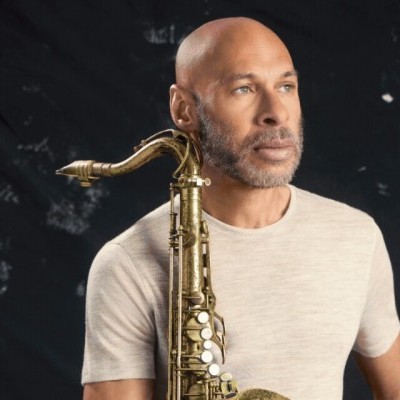
A solo concert by saxophonist Joshua Redman will close the first night of the Hyde Park Jazz Festival on Sept. 26.
Sep 22, 2026 12:26 PM
The Hyde Park Jazz Festival will take place for the 20th time on the final weekend of September 2026. Beginning half…
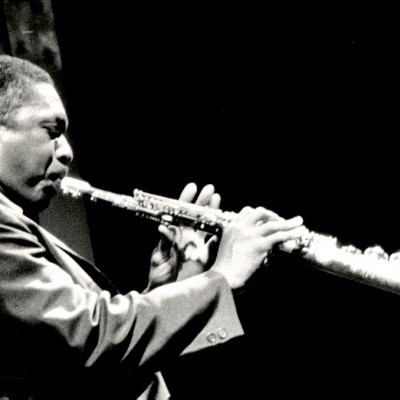
“It was just that suddenly … I could hear it,” Ravi Coltrane said of an epiphany he experienced during his late teens regarding his father’s music. “And it was almost like a calling, like something saying, ‘Hey, man, come on. It’s time to get serious.’ And the first time you really tune in and dial in and focus like that, it can be very life-changing.”
Sep 22, 2026 1:39 PM
Editor’s Note: Tomorrow, Sept. 23, is the 100th anniversary of John Coltrane’s birth. In honor of the tenor and…