Sep 3, 2026 10:44 AM
In Memoriam: Cassandra Wilson, 1955–2026
Cassandra Wilson, a singer, songwriter and producer who was one of the most acclaimed and successful jazz vocalists of…


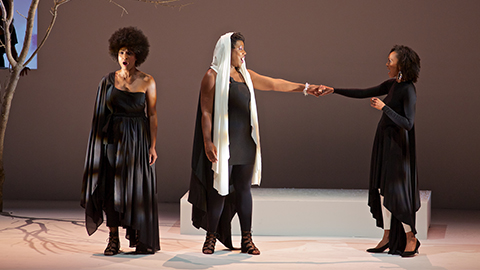
A publicity photo for Carrie Mae Weems’ multimedia production Grace Notes: Reflections of Now
(Photo: Courtesy of Kennedy Center)Grace Notes: Reflections of Now—Carrie Mae Weems’ sobering multimedia production centering on the tense race relations in the United States—made its debut in Washington, D.C., on Oct. 20 at the Kennedy Center. Weems’ ambitious work incorporated stately orchestral music penned by jazz renegades Craig Harris and James Newton and new music composer Edward Ruchalski.
The work marked new territory for Weems, a 2013 MacArthur Fellow best known for photography and video installations. Her keen visual aesthetic fueled the program, as she projected video portraits of various, unnamed black people—revealing their joy, humanity and vulnerability.
The presentation also depicted an exhaustive history of worldwide violence that included images of the 1945 bombing of Hiroshima, and more recently, split images of Black Lives Matter protests alongside images of the white nationalist rally in August in Charlottesville, Virginia.
The dense work referenced former President Barack Obama singing the hymn “Amazing Grace” during his eulogy for Rev. Clementa Pinckney, one of the nine victims gunned down by Dylann Roof in July 2015 at the Emanuel AME Church in Charleston, South Carolina. Indeed, Obama’s gesture anchored the plot, which also nodded to the tale in Greek mythology of Antigone’s request to bury her brother Polynices.
Grace Notes expanded its remembrance to other fallen African-Americans, many of whom were unarmed victims killed by the police.
What could have resulted in a convoluted, overwrought mess in lesser hands unfolded into an exquisite performance-art mediation. The work posed probing, self-reflective questions concerning how one measures a life—and the worthiness of someone else’s life.
Weems examined the true nature of grace, too, approaching it from various angles, as a noun, verb, adjective and adverb. The work eventually zeroed in on the very act of grace amidst seemingly inescapable despair—and, pointedly, amidst the resurgence of white nationalism in 2017.
Weems brilliantly articulated perspectives, fears and struggles that are often difficult to convey because of emotional and psychological fatigue and suppression, combined with prolonged systemic racism.
These themes were reinforced by Matt Saunder’s sparse set design, which featured inset windows, a leafless tree branch and falling snow; brooding poetry from Carl Hancock Rux (“Democratic Vistas”) and Aja Monet (“Protesting)”; and additional directorial assistance from Tanya Selvaratnam.
Weems’ reflections were most poignant during her account of witnessing unarmed black men running from police officers, her depiction of the love and fear of a mother for her unborn son, and her portrayal of a black man tirelessly carrying the piling weight of both racial micro- and macro-aggressions in the white-collar workforce.
Singers Alicia Moran Hall—wife of pianist Jason Moran, the Kennedy Center’s artistic director of jazz—Elisa Davis and Imani Uzuri also gave voice and emotional immediacy to Weems’ ruminations of black American life and death, particularly with a moving rendition of “Amazing Grace” that eschewed melodrama.
But it was Nona Hendryx’s piercing original “Grace Will Set You Free” that really brought the house down as a soul-stirring finale.
The all-male, ethnically diverse troupe Dem’ Raider Boyz Step Squad from Eleanor Roosevelt High School in Greenbelt, Maryland, delivered another high point in Grace Notes, thanks to its step-dance and oratory performance, which, like “Grace Will Set You Free,” gave the piece a glimmer of defiant optimism.
The production wasn’t flawless. It had a few jarring moments, particularly when Weems turned her attention to environmental issues, such as climate change. While it is true that hazardous environmental conditions have historically impacted poor black and brown communities in the U.S. at an alarming rate, Weems’ commentary on this issue came off almost like an afterthought.
Nevertheless, Grace Notes—which left the audience grappling with questions about why black life continues to be seemingly so disposable in the U.S., even after electing its first African-American president in 2008—is a triumphant work that sharply addresses a bleak and overextended chapter in our nation’s history.
Upcoming jazz events at the Kennedy Center include concerts by pianist Christian Sands (Nov. 18), the trio Harriet Tubman (Dec. 16) and singer Dee Dee Bridgewater (Dec. 31). For more info, visit the Kennedy Center website. DB
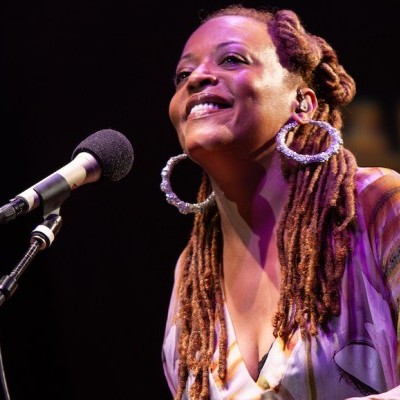
Wilson’s ability to connect to audiences helped her to win two Grammy awards and multiple other accolades. She was named an NEA Jazz Master in 2022.
Sep 3, 2026 10:44 AM
Cassandra Wilson, a singer, songwriter and producer who was one of the most acclaimed and successful jazz vocalists of…
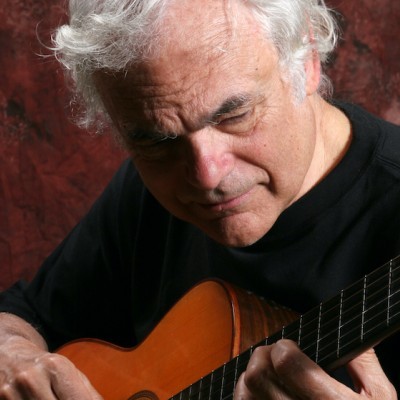
Bertoncini was a specialist and advocate for the nylon-string acoustic guitar, turning down high-profile opportunities that were unsuited to the sound and techniques that he used with that instrument.
Sep 1, 2026 11:06 AM
Gene Bertoncini, an esteemed jazz guitarist, composer, arranger and educator, died Aug. 29 at the Lillian Booth Actors…
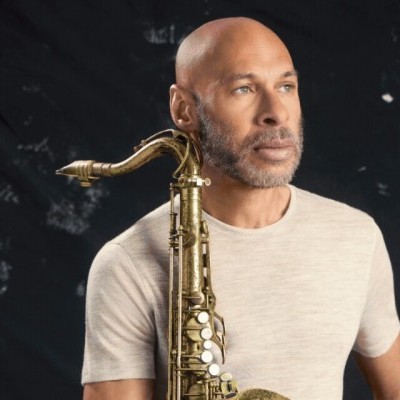
A solo concert by saxophonist Joshua Redman will close the first night of the Hyde Park Jazz Festival on Sept. 26.
Sep 22, 2026 12:26 PM
The Hyde Park Jazz Festival will take place for the 20th time on the final weekend of September 2026. Beginning half…
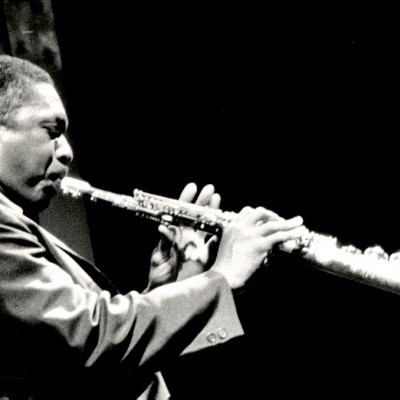
“It was just that suddenly … I could hear it,” Ravi Coltrane said of an epiphany he experienced during his late teens regarding his father’s music. “And it was almost like a calling, like something saying, ‘Hey, man, come on. It’s time to get serious.’ And the first time you really tune in and dial in and focus like that, it can be very life-changing.”
Sep 22, 2026 1:39 PM
Editor’s Note: Tomorrow, Sept. 23, is the 100th anniversary of John Coltrane’s birth. In honor of the tenor and…
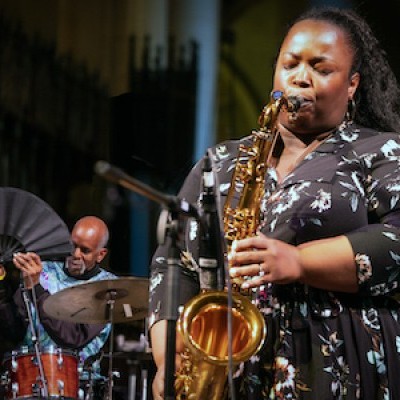
Camille Thurman took to the stage alongside bassist Kenny Davis and drummer Tommy Campbell for a rendition of Johnny Mercer’s “I’m An Old Cowhand” that recalled Rollins’ epochal 1957 trio outing Way Out West.
Oct 6, 2026 1:33 PM
As emcee Mark Ruffin noted at the commencement of an epic tribute to saxophonist Sonny Rollins at the Cathedral of…