Sep 3, 2026 10:44 AM
In Memoriam: Cassandra Wilson, 1955–2026
Cassandra Wilson, a singer, songwriter and producer who was one of the most acclaimed and successful jazz vocalists of…


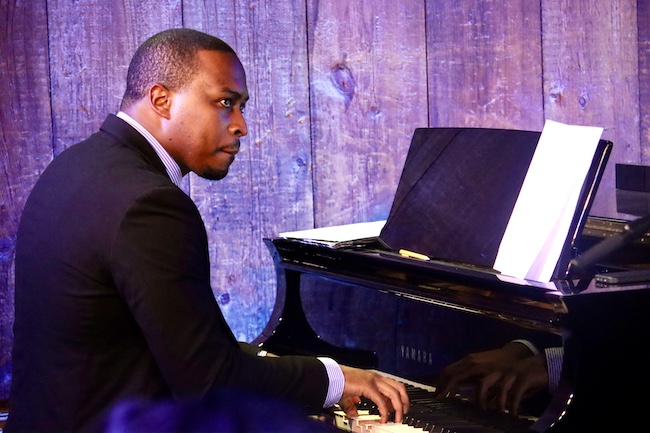
“The elders are very serious about making sure that the tradition of the music stays alive,” said Jordan Williams.
(Photo: Bruce Woods)For pianist Jordan Williams, the title of his debut album Playing By Ear (Red Records) isn’t metaphorical. It’s autobiographical. Williams started playing as early as age 6, absorbing the jazz albums in his father’s collection in their family home in Philadelphia. His father was an avid jazz enthusiast and a respected hometown jazz drummer. Before Williams learned to read music and took formal lessons, he used to sit at a small keyboard attempting to emulate the licks and solos he heard from John Coltrane, Miles Davis, Art Blakey and ’90s gospel music. When Williams started organizing music for his debut, his father had already come up with the title of the album years ago.
“My dad was like, ‘That would be a cool title,’” Williams recalls. “And at first, I guess I didn’t like it, I wasn’t in agreement. And then eventually I was like, wait, no, that is a great idea. Because that’s how I started really from my parents. I don’t want to say I didn’t have a choice, but it just kind of happened naturally. I just flowed into things.”
Music wasn’t something he discovered. It was something he inherited. Playing By Ear goes back to the very way Williams learned to make music, along with the influences that captivated him early on. Consisting mostly of standards, this recording leans into the straightahead and hard-bop era of the ’50s. Williams’ sure-fire swinging on the keys and smooth, lyrical touch are akin to Kenny Kirkland, McCoy Tyner and Herbie Hancock. Thematically, he chose to pay homage to those musicians with a powerhouse rhythm section consisting of bassist Nat Reeves and drummer Jeff “Tain” Watts, and special guest trumpeter Wallace Roney Jr.
Williams, Reeves, Watts and Roney bring much of that Philadelphia fire to the bandstand. The repertoire itself underscores the bandmates’ lineage. Williams visits Kirkland’s “Steepian Faith,” and compositions connected to the Kirkland/Reeves/Watts era, and much of the swinging they did with Kenny Garrett.
“I wanted to add in some of the things that they (Watts/Reeves/Kirkland) did with Kenny Garrett, so we recorded ‘Miss Baja.’ That’s one of my favorite songs from his Songbook album that Garrett did in the late ’90s. It’s just a very beautiful piece, so I thought why not recreate that with the ones who did it,” recalls Williams.
Reeves contributed compositions, including the bluesy “Blue Ridge” and the somber “Waltz For Ellis,” a poignant tribute to Ellis Ruley, an African American folk artist who died tragically. Williams also included the blazing “One Finger Snap,” a playful nod to Hancock. Roney’s solo on the tune honors Freddie Hubbard, who played on the original.
Hancock remains a central inspiration for Williams musically and intellectually. Like Hancock, he studied engineering in college (at George Washington University) and was drawn to the parallels of math, structure and improvisation. He was even a semifinalist in the Herbie Hancock Competition.
As hard as Williams swings on the keys, the piano wasn’t his first instrument. He began on drums as a kid, playing along with Elvin Jones albums. At age 6, his father moved him to piano, insisting he learn harmony and melody. Williams studied simultaneously at Philadelphia’s Settlement Music School, where he was introduced to the music of Mozart and Haydn, and at the Philadelphia Clef Club of Jazz and Performing Arts, where he absorbed blues and jazz standards. Mondays were devoted to classical recitals, and Saturdays were all about jazz ensembles. The dual training built his technical facility.
Also, growing up in Philadelphia, Williams immersed himself in the music of Philly greats like Lee Morgan, Bobby Timmons, Reggie Workman and Kenny Barron.
Williams is from a family of serious jazz enthusiasts. His grandparents were devotees of Sarah Vaughan and were particularly fond of the Blue Note recordings. His uncle played piano by ear, and Williams’ grandfather skipped college classes to travel to New York to hear Miles Davis and John Coltrane live. Drummer Eric Gravatt, who performed often with Tyner, is Williams’ cousin.
In an era when many young pianists lean quickly toward fusion or genre hybrids, Williams has chosen to steep himself in straightahead language and the music he grew up listening to. That decision is reinforced by his mentors.
Over the years, he has worked with Bobby Watson, Curtis Lundy and Branford Marsalis. Recently, he performed with trumpeter Charles Tolliver at Dizzy’s Club, studying the composer’s detailed voicings firsthand.
“They’re really golden experiences because I feel like that’s how you learn. Especially like our generation, we grew up on hip-hop, but these guys, they were there, they grew up in the tradition,” says Williams.
With Playing By Ear available nationwide, Williams is working on a follow-up record featuring mostly original compositions, also featuring solo piano tracks, a stride homage to James P. Johnson’s “Carolina Shout,” quintet material and vocal collaborations. Where the debut plants him firmly in tradition, the next release will be primarily focused on an articulation of compositional prowess.
To keep his chops strong and to broaden his fan base, Williams plans to continue touring with Camille Thurman, Darrell Green and Watson. His long-term goal is to continue building on what he’s learned from his elders and writing new music that pushes the genre further.
“The knowledge is endless, there’s always something to learn on the bandstand and off the bandstand, and I treasure those experiences and wish to carry them forward. The elders are very serious about making sure that the tradition of the music stays alive.” DB
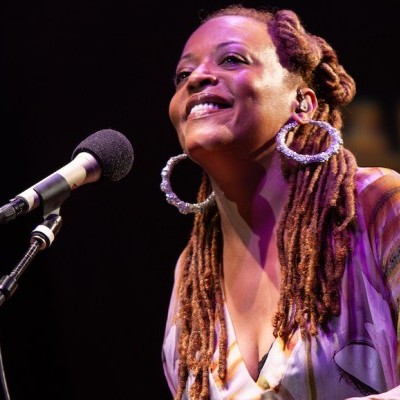
Wilson’s ability to connect to audiences helped her to win two Grammy awards and multiple other accolades. She was named an NEA Jazz Master in 2022.
Sep 3, 2026 10:44 AM
Cassandra Wilson, a singer, songwriter and producer who was one of the most acclaimed and successful jazz vocalists of…
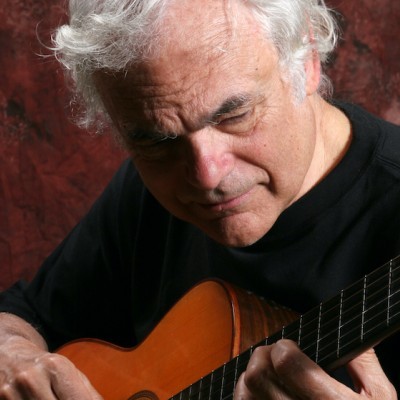
Bertoncini was a specialist and advocate for the nylon-string acoustic guitar, turning down high-profile opportunities that were unsuited to the sound and techniques that he used with that instrument.
Sep 1, 2026 11:06 AM
Gene Bertoncini, an esteemed jazz guitarist, composer, arranger and educator, died Aug. 29 at the Lillian Booth Actors…
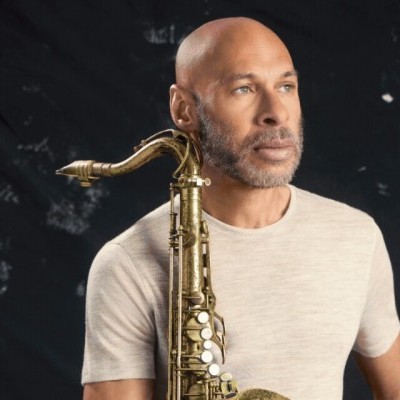
A solo concert by saxophonist Joshua Redman will close the first night of the Hyde Park Jazz Festival on Sept. 26.
Sep 22, 2026 12:26 PM
The Hyde Park Jazz Festival will take place for the 20th time on the final weekend of September 2026. Beginning half…
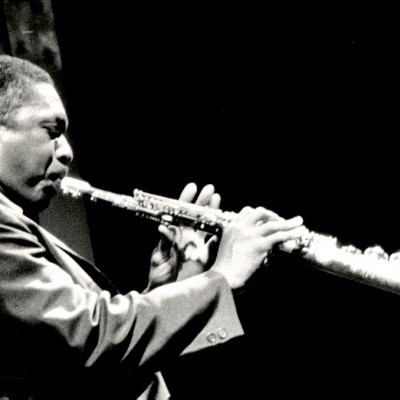
“It was just that suddenly … I could hear it,” Ravi Coltrane said of an epiphany he experienced during his late teens regarding his father’s music. “And it was almost like a calling, like something saying, ‘Hey, man, come on. It’s time to get serious.’ And the first time you really tune in and dial in and focus like that, it can be very life-changing.”
Sep 22, 2026 1:39 PM
Editor’s Note: Tomorrow, Sept. 23, is the 100th anniversary of John Coltrane’s birth. In honor of the tenor and…
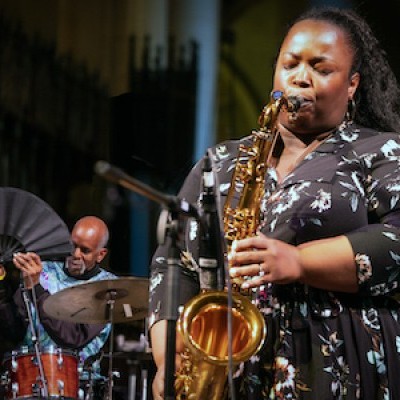
Camille Thurman took to the stage alongside bassist Kenny Davis and drummer Tommy Campbell for a rendition of Johnny Mercer’s “I’m An Old Cowhand” that recalled Rollins’ epochal 1957 trio outing Way Out West.
Oct 6, 2026 1:33 PM
As emcee Mark Ruffin noted at the commencement of an epic tribute to saxophonist Sonny Rollins at the Cathedral of…