Sep 3, 2026 10:44 AM
In Memoriam: Cassandra Wilson, 1955–2026
Cassandra Wilson, a singer, songwriter and producer who was one of the most acclaimed and successful jazz vocalists of…



Craig Taborn (left), Nels Cline and Marcus Gilmore turn a producer’s pet project into a jam for the ages.
(Photo: Frank Heath)The art of the trio is a sturdy yet intimate, changeable and sometimes fragile phenomenon. Triangular geometry has its own set of rules and structural strengths, in music as well as architectural and theoretical domains. Throughout jazz history, some trio formations have had solidity and longevity on their side, as in the case of deeply entrenched groups led by pianists Keith Jarrett and Bill Charlap and such adventurous aggregates as Tarbaby and the famously fearless team of Paul Motian, Joe Lovano and Bill Frisell.
And then there are more transitory outliers: Enter the unique case of Trio of Bloom, involving an enlightened confluence of important musicians, a bass-less unit with keyboardist Craig Taborn, guitarist Nels Cline and drummer Marcus Gilmore. This is a power threesome of kindred spirits brought into being by an outside source and force. At its root, Trio of Bloom is the inspired brainchild of veteran producer David Breskin, who imagined the evocative chemistry that could flower from these three prominent, progressive musicians. His instincts are richly validated on the trio’s diverse and fresh-sounding new album on Kris Davis’ Pyroclastic label (which Breskin has had a hand in making manifest).
Breskin’s long and storied career in music, and other art realms, has impacted and expanded the jazz world, through a list of artists including John Zorn, Ronald Shannon Jackson’s Decoding Society, Vernon Reid and Frisell. Not coincidentally, Breskin’s more recent album projects include work by Taborn and especially Cline, going back to 2010’s Initiate and including the guitarist’s 2016 Blue Note Records debut, Lovers.
Taborn commented that the Bloom concept represented “an opportunity to work creatively with some people who I have long admired but with whom I had not had the opportunity to engage. I think in some way collaborations with both of these special musicians was bound to happen, and it was a happy occurrence that this situation was presented.
“So it was a chance to bring out some ideas I have had for this kind of situation and with players with these references, in particular with regard to Nels, whose unique history and combinations of influence resonates strongly with my own — in regard to the confluence of some punk rock, avant-garde and various global influences combining with our love of jazz and improvised vernaculars.
“DB simply presented the personnel idea and the recording possibility, and the rest was up to us. The simple idea being that each member would bring some compositions they want to play in this context. The rest was us finding a collective point of view, which arrived quite quickly. Having worked with Marcus before, I knew the breadth of his skill set and something of his inclinations, and I have listened to Nels since I was 12 or 13, so have dreamed of music with his particular voice for quite some time.”
For his part, Cline was also excited to finally interact directly with Taborn and Gilmore. His own awareness of Taborn goes back many years. “I first heard Craig with Roscoe Mitchell — with Vijay Iyer — and then in many other places,” he said. “I also loved what I heard him do with Tim Berne. One thing that surprised me about Craig was that, on top of everything else he does, he can be very punk rock. And he played that gorgeous solo piano opening on ‘Eye Shadow Eye,’” Cline’s composition from the new album.
DownBeat caught up with Cline in Seattle late in August, during a tour stop with his longtime “day gig” as a member of the legendary and artful rock band Wilco. Count Cline as a musician who keeps the lights on through work including pop-world work with Wilco, but he has also gained a lofty reputation as a prolific maverick guitarist/bandleader with an experimentalist bent. For proof, check out his latest project, the Concentrik Quartet, a group with drummer Tom Rainey, saxophonist Ingrid Laubrock and bassist Chris Lightcap.
Regarding Trio of Bloom, “This was all David’s idea,” Cline explained, “with these players, the material and the production, and we recorded in the studio (The Bunker, in Brooklyn) with his longtime engineer Ben Greenberg. He asked us each to bring in original tunes and to choose an outside song for us to play.
“After the ’80s, David had left the music world years earlier, but reconnected with me, which also marked the reinstitution of his Shifting Foundation, which gives awards and funding to musicians and also writers and other artists. We continued working together. When it came time to put together Trio of Bloom, we had a natural relationship to link us.”
Even so, Cline confessed, “I was scared to play with these guys.”
Can’t a case of nerves be valuable in creative endeavors, keeping an edge on the creative act? “That’s true, but I also can freeze up when I get nervous. But this worked out very well.”
Gilmore describes the working process involved, noting that “DB came up with the concept and parameters, and he set it all in motion. And then from there on it was up to us to figure it out. Everybody came with compositions, cover and original, and we worked it out. We had a couple of days to kind of go over different things. We actually had some time before the rehearsal to send stuff over, but really the rehearsal was the first time we were able to flesh things out.”
As Taborn confirms, “The rapport was immediate. And I do think that the fact that none of us had to bear the burden of initiating this, and the accompanying sense of failure or success or responsibility that could bring, was in some way liberating. It felt like a good experiment that paid off, starting with the hypothetical and yielding a result that I think surpassed the initial promise of the idea.”
Gilmore, grandson of the late Roy Haynes, continues to impress on various fronts. He recently served as a vital member of the Kismet trio, with bassist Dave Holland and saxophonist Chris Potter, a highlight set of this summer’s Ystad Jazz Festival in Sweden. Trio of Bloom is distinctly different, but fundamentally related.
“I think there’s always a triangular power with trios,” he says. “I’d say that, I don’t know why, but there is something about the number 3. I will say with this particular group, it is very special because both Craig and Nels can really bring out a lot of different sounds. I mean, the sound spectrum between each of them individually is pretty wide. So with them together, of course, it’s extremely vast.
“And you know, I wasn’t really playing any electronic drums or anything. It was pretty much just a standard drum set. But I did have quite a few drums — one of the bigger setups of mine — and then I had quite a few tam-tams, as well. I would say this trio is definitely very powerful, and it can create so many different types of sonic layers, which to me is one of the cool things about it.”
This new project is a power trio and also a live wire that gives new meaning and texture to the general concept of “electric jazz” (with acoustic asides in the case of Taborn’s occasional piano turns). On the whole, the musical fare doesn’t qualify as fusion, per se, though with echoes of such proto-fusion acts as the Larry Young-era Tony Williams Lifetime and John McLaughlin’s Mahavishnu Orchestra work in the ’70s (as on Cline’s ominous tune “Forge”).
Past legacy comes to bear as well, with Cline’s choice of a cover tune, “Bend It,” from Norwegian sound conjurer Terje Rypdal’s classic 1973 ECM release What Comes After. “I was a huge fan of Terje Rypdal as a teenager,” Cline says, “who I first heard as part of the (Jan Garbarek) Afric Pepperbird album. The electric guitar and its effects really jumped out at me. Of his records, I especially love the album What Comes After.”
More importantly than its fusion antecedents, Trio of Bloom connects the dots of these specific musicians’ broad vocabularies and hunger for new discoveries. One key point of reference, on historical and at least partial musical terms, is another seminal Breskin-conjured trio project, Power Tools, which released a single album, 1987’s Strange Meeting. By now a cultish jewel in the annals of ephemeral jazz projects, Power Tools brought together the talents and big-eared interactions of then-thirtysomething guitarist Frisell, bassist Melvin Gibbs and volcanic auteur drummer Ronald Shannon Jackson, whose electro-jazz band the Decoding Society feels like something of a paradigm for some aspects of the Trio of Bloom ethos.
Fittingly, the Trio Of Bloom album sequence bursts out of the gate with the Jackson composition “Nightwhistlers,” powered by Gilmore’s propulsive yet textured drumming and a textural palette of riffs and noise gestures from Cline and Taborn which set the stage for the music to come.
Taborn has a particularly strong affinity for Jackson’s groundbreaking jazz approach, relating to the fact of “Breskin having produced a couple of those Decoding Society albums and Power Tools. But also, in general, I have an affection for RSJ as a composer and feel his work needs to be kept alive in the wake of his passing.
“He represents a certain generation of composers who were operating at such a high level, and yet with totally unique approaches, and they have not been elevated in the jazz canon for a variety of reasons, so I have been seeking to shine some light on some of those folks.”
There are plenty of energized and electric moments on the album, as variously heard on Taborn’s knotty maze of a score “Why Canada” and the potent 10-minute collective improvisation “Bloomers” (of which Cline says, “I would have liked to do more of that on the album, but we were running out of time in the studio, and we also had David’s parameters to stick to.”) Still, the overall programmatic scheme of the album involves a question of balance, between raw and sometimes rock-ish energy, abstraction and also lyricism along the way. Taborn notes that “all three of us are inclined to a diversity of musical vernaculars and so any real representation of our combined efforts would necessitate an exploration of a variety of sound spaces.”
Gilmore’s “Breath” conveys meditative, time-suspending calm, as does the first half of Taborn’s “Unreal Light,” which then segues into a rhythmic roil with clearly West African impulses. The same spirit segues into the following Afrobeat-inspired track, Cline’s “Queen King.” During the rehearsal and sessions, Cline remembers that, “at one point, (Breskin) said, ‘Why so many ballads?’ So I brought in ‘Queen King,” a variation on my old tune ‘King Queen,’ this Afrobeat 6/8 groove that I knew Marcus would be great on. He’s so good with those compound rhythms.”
The African musical connection turns out to be an important thread on the album, on multiple fronts — including the notion of feeding off of collective musical energies versus individual showboating. Gilmore asserts that “West African musical thinking is always gonna be a part of any modern-day rhythm section. A lot of the concepts that come from West Africa are very much a part of 21st century music. ‘Queen King’ makes a nod to Tony Allen [iconic Nigerian drummer famous for his work with Fela Kuti] — more than Fela, I’d say. A lot of the stuff that Fela was doing, at least speaking in terms of the rhythm section, was coming from Tony Allen.”
From Taborn’s perspective for “Queen King,” he comments that “knowing some of Nels’ inclinations, and thinking of the kinds of keyboards I was bringing in, I thought that would be a good reference point to deal with — somewhere in the nexus of West and North African music of the ’70s, primarily. I also wanted to explore how that interfaces with some other things I love like ’70s Sun Ra, and also things like the B-52s, or The Stickmen, or even early live Lounge Lizards when Evan Lurie was using Farfisas and things. Great sounds.”
On the gentler end of the spectrum, Gilmore’s choice for a cover tune is an inventive take on Wayne Shorter’s ballad “Diana,” from Shorter’s album with Milton Nascimento, Native Dancer. “I’m always down for a tribute to Wayne,” says Gilmore. “He is one of my favorite composers and characters. I just never heard “Diana” covered before. Obviously, it’s just one of the many gorgeous Wayne Shorter compositions that he contributed to this planet. And I just thought it would be fun to try it with these particular players.”
Trio of Bloom manages to tap into historicity while forging a new agenda, unfolding as it evolved. Taborn admits that the trio drew on “references in terms of what we were using as starting points, or more accurately points of common affection that we drew on. It has more to do with engaging from places that you love musically and just drawing from that attraction to generate new music, rather than any real attempt to emulate.
“Whether it fits into a specific continuum is almost a given because we are all the sum of our influences, and this project just foregrounded a few of those more strongly.”
The question remains open as to a possible future for Trio of Bloom. Could it be, like Power Tools, a bold and fruitful idea whose time came and went, leaving a beautiful recorded document for posterity?
“I don’t know if there will be much in the way of live gigs, because everybody is so busy,” Cline considered. “But the recorded evidence is there.” DB
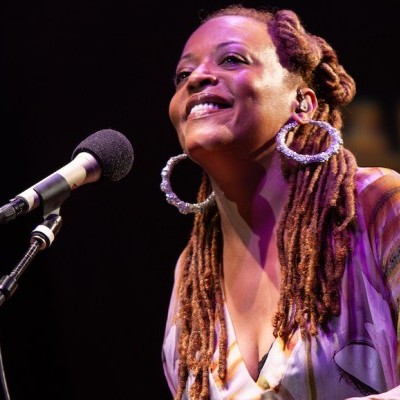
Wilson’s ability to connect to audiences helped her to win two Grammy awards and multiple other accolades. She was named an NEA Jazz Master in 2022.
Sep 3, 2026 10:44 AM
Cassandra Wilson, a singer, songwriter and producer who was one of the most acclaimed and successful jazz vocalists of…
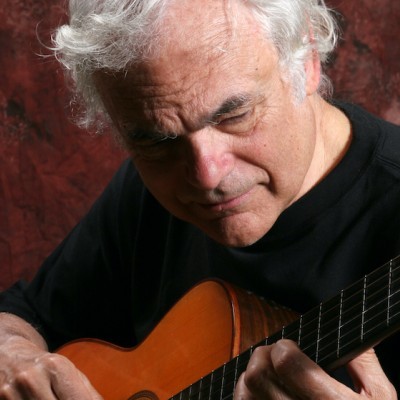
Bertoncini was a specialist and advocate for the nylon-string acoustic guitar, turning down high-profile opportunities that were unsuited to the sound and techniques that he used with that instrument.
Sep 1, 2026 11:06 AM
Gene Bertoncini, an esteemed jazz guitarist, composer, arranger and educator, died Aug. 29 at the Lillian Booth Actors…
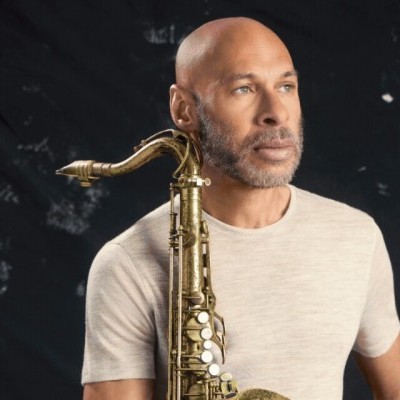
A solo concert by saxophonist Joshua Redman will close the first night of the Hyde Park Jazz Festival on Sept. 26.
Sep 22, 2026 12:26 PM
The Hyde Park Jazz Festival will take place for the 20th time on the final weekend of September 2026. Beginning half…
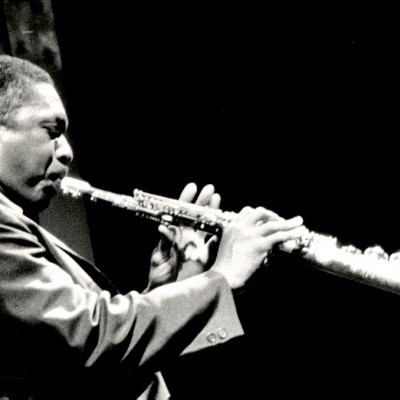
“It was just that suddenly … I could hear it,” Ravi Coltrane said of an epiphany he experienced during his late teens regarding his father’s music. “And it was almost like a calling, like something saying, ‘Hey, man, come on. It’s time to get serious.’ And the first time you really tune in and dial in and focus like that, it can be very life-changing.”
Sep 22, 2026 1:39 PM
Editor’s Note: Tomorrow, Sept. 23, is the 100th anniversary of John Coltrane’s birth. In honor of the tenor and…
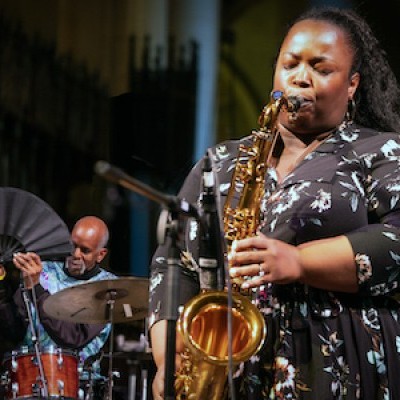
Camille Thurman took to the stage alongside bassist Kenny Davis and drummer Tommy Campbell for a rendition of Johnny Mercer’s “I’m An Old Cowhand” that recalled Rollins’ epochal 1957 trio outing Way Out West.
Oct 6, 2026 1:33 PM
As emcee Mark Ruffin noted at the commencement of an epic tribute to saxophonist Sonny Rollins at the Cathedral of…