Sep 3, 2026 10:44 AM
In Memoriam: Cassandra Wilson, 1955–2026
Cassandra Wilson, a singer, songwriter and producer who was one of the most acclaimed and successful jazz vocalists of…


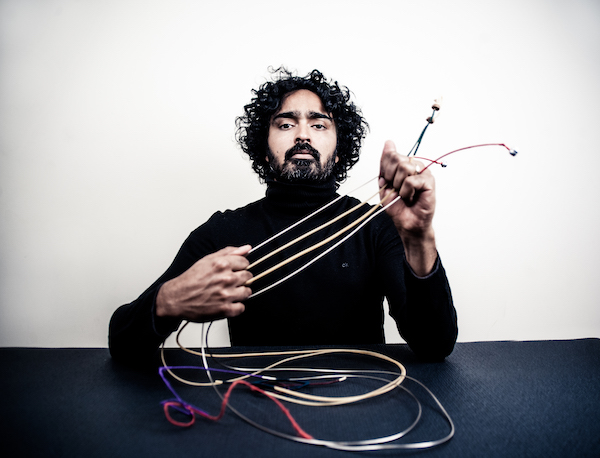
Bassist Harish Raghavan steps out with his first leader date, Calls For Action.
(Photo: Emra Islek)It seems obvious to say that a bass player’s sound would be a deep one. But there is a real darkness to Harish Raghavan’s tone, a rich mahogany that is at turns warm and undulatingly forceful; his precise rhythms and soft melodies emerge from a studied profundity. It’s a thoughtful tone, one that reflects the measured patience of its maker, one of New York’s most in-demand bassists, who has played with the likes of Ambrose Akinmusire and Vijay Iyer, and who, 12 years into his career, is only now releasing his debut album as a bandleader, Calls For Action (Whirlwind).
It wasn’t doubt that held Raghavan back but logistics, it turns out. “I had been wanting to record an album for some time and I always had the intention of playing five to 10 gigs with the same band and then documenting it,” he said from New York. “It’s just keeping the same great musicians on every gig to develop a sound in this busy city proved to be tricky.”
It wasn’t until Raghavan produced sessions for young vibraphonist Joel Ross’ debut Blue Note record, KingMaker, that he began to find a reliable set of like-minded musicians he could develop a residency—and eventually a sound—with.
With Ross only being 23 and saxophonist Immanuel Wilkins at 24, it was youth that provided an unlikely but welcome foundation from which Raghavan could improvise and take leadership. Playing around eight shows a year, with four new pieces penned by Raghavan to be performed at each, it was a methodology of trial and error to reach the final 15 songs on Calls For Action.
“My process for most of the pieces was to record improvisations on the bass daily,” he said. “I’d do this for about a week or two and then I’d listen to all the recordings for anything that sparked an idea. Using that method, some of the pieces are just complete improvisations from beginning to end, like ‘Seaminer.’”
A loping, medium-tempo meditation, “Seaminer” progresses like many of the compositions on the record—underpinned by a sturdy rhythmic base, it soon spirals out into a complex, frenetic interplay between drummer Kweku Sumbry’s rattling cymbal work and Wilkins’ bebop saxophone lines.
The pieces all have personal resonances for Raghavan. Opener “Newe” was written in homage to his band and to Dave Holland’s quintet through the 1990s, with masterful melodic playing from Ross mirroring Wilkins throughout. “Los Angeles” is a tribute to the city where Raghavan attended college—the sun-soaked nature of the place seeping in through its down-tempo haziness. And the optimistic “Sangeet” was written for his recent wedding.
The most powerful thematics come on the final number, “AS”—or Aurelia’s song—named for Raghavan’s newborn niece. A raw, yet tentative, bass solo, it carries a yearning within its three-minute runtime, plucking gently into the slow dissolution of silence at its close. “It’s about growing up in the United States as a person who does not look ‘American,’”he said—a reality which is becoming increasingly difficult to inhabit in the current political climate.
Yet, it is typical that Raghavan approaches such sensitive subject matter with a gentle pragmatism, an improvised expression that betrays thoughtful emotion.
Ultimately, Raghavan’s playing on Calls For Action is deep—in all senses of the word. It is a complex record that squeezes every drop of raw talent from his young quintet without flashy showmanship. Whether it connects with new listeners or not, the process has at least inspired Raghavan to continue as a bandleader, and come to a welcome realization: “I’m ready to record the next one now,” he said.“I’m inspired to keep writing, so I hope that continues.” DB
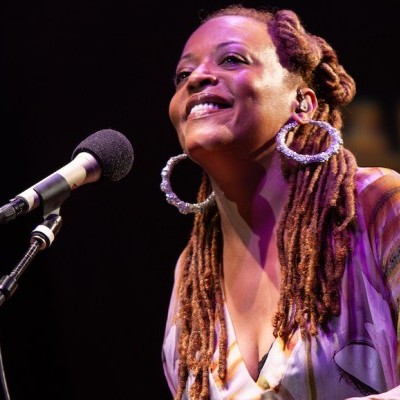
Wilson’s ability to connect to audiences helped her to win two Grammy awards and multiple other accolades. She was named an NEA Jazz Master in 2022.
Sep 3, 2026 10:44 AM
Cassandra Wilson, a singer, songwriter and producer who was one of the most acclaimed and successful jazz vocalists of…
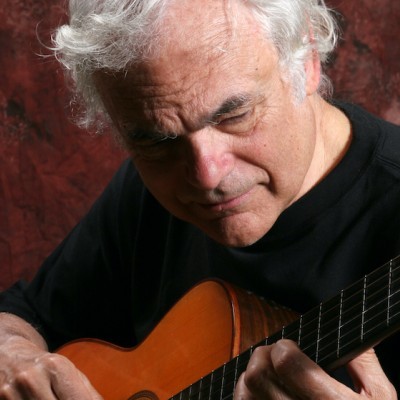
Bertoncini was a specialist and advocate for the nylon-string acoustic guitar, turning down high-profile opportunities that were unsuited to the sound and techniques that he used with that instrument.
Sep 1, 2026 11:06 AM
Gene Bertoncini, an esteemed jazz guitarist, composer, arranger and educator, died Aug. 29 at the Lillian Booth Actors…
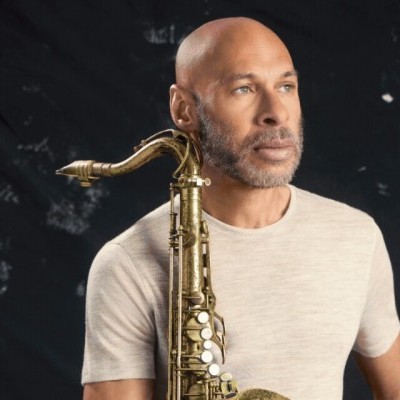
A solo concert by saxophonist Joshua Redman will close the first night of the Hyde Park Jazz Festival on Sept. 26.
Sep 22, 2026 12:26 PM
The Hyde Park Jazz Festival will take place for the 20th time on the final weekend of September 2026. Beginning half…
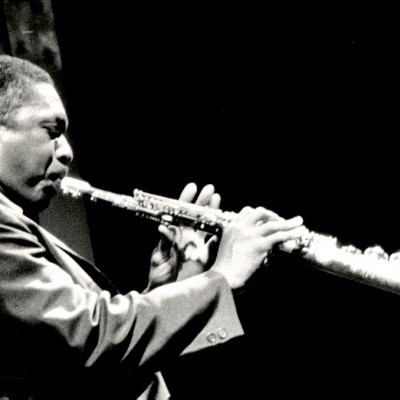
“It was just that suddenly … I could hear it,” Ravi Coltrane said of an epiphany he experienced during his late teens regarding his father’s music. “And it was almost like a calling, like something saying, ‘Hey, man, come on. It’s time to get serious.’ And the first time you really tune in and dial in and focus like that, it can be very life-changing.”
Sep 22, 2026 1:39 PM
Editor’s Note: Tomorrow, Sept. 23, is the 100th anniversary of John Coltrane’s birth. In honor of the tenor and…
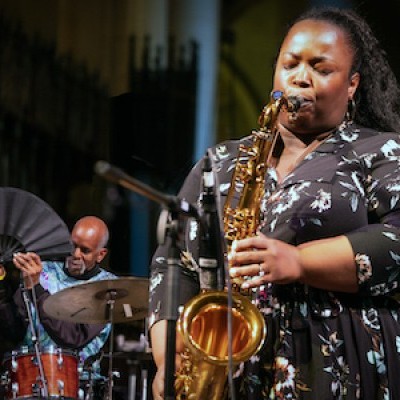
Camille Thurman took to the stage alongside bassist Kenny Davis and drummer Tommy Campbell for a rendition of Johnny Mercer’s “I’m An Old Cowhand” that recalled Rollins’ epochal 1957 trio outing Way Out West.
Oct 6, 2026 1:33 PM
As emcee Mark Ruffin noted at the commencement of an epic tribute to saxophonist Sonny Rollins at the Cathedral of…