Sep 3, 2026 10:44 AM
In Memoriam: Cassandra Wilson, 1955–2026
Cassandra Wilson, a singer, songwriter and producer who was one of the most acclaimed and successful jazz vocalists of…


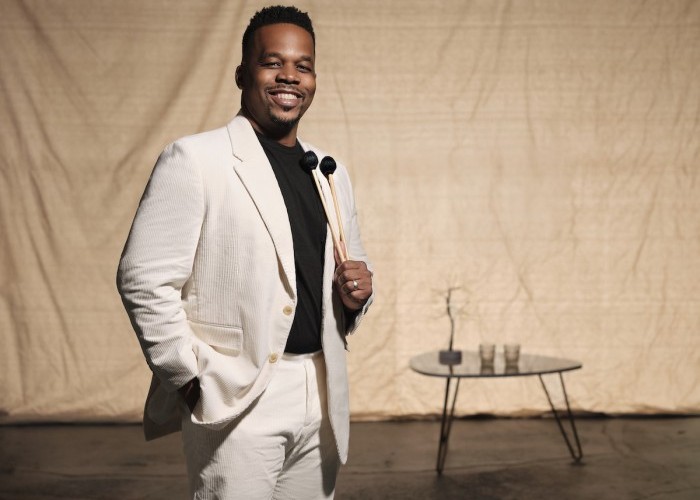
“I’ll always keep the jazz harmonic side in my music because I could never go all the way and be a straight smooth-jazz guy,” says Warren Wolf of his groove-oriented music.
(Photo: Roy Cox Jr.)March 2020: Less than 24 hours before Baltimore residents begin sheltering in place, Warren Wolf is preparing for his studio date when he gets a call from his piano player. He won’t make the session. Proximity to the other players is just too dangerous.
Around midnight that night, Wolf weighed his options. His mind was scrolling through available pianists when he had a thought: “’You know, I play piano very well. I’ll just do it myself.’” That moment of resolve would spark the creation and September 2020 release of Christmas Vibes, one of his five albums for Mack Avenue Records.
Six years later, the vibraphone master and multi-instrumentalist would refine and expand what he started during the pandemic, prompting the self-produced April 2026 release of SMOOVE VIBES, his 10th leader album. “All of this leads back to the COVID years,” says Wolf, who, like so many artists, played countless remote sessions during lockdown. Back then, he’d spend hours on the phone with his friends, drummer Lee Pearson and trumpet player Darren Barrett. “They started hipping me to the audio game of self-recording at home.”
For this project, whose title traces its origins to a conversation with bassist Vicente Archer, Wolf sought an invitational energy. “My goal lately, with a lot of recordings, is for people to be able to listen to the music without intently having to study it,” he says. “I want them to just be able to put it on and say, ‘This feels good.’”
Groove persists, but so do harmonic tensions and searing solos. “I’ll always keep the jazz harmonic side in my music because I could never go all the way and be a straight smooth-jazz guy,” says Wolf. “I go from playing with Christian McBride & Inside Straight, which is traditional swing, to a group like the SFJAZZ Collective, which is completely modern, to Aaron Diehl, which is a mix of classical and jazz, to Etienne Charles to Wynton Marsalis and Jazz at Lincoln Center. And I try to take all those styles and put them into one. So when I’m creating these tracks, I know from the very beginning what I want this music to sound like and how it’s supposed to flow.”
Wolf worked through two originals and six songs from a range of influential composers, including Cesar Camargo Mariano’s “Fábrica,” Ramsey Lewis’ “Sun Goddess,” “Some Skunk Funk” from the Brecker Brothers and “Yesterday” from Paul McCartney and John Lennon. Beginning with a muted bass or classic fretless patch, he tracked every song in his basement studio via Logic Pro X, performing vibraphone, marimba, piano, Fender Rhodes, Hammond B-3, drums, vocals and all sampled material himself. He then convened a session with Brandon Lane on electric bass, Brent Birckhead on alto saxophone, flute and vocals, Terrence Cunningham on organ, Elan Trotman on soprano saxophone and Imani-Grace Cooper on vocals.
How Lane was able to create a consistent feeling of live energy between his bass and Wolf’s recorded drums is a testament to the bassist’s skill and artistry. “He was very quick and professional about it,” says Wolf. “He doesn’t play traditional upright bass like most jazz players, but he has a serious jazz background as well as playing R&B and funk.”
A studio practice Wolf has leaned into as he’s developed his producer muscle is recording to click, as he does on Greg Howe’s “Contigo,” delivering a montuno-fueled drum feature inspired by his hero Dennis Chambers. He admits the method is controversial. “[It] totally goes against 95 percent of jazz recordings,” he says. “When I talk to a lot of people about using the click, they don’t want to do that — and I totally get it. They want the music to feel more organic. They don’t want to be locked into something.”
But in recent years, Wolf has taken opportunities to explore the method in different contexts. During an ensemble session in 2025, he was the only artist in the studio recording to click, which led to some emotional responses among his fellow artists. “It’s a certain skill to know how to do it,” he says, “to be able to be a natural musician and do the things that you can do [while having] this beat in your ears. So we had a few tiffs in the studio about that but eventually we got it done.”
That same year, he played on Mauricio Morales and Adam Hersh’s Between Dreams & Twilight, which features a string quartet. According to Wolf, the artists recorded the entire album to click. “I think it was planned out because we had certain sections with shifting meters,” he says. “They knew what they wanted to do beforehand. Kind of like me with this record. I knew exactly what I wanted to hear.” Over time, Wolf has adopted an attitude of “click and let click”: “This is no shade to anybody: I’m certainly used to recording without a click, that’s totally fine. But when it comes to my own projects, I just like for everything to be nice and steady and even.”
Inspired in part by D’Angelo’s xennial anthem “Untitled (How Does It Feel),” Wolf’s original song “First Kisses” transmits young romance nostalgia through a slow 3/4, with Cooper interpreting his original lyrics. “I decided to do something nice and slow like that,” he says, “but I wanted to include those elements of gospel music in there, still making it jazzy.”
Apart from its obvious Eminem reference, “Will The Real Kenny Gee Please Stand Up” serves as a dual homage. “Both Kenny G’s — Kenny G and Kenny Garrett — they are two of my favorite artists,” says Wolf. Kenny G was one of the first artists he experienced live. “I actually picked up a couple of records where he’s playing some music by Outkast,” says Wolf. “I’ve seen some videos where he’s playing ‘Giant Steps.’”
And as a young artist living in Boston, Wolf remembers purchasing Garrett’s 1999 Warner Records release Simply Said on CD. “You hear this blazing beat from Chris Dave,” he says, “and then the thumping bass from Marcus Miller, and Shedrick [Mitchell] comes in with the organ. The entirety of that record gave me the idea to do a record like this one. He’s still playing jazz; he’s just doing something different.”
For this song in particular, Wolf knew he wanted and needed Trotman’s alto. “I used him because he has certain similarities between both Kenny G and Kenny Garrett. People say, ‘There’s only one Kenny G and that’s Kenny Garrett.’ So I decided to write a song I could easily hear both of them playing.” [laughs]
SMOOVE VIBES creates a groove-centered mosaic of Wolf’s musical influences, but the release means much more to him than a feel-good record.
“I want to reach more people,” he says. “As the years go by, I want to continue to get on a higher ground, like a Herbie or a Chick Corea-ish person. When [Herbie] came out, he was playing a lot of straightahead jazz. But then, eventually, as the years went on, going from the Headhunters to the other groups, he went from straightahead jazz to avant garde-ish rock music to playing funk, and then he came out with hits in the ’80s. And now Herbie Hancock is who he is, and I wanted to model my career after that. I guess the point of this record is that when you hear everything, it’s smoove.’” DB
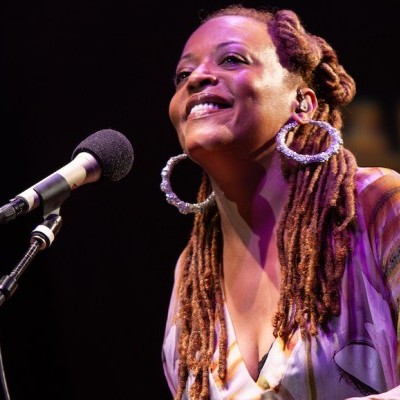
Wilson’s ability to connect to audiences helped her to win two Grammy awards and multiple other accolades. She was named an NEA Jazz Master in 2022.
Sep 3, 2026 10:44 AM
Cassandra Wilson, a singer, songwriter and producer who was one of the most acclaimed and successful jazz vocalists of…
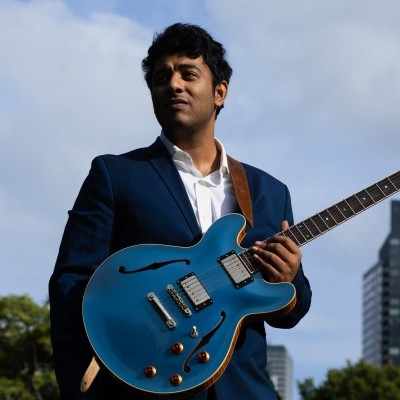
“The love from the jazz and music community restored my faith in humanity,” Walia wrote in an online post upon his release from detention at an ICE facility.
Aug 18, 2026 2:15 PM
Indian jazz guitarist and composer Pritesh Walia has been released after being unexpectedly detained by ICE and taken…
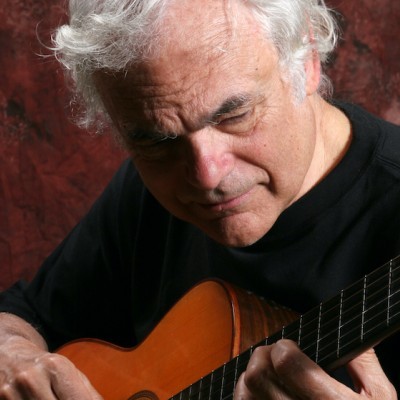
Bertoncini was a specialist and advocate for the nylon-string acoustic guitar, turning down high-profile opportunities that were unsuited to the sound and techniques that he used with that instrument.
Sep 1, 2026 11:06 AM
Gene Bertoncini, an esteemed jazz guitarist, composer, arranger and educator, died Aug. 29 at the Lillian Booth Actors…
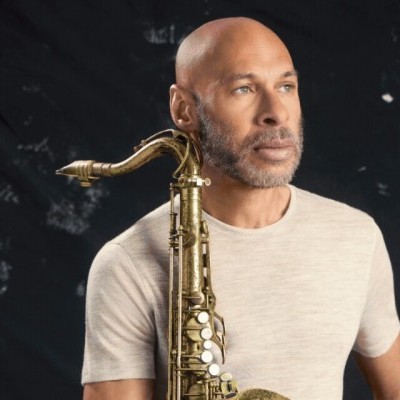
A solo concert by saxophonist Joshua Redman will close the first night of the Hyde Park Jazz Festival on Sept. 26.
Sep 22, 2026 12:26 PM
The Hyde Park Jazz Festival will take place for the 20th time on the final weekend of September 2026. Beginning half…
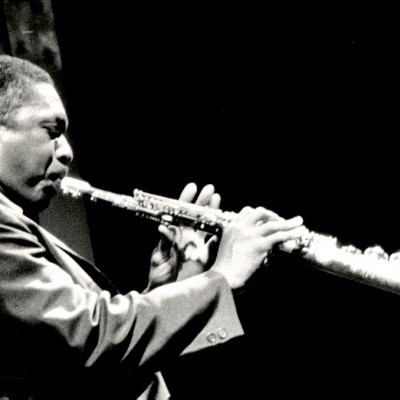
“It was just that suddenly … I could hear it,” Ravi Coltrane said of an epiphany he experienced during his late teens regarding his father’s music. “And it was almost like a calling, like something saying, ‘Hey, man, come on. It’s time to get serious.’ And the first time you really tune in and dial in and focus like that, it can be very life-changing.”
Sep 22, 2026 1:39 PM
Editor’s Note: Tomorrow, Sept. 23, is the 100th anniversary of John Coltrane’s birth. In honor of the tenor and…