Sep 3, 2026 10:44 AM
In Memoriam: Cassandra Wilson, 1955–2026
Cassandra Wilson, a singer, songwriter and producer who was one of the most acclaimed and successful jazz vocalists of…


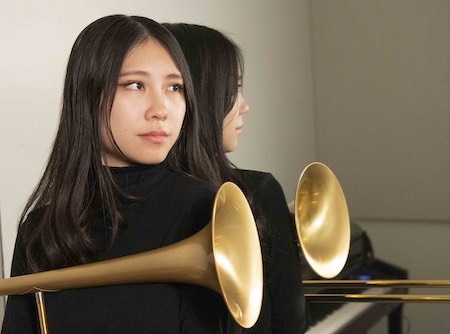
“I really like free-jazz, and my foundation is ’50s and ’60s jazz,” says Nanami Haruta. “So I tried to combine all of that music in one album.”
(Photo: Lynne Brown)Born in Sapporo, Japan, Nanami Haruta started playing piano at age 5 and gravitated to the trombone when she was only 8 years old. The instrument was taller than she was.
“They do have smaller trombones for kids but I just used a normal one,” she recalled from Michigan State University, where she’s currently enrolled in the jazz studies program. “What first made me want to play it was that the sound of the name trombone was funny,” she added with a laugh.
There was nothing funny about Haruta’s prowess, however. At age 13, she began giving concerts in Sapporo and won multiple prizes in summer music competitions before moving to Tokyo in 2020. She made a big splash on the Tokyo jazz scene as soon as she arrived and released her first solo album in 2022.
Haruta continues to hone her skills at MSU, where she’s studying with her mentor, trombonist Michael Dease, one of several MSU professors she tapped to contribute to her mesmerizing debut album The Vibe (Origin). Among the others were bassist Rodney Whitaker, drummer Ulysses Owens Jr., keyboardist Xavier Davis and composer/producer Greg Hill, who produced the album and wrote the title track.
During a lively conversation, Haruta proved herself remarkably fluent in English just a year after starting to speak it. She discussed everything from her mission to combine free-jazz improvisation with more traditional forms to finding her own voice as a composer to her passion for covering little-known tunes by well known jazz artists like Christian McBride.
The following conversation has been edited for length and clarity.
Cree McCree: The first track on the album is called “Girlie’s World.” Is that a reference to being one of the very few female trombone players?
Nanami Haruta: Maybe a little bit. That tune was written by the pianist Renee Rosnes. I really wanted to record it because she played it earlier with J.J. Johnson, and she’s a great musician and role model for me as a female.
McCree: My favorite cut on the album is the title track, “The Vibe.” It sounds like there’s a party going on with hoots and hollers and laughing. Burbling and bubbling. It’s a real set piece.
Haruta: That tune was written by the composer/producer Greg Hill, one of my MSU professors, who produced my record. Before I came to Michigan I was gigging in Tokyo, where I played a lot of free-jazz. But I also like straightahead music, so I wanted a kind of combined sound for my album.
McCree: “Algonquin” is a kind of sophisticated swing tune, a little beboppy. Several of the tracks on the album are also named after people, like “Toshi.”
Haruta: Toshi was my first mentor in my hometown of Sapporo.
McCree: Where the beer comes from, right?
Haruta: Yes. Toshi was a pianist in Sapporo when I first started playing jazz when I was 13 years old. I literally grew up with Toshi. I played with him a lot. He taught me what jazz is, and I wrote that tune for him.
McCree: There’s also “Jamerson’s Lullaby,” which really sounds like a lullaby. Who is Jamerson?
Haruta: Rodney Whitaker wrote that tune and Jamerson is his son.
McCree: What about “Sister Rosa”? Is that named after somebody?
Haruta: I don’t really know, actually. But it’s a Christian McBride tune.
McCree: “How It Goes,” which has a strong bass opening, feels like a real combo piece. Was that fun to record?
Haruta: Yes. That’s Michael Dease’s tune. He wrote it at my lesson in like 15 minutes. We both really liked that tune but we didn’t really have arrangements until we went into the recording studio, Troubadour Studio in Lansing.
McCree: Was the entire album recorded live in the studio?
Haruta: Yes, all the tracks.
McCree: “Heartstrings” is very romantic.
Haruta: It’s actually my first love song for my partner. I wrote that tune. I also wrote “Woodpecker” because I wanted to write some blues.
McCree: I also love that you covered “Unchained Melody.” It took me back to my high school years in 1965, when the Righteous Brothers’ song was a hit. What made you decide you wanted to record that?
Haruta: I heard that song in the movie Ghost, which I watched when I was in elementary school and always wanted to record one day. And just before we went into the studio, the producer asked me, ‘Do you want to record one song with Rodney, just a duo or trio?’ And I came up with that song immediately.
McCree: What do you hope people will take away from listening to The Vibe?
Haruta: I made this record as a way of introducing myself in America. I really like free-jazz, and my foundation is ’50s and ’60s jazz. So I tried to combine all of that music into one album.
McCree: Who are some of your favorite jazz musicians, both current and classic?
Haruta: As a trombonist, I like Curtis Fuller the most. I also like listening to piano trios like Phoenix and Phineas Newborn Jr.’s group. And I love Art Blakey and The Jazz Messengers. Some people say musicians need to record or make new original music. I understand and I agree with that. But I also think there is so much great music that never gets recorded by someone else. That’s why I recorded “Sister Rosa” by Christian McBride and “Girlie’s World” by Renee Rosnes, great compositions that nobody else recorded. DB
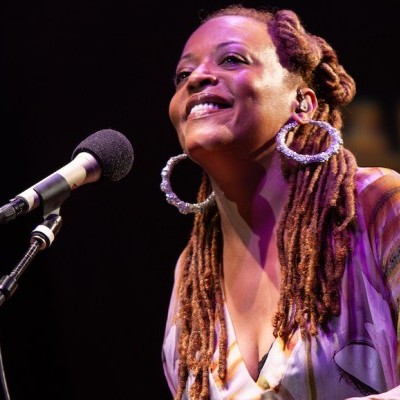
Wilson’s ability to connect to audiences helped her to win two Grammy awards and multiple other accolades. She was named an NEA Jazz Master in 2022.
Sep 3, 2026 10:44 AM
Cassandra Wilson, a singer, songwriter and producer who was one of the most acclaimed and successful jazz vocalists of…
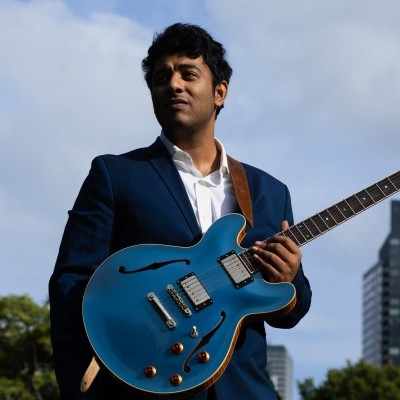
“The love from the jazz and music community restored my faith in humanity,” Walia wrote in an online post upon his release from detention at an ICE facility.
Aug 18, 2026 2:15 PM
Indian jazz guitarist and composer Pritesh Walia has been released after being unexpectedly detained by ICE and taken…
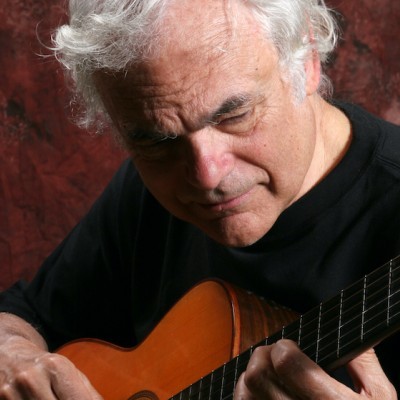
Bertoncini was a specialist and advocate for the nylon-string acoustic guitar, turning down high-profile opportunities that were unsuited to the sound and techniques that he used with that instrument.
Sep 1, 2026 11:06 AM
Gene Bertoncini, an esteemed jazz guitarist, composer, arranger and educator, died Aug. 29 at the Lillian Booth Actors…
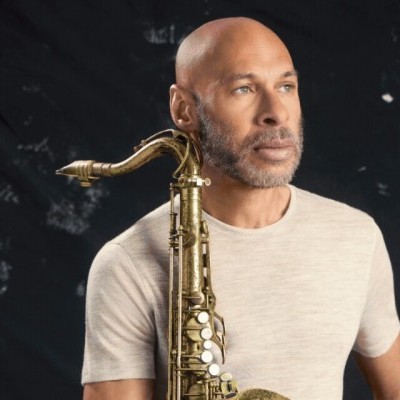
A solo concert by saxophonist Joshua Redman will close the first night of the Hyde Park Jazz Festival on Sept. 26.
Sep 22, 2026 12:26 PM
The Hyde Park Jazz Festival will take place for the 20th time on the final weekend of September 2026. Beginning half…
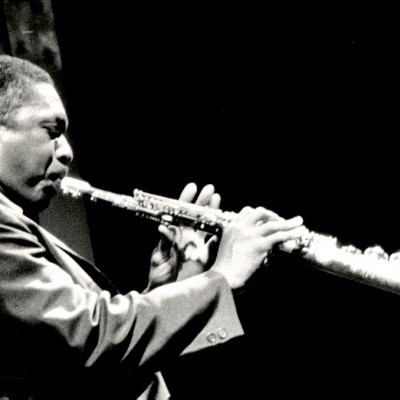
“It was just that suddenly … I could hear it,” Ravi Coltrane said of an epiphany he experienced during his late teens regarding his father’s music. “And it was almost like a calling, like something saying, ‘Hey, man, come on. It’s time to get serious.’ And the first time you really tune in and dial in and focus like that, it can be very life-changing.”
Sep 22, 2026 1:39 PM
Editor’s Note: Tomorrow, Sept. 23, is the 100th anniversary of John Coltrane’s birth. In honor of the tenor and…