Sep 3, 2026 10:44 AM
In Memoriam: Cassandra Wilson, 1955–2026
Cassandra Wilson, a singer, songwriter and producer who was one of the most acclaimed and successful jazz vocalists of…


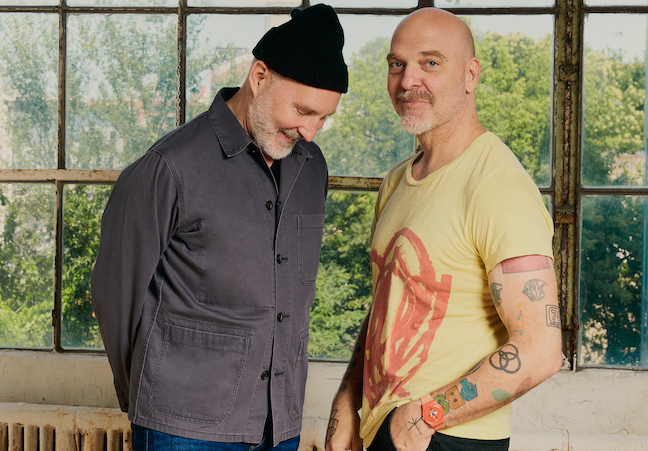
Dave King (left) and Reid Anderson offer insights into why The Bad Plus’ chemistry was cool, the accomplishments many and its longevity so fruitful.
(Photo: Evelyn Freja)The scene still sticks with me. I had heard the oddball name of this new group being dropped around town, and recognized a couple of its members. They were addressing a somewhat meager audience at the Knitting Factory’s Old Office (a smaller downstairs stage for up-and-comers).
The trio started rumbling and crackling, adept at waxing amorphous and blowing specific. Someone had mentioned their heady originals were balanced by a smattering of pop tunes. Cool, whatever. In the middle of a delicate passage it became clear the piece they were updating was Neil Young’s “Heart Of Gold.” Shards of melody were being chipped off in tiny bits — you had to focus to hear it coalesce.
Intrepid improvisers all, drummer Dave King, bassist Reid Anderson and pianist Ethan Iverson seemed to be using the lyrics as a metaphor for the seminal jazz task of unearthing new sounds while personalizing the past. Iverson raised eyebrows by repeating the “keeps me searching” phrase like it was a mantra, underscoring the trio’s esthetic goals: Press on until a new way of shaping the music arises.
Plunking keys with his right hand, the pianist was bent over, investigating the instrument’s innards and floor pedals — as if acting out the hunt for some ineffable essence with a bit of wry theatrics. Then this group of non-vocalists began singing the lyrics like a hymn before providing a ghostly conclusion. There was only one possible takeaway: The Bad Plus was going to be a very fun band.
Now — after 26 years, 16 albums, thousands of performances, three key personnel shifts, a handful of record labels and an inestimable impact on the modern jazz landscape — the group that named their 2010 album Never Stop is calling it quits.
It’s a bittersweet turn in a storied run, but Minnesota natives Anderson and King remain chipper, if a tad world-weary. They delivered the news via an Instagram clip shot on the snowy Minneapolis street where The Mary Tyler Moore Show’s hat-in-the-air opening sequence was filmed, peppering it by mentioning tongue-in-cheek future plans such as starting an alpaca farm and opening a string of tanning salons. Hey, even their farewells are fun.
Dedicated DownBeat readers probably know The Bad Plus’ genesis: Midwestern pals uniting in the pre-aughts around shared interests who forged an individual voice by blending enticingly askew original pieces with interpretations of rock nuggets both contemporary and classic. Punk rock band name. Posthaste critical acclaim. Media interest way outside the jazz biosphere. Busy touring schedule. Major label signing. Dope album graphics. Tchad Blake production. Savvy brand development. It all added up to a version of jazz stardom for artists coloring outside the lines in numerous ways.
“The audience response was over the top,” Iverson once said about the early days. “People loved it from the first gig.”
Yves Beauvais was one of those duly impressed. In 2002, he was the VP of A&R who brought them to Columbia after catching a blistering set at the Village Vanguard. “I’d seen them at a very empty Roulette show and the sound was boomy. I didn’t understand the music. It was Ben Ratliff who said, ‘You’ve got to see them again.’ So I went to the Vanguard and had an epiphany. It wasn’t just the covers. It was three really strong people playing as if one mind. I walked into my bosses at Columbia and said, ‘We have to sign these guys immediately.’”
In recent chat, Anderson and King looked over their shoulders at the work they’ve done, unearthing insights into why the chemistry was cool, the accomplishments many and the longevity so fruitful.
One topic was singularity. In an art form teeming with hired hands following a lone leader’s vision, The Bad Plus was an anomaly. One of the things the guys are proudest of is their commitment to the ensemble ethic. “No subs ever” is a motto that bolstered their fraternal bonds and musical eloquence.
“The reason there weren’t many true bands at the time we started is because everybody’s got to make a living,” says King. “We would have a gig planned four months down the line and a job would come up, and there’d be a big temptation to say, ‘Oh, well, guys, I just need to do this because I’ve got to make some money. We can reschedule our stuff.’ But, no. We would turn down the outside work because we believed in what we were doing together.”
Anderson: “We knew we had something special and we were going to see it through.”
Trusting in musical equality was also key to shaping their sound: Shared responsibility was paramount. “I’ve always been adamant about calling what we did a piano-bass-drums trio,” the bassist assures. “It’s an important distinction, because Dave and I certainly weren’t the polite sidemen backing up a leader. Our mission statements were ‘We’re going to be a democratic organization, we’re going to develop our sound, we’re gonna play group music.’”
King — who has told Insta followers that one of TBP’s goals was to “stretch the dynamic range” of a traditional piano trio — recently received a copy of the group’s very first show from a taper who clocked their May 2000 gig at the Artists’ Quarter in St. Paul. It was so early in their run they’d yet to choose a name. He says the chemistry was palpable even back then, and the combination of personalities “liberated” him.
“We supported each other’s individuality, and it felt like the music-making roles were mixed up in a cool way. Everyone was thinking elastically. It was almost like we were able to fit these pieces together in a way where we didn’t have to talk about it much.”
One of their initial achievements was realigning tunes decidedly outside the typical jazz canon. From ABBA to Blondie to Nirvana to Pixies, pop and rock nuggets stacked up almost as quickly as the band’s offbeat originals. In an early incarnation, TBP had tried its hand at jazz standards such as “Moose The Mooche,” “Body And Soul” and “Blue Moon.” But as the band’s footing became more assured, it was goodbye Rodgers & Hart, hello Osbourne & Iommi.
The idea for pop interpretations had actually been in the convo way early. As young fans, the drummer and bassist would return from The Dakota jazz club in St. Paul and riff about how great it would be if “a band just came out on stage and played something by the Police,” says Anderson, “something we were into that was more a part of our life experience.”
Dipping a toe in the pop world could have been considered a novelty gambit of sorts, and a few critics gave them heat for it, but the rigor fueling these experiments was substantial enough to broker an unmistakably resolute vibe. From “Knowing Me, Knowing You” to “Heart Of Glass,” their audacious dynamics overflowed with performance passion and design smarts. And they weren’t totally alone in their curation. Just prior, Brad Mehldau had gotten romantic with a Radiohead tune, and a decade earlier Bill Frisell had his way with “Chain Of Fools.” King says they realized their move had “a built-in ironic moment here and there,” but the group could be fully earnest while “messing with forms and feeling good about the music.” It was the turn of the century, and new songbook territory was slowly emerging. The Bad Plus accelerated the process.
“It was an idea whose time had come,” Anderson says. “There was something invigorating about having a more complete dialogue with contemporary culture. Once we tapped into it, there was obviously an energy. We weren’t the only ones who appreciated it. It was a way for us to connect with an audience, but at the same time go in some avant-garde directions and explore our sound.”
Recalibrating pop tunes may be one of the trio’s calling cards, but the true forging of the Plus persona came from the creation of the intricate originals that have outnumbered and perhaps outvalued the covers — the core of their book since the start. From the gleeful pounding of King’s “1972 Bronze Medalist” to the waterfall melody of Iverson’s “Self Serve” to the roiling taffy pulls of Anderson’s recent “French Horns,” the pieces they’ve penned stump for idiosyncrasy while offering plenty of invitations to those with open ears.
“It was a thrill to say to each other, ‘We need new music,’ and have everybody bring in something,” says King. “Not one of us was writing things that sounded like a garden variety jazz tune. We were always excited to peek at what the other guy was up to. And we have such distinct styles that it was always like, ‘What can we do to make this a group music?’ It was never like on Reid’s song we’re just going to do Reid’s bidding. It was always a balance.”
After almost two decades in this creative stew, the group announced that the start of 2018 would see hard-swinging Orrin Evans taking over the piano chair for Iverson — a risky amendment to the band’s existing persona. The deeply experienced improviser was a longtime pal of Anderson. Transitions aren’t easy. The nature of the music shifted a bit, but TBP vibe sustained itself.
“You had to come in and adjust to what Dave and Reid were thinking The Bad Plus was,” says Evans. “Then individually you had to figure out, ‘Does my voice fit in this ensemble?’ I didn’t realize how curated the music was until I was a part of it, and that’s not a negative thing. The [performance] surprises were based on how we did what we knew we were already going to do. It was more about the song, which was actually exciting for me.”
The originals-only Never Stop II (2018) was one of the group’s most fascinating efforts, and their gigs around it centered on precision and eruption. Evans’ playful “Boffadem” fit in nicely with Anderson’s piercing “Safe Passage.”
“I was always encouraged to bring material. But you join a band after they’ve been at it for 20 years and you got a lot of homework to do. I wasn’t running to add my tunes because I was trying to deal with their stuff.”
In the late summer of 2021, mid-pandemic, we learned that TBP was saying goodbye to Evans and morphing into a quartet with the arrival of guitarist Ben Monder and saxophonist Chris Speed. The lack of piano threatened to upend the ensemble’s character, but somehow the following year’s The Bad Plus and 2024’s Complex Emotions provided vivid new textures while maintaining the poised aggression that long captivated diehard fans. Once again, the group was pliable enough to shift gears while remaining true to its initial approach.
“The beauty of what The Bad Plus did was the fact that there was no ‘That’s what they do,’” declares Evans. “Whether dealing with classical, Nirvana or whatever, they covered music, you know? They covered music.”
Emotions should run high during these final months of play. The quartet kicked off 2026 in Midwestern clubs and will move on to Canadian concert halls among many other venues. Between hushed murmurs and tactical explosions, their spectrum of sound, amplified by the Speed/Monder sonic axis on a pieces such as “Deep Water Sharks,” makes sense in all kinds of rooms. They intend to work through the last days of December.
“It’s tough to say how that final show is actually going to feel emotionally,” offers Anderson, “but I know it’s going to hit hard. I know it. And that’s how it should be.”
“It’s already hitting hard,” says King. “We just experienced that feeling at a five-night stand at Jazz St. Louis, a gig we’ve been doing for 18 or 19 years. We’re not going back to St. Louis again, and that last night, you really felt it.”
The work continues, of course. For a sizable chunk of the spring, these lifelong pals have been investigating the work of key forebears, uniting with Craig Taborn and Chris Potter to address the splendor of Keith Jarrett’s American Quartet. Numerous March and April dates found them turning to a set list containing jewels such as “Byablue,” “(If The) Misfits (Wear It)” and “Southern Smiles.”
“That’s another group that had multiple composers,” reminds King. “Charlie tunes, Dewey tunes, Motian tunes. It’s really fun to dig into it.”
So the curtain is closing. But a question arises: Would they work together again if a colleague who wanted a Plusian vibe hits ’em up?
“Ahhh, we don’t do someone’s rhythm section, Jim,” smiles Anderson with faux indignation. But his rejoinder takes just a second or two to emerge: “Of course, if Robert Plant calls, we’ll do the gig.”
“Life is long,” King muses. “With the right combination, we might hook somebody up for sure. Add two zeros and we’re in.”
Two zeros. That’ll keep ’em away from those tanning salons. DB
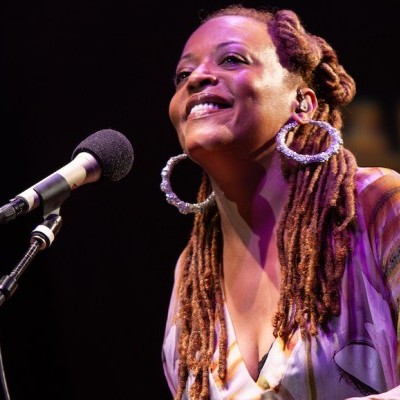
Wilson’s ability to connect to audiences helped her to win two Grammy awards and multiple other accolades. She was named an NEA Jazz Master in 2022.
Sep 3, 2026 10:44 AM
Cassandra Wilson, a singer, songwriter and producer who was one of the most acclaimed and successful jazz vocalists of…
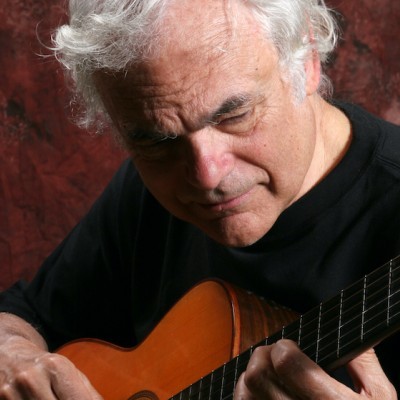
Bertoncini was a specialist and advocate for the nylon-string acoustic guitar, turning down high-profile opportunities that were unsuited to the sound and techniques that he used with that instrument.
Sep 1, 2026 11:06 AM
Gene Bertoncini, an esteemed jazz guitarist, composer, arranger and educator, died Aug. 29 at the Lillian Booth Actors…
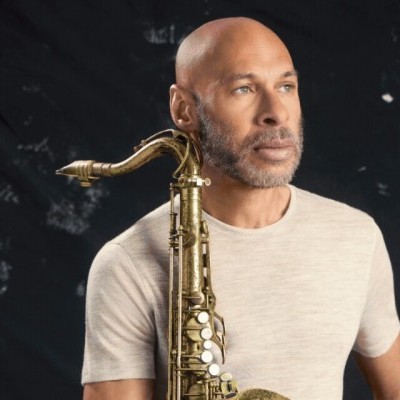
A solo concert by saxophonist Joshua Redman will close the first night of the Hyde Park Jazz Festival on Sept. 26.
Sep 22, 2026 12:26 PM
The Hyde Park Jazz Festival will take place for the 20th time on the final weekend of September 2026. Beginning half…
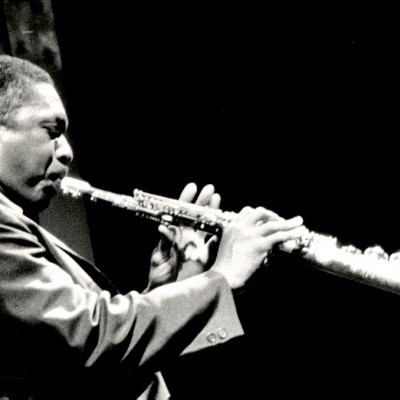
“It was just that suddenly … I could hear it,” Ravi Coltrane said of an epiphany he experienced during his late teens regarding his father’s music. “And it was almost like a calling, like something saying, ‘Hey, man, come on. It’s time to get serious.’ And the first time you really tune in and dial in and focus like that, it can be very life-changing.”
Sep 22, 2026 1:39 PM
Editor’s Note: Tomorrow, Sept. 23, is the 100th anniversary of John Coltrane’s birth. In honor of the tenor and…
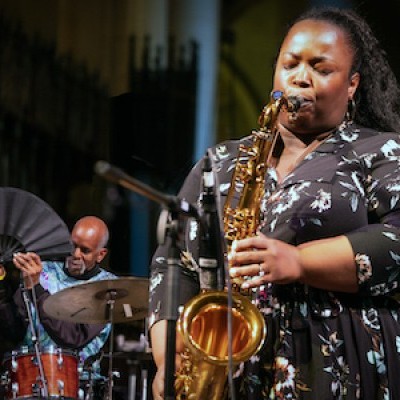
Camille Thurman took to the stage alongside bassist Kenny Davis and drummer Tommy Campbell for a rendition of Johnny Mercer’s “I’m An Old Cowhand” that recalled Rollins’ epochal 1957 trio outing Way Out West.
Oct 6, 2026 1:33 PM
As emcee Mark Ruffin noted at the commencement of an epic tribute to saxophonist Sonny Rollins at the Cathedral of…