Sep 3, 2026 10:44 AM
In Memoriam: Cassandra Wilson, 1955–2026
Cassandra Wilson, a singer, songwriter and producer who was one of the most acclaimed and successful jazz vocalists of…


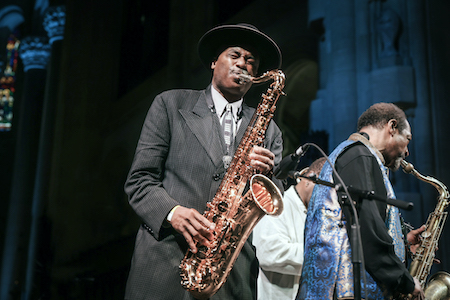
James Carter (left) and Eric Wyatt
(Photo: Michael Jackson)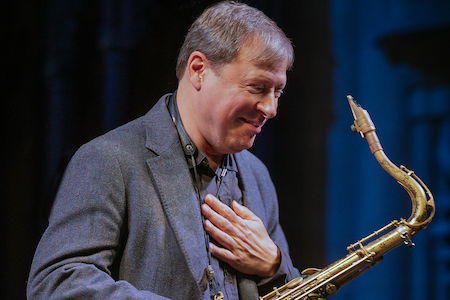
Chris Potter
(Photo: Michael Jackson)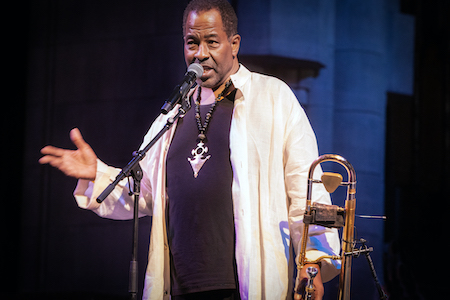
Clifton Anderson
(Photo: Michael Jackson)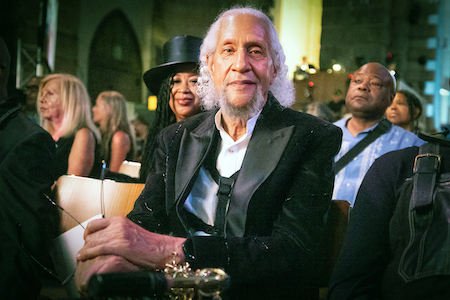
Gary Bartz
(Photo: Michael Jackson)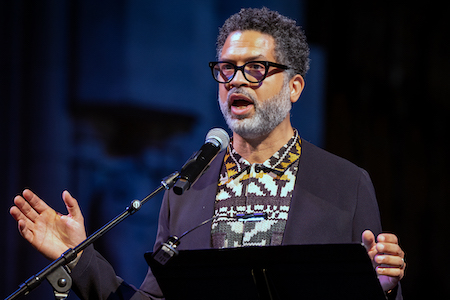
Jason Moran
(Photo: Michael Jackson)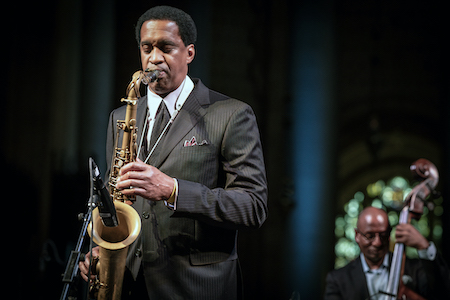
Javon Jackson
(Photo: Michael Jackson)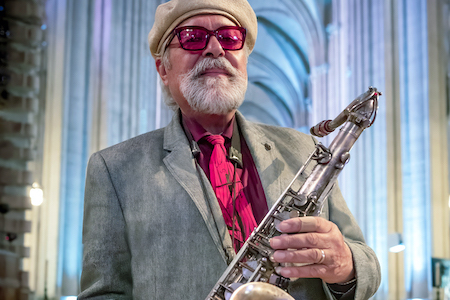
Joe Lovano
(Photo: Michael Jackson)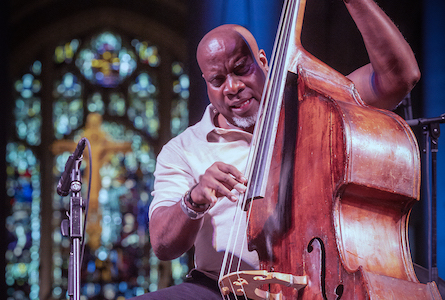
Russell Blake
(Photo: Michael Jackson)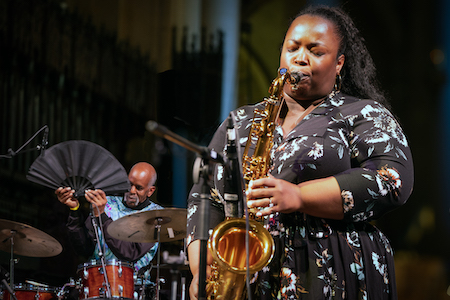
Camille Thurman
(Photo: Michael Jackson)As emcee Mark Ruffin noted at the commencement of an epic tribute to saxophonist Sonny Rollins at the Cathedral of Saint John the Divine in Morningside Heights, Manhattan, on Sept. 19, the gigantic 125-year-old building has hosted memorials for Randy Weston, Dave Brubeck and Duke Ellington (who also presented his 1968 Second Sacred Concert there). The event, put together in partnership with the Rollins family, drummer Steve Jordan and the Jazz Foundation of America, was a triumphant farewell celebration for a singular jazz icon (and the last persona from Art Kane’s epochal “A Great Day in Harlem” photograph), who passed at his home in Woodstock, New York, on May 25, at age 95.
First up to pay musical tribute with “Alfie’s Theme” was the mighty tenor saxophone of Joe Lovano, backed by an 11-strong band buoyed by Billy Hart and Rufus Reid and conducted by Cecil Bridgewater, a close associate of close Rollins associate Max Roach and staunch supporter of the Jazz Foundation of America, which offers crucial support to elderly jazz and blues musicians.
Lovano didn’t over-egg “Alfie’s Theme” despite Rollins’ monolithic 1966 movie soundtrack recording. Rollins told this writer in a DownBeat interview 30 years ago that the curtain failed to open at the premier of the film in London, when he was sitting with Michael Caine and Jane Asher, so British musicians at the theater, among them Stan Tracey and Ronnie Scott, kept cycling his basic theme, with its swaggering echoes of “Singing In The Rain.” Rollins had written the ditty late-night at Scott’s club and chuckled at the guys worrying it to death waiting for curtain-up. Bridgewater brought his own arrangement, so this was a different experience to the original Oliver Nelson setting.
Unfortunately, as befell most of this nonpareil gathering of incredible saxophony (including Melissa Aldana, Craig Handy, Gary Bartz, Ron Bake, George Braith, James Carter, Gene Ghee, Javon Jackson, Camille Thurman, Chris Potter, Bill Saxton, Henry Threadgill and Rollins’ godson Eric Wyatt), Lovano’s granite sound and sculptural phrasing were subsumed into the reverberant 162-foot-high Guastavino dome tower at St John’s.
Though Rollins was saddled with his “Saxophone Colossus” mantel for about 70 years, after that landmark Prestige recording made at age 25, and rather resented the pressure, reports have surfaced since his passing of his competitive streak — perhaps he was smiling again at such a cabal of battle-hardened sax-slingers, compromised by vaulty acoustics.
After Lovano’s opening volley came a rendition of Rollins’ ubiquitous “Rhythm” changes head “Oleo,” delivered querulously by distinguished elders Gary Bartz and Eddie Henderson, backed by pianist Bill O’Connell, who toured with Rollins in the ’70s, and drummer Lenny White. (The drummers — Billy Hart, Billy Drummond, Steve Jordan, Tommy Campbell and Jeff “Tain” Watts — were underserved by sight lines in the great choir area, all but hidden behind the piano).
A six-gun fusilade through “Tenor Madness” followed, featuring a front line of Aldana, Jackson, Saxton, Patience Higgins, James Carter and Craig Handy. Carter would later open up the soloing on a saxophone battalion twice the size (plus trumpets and conduction from Sonny’s nephew Clifton Anderson on trombone). On the closing “Don’t Stop The Carnival,” Carter came on like a collision of King Curtis, Boots Randolph and David Murray, but his plosive bell notes conjured the cycle-breathed bottom B-flats Sonny used to deploy at the end of a set. Meeting Carter later on at Smoke after Steve Turre’s All-Star Sextet show with Jon Faddis (Turre and Faddis also performed at the memorial), I brought up that his bold histrionics had managed to permeate the cathedral’s diluting echo. “You know why?” He said, showing me a recent video of Sonny at home informing Carter that it was his responsibility to carry on the legacy, “That’s why!”
Despite the colossal preponderance of testosterone in the space, another woman — Camille Thurman — took to the stage alongside bassist Kenny Davis and drummer Tommy Campbell for a rendition of Johnny Mercer’s “I’m An Old Cowhand” that recalled Rollins’ epochal 1957 trio outing Way Out West with Ray Brown and Shelly Manne. Drummer Tommy Campbell cannily avoided the horse-hoof woodblocks Manne made famous, dramatically popping a clack fan at intervals instead. Thurman is a triple threat as vocalist, flute player and booting tenorist, and she and the formidable Aldana were sorely missed in the insane front line for the finale, which kicked off with Rollins’ “Global Warming,” the titular track from his 1998 Milestone studio recording.
Multi-reedist Bill Saxton, who worked with Bennie Maupin (also in attendance), and Rollins’ boyhood Sugar Hill campadre Jackie McLean joined forces with trumpeter Charles Tolliver. Saxton, 80, and Tolliver, 84, offered a suitably ramshackle “East Broadway Rundown,” reviving their association in Tolliver’s formidable 19-piece big band.
Where other saxophonists perhaps showed nerves — understandable given the import of the occasion and the racy company — Chris Potter bounced onstage with his customary (yet never obnoxious) insouciance to join bassist Rufus Reid, repeat-hire longtime Rollins guitarist Bobby Broom and drummer Lenny White for a rip through “The Bridge,” a fleet, tumbling head hatched during Sonny’s hallowed sabbatical atop the East River on the Williamsburg Bridge. On that tip, at the podium, Rollins biographer Aiden Levy urged all to petition for the renaming of the bridge in honor of Sonny. Levy and attorney Tamara Miller recently succeeded in moving mountains, securing a full pardon, shortly before Sonny passed, with lost pay reparations for the unjust court martial of his naval steward father, Walter William Rollins, imprisoned 80 years ago on trumped-up charges of “scandalous conduct” and interracial romance. Levy shared Rollins’ aspiration to be a second Paul Robeson and noted how, if he hadn’t quite succeed there, he became a pretty impressive Sonny Rollins. Godson Eric Wyatt recalled how Rollins had cautioned him about the demons circling the jazz life, just as Charlie Parker had warned Sonny himself off drug use. René McLean concurred: “Forget about the lifestyle,” Sonny had said to him. Mention was made of Rollins’ reading habits; Marcus Garvey and W.E.B DuBois were name-checked in the context of the Black struggle for civil rights.
Some speeches were rambling and on the fly, others mercifully prepared and concise but all clearly heartfelt. St. John’s Very Reverend Winnie Varghese and Canon Steven Lee spoke early on, and towards the end of proceedings, which spilled almost two hours over the allotted 1–3 p.m. time slot, New York Senator Cordell Cleare declared a resolution, written into the New York State Record, claiming Sonny Rollins as “one of the most important and influential musicians in the history of American Music.”
Sonny’s sympathies with the buddha’s low-key, lay-in-the cut ways, despite his own gregarious performance style of yore, will no doubt have elicited a celestial shrug at all the fuss. Further encomiums from musicians who couldn’t make it, including Joshua Redman and Charles Lloyd, were read out or presented on large screens that played a cavalcade of videos and archive photos from John Abbott and others.
Passion and nostalgia overflowed onstage and from the pulpit. Rollins, who had begun his career as a rather truculent renegade, an outsider who seemed to like it that way, despite joyous onstage transmissions, will ultimately be remembered as a humanist, sympathetic to assorted faiths, who may have scribbled with bravado outside the musical lines, but, as Moran pointed out, eventually acquiesced to the role of cultural representative for one of America’s greatest art forms, and standard bearer for those before him who didn’t bow out with such triumphal fanfare, like acquaintances Lester Young, Billie Holida, or his own father.
He would certainly have been flattered and gracious about the spectacular, talent-festooned turnout (also embracing guitarist Yoshiaki Masu and choice percussionists Sammy Figueroa, Ronnie Burrage and Victor See Yeun) for this grand send-off. DB
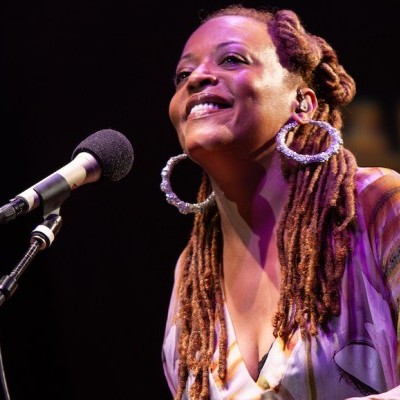
Wilson’s ability to connect to audiences helped her to win two Grammy awards and multiple other accolades. She was named an NEA Jazz Master in 2022.
Sep 3, 2026 10:44 AM
Cassandra Wilson, a singer, songwriter and producer who was one of the most acclaimed and successful jazz vocalists of…
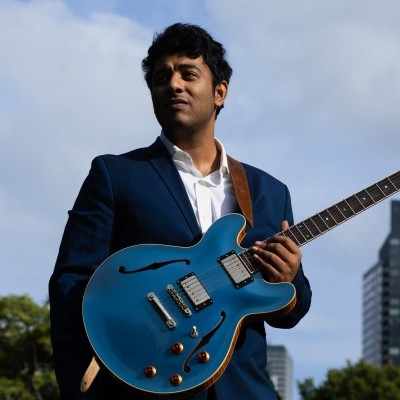
“The love from the jazz and music community restored my faith in humanity,” Walia wrote in an online post upon his release from detention at an ICE facility.
Aug 18, 2026 2:15 PM
Indian jazz guitarist and composer Pritesh Walia has been released after being unexpectedly detained by ICE and taken…
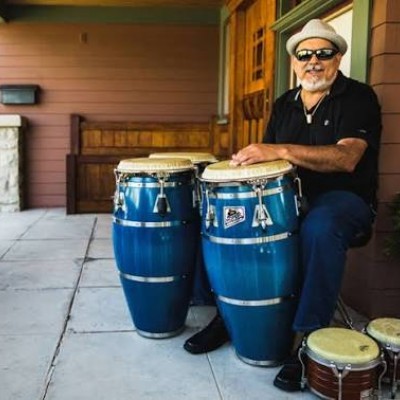
Percussionist Poncho Sanchez was among the artists scheduled to perform at the now-canceled inaugural LA Jazz Festival.
Aug 11, 2026 12:53 PM
The inaugural LA Jazz Festival, originally scheduled to run Aug. 7–23 with dozens of events across Los Angeles’…
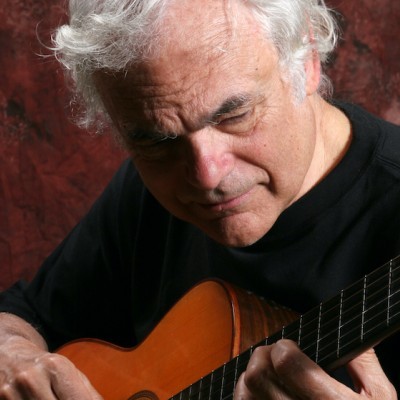
Bertoncini was a specialist and advocate for the nylon-string acoustic guitar, turning down high-profile opportunities that were unsuited to the sound and techniques that he used with that instrument.
Sep 1, 2026 11:06 AM
Gene Bertoncini, an esteemed jazz guitarist, composer, arranger and educator, died Aug. 29 at the Lillian Booth Actors…
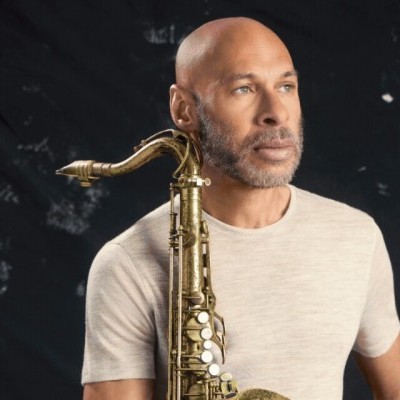
A solo concert by saxophonist Joshua Redman will close the first night of the Hyde Park Jazz Festival on Sept. 26.
Sep 22, 2026 12:26 PM
The Hyde Park Jazz Festival will take place for the 20th time on the final weekend of September 2026. Beginning half…