Oct 6, 2026 1:33 PM
Sonny Rollins Gets an Epic Send-Off in Manhattan
As emcee Mark Ruffin noted at the commencement of an epic tribute to saxophonist Sonny Rollins at the Cathedral of Saint…


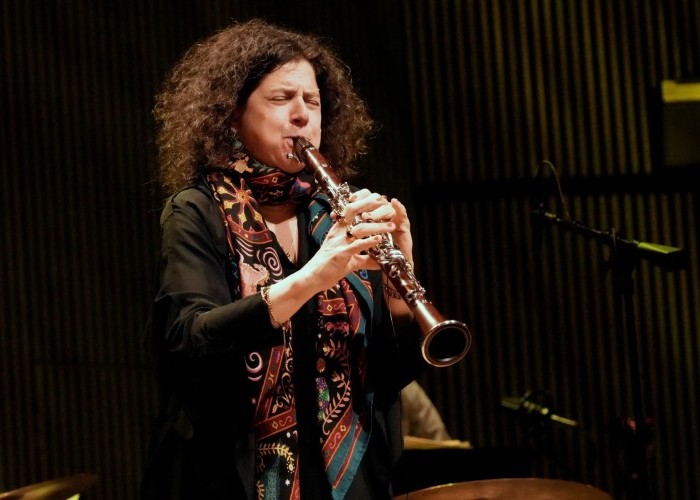
Anat Cohen at her 50th birthday celebration at SFJAZZ last December.
(Photo: Rick Swig)Midway through a luncheon interview in Brooklyn’s Fort Greene neighborhood, Anat Cohen mentioned her morning phone call with Oded Lev-Ari, her producer and partner in Anzic Records since the label launched in 2005.
The conversation, which took place in late September, was about a piece on Cohen’s next album, as yet untitled, which they were mastering. As Cohen usually does, she’d conveyed her intentions impressionistically. “I told him, ‘It feels to me like the song wants to burst more,” Cohen said. “Oded took that and responded, ‘Maybe you want to pull up the highs.’ He knows me, and he knows how to translate my needs.”
After a forkful of grilled lamb and salad, Cohen recalled another instance when Lev-Ari “applied some magic powder” to the 2024 recording session by her kinetic, Pan-American-oriented Quartetinho (Tal Mashiach on bass, Vitor Gonçalves on piano and accordion, James Shipp on vibraphone and percussion) that generated their second album, Bloom. “We were struggling with a Paraguayan classical piece. Oded told us, ‘Either try to play it the way the composer says, or give it your own take so you can loosen up a bit.’ Then he suggested, ‘maybe lay out’ or ‘maybe this you can play alone.’ It opened our mind to relax in the moment. The next take is what’s on the album.”
Recorded last summer, Cohen’s forthcoming album frames her clarinet with a rhythm section comprising fellow Israelis Mashiach, pianist Gadi Lehavi and drummer Ofri Nehemya. Each is 30-ish, and each contributed a song. “We went in and just played,” Cohen said. The group’s elder at 51, she rejects the title of “mentor.” “They kick my ass. When I’ve heard them play as a trio, I’m always, like, pulling my hair, going, ‘Oh, my God!’ Each is a master of their instrument, but they also have this live energy that I want. I want to burn. I feel the need to scream.”
Cohen paused, sipped her water and elaborated. “I’ve spent my life trying to be a kind person, and fair and honest, and do good and bring good and unite people. But we’re in a point where I’m labeled as something. … It’s not like I can hide behind the name Cohen. So I want to say what I have to say through my instrumental music.”
Towards fulfilling that urge to scream, might Cohen—the top clarinetist in both the DownBeat Readers and Critics polls every year since 2011—consider returning to the tenor saxophone, her primary instrument when she moved to New York in 1999, but has not documented on any leader date since the 2015 album Luminosa? She quickly claimed her niche, deploying a huge sound to deliver virtuosic tonal personality that reflected her deep dives into the dialects of, among others, Lester Young, Ben Webster, Dexter Gordon and Crescent-period John Coltrane. “I can scream on the clarinet,” Cohen deflected matter-of-factly. “I’m waiting for the right moment to go back to the tenor—it’s so heavy to carry.”
Does her enthusiasm for the players on her forthcoming album signify a future working band? Cohen was noncommittal. “I call it forming a recording,” she said. But Cohen acknowledged that, after “going Brazil-heavy the last 10 years,” she’s eager to return to the more freewheeling quartet format she navigated on recordings and tours from the mid-’00s until the mid-’10s with pianist Jason Lindner, bassist Joe Martin and drummer Daniel Freedman. “I want a context where not only can I swing, but also go deep into the harmony and interaction of American jazz.”
On Luminosa, apart from the aforementioned tenor feature, “The Wein Machine,” Cohen convened choro specialists Choro Aventoroso and guitarists Romero Lubambo and Gilad Hekselman to join the quartet (also documented therein for the last time) for a program primarily focused on various Brazilian flavors. There followed the simultaneously released, 2017-Grammy-nominated Otro Cosa: The Music Of Moacir Santos in duo with seven-string guitar maestro Marcello Gonçalves, and Rosa Dos Ventos, with Trio Brasileiro, following their 2014 release Alegria Da Casa. For the next several years, she toured heavily with all of the aforementioned Brazilian partners, and, with Lev-Ari, launched the Anat Cohen Tentet after receiving a commission to respond to the centennial of the purported “first jazz recording” by the Original Dixieland Jazz Band. The ensuing repertoire, composed and arranged by Lev-Ari, appears on Happy Song and Triple Helix.
“It shows everything the clarinet can do—as it’s used in jazz, classical music, Balkan folk music and Brazilian music,” Lev-Ari said. After the COVID pandemic, Cohen “pinned myself even more deeply into the Brazilian thing,” with an efflorescent Cohen-Gonçalves meditation on the Música Popular Brasileira songbook called Reconvexo, and Quartetinho’s eponymous debut album, which included songs by Jobim and Gismonti.
“I love Brazilian music,” Cohen said. She noted that a few days hence she’d be teaching for the third time at Choro Camp New England in Marlboro, Vermont, where she’d reunite with the members of Água de Moringa she met during her first visits to Rio de Janeiro at the end of 2000. Five months earlier, she’d done the same at Choro Northwest in Port Townsend, Washington, where she’s taught yearly since 2013. “It reaches my heart,” she continued. “But that isn’t what I want to do on stage. I don’t want to be defined by country.”
Cohen’s seriatem DownBeat poll wins indicate that audiences respond to her clarinet whether the styles, grooves and songs she plays are Brazilian, Pan-American, Middle Eastern, Great American Songbook or hardcore jazz. “Playing clarinet well is beautiful and challenging, and I do my best to honestly represent the instrument,” Cohen said. “I come from the classical tradition and I practice with respect to that sound. But being also a saxophone player has helped me be more flexible my sound production. That’s one reason why both the classical and jazz communities accept my clarinet playing.”
Lev-Ari, who has done projects with Cohen since they were classmates at a Tel Aviv arts high school, translated: “She channels the subtone that saxophone players use into the clarinet in a way I haven’t heard other people do. But none of these technical things are from an intellectual exercise to find something new in the music, but from her will to expand the instrument’s expressive palette. Many reviews over the years mention how bouncy her hair is and how she dances on stage. It’s all true, though I don’t know how many male musicians get similar comments about their physicality. But Anat’s personality also connects with listeners emotionally, both in person and through recorded sound. She makes people feel things. Our requirement when we work on something together is whether or not we’re connecting. We’re telling a story.”
“People constantly comment that clarinet seems like an extension of me, that my personality naturally flows through the instrument,” Cohen added. “That’s also how I feel when I play it. I feel I can be myself 100 percent, whereas I am sometimes more inhibited with other instruments. With the clarinet, I manage to connect the past, present and future. I don’t judge one style against another. It’s all just music.
“People also say they hear joy when I play. This baffled me, because our process as musicians carries so much solitude and suffering. I’ve realized that when I’m on stage, when I’m inside the music, communicating through notes and not through words, and feeling one heart—that’s my safe place. That connection brings me joy, and that connection is what people relate to. It’s honest. To be inside music really is joyous. It’s a privilege and a celebration. Music is a moving art. There’s no time to get lost in your thoughts, because you’re improvising. If you miss the moment, then it’s gone.”
Lev-Ari’s seven arrangements for the 2025 release Interaction by The 3 Cohens (Anat on clarinet, older brother Yuval Cohen on soprano saxophone, younger brother Avishai Cohen on trumpet) with the WDR Big Band from a 2022 concert include the siblings’ a cappella treatment of Gerry Mulligan’s “Festive Minor.” It mirrors Lev-Ari’s description in the booklet notes of first hearing the Cohens accompanying a Music Minus One recording as he stood outside their apartment, “transfixed by the way their musical lines swerved and wove around each other in an organic, contrapuntal interplay. One would start a musical phrase, and another would imitate or complete it—or even foreshadow its conclusion, to the frustration of the originator, as if to say, ‘I know what you’re going to do,’ or ‘Corny! Find something else.’ The music was alive, exhilarating, and joyous, and I didn’t want to open the door for fear the magic might disappear.”
The magic hasn’t disappeared. Nor has Anat Cohen’s predisposition to walk the tightrope.
“I love working with Oded,” she said. “It’s so good to have him in case I get tangled up. He’s brilliant and musical, and throws out these pearls of wisdom. I trust him 100 percent. He’s a real mensch.” DB
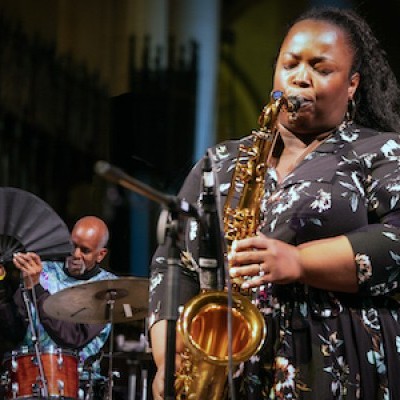
Camille Thurman took to the stage alongside bassist Kenny Davis and drummer Tommy Campbell for a rendition of Johnny Mercer’s “I’m An Old Cowhand” that recalled Rollins’ epochal 1957 trio outing Way Out West.
Oct 6, 2026 1:33 PM
As emcee Mark Ruffin noted at the commencement of an epic tribute to saxophonist Sonny Rollins at the Cathedral of Saint…
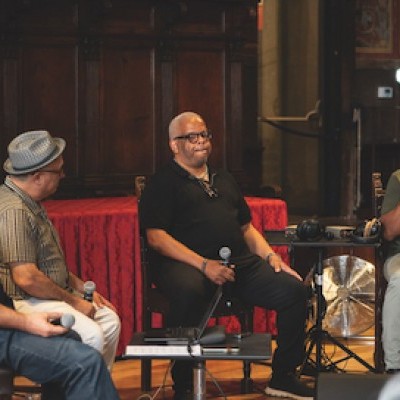
Ravi Coltrane (right) makes a point during a live Blindfold Test at the Umbria Jazz Festival while pianist Greg Burk (far left), journalist Ashley Kahn and trumpeter Terence Blanchard listen.
Oct 20, 2026 12:53 PM
The pairing of Terence Blanchard and Ravi Coltrane was billed as “The Miles/Coltrane Legacy,” a tour celebrating the…
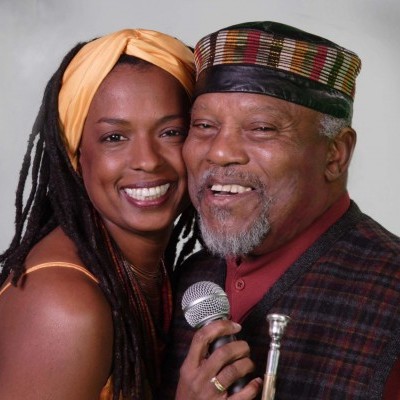
For trumpeter Marcus Belgrave (1936–2015), shown here with his wife, Joan, teaching meant more than developing instrumental technique. It meant helping musicians understand the history they were inheriting and the immense responsibility that came with it.
Oct 20, 2026 12:35 PM
In a standout scene from …And Damn, He Could Play: The Marcus Belgrave Story, bassist Endea Owens discusses a…
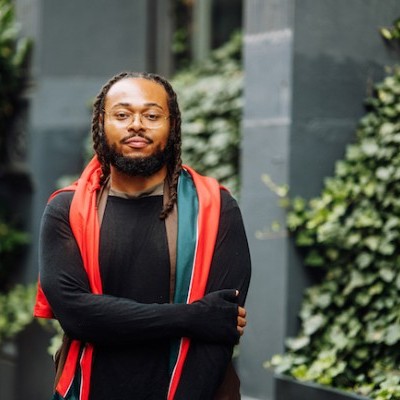
Alto saxophonist and composer Immanuel Wilkins has been named a 2026 MacArthur fellow.
Sep 29, 2026 11:30 AM
Immanuel Wilkins, an alto saxophonist, composer, bandleader and Blue Note recording artist based in Brooklyn, New York,…

RSD Black Friday (Nov. 27) is a great day to shop for special new releases at your local record store.
Nov 24, 2026 9:00 AM
Looking for a great gift for your vinyl-loving loved one, or maybe for yourself? Record Store Day’s Black Friday…