Sep 3, 2026 10:44 AM
In Memoriam: Cassandra Wilson, 1955–2026
Cassandra Wilson, a singer, songwriter and producer who was one of the most acclaimed and successful jazz vocalists of…


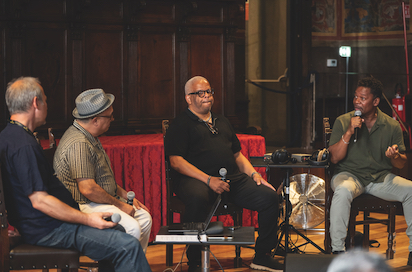
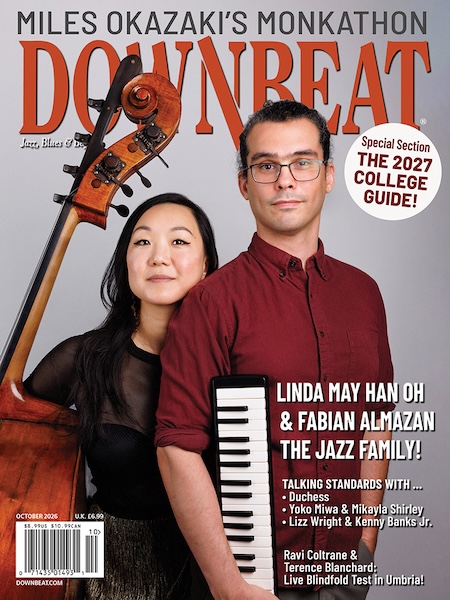
Ravi Coltrane (right) makes a point during a live Blindfold Test at the Umbria Jazz Festival while pianist Greg Burk (far left), journalist Ashley Kahn and trumpeter Terence Blanchard listen.
(Photo: Karen Righi)The pairing of Terence Blanchard and Ravi Coltrane was billed as “The Miles/Coltrane Legacy,” a tour celebrating the twin centennials of 2026, focusing on the sounds and spirit they produced together when the two legends were in close orbit. Blanchard and Coltrane toured Europe through the summer, co-headlining a number of notable venues and festivals, including the Umbria Jazz Festival, where they convened early one morning for a well-attended Blindfold Test in the hallowed hall of Perugia’s Sala dei Notari.
Paul Chambers
“Omicron” (Whims Of Chambers, Blue Note, 1958) Donald Byrd, trumpet; John Coltrane, tenor saxophone; Kenny Burrell, guitar; Horace Silver, piano; Chambers, bass; Philly Joe Jones, drums.
Blanchard: We were just talking about the sound of the record and how clear everything sounds.
Coltrane: Each individual voice is represented in the recordings just so perfectly. That’s from a Paul Chambers record called Whims Of Chambers. I think that tune is called “Omicron.” That’s John Coltrane and Donald Byrd and Paul Chambers and Kenny Burrell on guitar and Philly Joe.
Blanchard: This is one of the few times when I’ve heard some early Donald Byrd and I go, “Man, he loved Clifford Brown!”
Coltrane: My favorite Coltrane-Byrd moment is probably from 1958. They do the song “Lover” very, very fast. It’s beautiful and brilliant, outrageous and incredible. I remember talking with Donald Byrd about it. He said John was practicing it at that tempo for a long time. He said, “I had no idea we were going to play it that fast!”
Marsalis Family
“Cain And Abel” (YouTube video of a New Orleans concert, 2001) Wynton Marsalis, trumpet; Branford Marsalis, tenor saxophone; Roland Guerin, bass; Jason Marsalis, drums.
Blanchard: It’s kind of hard to deny Wynton and Branford. They set the bar for another generation that came along.
Coltrane: Black Codes From The Underground — that’s one of Wynton’s earliest records. I was in my early 20s and I was very, very influenced by that record. It was the first time I saw young Black men of a similar generation to me making this music. The Charlie Parkers and the John Coltranes they seemed so far away. But seeing Branford and Wynton inspired me that maybe I can be a part of this music as well.
The Brecker Brothers
“Sponge” (Live And Unreleased, Piloo Records, 1980) Randy Brecker, trumpet; Michael Brecker, tenor saxophone; Barry Finnerty, guitar; Mark Gray, keyboards; Neil Jason, electric bass; Richie Morales, drums.
Blanchard: That’s obviously The Brecker Brothers. So you have another theme going here: families in jazz!
Coltrane: I’ve had many opportunities to hear Michael and Randy play. When I moved to New York, Michael was one of the first people to reach out to me. Do you need any help? I think he extended his love for John Coltrane to me. I always loved being around him. He developed a very unique sound combining his jazz knowledge with a rock approach, extending the techniques on the instrument. When someone comes along with a newer sound, a lot of people start to copy it and sometimes it goes a little too far. We used to call them “Brecker heads” — it was clear they were only listening to one guy. Michael was not happy about that. He actually thought it was watering down his sound, and I agree with that to a certain extent.
Claudio Fasoli 5tet
“Boerum Hill” (The Brooklyn Option, Abeat, 2015) Ralph Alessi, trumpet; Fasoli, tenor saxophone; Matt Mitchell, piano; Drew Gress, bass; Nasheet Waits, drums.
Blanchard: Was this Ralph Alessi? Because Ralph is one of those trumpet players that really can play. [to Ravi] You would know Ralph’s sound.
Coltrane: It didn’t sound like Ralph. I’ve been playing with him since 1986, and I’m pretty familiar with his approach.
Blanchard: The performances I thought were daring. To me this is what jazz should be in terms of exploring and you could tell everybody could really play. My curiosity is piqued by what would happen if this band stayed together for, like, five years.
Sonny Rollins
“Oleo” (Our Man In Jazz, RCA, 1962) Rollins, tenor saxophone; Don Cherry, trumpet; Henry Grimes, bass; Billy Higgins, drums.
Coltrane: The great Sonny Rollins. The great Sonny Rollins. The great Sonny Rollins. The great Sonny Rollins.
Blanchard: I think it was the great Sonny Rollins.
Ashley Kahn: I think they’re both right.
Blanchard: Was that Booker Little? I thought it was Don Cherry at first.
Coltrane: It’s Don Cherry, “Oleo.” I know the recording. This is from 1962, but when it started I thought it might have been some cats recording a year ago. It’s such a future-focused sound in there. I admire Sonny during this period, really wanting to stretch, go where the music was going in the 1960s.
Blanchard: That makes me want to go up on a bridge for two years and sit on it and practice.
Artemis
“The Smile Of The Snake” (Arboresque, Blue Note, 2025) Ingrid Jensen, trumpet; Nicole Glover, tenor saxophone; Renee Rosnes, piano; Noriko Ueda, bass; Allison Miller, drums.
Blanchard: The performances were amazing, really interesting, and the groove: a mixture of a “Poinciana” beat with a New Orleans second line thrown in there. I loved the performance. Was it Ingrid?
Coltrane: I enjoyed the saxophone very much. I was not familiar with this recording but I’m familiar with all of these musicians, especially Renee. The first time I heard her play was in the ’80s with Joe Henderson and she was playing incredibly then. I’ve heard Nicole play many times. She’s fantastic, and Allison Miller, I know her playing from my CalArts days.
Blanchard: At a time when bigotry is on the rise, it’s important for young boys and girls to experience this band to understand that we all have potential to do great things. DB
The “Blindfold Test” is a listening test that challenges the featured artist to discuss and identify the music and musicians who performed on selected recordings. The artist is then asked to rate each tune using a 5-star system. No information is given to the artist prior to the test.
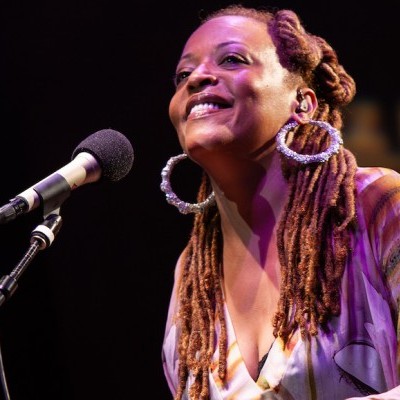
Wilson’s ability to connect to audiences helped her to win two Grammy awards and multiple other accolades. She was named an NEA Jazz Master in 2022.
Sep 3, 2026 10:44 AM
Cassandra Wilson, a singer, songwriter and producer who was one of the most acclaimed and successful jazz vocalists of…
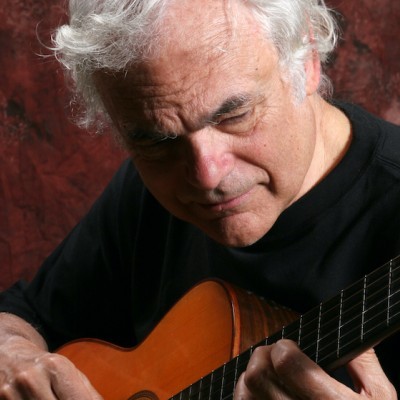
Bertoncini was a specialist and advocate for the nylon-string acoustic guitar, turning down high-profile opportunities that were unsuited to the sound and techniques that he used with that instrument.
Sep 1, 2026 11:06 AM
Gene Bertoncini, an esteemed jazz guitarist, composer, arranger and educator, died Aug. 29 at the Lillian Booth Actors…
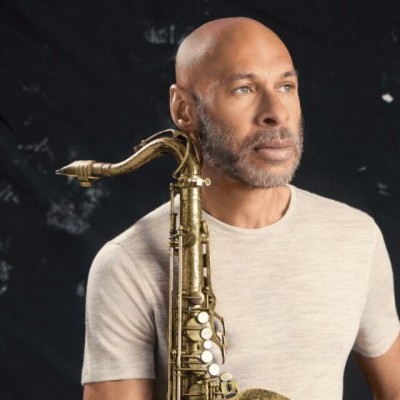
A solo concert by saxophonist Joshua Redman will close the first night of the Hyde Park Jazz Festival on Sept. 26.
Sep 22, 2026 12:26 PM
The Hyde Park Jazz Festival will take place for the 20th time on the final weekend of September 2026. Beginning half…
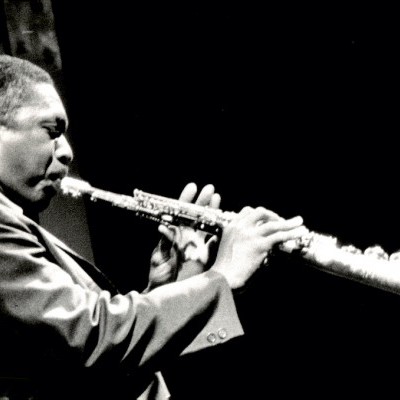
“It was just that suddenly … I could hear it,” Ravi Coltrane said of an epiphany he experienced during his late teens regarding his father’s music. “And it was almost like a calling, like something saying, ‘Hey, man, come on. It’s time to get serious.’ And the first time you really tune in and dial in and focus like that, it can be very life-changing.”
Sep 22, 2026 1:39 PM
Editor’s Note: Tomorrow, Sept. 23, is the 100th anniversary of John Coltrane’s birth. In honor of the tenor and…
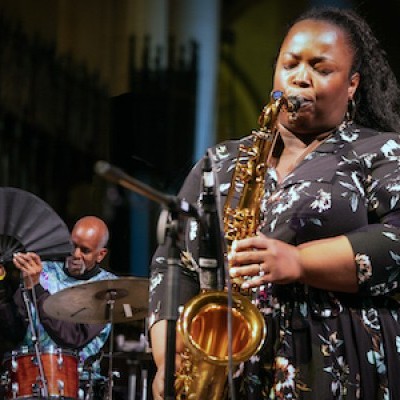
Camille Thurman took to the stage alongside bassist Kenny Davis and drummer Tommy Campbell for a rendition of Johnny Mercer’s “I’m An Old Cowhand” that recalled Rollins’ epochal 1957 trio outing Way Out West.
Oct 6, 2026 1:33 PM
As emcee Mark Ruffin noted at the commencement of an epic tribute to saxophonist Sonny Rollins at the Cathedral of…