Sep 3, 2026 10:44 AM
In Memoriam: Cassandra Wilson, 1955–2026
Cassandra Wilson, a singer, songwriter and producer who was one of the most acclaimed and successful jazz vocalists of…


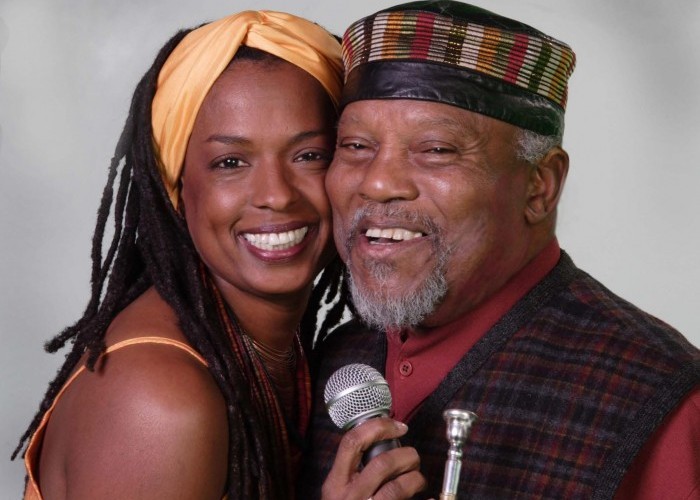
For trumpeter Marcus Belgrave (1936–2015), shown here with his wife, Joan, teaching meant more than developing instrumental technique. It meant helping musicians understand the history they were inheriting and the immense responsibility that came with it.
(Photo: Courtesy Joan Belgrave)In a standout scene from …And Damn, He Could Play: The Marcus Belgrave Story, bassist Endea Owens discusses a difficult chapter in her life during which she questioned whether she had a future in music. So discouraged that she considered quitting, Owens found Marcus Belgrave unwilling to let her walk away.
“Marcus pulled up in front of her house in a van with a bass in the car and told her to get in,” vocalist Joan Belgrave, Belgrave’s widow and the executive producer of the documentary, recalled. “He said you are going to do this. He could see not only her talent, but that she needed the music.”
In the documentary, Owens, who has since become a household name performing with Jon Batiste on The Late Show with Stephen Colbert, highlighted how Belgrave was there for her at a critical time in her life and gave her the confidence to keep going.
Throughout his life, Belgrave helped generations of musicians find their voices. More than a decade after his death, the new documentary traces the reach of that legacy.
Belgrave’s career encompassed tenures with Ray Charles and Motown, decades as a jazz educator and a far-reaching role as a mentor. Those intertwined parts of his life form the foundation and emotional heart of …And Damn, He Could Play, directed by Detroit filmmaker Timashion Jones. The 90-minute film will premiere at the DOC NYC documentary film festival in November, bringing Belgrave’s history to a global audience.
For Joan Belgrave, the festival selection represents a step toward cementing her husband’s legacy. “It’s huge. I mean, it’s really huge,” she said. “It’s not just a national audience; it’s a global audience. And that is something that I’m just absolutely thankful for. The end goal for me is to get it distributed globally, and so the New York documentary festival is one step closer to that.”
Jones, whose team submitted the film to several prominent festivals, described DOC NYC’s acceptance as a “sigh of relief.”
“When you create art, you don’t want to just create it so you can look at it in your own house,” he said. “You want to show it off to people. And there is plenty to show.”
The Man Behind the Music
Born in 1936, Belgrave was a formidable trumpeter whose musical journey crossed jazz, R&B and soul. His playing earned the respect of musicians globally, but his most enduring contribution was nurturing generations of jazz musicians that included Kenny Garrett, Geri Allen, Theo Coker, Regina Carter and Robert Hurst.
When Joan Belgrave initially approached Jones about directing the film, Jones knew nothing about Belgrave. “I started calling other people that I knew in the music business, and every single person that I called and talked to, they were like, ‘Yeah, of course. You didn’t hear about Marcus?’” Jones even recalled premiering an earlier film at Detroit’s Charles H. Wright Museum of African American History, where a large photograph of Belgrave hung near the screen. At the time, he had no idea who the musician was.
Jones’ unfamiliarity ultimately became an asset to the documentary. Instead of approaching Belgrave’s story as a lifelong admirer, he could shape the film for viewers who, like him, were discovering the musician’s career for the first time. “I think it was good that Timashion didn’t know because he was objective,” Joan Belgrave said. “He came in it green, and he came in it with a different perspective.”
As Jones dug deeper, he became interested not only in the musicians Belgrave mentored but also in the musical lineage that shaped Belgrave. The answer became central to the documentary. Belgrave absorbed lessons from generations of great musicians and spent his life passing that knowledge forward.
More Than a Great Trumpeter
Trumpeter Theo Croker, in the film, for example, recalled sessions that could last for hours. Belgrave would immerse him in Detroit’s musical environment while connecting him with jazz traditions, including the legacy of Croker’s grandfather, trumpeter Doc Cheatham.
For Belgrave, teaching meant more than developing instrumental technique. It meant helping musicians understand the history they were inheriting and the immense responsibility that came with it. His commitment to mentorship was part of a larger tradition that established Detroit as one of jazz’s incubators of talent.
Detroit jazz historian and journalist Mark Stryker, author of Jazz from Detroit and a writer/producer behind the documentary The Best of the Best: Jazz from Detroit, sees Belgrave as an essential link in a lineage stretching across generations. “Mentorship is key to the Detroit jazz tradition,” Stryker said. “This is a long, continuous tradition that existed before Marcus, was inherited by Marcus, who then exemplifies it, personifies it, puts his grace and brilliance on it, and then passes it on to the next generation.”
That mentor tradition traces back to a precocious pianist, Barry Harris, a mentor to Charles McPherson, Donald Walden and Wendell Harrison. Belgrave carried on that tradition throughout the 1970s, ’80s, ’90s and mid-2000s.
Capturing a Lifetime
Squeezing Belgrave’s extraordinary life into 90 minutes presented challenges. Jones assembled archival performances, historical footage, home videos and interviews with musicians whose careers intersected with Belgrave’s. The production team traveled to New York, Los Angeles, Philadelphia and New Orleans to capture those perspectives. Jones said the first edit ran approximately three hours. “I had footage that brought me to tears that we didn’t put into the documentary,” he said. Jones compared editing to chiseling a statue, gradually removing material until the essential story emerged.
Joan Belgrave also emphasized the importance of assembling a talented, largely Detroit-based production team. When people asked whether the filmmakers had brought in a crew from Los Angeles because of the documentary’s quality, she saw an opportunity to challenge assumptions about Detroit’s creative community. “This is Detroit, baby,” she said. “We’ve got the people. It’s just a matter of tapping into that.”
Joan believes that Belgrave’s selflessness and openness helped him connect with musicians from different backgrounds. “I think everybody can relate to the story,” she said. “I think everybody can relate to his humanity, and everybody can relate to Marcus.”
She hopes Belgrave’s story demonstrates how one person can profoundly affect countless lives. “If this documentary can inspire someone to give, then I’m good,” she said.
Asked what Marcus would think about seeing his life onscreen, Joan Belgrave recalled a conversation a week before his death in 2015, when he expressed satisfaction with the life he had lived. “Baby, I’m happy with my legacy. I’m good,” he told her.
At the time, she wasn’t ready for that sentiment, but today she understands what he really meant. “I think he knew that he was OK, that he had done what he was put on this earth to do. And he was happy with that. So hopefully, hopefully we have shown that and he’s smiling down on us now.” DB
The Marcus Belgrave documentary …And Damn He Could Play will premiere at the DOC NYC film festival on Nov. 13 at 7 p.m. A second showing will be held on Nov. 14 at 1 p.m. Both screenings will take place in Village East. For more information, visit the site: docnyc.net/film/and-damn-he-could-play-the-marcus-belgrave-story.
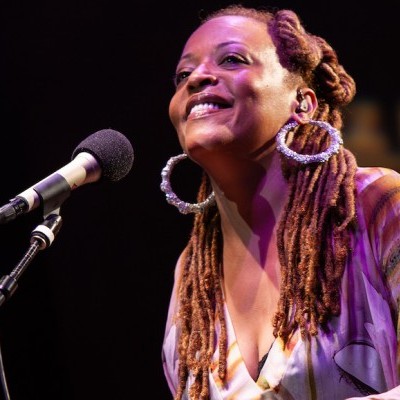
Wilson’s ability to connect to audiences helped her to win two Grammy awards and multiple other accolades. She was named an NEA Jazz Master in 2022.
Sep 3, 2026 10:44 AM
Cassandra Wilson, a singer, songwriter and producer who was one of the most acclaimed and successful jazz vocalists of…
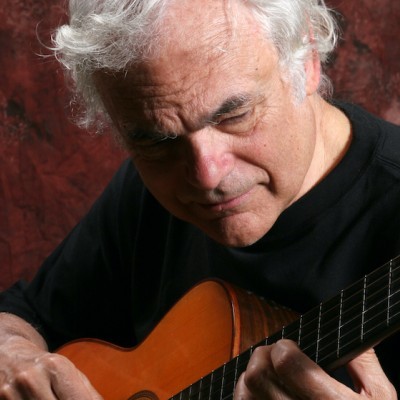
Bertoncini was a specialist and advocate for the nylon-string acoustic guitar, turning down high-profile opportunities that were unsuited to the sound and techniques that he used with that instrument.
Sep 1, 2026 11:06 AM
Gene Bertoncini, an esteemed jazz guitarist, composer, arranger and educator, died Aug. 29 at the Lillian Booth Actors…
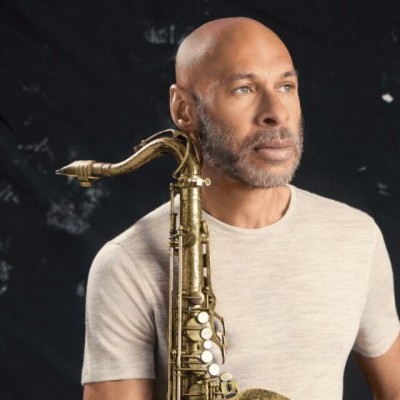
A solo concert by saxophonist Joshua Redman will close the first night of the Hyde Park Jazz Festival on Sept. 26.
Sep 22, 2026 12:26 PM
The Hyde Park Jazz Festival will take place for the 20th time on the final weekend of September 2026. Beginning half…
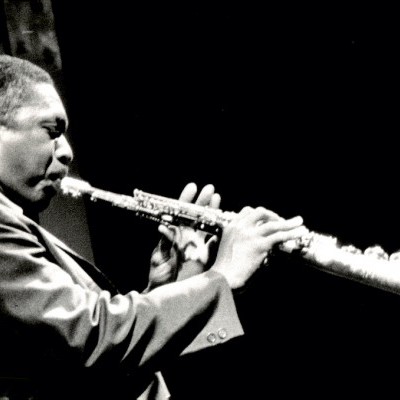
“It was just that suddenly … I could hear it,” Ravi Coltrane said of an epiphany he experienced during his late teens regarding his father’s music. “And it was almost like a calling, like something saying, ‘Hey, man, come on. It’s time to get serious.’ And the first time you really tune in and dial in and focus like that, it can be very life-changing.”
Sep 22, 2026 1:39 PM
Editor’s Note: Tomorrow, Sept. 23, is the 100th anniversary of John Coltrane’s birth. In honor of the tenor and…
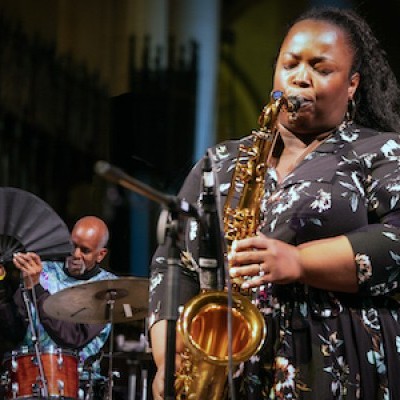
Camille Thurman took to the stage alongside bassist Kenny Davis and drummer Tommy Campbell for a rendition of Johnny Mercer’s “I’m An Old Cowhand” that recalled Rollins’ epochal 1957 trio outing Way Out West.
Oct 6, 2026 1:33 PM
As emcee Mark Ruffin noted at the commencement of an epic tribute to saxophonist Sonny Rollins at the Cathedral of…