Sep 3, 2026 10:44 AM
In Memoriam: Cassandra Wilson, 1955–2026
Cassandra Wilson, a singer, songwriter and producer who was one of the most acclaimed and successful jazz vocalists of…



“We’re going to do what we want to do; that’s how we got a fanbase in the first place,” says Snarky Puppy leader Michael League.
(Photo: Annemone Taake)Dreams are slippery things. From devout Jungians to the astrologers of TikTok, every new generation seeks to uncover what dreams might reveal about the self. When he set out to write music for Somni (GroundUP), Snarky Puppy’s new live collaboration with The Metropole Orkest, bandleader and producer Michael League booked himself a residency in the Japanese countryside to meditate on dreams. He, too, grappled with those questions.
For three weeks, the Catalonia-based artist secluded himself from the world — no Zooms, no interviews, no dinner meetings — and immersed himself in writing. By the end of his residency, he had composed the entirety of Somni, eight songs inspired by different conventions of dreams and dreaming. But, he’d soon learn, the coming months of arranging, producing, recording and multimedia collaborating would reveal less about the meaning of dreams and so much more about the meaning of Snarky.
For two decades, the multiple Grammy Award-winning band has been releasing new music and touring internationally with different iterations of its 20ish-piece ensemble. Members have collaborated with icons including Herbie Hancock, Erykah Badu, Eric Harland, Ledisi, Snoop Dogg, Kendrick Lamar, Nate Smith, Kirk Franklin, Chaka Khan and David Crosby; among the current roster are Robert “Sput” Searight, Jamison Ross, Zach Brock, Jay Jennings, Larnell Lewis, Keita Ogawa, Jason “JT” Thomas and Nikki Glaspie. Over the years, casual fans have fallen in love with signature melodies and the way Snarky compositions unfold live, but true fans hold sacred the band’s commitment to each member’s unique expression and a relentless pursuit of what’s next.
“One of the main things I’ve learned over 21 years with Snarky Puppy,” says League, “is that when you make people feel small and when you limit them and when you force them to fit inside boxes, the final result may be more in line with what you envisioned originally, but it will never be better than when they feel liberated and able to express themselves.”
Recorded over three nights and issued on Nov. 21, alongside its Blu-Ray film release capturing the live performances, Somni features the artists stretching their individual sounds way out into a shared musical terrain.
“There’s a common theme throughout all the songs, which is that I was trying to develop motivic ideas slowly,” says League. “Dreams don’t have hard cuts. Maybe a dream starts with you going grocery shopping with your mom and then the grocery store turns into a football stadium and then your mom turns into Michael Jackson. … They all shift slowly.”
He admits leaning into the long, deliberate and patient trek from one outpost to the next — a departure even from Sylva, the band’s first release with Metropole — might feel disorienting to certain listeners.
“I recognize that there’s a contingent of our audience that really likes the bombastic-ness of what we were doing when we were younger,” he continues. “But we’re not going to write that way or play that way because people want us to do that. We’re going to do what we want to do; that’s how we got a fanbase in the first place.”
Working with Metropole — an orchestra known for interpreting contemporary music with an ability, according to conductor Jules Buckley, to “understand the DNA of the groove” — consistently inspires League and his fellow artists to enter new realms of creativity. Reflecting on Snarky’s years-long partnership with the Holland-based ensemble that has collaborated with generational luminaries from Ella Fitzgerald and Dizzy Gillespie to Tori Amos and Arooj Aftab, he admits defying his own artistic instincts can be a helpful strategy.
“There’s just a million things you can do with 54 musicians playing that set of instruments, and it’s very easy to get locked into doing traditional things,” says League. “But when you really step back and look at it like a child, it’s like, ‘Man, we’re capable of doing so much stuff that’s not typical.’ So on this record I tried to explore several ideas that are maybe lesser used.”
Those ideas emerge as both direct and conceptual references to dreaming, through the album and on individual songs. The artists play sections of “Chimera” — the song that taps into the id energy of dreams — with cooperative defiance.
“Musically, the inspiration for the expression of these choruses is actually Ornette Coleman, kind of like ‘Lonely Woman,’” says League. “We told the orchestra, just, like, don’t play together: ‘Here’s your melody. I don’t care if it’s out of time. I don’t care if you add notes. Just don’t play it politely, and don’t play it together.’ That’s the only direction I gave them.”
“As You Are But Not As You Were” proffers a more literal manifestation of dreaming in the marimba melody sequencing through the piece. The idea references the phenomenon of dream characters whose faces may change while the rest of them stays the same.
“The identity is the motif and the instruments are the faces,” says League. “In this case, the philosophical concept was governing the composition process.”
Introducing the balağma, or saz, a Turkish stringed instrument, provides a different color palette for “Between Worlds,” serving the album’s atmospheric tribute to lucid dreaming, while “Recurrent,” the “chase dream” song, features the four drummers delivering solos on four distinct kits, each uniquely named and tuned. According to League, the quartet of kits allows both the music to expand and the artists’ personalities to intensify: “[It] affords [us] the unique opportunity to get four different sounds and find the most appropriate sound for the different sections of each song.”
To Glaspie, the band’s newest full-time member, the concept, in and of itself, is utterly Snarky.
“Mike is a genius for giving everyone the space to be themselves,” she says. “That’s the best type of band leader and producer; you call people because you want them to do what they do, not to make them conform to whatever idea it is you have in your head.” The drummers named each kit for the familiarities of its sound and, perhaps, in tribute to the shifts-and-layers nature of dreams. “Bonzo” features a 24-inch kick, 13-inch rack and 16- and 18-inch floor toms.
“I’m a huge John Bonham fan,” says Glaspie. Named for Mr. Hakim, “Omar” features a 20-inch kick, 12-inch tom, 14-inch floor tom and, to the left, another 18-inch kick. “It was a bebop kind of hybrid kit,” she says. “Steve,” the “snom kit” named for Steve Jordan, features a collection of snares the drummers would switch off to become toms, and the Snarkiest kit according to Glaspie is “Sput,” named for Searight: “The ‘regulation,’ if you will.”
But the secret is in the cymbals. “We had to make sure we had the sound in the cymbals that we needed for the songs and the specific parts that we were playing on those kits,” says Glaspie. “So there was a lot of moving and talking: We worked together to figure out, ‘OK, well, on this song, you’re doing this so you probably need this ride.’ It was incredible, and I can’t believe it honestly came together in the way that it did. But that’s a testament to everyone wanting to make the music happen. Because the music is the most important thing.”
Loyalty to the music drives the legacy of Snarky Puppy, overriding vision, expectation and, to a degree, ego. When League asked Buckley to be a primary arranger for Somni, the savvy conductor suggested they use four arrangers for the project, prompting a partnership with Jochen Neuffer and Same Gale. The four artists assembled in Berlin to share space and talk down ideas, placing strong focus on dreamscaping. Song by song, they got to work.
“It was so cool, first off to not have to do all of it,” says League, who arranged much of Sylva himself. For “Drift” — whose title and shifting sections capture a common through-feeling in dreams — he remembers handing off the music to Gale with the following directive: “I said, ‘Sam, Gil Evans, five-part harmony, go in there.’ And he’s like, ‘All right, give me an hour.’”
The other reason League sparked to the idea of inviting more voices into the arrangers room is that he wanted to get away from his own — just a little: “Even though [Jules] had a role in the arranging of Sylva, when I hear that record, it just sounds like a lot of me.” While League was present throughout the process of arranging Somni, engaging the other artists and delivering feedback in real time, his primary motive was encouraging them to express themselves as individual composers.
“I was like, ‘I want to hear all the different personalities,’” says League. “And I think that’s really the thing that takes this record to a place that Sylva never got to — you really hear the personalities of these three other arrangers, not just me. And I’m really grateful to them and I can’t say enough wonderful things about them.”
Buckley, who’s known to assemble small teams for each of his own projects and those with Metropole, felt the collaboration could serve the album in ways he and League wouldn’t be able to achieve alone.
“When certain arrangers write,” he says, “you can tell right away, ‘that’s Nelson Riddle, that’s Vince Mendoza, that’s John Clayton’ — it’s just clear. What comes with that is essentially the taste of that composer-slash-arranger. … When I look at my own writing, there are things I think I’m really good at and there are things I think I’m kind of crap at. So I’m not going to chuck my own ego in the way when I know that [other people are] going to do a way better job than me on it. I’d rather ask them to do it and then work more with my producer hat on, listening to what they’ve done.”
Over the years, League has grown to embrace that actionable ideology. Like Buckley, he’s learned to get out of his own way by relegating his ego to relinquish control. It hasn’t been easy. When Snarky Puppy formed, the band members were in their 20s, full of big ideas and youthful hubris. Admittedly, and like many working artists, at times League would allow his desire for external validation to influence his playing and composing. Since those early days, he’s worked to develop patience and perspective around the art of music making, and to trust not only his fellow artists but also himself.
“It can be easy for musicians, and artists in general, to get caught up in perfectionism and to get caught up in self-importance like, ‘Everything I do has to be amazing so that people think I’m amazing, and say I’m amazing so that I can believe I’m amazing,” he says. “When you’re younger you want to do everything yourself, you want to test your limits, you want to see what you’re capable of. Then as you get older you’re like, ‘I want people who are really good at things to do things,’ [laughs]. When you’ve lived enough experiences where someone contradicting your vision or modifying your vision resulted in a better artistic product, you welcome it and you listen for it.”
The contradiction-seeking approach enhances Snarky’s projects and, by extension, Snarky’s sound. Ross has been a full-time member for more than a decade, joining the band on tour in São Paulo and recording Family Dinner Vol. 2, followed by many other acclaimed releases. And like the other members, his musical palate has always flexed strong tastebuds.
“When I first joined Snarky Puppy, the language which we used to communicate about the music was from the great jazz lineage,” says Ross. “The Miles Davises, the Nefertitis, the Four & Mores, the Herbie Hancocks, the Ron Carters, the Freddie Hubbards — that’s how we communicated.”
Over time, he has witnessed his bandmates evolve their own artistries through diligent work and self-reflection: “In Snarky, everyone has spent time researching not only the music but themselves. … When they first started, everybody was 19, 20. Now we’re all 40-plus. That’s a lot of time and experience of getting to know yourself, your own convictions, but also, to be able to swallow the amount of lineage that has come before you, and utilize it in creative spaces. So that’s what you hear. And that’s why this record is one of my favorites.”
Perhaps what Ross appreciates most about how Snarky Puppy has developed into a collective force is the freedom every player has to be themselves.
“I am being the same Jamison that I am being in every other project I work on with Snarky Puppy,” he says. “When it comes to developing that sound, Snarky Puppy is a sum of its parts. The name is a sound combined. That’s why if you ever see a different lineup of the band, with different guitar players and different drummers and different horn players, it changes.”
But with that freedom, each member takes on the solemn responsibility of suppressing their ego and working in service to the music — and to a sound that may shift and evolve but never changes its DNA. “You know [Somni is] a Snarky Puppy record,” says Ross. “The melodies are Snarky Puppy melodies. And when I say Snarky Puppy, I mean “Thing Of Gold,” “What About Me,” “Lingus”: the songs that blew the band up. As soon as I heard [these melodies], I said, ‘Yeah. This is Snarky Puppy 101.’”
For League, integrating everyone’s strengths, tastes and creative impulses, particularly as they all continue to mature as artists and human beings, sets the band apart from other composition-driven projects.
“That’s like the secret sauce of Snarky Puppy,” he says. “You have 20 people all making these little changes, improvising just the right amount, within the construct of the song so that you stay on message, that you get all these different dimensions, rather than just like — the thing that Mike wanted when he wrote the tune. If the band has a superpower, that’s what it is.”
Some might say being part of Snarky Puppy, with its legacy of shapeshifting through a consistent yet evolving identity, is similar to entering the realm of dreams. As the band heads into its 22nd year as a collective of artists serving a collective of sound, League has entered a decidedly less “precious” phase of his artistry as a player and composer.
“I won’t say that it started that way,” he says. “I’ve written probably 150 songs or more. And then more you do it, the less worried you are about it being the most amazing thing that anyone’s ever heard and that you’ve ever done. It just becomes, ‘I feel a certain way; I want to write something about it; I want to execute it well so that people understand it and boom — I’m going to put it out into the world and start writing the next song.’” DB
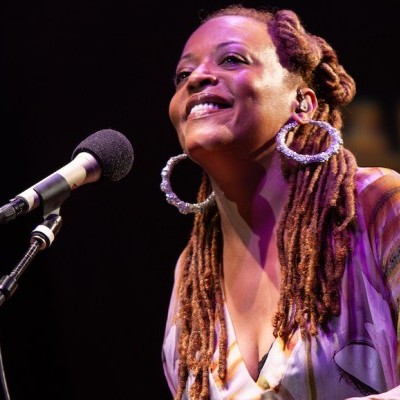
Wilson’s ability to connect to audiences helped her to win two Grammy awards and multiple other accolades. She was named an NEA Jazz Master in 2022.
Sep 3, 2026 10:44 AM
Cassandra Wilson, a singer, songwriter and producer who was one of the most acclaimed and successful jazz vocalists of…
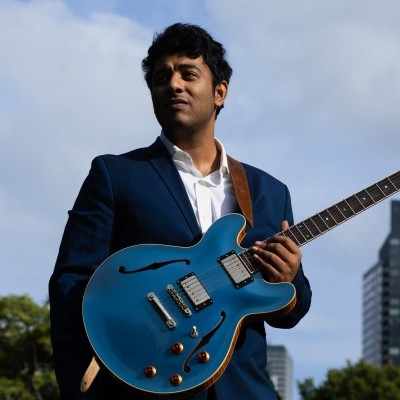
“The love from the jazz and music community restored my faith in humanity,” Walia wrote in an online post upon his release from detention at an ICE facility.
Aug 18, 2026 2:15 PM
Indian jazz guitarist and composer Pritesh Walia has been released after being unexpectedly detained by ICE and taken…

Bertoncini was a specialist and advocate for the nylon-string acoustic guitar, turning down high-profile opportunities that were unsuited to the sound and techniques that he used with that instrument.
Sep 1, 2026 11:06 AM
Gene Bertoncini, an esteemed jazz guitarist, composer, arranger and educator, died Aug. 29 at the Lillian Booth Actors…
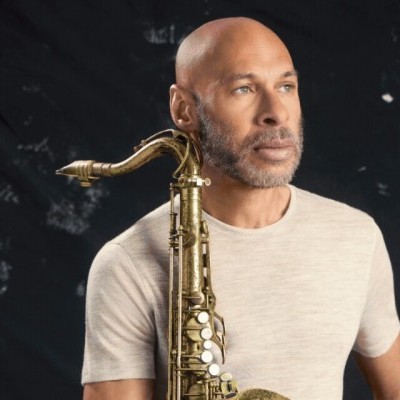
A solo concert by saxophonist Joshua Redman will close the first night of the Hyde Park Jazz Festival on Sept. 26.
Sep 22, 2026 12:26 PM
The Hyde Park Jazz Festival will take place for the 20th time on the final weekend of September 2026. Beginning half…
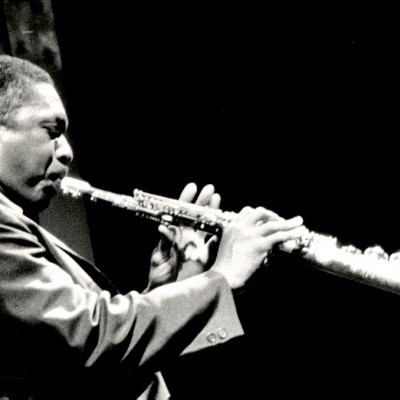
“It was just that suddenly … I could hear it,” Ravi Coltrane said of an epiphany he experienced during his late teens regarding his father’s music. “And it was almost like a calling, like something saying, ‘Hey, man, come on. It’s time to get serious.’ And the first time you really tune in and dial in and focus like that, it can be very life-changing.”
Sep 22, 2026 1:39 PM
Editor’s Note: Tomorrow, Sept. 23, is the 100th anniversary of John Coltrane’s birth. In honor of the tenor and…