Sep 3, 2026 10:44 AM
In Memoriam: Cassandra Wilson, 1955–2026
Cassandra Wilson, a singer, songwriter and producer who was one of the most acclaimed and successful jazz vocalists of…


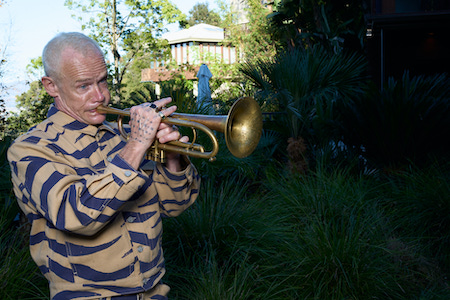
“Cerebral and academic thought is a different way to approach music,” Flea says of his continuing dive into jazz. “I’ve always relied on emotion and intuition and physicality.”
(Photo: Gus Van Sant)In the relatively small pantheon of certifiable rock stars venturing into the intersection of pop music and jazz, the population grows by one this season with the arrival of the artist known as Flea.
The famed bassist and co-founder of the funkified, hard-rocking band Red Hot Chili Peppers is releasing a passion project and his first full solo album, Honora, a mostly instrumental and variously jazz-colored project showcasing work on his original instrument, the trumpet.
Other celebrity musicians have tilled the rock-jazz soil before Flea, including the international pop star Sting, whose first band as a solo artist included saxophonist Branford Marsalis, keyboardist Kenny Kirkland, drummer Omar Hakim, bassist Darryl Jones and others. British avant-garde rocker David Bowie’s revelatory final album Blackstar featured saxophonist/flutist Donny McCaslin, drummer Mark Guiliana, guitarist Ben Monder, bassist Tim Lefebvre and keyboardist Jason Lindner. Jazz — and jazz attitude — has long been a key ingredient in Steely Dan’s ethos, and Wilco guitarist Nels Cline comes to the gig steeped in jazz culture.
In the case of Flea, born Michael Peter Balzary in Australia in 1962 but rooted in Los Angeles since his teen years, Honora is at least in part a homecoming journey. The driving concept was not to adorn his existing persona with jazz attributes and atmospheres, but to create a new entity, to expand his creative universe while also harkening directly back to the source of his half-century-long musical adventure.
The album’s distinctive, diversified song set includes a cameo from Radiohead’s Thom Yorke on “Traffic Lights” and a touching vocal by Nick Cave on a fresh take on Jimmy Webb’s masterpiece “Wichita Lineman.” Flea’s trumpet work comes in different shades and effects, on the ambient “Frailed,” the Ornette Coleman-esque “Morning Cry” and a sly electrified spin on “Willow Weep For Me.”
Among his allies are producer/saxophonist Josh Johnson, drummer Deantoni Parks, guitarist Jeff Parker and bassist Anna Butterss. Veteran Los Angeles saxophonist Ricky Washington — father of Kamasi Washington, and a mentor for Flea’s late-life dive into jazz studies — appears as flutist on “A Plea.” The album-closing “Free As I Want To Be” is a mantra-adorned jazz-swamp jam space featuring spicy solo bits from Parker and Flea’s FX-treated trumpet, with psychedelia and a melodic detour in the mix.
Interestingly, Flea’s boutique specialty “jazz” album follows a more typically high-profile outing. Honora has its roots in the reflective aftermath of a two-year tour by the Chili Peppers traveling the world and playing arenas and other massive venues following the release of their two latest albums, Unlimited Love and Return Of The Dream Canteen, both dropping in 2022. As an indication of the band’s continuing global reach, beyond the enduring power of such ’90s hits as “Californication,” “Give It Away,” “Otherside” and “Under The Bridge,” the hit “Black Summer” had logged 158 million hits on Spotify at press time.
The hit count will most likely be vastly humbler for Honora, but the emotional and artistic stakes run deep. As Flea explained in an interview with DownBeat, “I wanted to be a jazz trumpet player when I was a kid. When I got into high school and started playing bass in a rock band, that was that. [This album] was an opportunity for me to really be myself, trust my intuition and leave a lot up to chance — which is the thing with jazz, to follow improvisational messages.
“I didn’t really know what was gonna happen, which was really exciting. I just got together with everybody and we were just playing. I had these pretty loose structures. Some were more arranged than others. But we left things pretty open and loose and got together with a group of musicians to whom I could say, ‘Hey, be yourself. Do your thing. Go for it.’ They were all supportive and sensitive, and wanted to help me realize my vision. It just felt so good, emotionally, for me to surrender to the process and get up every day and be diligent about it. I’m so happy I got to do it.”
DownBeat checked in for a Zoom interview from Australia, Flea’s country of origin. He was in Sydney for a poignantly personal reason: scattering his recently deceased father’s ashes in a favorite fishing spot. He appeared, shirtless and brandishing tattoos, with his famous gap-toothed smile matched by a strategic gap in his moustache, chomping on watermelon and speaking with openness and sincerity about the latest chapter in a storied musical life.
He was at home, in an intimate sense. Similarly, his new album finds him in a duality: retracing steps to a musical “home” while exploring new vistas.
Josef Woodard: One of the reasons I like this album is because I don’t know what to call it, or how to categorize it. It’s not a jazz record, per se, and yet it is. Is that ambiguity a sign of success, in your mind?
Flea: Yeah. I originally set out to make a trumpet record, and I was working at home in the beginning. I was playing bass, and I’d have a drum machine and then blow trumpet on it. I was happy to just do it like that. That was my trumpet album plan. One frustrating thing is that I’ve gotten so much better since then as I continue to practice and study. I’m relentless. I might drive my wife crazy [laughs] for hours.
But then I got together with Josh Johnson, who I knew as a saxophone player because he had played on a Chili Pepper record. I was listening to some other records that he was on, in particular this Meshell Ndegeocello record The Omnichord Real Book, which I really loved. I’d just been listening to that record without even realizing that he had produced it. When I got together with him, he was saying, “With the music that you’re writing and what you’re doing, it’s not just a trumpet record. I feel what you’re doing is open to lots of other feelings.” It was really good advice.
It’s only recently that I’ve really been studying that stuff in earnest, and it’s difficult for me. Cerebral and academic thought is a different way to approach music. I’ve always relied on emotion and intuition and physicality. For instance, the way I dance makes me play the way that I play. I’ve spent a lot of time just chilling with my buddy, you know, hanging out and smoking weed and pounding on the bass.
So making the record was, first off, just an opportunity for me to really express myself. And when I listen to the record, it might be difficult to categorize in terms of the terms we use: jazz, rock, fusion, all these things. It’s just me. We all have this infinite source of feeling and emotion and longing to connect with the divine and what we find beautiful and what makes us happy. It’s a lifetime mission.
Doing this record opened that up for me. I was cool with this record sucking. I didn’t even know what I would do with it. I just wanted to go make it. I didn’t know if I would fail or what it would be, but when I was in the studio, it just felt so great. It was great playing with Anna Butterss, the bass player, and the drummer Deantoni Parks — just rocking with everybody, with all of us in the room playing.
It felt like I was released into another world of expression. Being able to do that was very meaningful for me, all the way through, from the first second of sitting down and starting to play till the last day of mastering the mixed record. It awakened a part of me, in a way. I didn’t know what it would be, or if it would be, if it would be something of substance and quality or just me having fun or tripping out and going to make something. But I feel very happy with the result and feel like I can touch people’s hearts with music. That’s all I care about. Especially as I get older, what else is there?
I’m just doing my best, man, and I wanna continue to do the work inside myself, as a human being, with a diligent focus every day. I could tell you how hard I’m just working on things, like “OK, let’s do these Coltrane alt chord riffs in every key.” [laughs] It challenges my brain.
Woodard: “Giant Steps” changes?
Flea: Yes. I will go hard and little synapses will be firing, and then I have to sit down and take a breather. I meet these young jazz kids who learned all that when they were kids and went to music school. I was talking to one musician who I really admire. Her name is Mei Semones. She’s a young girl, and she’s beautiful. She made this fine EP called The Kabutomushi, and she just put out a new record called Animaru. She’s a guitar player and a singer, and a songwriter and a jazz kid.
I did a thing in New York where I played my record for a bunch of people, and she came. She said, “Your record sounds great.” And I said, “Thank you. I’m working really hard on my theory and, you know, learning all this jazz.” She knows it inside out. She said, “You are taking the journey from coming from a place of all feeling into the academic part of music, but for someone like me, I’m taking a journey from all the academic stuff into a place of emotion and intuition, and that’s really hard.”
I had never thought about that. As humans, we all suffer. We are emotional people. We’re human. We’re lonely, we’re scared, we’re angry, we’re frustrated. We make mistakes. We pay for ’em. All of it. Something I really thought about when making this record was my yearning to get better and growing up.
Woodard: Where did jazz enter your life?
Flea: I had a stepdad who was a jazz musician, and I always felt that when I was playing rock music, he looked down on it. It was kind of this old-school jazz thing. He grew up learning all bop in the ’40s, and he was a serious bop guy. He really frowned upon rock music. It was like, “What are you doing with your haircuts and bell bottoms?” [laughs] I’ve always been sort of insecure about it, feeling like I’m tricking people. I can’t play “Donna Lee.” But it felt great making this record and working with everyone else playing on the record, all very accomplished jazz musicians who studied as well.
I think it was Jeff Parker who said it’s like we’re all climbing this mountain of music. It doesn’t matter where you are, what side of the mountain. It’s as beautiful at the bottom as it is at the top. It’s this journey that we take, and it’s a lifelong journey. That’s a beautiful way to look at it — it’s all relative.
I just love music so much, man. I love the work. I love connecting. I love playing with other musicians. I love sitting by myself in a room. Now, I play trumpet and bass and practice every day. Every day, I look forward to it. I see the instrument sitting there and just wanna get to work. We’re so lucky to have that.
Woodard: This album serves as a kind of portal into a new realm for you, but it also reaches back to your very musical beginnings as a trumpeter. Do you have a sense of, after so many years, picking up where you left off?
Flea: Yeah, it does. It’s something that’s always been with me in terms of playing the trumpet. I picked it up once in a while and remembered that the trumpet is so demanding. I go on a holiday, and don’t play bass for a week. I’ll pick it up, and it’ll feel a little dorky or whatever, but for an hour or two, and I’m back on there banging away. If you don’t play trumpet for a week, you’re sunk. You’ve gotta play every day. You can take a day off once in a blue moon, maybe every couple of weeks, and it actually might be good to rest the chops a little. But it’s so demanding.
So I would pick it up and play it a little bit, kind of get it going and play the same stuff I played in junior high, “Billy’s Bounce,” whatever. And then I wouldn’t play it for maybe a year, two years, three years. When I decided I was really gonna do it, it was only three years ago. I’d always wanted to make a record like this, just become more adept on my horn. No, I’ll never be as good as Clifford Brown or Lee Morgan, but I’m gonna really give it my best shot to be a good trumpet player and to find my own voice. I feel that I found my own voice as a bass player, a way of doing it that was specifically me. I just wanted to find a voice [on trumpet], and I’m still working on that — something that feels like my nervous system and my relationship to the world.
So it is something that’s always been with me and is coming back, you know, full circle to doing it and realizing a childhood dream. It has become an integral part of my life that I intend on doing every day till I die. It makes me happy.
Woodard: The first single from the album was “A Plea,” which in a way, pulls together so many strands of what you’re talking about. Jazz elements meet punk and funk energies and social commentary. Also, it features Rickey Washington on alto flute. He was an important link to your jazz studies, wasn’t he?
Flea: Yeah, he was. I’m 63 and pretty much all of my life, I’ve been playing music and surfing. I was playing trumpet in seventh grade, 10th grade, 11th grade, when I switched over to bass. I’ve never really had a teacher. I always just played with my friends. In school, I played in the school band, and I had one trumpet teacher for a little while in like 10th grade. I won an award to get free trumpet lessons. My parents couldn’t afford to do that, but I did it for a few months, you know, and I really liked the teacher, but I was too wild, man. I was out in the street running around, doing drugs, getting in trouble.
But with Rickey, it was like the first time I had a serious teacher. He wouldn’t take any money. I’d go over his house and sit in his room and he would say, “OK, this is a ii–V progression. There are ways that you can articulate this.” I was always so intimidated when I would look at chords on a paper and a bebop song. I know it sounds like the simplest thing, ii–V, but I didn’t know about it. I kind of intuitively knew it. We obviously play chords in the Chili Peppers, but we just play what feels good.
I studied with Rickey when I’d have breaks on tour. I’d go over to his house and sit with him and it was really helpful. Lately, I’ve been studying with another guy, a saxophone player named Ben Clatworthy. Ben’s great and has been teaching me some stuff. I’m getting better at it, day by day. Some days I get frustrated, and then one day I’ll be playing something and think, “OK, I’m a little bit better than yesterday.” Or I’ll be incorporating that thing that seemed like the most complicated math in the world, and now I’m incorporating it into trying to play something beautiful. It’s becoming a part of me and how I speak as a musician.
The humility of being a student is crucial to being a good musician, to being a good human being. When we stop being a student, we become an old fart.
Woodard: For a high-profile musician in your position, it could be easy to coast at this point and just rest on your laurels. You have such a huge songbook and a strong reputation. But is it important for you to keep venturing into new terrain, and challenging yourself, as you have on Honora?
Flea: Well, in different ways, I’ve always been a student, but this is a more advanced particular study that I’m focused on. But I always tried to stay a student. The Chili Peppers are obviously a really popular rock band. We play stadiums and arenas all over the world. People get really happy when we play songs and entertain people. There’s a lot of adulation and all that. It can play a trick on you. And it’s not like the music isn’t always an earnest expression. I’ve played “Under The Bridge” 10 million times, but if I play it, I wanna honor it. I wanna play it as beautiful as I can and find the beauty in the subtle interpretation of the music. It means a lot to me.
But [fame] can trick you. To remain a student helps you keep things in perspective. I honor and treasure every part of my development as a musician and for everything that we’re able to do in the Chili Peppers. But I also want to grow in this other way as well. One thing informs the next, like all my years of being on the road, like laying down some dirty grooves really inform my approach to being a jazz trumpet player, just a trumpet player. The stuff that I’m studying as a jazz trumpet player really goes to my bass playing and is giving me a wider, bigger picture as a bass player.
The Chili Peppers have been composing songs lately, and as I sit down at the piano or the bass to write stuff for the Chili Peppers, the jazz studies that I’m involved in really inform that and help me get a bigger picture of music and how it works. Music’s infinite. Life is short, music is big, and there are just not enough days in a lifetime to do everything you wanna do. So I’m at it, man.
Woodard: Thom Yorke is featured on the track “Traffic Lights,” and he led the side project Atoms for Peace, which you played in. You seem to share with him the unique position of having a major rock band that has always bucked trends or the fashion of the time. Radiohead carved its own path through the universe, as have the Chili Peppers. You broke new ground, mixing punk, funk and pop hooks and other moves, and the sound has been very influential, to this day. Are you, in that way, like-minded artists?
Flea: Yeah, totally. We’re obviously very different people, but we love a lot of the same music. I love him, and I admire him. Thom is a fantastic musician and very intuitive. Talk about a guy who has a unique voice and always nurtures different ways to express it. Obviously, if you look at his body of work, he doesn’t rest on his laurels and just say, “Oh, I’m just gonna go play my Radiohead hits.” He’s always game to do something different, electronic music, different ways of expression, soundtracks, just all the stuff that he does.
What’s funny is that I see people writing about Thom as if he’s like some kind of intellectual aloof nerd. He’s supposed to be cold, but Thom is the warmest, most jamming guy ever. Whenever we play and get in the room, it’s like, bam, he just wants to get lost in a hypnotic groove and jam out. When I did that track “Traffic Lights,” I was just gonna blow trumpet solos over the whole thing. It was a rhythm track, and then Josh [Johnson] came up with that melody, and Deantoni [Parks] plays that great drum part. By the way, Deantoni is a national treasure.
In terms of rock bands, with Radiohead and Chili Peppers, even though we’re really different bands, we’re very much alike in some ways. For a young band, the natural tendency is to say, “I really like this stuff and it’s cool, so I’m gonna be like this. Things will work out if I play like, look like this, do like this.”
Neither Thom or I ever did that. We just did our own thing our own way. It’s harder now because when I was young, you know, pre-internet, stuff that you liked was stuff that you and your friends liked. I never was a big radio listener or anything anyway, so I never was that aware of popular culture. But I’d go out, especially as a teenager, to rock clubs or different clubs every night, seeing music. I’d go see some punk rock band. I’d go down to the Parisian room in L.A. and see Freddie Hubbard. I’d go to see some weird electronic experimental stuff. I loved local bands, like X. I’d go see reggae bands and African bands and all this different music. It was constant. And, and, you know, whatever records you could get, like someone who’s really into (Captain) Beefheart gave me Trout Mask Replica — it’s one of my favorite records of all time.
But with all this music, you didn’t share it on the internet. It wasn’t this giant thing. It was just the people that you knew, and you called each other up said, “Man, you gotta hear the Lee Morgan record The Procrastinator,” with Billy Higgins. When we were 15 or so, me and my friend were so into that record, we got out my stepdad’s local 47 union phone book, got Billy Higgins’ phone number and called him. A woman answered the phone, we’re like, “Oh, hello, is Billy there?” She says, “Oh no, he’s down the street playing with the kids. Who is this?” I said, “Please just tell him he plays so great on ‘Stopstart,’ and just tell him we really love him. He’s the best.”
I loved having all these reference points, so we developed in our own way. And I liked the New York scene like that early, like Defunkt and James Chance and the Contortions. I’d see them when they came to town and played at the Whiskey (Whiskey A Go Go) or whatever. It just excited the hell outta me.
When we went to go play, it was never a thought of like being a part of some bigger picture, conforming to some outside influence. It came out of a very intense and willful sense of individuality. I wanted to be myself, and angry kid in the world. I wasn’t gonna go with what was popular when we started with Chili Peppers in ’83. I don’t know what was popular, Journey? I’m not like dissing anybody. I’m just saying it was a world I didn’t pay attention to. I didn’t know what the Top 40 was. We just did our thing.
Then you become more aware of everything in the pop world, which really just made me and us dig our heels in on our own way. There was never any desire or thought of being a part of something that was popular or would make money or whatever. Obviously, I get it. People wanna make a buck, and we’re really fortunate in that way, to be able to make a good living from playing music. But the reason is because we’ve done our own thing. That’s the reason for the longevity. I think even if you aspire to some sort of pop stardom by something that’s popular and you achieve it, you get that in short term, because the next trend is coming. You have to live outside of that in order and do your own thing, in order to continue to do it and to be a student of music.
Woodard: That eclectic stew of influences that you’re talking about is represented on your new record. You touch on many different styles, including different trumpet approaches. “Frailed” is almost reminiscent of Jon Hassell’s ambient music, with an echo effect on your horn, and the Ornette Coleman-ish “Morning Cry.” Almost subversively, the only standard, “Willow Weep For Me,” is not at all standard in its treatment. Was that an intentional move?
Flea: No, it wasn’t. It wasn’t intentional in the way of “I’m gonna do it really different.” It was just how I wanted it to sound, just because that was in my heart. I originally did it at home with just synthesizer and trumpet. I liked the way it felt. I knew that song through Art Tatum, the solo-piano version. But I wanted it to sound like the feeling I had was in New Orleans, when I went on this airboat, over the swamps.
We got in the studio and Josh Johnson was better at finding sounds on the Moog than me, and is much better keyboard player than me. So he played it, and I played the trumpet. And then I wanted John Frusciante to play synthesizer on the record, because John is really good with modular synths and all that. But I just sent it to John to treat it, just run the thing through his synthesizer. He treated the trumpet and did all those echoes and stuff on the trumpet on that.
You mentioned “Frailed” and the Jon Hassel comparison. I played bass with Jon on a record of his (Dressing For Pleasure, 1994). He was a really nice guy. And I knew him from (the Talking Heads album) Remain In Light. He plays on that. I really love that record.
Woodard: Regarding other trumpet approaches on this album, you played lyrically — on the David Monette-designed “flumpet” — on “Wichita Lineman.” For the record, that is one of my favorite songs in the world [laughs].
Flea: Thank you for that. Dave Monette, as you know, is a famous trumpet maker, and he created the “flumpet,” a cross between a flugelhorn and a trumpet. Years ago, after an ill-fated attempt to start playing trumpet again, I called him up and said, “I wanna buy one of your trumpets.” He said, “No, you cannot buy one of my trumpets.” I’m used to having my ass kissed, you know? [laughs], and he said, “You can’t just buy one of my trumpets. I make them by hand for each person.”
Woodard: He didn’t deem you worthy?
Flea: No, he didn’t deem me worthy. In one way I was pissed. But another way, I really respected that [laughs]. When I started playing again this time I was like, OK, now I’m serious. I’ve been playing my C trumpet I’ve had for 30 years, like every day now for a year. And I’m gonna be playing for another year before I make my record. I want him to make me a trumpet. And I called him and I gave him my most earnest pitch. But I bought the flumpet online and it has a beautiful sound.
With “Wichita Lineman,” I just did the whole thing on trumpet, all the way through. We tracked it live in the room, and I was really happy with my flumpet playing, with Deantoni, Jeff and Anna playing. It felt just really nice. Listening back to it, it popped into my head that Nick Cave loves Jimmy Webb. I know Jimmy. And he wrote a book that I liked, Faith, Hope and Carnage. In it, he talks about Jimmy Webb, and I thought maybe Nick would wanna sing on it. And I’m a big Nick fan.
Once again, I sent him the track. I just know Nick a little bit — we have a mutual friend, Thomas Houseago, who knows him well. I got the track to him, and he responded within a half hour and said, “I’m scared to death. I love this song. It could be my favorite song of all time. I’m leaving on tour in two days, but I’m gonna go in and take a stab at it.” A day later, bam, he sends me that vocal. I was just sobbing.
I spoke with him shortly after, and I could tell it really meant a lot to him to do it. He really loved the music and that he was very moved by us coming together and doing it. And that just made me really happy, because he’s someone I admire and respect very much. That he was willing to take the time and really do it. There’s so much feeling in it. And it’s a difficult song to sing.
Woodard: You close the album with your tune “Free As I Want To Be.” Is that title meaningful in terms of how you are approaching your musical life, generally?
Flea: It is, yes. But it’s actually something I’ve had for a long time in my head. And it’s always been meaningful for me in a way that, like, I remember the time I was going through a period of a lot of anxiety and stressing about where I was in life. Chili Peppers were doing a lot of touring. I was feeling emotionally unstable and struggling just to be OK, being able to sleep at night and have moderate health and peace. I was really hurting, going through a lot of panic attacks and stuff.
I was walking in the woods and I started going, “I’m free, I’m free as I wanna be, I’m free, I’m free.” I was singing that to myself, like this mantra, walking and doing it for about an hour. I thought of the things that were weighing me down, like my broken-up girlfriend relationship, feeling overwhelmed with work in the band, feeling lonely, feeling all these things, and all of a sudden, they didn’t feel so bad, because I realized I choose to have these things in my life.
I failed in this relationship. It’s hard sometimes, and I can choose to be in one or not be in one. All of a sudden it was like, “I’m free to be what I wanna be.” It may seem remedial, but it felt very profound to me and felt like I was teaching myself, in a way.
I just had that riff in my head, like this kind of mantra that I’ve often said and sung to myself, and it something that, you know, makes me feel better. I thought of recording it many times with Chili Peppers, but somehow it just never was right. I did it with Deantoni and Jeff, just the three of us when we initially laying it down, it just felt great.
It relates well to what you suggested — to what I’m doing now, to making this record. I can go make an instrumental record, or mostly instrumental record, and have it feel really substantial to me. It’s not just me going and being self-indulgent. I’m making something beautiful for the world, and it is helping me grow as a musician. That does give me a sense of freedom, and a sense of purpose.
Funny enough, it makes me feel like I can go into the Chili Peppers and feel very passionate about doing that, knowing that all this rest of me is alive and it’s all there.
It’s like when you have another kid. I have three children. I have a 37-year-old daughter, a 20-year-old daughter and a 3-year-old boy. They’re all incredible human beings. They’re more evolved human beings. My kids are so far apart — they’re each almost exactly 17 years apart, which is wild. When I had my first daughter and she was 17 years old, I go have another kid with another woman and there’s a feeling of, “Oh, he’s not gonna love me as much cuz he’s having another kid.” But it doesn’t work that way. It’s more love. I will never love you less. I will only love you more. You just become surrounded by more love.
That’s the way it feels like with music, too. It makes me love and appreciate the Chili Peppers more. And it makes me love and appreciate and be excited about the possibilities of me making my own jazz records going forward and collaborating with different people and just music in general. It becomes a bigger picture with more love and more opportunity and more horizons, things just open.
And I couldn’t be more happy about that.
Woodard: Will there be sequels to this album?
Flea: Yeah. I don’t know if I’m supposed to say it or not, but … [laughs]. DB
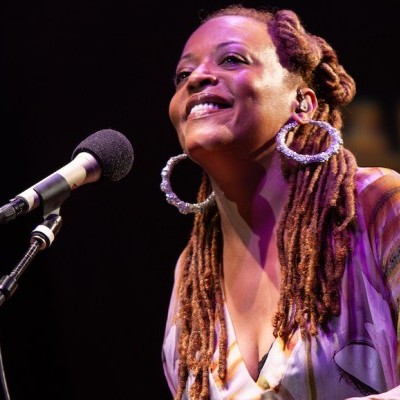
Wilson’s ability to connect to audiences helped her to win two Grammy awards and multiple other accolades. She was named an NEA Jazz Master in 2022.
Sep 3, 2026 10:44 AM
Cassandra Wilson, a singer, songwriter and producer who was one of the most acclaimed and successful jazz vocalists of…
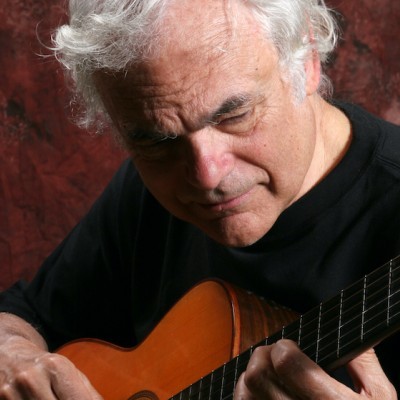
Bertoncini was a specialist and advocate for the nylon-string acoustic guitar, turning down high-profile opportunities that were unsuited to the sound and techniques that he used with that instrument.
Sep 1, 2026 11:06 AM
Gene Bertoncini, an esteemed jazz guitarist, composer, arranger and educator, died Aug. 29 at the Lillian Booth Actors…
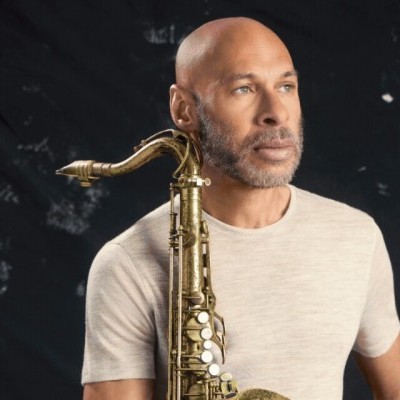
A solo concert by saxophonist Joshua Redman will close the first night of the Hyde Park Jazz Festival on Sept. 26.
Sep 22, 2026 12:26 PM
The Hyde Park Jazz Festival will take place for the 20th time on the final weekend of September 2026. Beginning half…
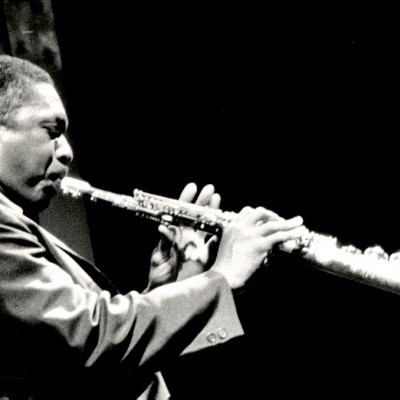
“It was just that suddenly … I could hear it,” Ravi Coltrane said of an epiphany he experienced during his late teens regarding his father’s music. “And it was almost like a calling, like something saying, ‘Hey, man, come on. It’s time to get serious.’ And the first time you really tune in and dial in and focus like that, it can be very life-changing.”
Sep 22, 2026 1:39 PM
Editor’s Note: Tomorrow, Sept. 23, is the 100th anniversary of John Coltrane’s birth. In honor of the tenor and…
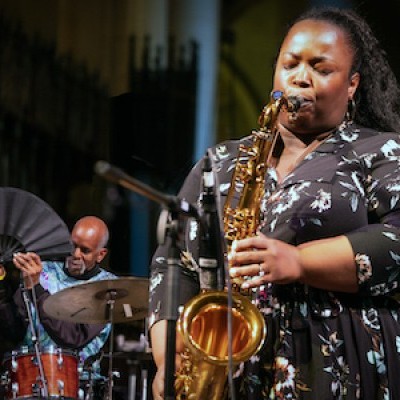
Camille Thurman took to the stage alongside bassist Kenny Davis and drummer Tommy Campbell for a rendition of Johnny Mercer’s “I’m An Old Cowhand” that recalled Rollins’ epochal 1957 trio outing Way Out West.
Oct 6, 2026 1:33 PM
As emcee Mark Ruffin noted at the commencement of an epic tribute to saxophonist Sonny Rollins at the Cathedral of…