Sep 3, 2026 10:44 AM
In Memoriam: Cassandra Wilson, 1955–2026
Cassandra Wilson, a singer, songwriter and producer who was one of the most acclaimed and successful jazz vocalists of…


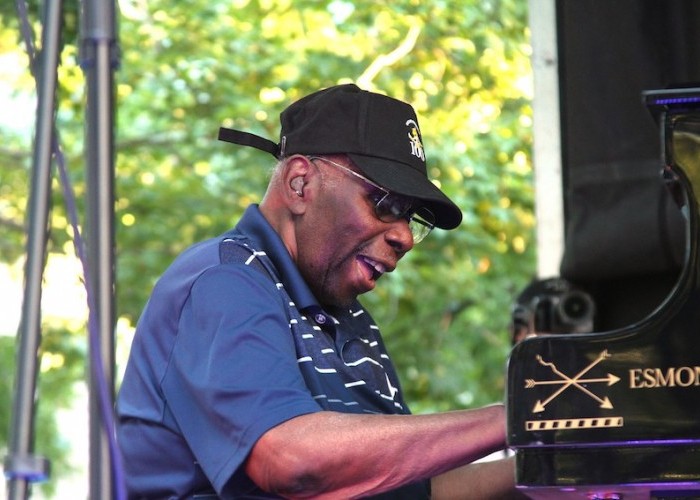
Oliver Jones’ debut album, Live At Biddle’s Jazz & Ribs, was recorded in 1983, the first release on the Montreal-based label Justin Time.
(Photo: Sharonne Cohen)The passing of Canadian treasure Oliver Jones on July 22, at the age of 91, has left a void in the Montreal jazz community and beyond. “He was an incredible musician whose humanity truly spoke through his music,” reflects Jim Doxas, Jones’ longtime accompanist. Jones is celebrated for his rare talent, his many honors and notable collaborations; he was, after all, an exceptional pianist, one of the giants of his generation. But his story is also part of the larger story of Little Burgundy and Black Montreal, of an extended calypso chapter and a return to jazz, of Oscar Peterson and the Montreal jazz community, and of Dr. Jones’ extraordinary generosity of spirit.
The Gift, and the Sound
“Oliver Jones treated the piano like an acoustic watercolor,” says Andy Williams, a prominent Montreal jazz educator and DJ, noting Jones’ fluidity and lyrical phrasing. Gifted with an extraordinary facility and command of touch, dynamics and tone, he was able to make a piano sound almost orchestral in its range of color. “He had an ability to swing around to subtle, subtle changes,” observes singer Molly Johnson. “You can hear his personality in his playing, and that’s a sign of brilliance; to really hear a person, an individual person, that slice of humanity.”
The qualities of Dr. Jones’ musicianship are appreciated both in his hometown of Montreal and around the world. “Playing with Oliver was pure joy. It felt as though he was dancing across the keys,” Doxas shared with DownBeat. “He was always looking for a new angle, a new way to phrase a melody, which made my job as a drummer both exciting and effortless,” he recalls. “From the drum kit, you could feel and hear the playfulness in his improvisation.”
Over the course of their 12 years working together, with Éric Lagacé on bass, they never once used a set list. “Oliver often said he found it impossible to plan a set in advance, because he didn’t know the atmosphere of the room until he actually stepped onto the stage,” recalls Doxas. “He would simply sit down, put his hands on the keys and we would begin. It was an amazing adventure every single night! You couldn’t rely on memory or habit; you had to listen and respond in real-time.” Speaking of the dynamics within the trio, he notes that “despite the over 40-year age gap between us, the moment we stepped on stage, we were one. It was a special telepathic connection … the boundaries between the three of us seemed to dissolve. It wasn’t about individual parts anymore; it was a shared consciousness.”
Early Beginnings, and the Peterson Connection
Oliver Theophilus Jones was born on Sept. 11, 1934, in Montreal’s Little Burgundy, to Barbadian parents. A child prodigy, he was able to play songs from memory at 3, and by the age of 5 was taking lessons with Mme Bonner at Union United Church.
The neighborhood Jones grew up in was home to a vibrant Black community, and a major center of Montreal’s jazz life. He emerged from a particular Black Montreal musical ecosystem, one that included churches, clubs, gospel, blues and jazz. Living just a few doors from the Peterson family, Jones would sit outside their home and listen to Oscar practice. Oscar’s sister Daisy, a distinguished classical piano instructor, became Jones’ teacher and influential mentor when he was just 8.
It was watching Oscar Peterson play that set everything in motion. Jones recalled his parents’ surprise when he began playing this “funny music” called jazz, which was unfamiliar to them. But once the church audience heard him play, everyone was convinced that, like Peterson, he too was destined for a bright future as a pianist.
At age 9, Jones developed a novelty act and began playing professionally at local venues such as the Café St. Michel, entertaining crowds with acrobatic piano stunts. During his teenage years he joined a band called Bandwagon, playing everything from swing to rock and roll to popular show tunes. He spent much of the 1950s and early 1960s touring through Quebec and Vermont.
The Calypso Chapter, and the Return to Jazz
Jones’ career wasn’t an uninterrupted journey toward jazz greatness. In 1964, then in his late twenties, Jones met Jamaican calypso singer Kenny Hamilton, and accepted the position of Musical and Orchestra Director for Hamilton’s band. They spent the next 16 years touring together, based primarily in Puerto Rico.
Jones returned to Montreal in 1980, connected with bassist Charlie Biddle and became the resident pianist at Biddle’s namesake jazz club. Only then did he reestablish himself in the local jazz scene, launching an iconic late-career resurgence in jazz, and gaining growing international acclaim. By the mid-1980s, Jones was touring throughout Canada and Europe, performing either as a soloist or with a trio. His debut album, Live At Biddle’s Jazz & Ribs, was recorded in 1983, the first release on the budding Montreal-based record label Justin Time. It was the beginning of a decades-long relationship with the label and its founder, Jim West. Justin Time released the vast majority of Jones’ recordings, helping bring his music to an international audience. He went on to tour across North America, Europe, Australia, New Zealand, Japan, China and Africa.
Over the course of his career, Jones recorded with trumpet legend Clark Terry on Just Friends (1989), featuring bassist Dave Young and drummer Nasyr Abdul Al-Khabyyr, and collaborated with jazz luminaries including Ed Thigpen, Ray Brown, Herb Ellis and Hank Jones.
A Hallowed Place in Montreal’s Black Community
A quintessential Montrealer, Jones was also attuned to the African roots of the music that shaped him. The National Film Board of Canada documentary Oliver Jones in Africa (1990), made by Canadian filmmaker Martin Duckworth, documents Jones as he tours Nigeria with his band, exploring the musical sources of the blues, spirituals and calypso. “I feel like I’ve come home,” he mused. Jones also wrote, arranged and performed the original score for Season of Change (1998), documenting the Montreal Royals’ 1946 season with baseball legend Jackie Robinson.
Dr. Jones was one of the great cultural sons and elders of Montreal’s Black community, and particularly of Little Burgundy. He was both a product of its extraordinary musical environment and, over time, one of its most significant ambassadors and benefactors.
Back in 1934, the neighborhood was a major center of Montreal’s Black community, shaped in part by railway workers and their families, who helped establish its institutions and cultural life. Its music scene evolved around the Union United Church, Daisy Peterson Sweeney, Oscar Peterson, the Negro Community Centre — a central institution for Montreal’s Black community that hosted cultural and musical activities, involving both Peterson and Jones — as well as Rockhead’s Paradise and other clubs.
Jones’ 1985 recording The Lights Of Burgundy paid tribute to his childhood neighborhood. Even as he toured, he stayed connected, mentoring younger musicians, supporting community initiatives, teaching and participating in programs for emerging artists, and is cherished for giving of his time so generously. Recent remembrances have emphasized precisely this quality: that he regarded giving back to the Black community as part of his life’s work.
The mural unveiled in Little Burgundy in his honor in 2014 serves as more than just a commemoration of a famous musician; it’s the community claiming this icon as part of its own history, making his portrait part of the physical landscape of the neighborhood. Jones demonstrated what a Black musician from Little Burgundy could become, while remaining deeply attached to the place and people who had nurtured him. He carried that musical tradition onto international stages, while serving as the kind of elder communities need: someone who achieves great stature, but continues to make himself available to aspiring young artists.
Jones the Collaborator
Dr. Jones was not only a bandleader. His work as an accompanist and collaborator offers yet another facet of his musicianship. He shared an artistic connection with Dr. Trevor W. Payne, founder of Montreal’s Jubilation Gospel Choir. The two came together at milestone community events, and appeared together on A Celebration In Time (2010), alongside the choir and celebrated Montreal vocalist Ranee Lee. Lee shared a 50-year-long personal and artistic relationship with Dr. Jones. At his request, she wrote the lyrics to a couple of his compositions, including “This Is It.” They often toured together, collaborating on Deep Song (1989), her tribute to Billie Holiday, and Just You, Just Me (2005). Sharing both her sadness and her appreciation of his kindness, soulfulness and musicianship, she told DownBeat how Dr. jones quickly became family. “I think of him in the present tense,” she said, correcting her verb tenses. “He was … is … such a large figure, always supportive. Even though he was always busy, he took the time for any musician, asking their name and remembering it.”
Jones the Tireless Mentor
Dr. Jones’ warmth, kindness and generosity have been noted by many. His legacy goes far beyond his gift, encompassing his generous spirit and devotion to encouraging young musicians. Shaped by the mentorship of Daisy Peterson Sweeney and Oscar Peterson, Jones was passionate about passing something forward to aspiring artists. “His dedication to mentoring younger musicians and his genuine care for the community were constant priorities in his life,” notes Jim Doxas. “The grace with which he carried himself is the greatest lesson he left me. That sense of poise, combined with his unyielding generosity, remains the standard I try to bring to my own playing and my own life every day.”
Among many others, Dr. Jones mentored vocalist Dione Taylor through the Governor General’s Performing Arts Awards Mentorship Program; the two later performed Peterson’s Civil Rights anthem “Hymn To Freedom” at the 2008 Canadian Songwriter’s Hall Of Fame gala. Another of Jones’ protégés is Daniel Clarke Bouchard, a gifted Canadian pianist and composer and, like Jones, a child prodigy. Beginning when Bouchard was just 7, their relationship spanned nearly two decades, deeply influencing the young pianist, who composed his first original piece in honor of Jones.
Through the late 1980s and 1990s, Dr. Jones worked as a formal music educator. He taught jazz and music courses at both McGill University and Laurentian University.
The Honors
Celebrated by music lovers and recognized by his peers, Jones has received six honorary doctorates throughout his decades-long career, as well as numerous awards and distinctions: the PROCAN (now SOCAN) Award, Juno and Félix awards, the Oscar Peterson Award, the Golden Ducat, the Martin Luther King Jr. Award, the Prix Opus and ADISQ awards.
Jones is also an Officer of the Order of Canada (1993), a Knight of the Ordre national du Québec (1994) and an honorary citizen of Ville de Montréal (2014). He received the Governor General’s Performing Arts Award in 2005, and was inducted into the Canadian Music Hall of Fame in 2023. “I kept on pinching myself saying I’m going to wake up and realize it’s just a dream,” Jones later told CBC. “It just reminded me that, yes, I am still here, and people still remembered me.”
The Non-Retirement
Jones officially retired on Jan. 1, 2000. But that didn’t last long; in 2002, he became the artistic director of the jazz section of the Montreal Chamber Music Festival. After attending a concert by the Doxas brothers in 2005, he approached Jim, asking if he’d like to play together sometime. “I assumed it was just a casual jam, given that he was in retirement,” he recalls. “He called me a few months later to say he had 82 concerts lined up and asked if I was in. It was the thrill of a lifetime!” In 2006 they recorded One More Time, showcasing Jones’ signature swinging, elegant style. To celebrate his 80th birthday, in 2014 Jones offered his fans a concert at the Montreal Jazz Festival, and in 2016 traveled to Haiti to play at the 10th anniversary of the Port-au-Prince International Jazz Festival. Deciding to wrap up his grueling professional touring schedule in 2017, at the age of 82, he intentionally chose Barbados for his final major performance.
In the summer of 2025 Jones played at the Little Burgundy street festival, participating in a panel discussion and, as usual, chatting with young musicians. Committed as always, he made a personal donation to the Universal Negro Improvement Association.
Jones and the Montreal Jazz Festival
Jones wasn’t merely a visiting star, but part of the very fabric of Montreal. He was also intertwined with its famed jazz festival, performing every year from 1981 through 1999, and participating in its opening and closing ceremonies. “Oliver Jones was a pillar in the Canadian jazz landscape,” says Modibo Keïta, senior manager for the FIJM booking team. “The Montreal Jazz Festival simply had the best seats to witness the illustrious career he had. His legacy runs deep for us. Every year we present the Oliver Jones Award to a young artist who we believe has the potential to follow in his footsteps, and make a significant impact on the Canadian jazz scene.”
Among Jones’ many unforgettable Festival appearances was a 2004 two-piano performance with his childhood idol, Oscar Peterson, during the festival’s 25th anniversary. “Today,” noted the festival in its parting words, “we imagine them picking up their musical conversation right where they left off.” DB
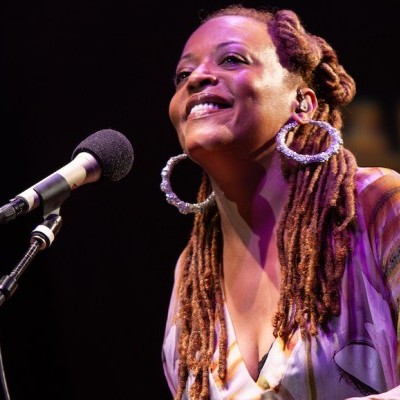
Wilson’s ability to connect to audiences helped her to win two Grammy awards and multiple other accolades. She was named an NEA Jazz Master in 2022.
Sep 3, 2026 10:44 AM
Cassandra Wilson, a singer, songwriter and producer who was one of the most acclaimed and successful jazz vocalists of…
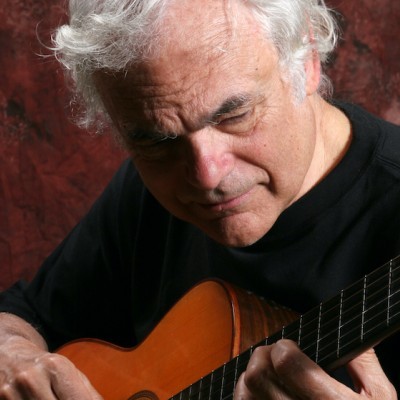
Bertoncini was a specialist and advocate for the nylon-string acoustic guitar, turning down high-profile opportunities that were unsuited to the sound and techniques that he used with that instrument.
Sep 1, 2026 11:06 AM
Gene Bertoncini, an esteemed jazz guitarist, composer, arranger and educator, died Aug. 29 at the Lillian Booth Actors…
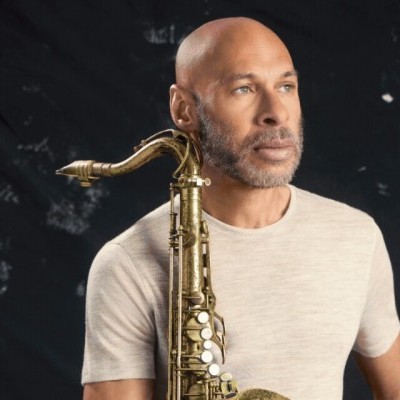
A solo concert by saxophonist Joshua Redman will close the first night of the Hyde Park Jazz Festival on Sept. 26.
Sep 22, 2026 12:26 PM
The Hyde Park Jazz Festival will take place for the 20th time on the final weekend of September 2026. Beginning half…
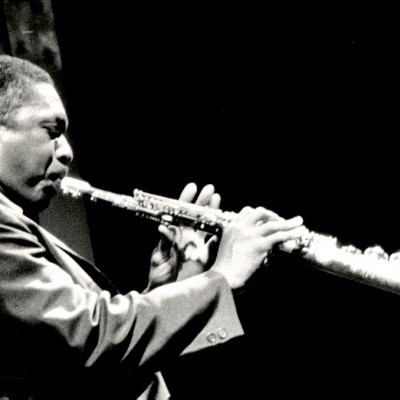
“It was just that suddenly … I could hear it,” Ravi Coltrane said of an epiphany he experienced during his late teens regarding his father’s music. “And it was almost like a calling, like something saying, ‘Hey, man, come on. It’s time to get serious.’ And the first time you really tune in and dial in and focus like that, it can be very life-changing.”
Sep 22, 2026 1:39 PM
Editor’s Note: Tomorrow, Sept. 23, is the 100th anniversary of John Coltrane’s birth. In honor of the tenor and…
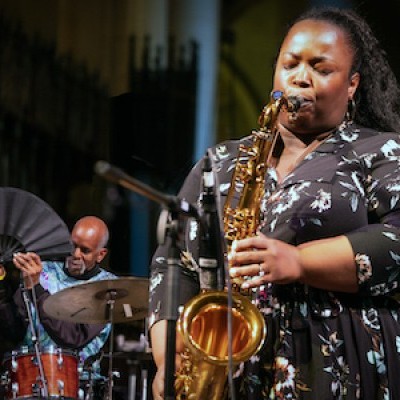
Camille Thurman took to the stage alongside bassist Kenny Davis and drummer Tommy Campbell for a rendition of Johnny Mercer’s “I’m An Old Cowhand” that recalled Rollins’ epochal 1957 trio outing Way Out West.
Oct 6, 2026 1:33 PM
As emcee Mark Ruffin noted at the commencement of an epic tribute to saxophonist Sonny Rollins at the Cathedral of…