Sep 3, 2026 10:44 AM
In Memoriam: Cassandra Wilson, 1955–2026
Cassandra Wilson, a singer, songwriter and producer who was one of the most acclaimed and successful jazz vocalists of…


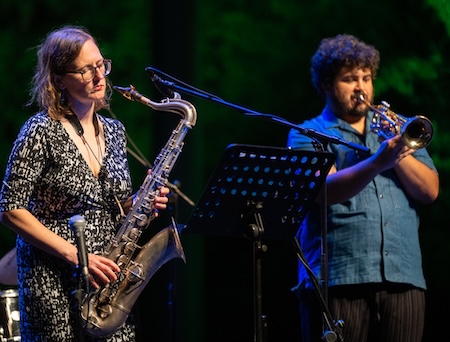
Saxophonist Anna Webber shares the front line with trumpeter Adam O’Farrill during a performance by Shimmer Wince at Jazz em Agosto.
(Photo: Petra Cvelbar)Thanks to the generous support of Lisbon’s Gulbenkian Foundation, a venerable cultural organization that contains an art museum, operates a classical orchestra and choir, and contains a rich archive of holdings, the annual Jazz em Agosto festival has maintained an independence that feels increasingly rare with Europe’s institutional jazz landscape. While many of the continent’s major festivals sometimes feel like franchises within a homogenous touring circuit, Jazz em Agosto charts its own path.
That’s not to say that Rui Neves — who has served as the festival’s artistic director since 1985, the year after the event began — refrains from programming musicians who’ve achieved a critical consensus. Some of the groups that played the 2026 edition, which ran from July 31 through Aug. 9, such as Ches Smith’s quartet Clone Row or French cellist Valentin Ceccaldi’s eclectic pan-European quartet Bonbon Flamme, have been appearing all over Europe this year. But the festival often taps its vast resources to facilitate unique performances that might otherwise never take place on the continent, whether Shardik, a tightly calibrated, John Zorn-adjacent prog-rock quartet, or Canyon, an American improvising quartet with pianist Sylvie Courvoisier, cellist Lester St. Louis, bassist Joe Morris and drummer Jerome Deupree that had only one previous performance under its belt.
Still, the most rewarding performances came from projects that, more or less, work regularly. Shimmer Wince, the inventive quintet led by saxophonist Anna Webber that is ramping up its activity after a sustained break, played one of my favorite sets of the festival. The group provides its leader with a malleable platform that privileges the sophistication and appeal of her rigorous post-bop tunes as well as her abiding interest in just intonation, a tuning system that uses whole-number ratios. Webber isn’t doctrinaire about tuning, but thanks to the malleability of cellist Mariel Roberts and keyboardist Elias Stemeseder the harmonies in her writing open up a vast field of sonic possibilities as the group straddles two different harmonic worlds. That approach could be a wan stunt if Webber’s tunes weren’t so sturdy and the ensemble so bold. Trumpeter Adam O’Farrill shares the front line with Webber and the unison lines they sculpted together routinely activated the psychoacoustic splendor achieved against the just intonation, fomenting an exquisite tension stoked by the restrained drumming of Lesley Mok. Most of the set revisited material from the group’s eponymous 2023 debut, but the quintet shared some dazzling new compositions, including the multi-partite “Meltwater Pulse 1A,’ which featured a searing, soul-streaked tenor solo from Webber that was further refracted by the unsettling synth long tones produced by Stemeseder.
The duo of poet Fred Moten and bassist Brandon Lopez continued to refine its remarkable chemistry, a livewire conversation of language and sound that’s increasingly unbound by literal meaning. Working from pre-written texts, Moten plays with language like a seasoned improviser, belying his relaxed cadences with a vigorous interrogation of linguistic meaning. Lopez contrapuntally toggles between or sometimes piles up melody and rhythm against Moten’s stentorian flow, serving as both a frame and a flame for his partner’s oratory. In the set’s main improvisation Moten collages multiple Ahmad Jamal Trio performances of the standard “But Not For Me” from his laptop, the setting for a witty but brutal subterfuge about racism, while a pithy encore honors the memory of Sonny Rollins, as Moten engages in a kind of verbal motific improvisation à la Rollins, examining a handful of phrases that reference the Newk tune “Blue Seven” and the Zoot Sims-Sonny Stitt recording of “My Blue Heaven” with a simpatico perspectival resourcefulness and imagination. Moten’s ability to draw upon current events or his recent experiences and conversations within an improvised performance is astonishing. He’s a thinker, theorist and poet capable of assimilating a world of ideas, information and creativity into cogent riffing that forces us to rethink what words really mean.
More than focusing on any specific stylistic approach, the programming elevates disparate manifestations of improvised music. The festival opened with fully improvised solo set from veteran German pianist Joachim Kühn. Unfortunately his refined touch and breathless virtuosity were in search of some kind of cogent form, but until returning for an encore, where he essayed a pair of Ornette Coleman tunes the saxophonist had never recorded, his dazzling technique failed to coalesce structurally. The great British pianist Pat Thomas delivered a more modest, galvanic and thunderous solo set a week later, generating viscous clouds of overtones trailing the angular collisions of his blunt force left-hand and the detailed embroidery accomplished by his agile right-handed figurations. The spirit of Thelonious Monk and Duke Ellington hung over the proceedings, but Thomas’ ability to magnify the smallest gestures into dynamic fields of study simultaneously underlines the historical continuity of his practice and his singular aesthetic.
The Los Angeles quintet SML engaged in a much different strain of collective improvisation, building a set-long excursion from groove-oriented sound sculpting, with each musician taking a specific role. Electric bassist Anna Butterss was the quiet guiding force, their subtly insinuating lines serving as the group’s armature, both holding steady and redirecting the performance, giving drummer Booker Stardrum wide berth to formulate complex constellations of electronic and acoustic beats that modulated the intensity of the band’s attack. Synthesist Jermiah Chiu reinforced the drummer’s output with his own gurgling electronic tones and cycling melodic cells, while guitarist Gregory Uhlmann focused almost exclusively on texture and color, using a bank of pedals to transform his strumming and picking as if they were different-sized paintbrushes. That left saxophonist Josh Johnson to blow terse, electronically processed gestures that fit together like pieces of a puzzle. The group maintained a cool simmer for most of its set, with Stardrum occasionally raising the temperature. On the other hand, a thrilling set by Chicago Underground Duo brought a crushing energy, with drummer Chad Taylor at his most ferocious, groove-switching to persistently redirect the precisely controlled trumpet melodies and wild vocal howling of Rob Mazurek. For the group’s final tune and encore they delighted the audience by inviting guest saxophonist James Brandon Lewis to join them, a presence that both elevated the melody-and-rhythm framework while also scuffing up the sound field with his febrile attack.
As usual, the Portuguese scene was represented by a duo set from sound artist David Maranha and tenor saxophonist Rodrigo Amado that achieved a weird collision of drone and smoldering soul, and a wildly eclectic and polished, if often corny, set from LUME–Lisbon Underground Music Ensemble. Of course, the stunning facilities of the Gulbenkian Foundation, replete with the regular presence of jets flying overhead, tracing a set flightpath toward the city’s airport, and the environmental presence of ribbiting frogs, roaring cicadas and quacking ducks from the lush gardens that lay behind the amphitheater, become an integral part of the festival experience, ameliorating the less successful performances. DB
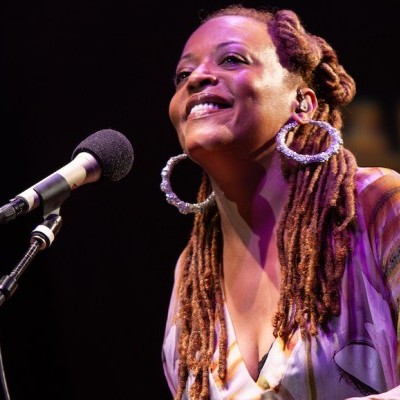
Wilson’s ability to connect to audiences helped her to win two Grammy awards and multiple other accolades. She was named an NEA Jazz Master in 2022.
Sep 3, 2026 10:44 AM
Cassandra Wilson, a singer, songwriter and producer who was one of the most acclaimed and successful jazz vocalists of…
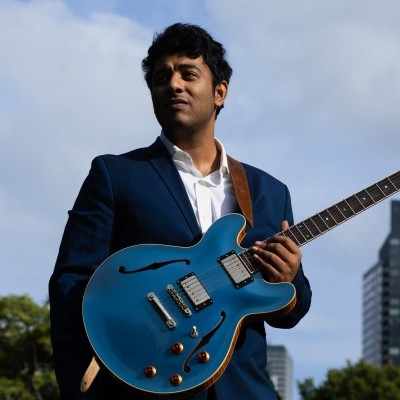
“The love from the jazz and music community restored my faith in humanity,” Walia wrote in an online post upon his release from detention at an ICE facility.
Aug 18, 2026 2:15 PM
Indian jazz guitarist and composer Pritesh Walia has been released after being unexpectedly detained by ICE and taken…
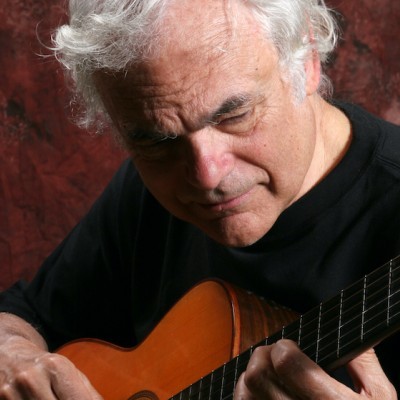
Bertoncini was a specialist and advocate for the nylon-string acoustic guitar, turning down high-profile opportunities that were unsuited to the sound and techniques that he used with that instrument.
Sep 1, 2026 11:06 AM
Gene Bertoncini, an esteemed jazz guitarist, composer, arranger and educator, died Aug. 29 at the Lillian Booth Actors…
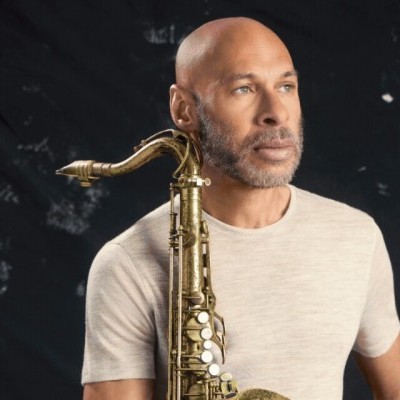
A solo concert by saxophonist Joshua Redman will close the first night of the Hyde Park Jazz Festival on Sept. 26.
Sep 22, 2026 12:26 PM
The Hyde Park Jazz Festival will take place for the 20th time on the final weekend of September 2026. Beginning half…
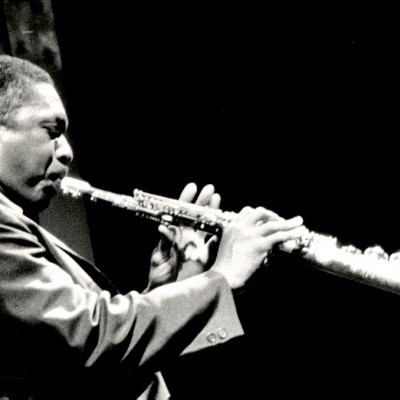
“It was just that suddenly … I could hear it,” Ravi Coltrane said of an epiphany he experienced during his late teens regarding his father’s music. “And it was almost like a calling, like something saying, ‘Hey, man, come on. It’s time to get serious.’ And the first time you really tune in and dial in and focus like that, it can be very life-changing.”
Sep 22, 2026 1:39 PM
Editor’s Note: Tomorrow, Sept. 23, is the 100th anniversary of John Coltrane’s birth. In honor of the tenor and…