Sep 3, 2026 10:44 AM
In Memoriam: Cassandra Wilson, 1955–2026
Cassandra Wilson, a singer, songwriter and producer who was one of the most acclaimed and successful jazz vocalists of…


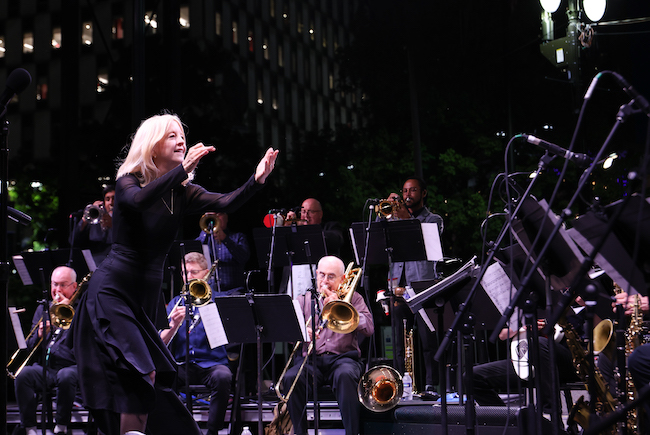
“These days, with curated news, where people only get half the story, people can’t even speak to family members anymore,” Schneider laments.
(Photo: Mark Sheldon)Maria Schneider is doing her part to try to fix what ails America. Which got her thinking about crows, specifically, enraged crows. The multi-Grammy-winning composer and orchestra leader was raised in rural Windom, Minnesota. “Crows were a part of my childhood,” she said. “We had pet crows — talking crows. They could say, ‘Go to hell!’ and wolf-whistle.
“We had a fair amount of animals and birds. If a bird had a broken wing, farmers would bring it to my mom, and she’d repair it somehow. I don’t know how she learned to do that, but she did. A farmer brought mom a couple of little crows that had fallen out of a nest, and my parents raised them. They imprinted so strongly, but they were free. They became a real nuisance in Windom.
“They would steal shiny things, like at the lake when somebody would lay out with their watch off. And Joe — that was [one crow’s name — would take the watch and bring it to us. They’d pull off clothespins from people’s clotheslines and bark like dogs. That was the worst because then all the neighborhood dogs would bark.
“Finally, the police made my parents lock the crows up. So, Dad built them a massive cage, and we had these enraged crows. In the winter, he would bring the cage, on a big forklift, to the plant where he worked. That’s where the night watchmen taught them to [swear]. When my parents came to pick them up in the spring, they were shocked to hear ‘Go to hell! Go to hell!’”
The cawing of angry crows features prominently in Schneider’s latest project, American Crow (ArtistShare). Its theme is America’s toxic social discourse, which has “devolved into an impenetrable knot of curated rage,” she says. The new composition is her attempt, in music, to make sense of America in 2026: the failure of polity and the fracturing of society into siloed, violently opposed camps. At a little over 10 minutes, it is not her longest work. But, in some ways, it may be her most ambitious.
The cawing — imitated with uncanny precision using trumpets fitted with old-fashioned solotone mutes — figures prominently in the piece. The way the orchestra’s various voices “talk” over one another at times is a metaphor for the deterioration of our capacity for dialogue and the profound disconnection that Americans feel from each other.
Schneider’s view is not all bleak, however. She holds out hope that, if we only can learn to listen to each other again, there may be a way to reclaim America’s sense of community and unity. The music itself — especially jazz — may suggest a way out: the ability to listen and respect the views of other people; to allow others to express themselves freely and feel heard; and to cooperate and work together on a shared project.
She’s wary of wading directly into the political issues underlying this disunion. “I didn’t want this to be identified with Democrats or Republicans,” she said. “To me what’s most important is how we make decisions as a country — the democratic process. These days, with curated news, where people only get half the story, people can’t even speak to family members anymore.”
In anyone else’s hands, this might be an over-ambitious agenda for a single musical composition. But for Schneider, creating such a work is almost inevitable. It’s who she is.
Schneider — vibrant, pretty and youthful at 65 — has been one of the leading figures in large-ensemble jazz virtually since her first album, Evanescence, in 1994. Mentored by the legendary composer-arrangers Gil Evans and Bob Brookmeyer, she is one of the few artists to receive Grammy awards in both jazz and classical music (seven so far, and many more nominations), as well as for her work with David Bowie in 2015. She was named an NEA Jazz Master in 2019. The following year, her magnificent double album Data Lords was named a Pulitzer Prize finalist. She did most of it without the conventional record business, releasing her works instead with the pioneering, fan-funded recording company ArtistShare. She also became one of the country’s leading advocates for artists’ digital rights. Time magazine once said of her, “To call Schneider the most important woman in jazz is missing the point. … She is a major composer — period.”
American Crow begins with an ominous but distinctly American fanfare played by the entire ensemble and punctuated by the cawing of crows. Eventually the fanfare dissolves into a series of poignant piano chords, and a theme emerges that is pure pastoral Americana. Mike Rodriguez’s trumpet is heard playing a plaintive melody, backed at first by piano and guitar, which becomes the basis for a soaring improvisation. More instruments enter, including reeds, brass, accordion, bass and drums. It is a civilized “hearing” for the trumpeter’s statement, quiet at first, but ratcheting up in intensity as it modulates. In the last third of the piece, other, more discordant, melodies are introduced, competing with the trumpeter. Voices are raised, jarring outbursts emanate from the brass and woodwinds, and the civilized society of the instruments gradually decomposes into a carefully orchestrated chaos. It all ends with a deep, sustained and unsettling rumble as Jeff Miles on guitar wistfully reprises the pastoral theme, answered by Rodriguez’s lone, heroic trumpet. As Schneider has written, “It’s as if to ask, ‘Do we want to find our way back?’ and ‘Can we find our way back?’”
Reached at his home in upstate New York, Rodriguez described his role in the new piece as “a challenge.”
“It was like a discussion with people when everyone is talking over each other with their own agendas,” he said. “There are times when I just have to cave, and I have to stop, regroup, gather my thoughts, then jump back in and ramp it up.”
Rodriguez has been with the Schneider orchestra since 2012. “She’s a wonderful person and a great leader, and she takes care of her musicians,” he said. “Her music is wonderful to play. I love the camaraderie. It’s a unique book. We still perform early stuff she did at Visiones [the late New York club]. I have seen the development. She’s always tweaking these masterpieces. She never feels like they’re completed. That’s her genius.
“It’s hard — I’m not going to lie — sitting in the trumpet section, holding out these notes. It’s physically challenging at times. But it’s very rewarding. And my soul at night, when I come home, is happy.”
The American Crow project is more than the music. The package, designed by longtime associate Cheri Dorr, includes artwork — of crows — commissioned from renowned illustrator (and Windom native) Aaron Horkey. It also includes a gorgeous long-form video combining unblemished color footage of the orchestra with black-and-white funhouse mirror distortions, nostalgic Midwestern home movies and lots of crows. It’s all suggestive of the America of old and its chaotic transformation. There are also relevant quotes from Rumi (“Raise your words, not your voice. It is rain that grows flowers, not thunder”), Epictetus (“We have two ears and one mouth so that we can listen twice as much as we speak”) and other statesmen and philosophers.
She will be making the American Crow video available for free on YouTube: a curious gesture, given Schneider’s history of advocacy and criticism of music streaming services for trampling on the rights of music creators. “YouTube should be about choice,” she said. “And in this case, this is something I want people to hear and see. I am hoping that the video will help get the point across.”
Speaking by video-chat the day after Christmas, Schneider was in a hotel in Pittsburgh where she and her partner were visiting family. It was 10 days before the ICE killing of an American citizen in her beloved Minnesota, but America’s sharply divided society had been on her mind for many months.
Schneider regards the new work as related to, or an extension of, the work she did on Data Lords, her 2020 two-album opus in which she contrasted the natural world, which is serenely indifferent to humans, to the digital world overseen by corporations intent on addicting customers through personalized, curated entertainment and information based on their personal data.
“If we allowed ourselves to be curated, and we allowed everybody to have our data for free, and we allowed ourselves to be manipulated, we shouldn’t really be surprised where we are. It’s like, hello? Something bad was bound to happen.”
She had been thinking about “how all of us get in our own echo chamber where algorithms are feeding us what enrages us but also addicts us. Because they know that whatever makes us angry, that’s what gets people clicking and coming back again and again. I call it curated rage.
“What started happening to me as I would stand in front of my band … I would start to just be in awe of the listening of the musicians, the improvisational part that isn’t about what somebody does by themselves, but what they do in the presence of others, and how generous and vulnerable and brave they are, the risk-taking … just hearing what people around you are saying, and then responding to it, and discovering something together. I mean, to me, that’s democracy.”
A decade ago, Schneider was engaged in a campaign to regulate digital service providers to protect the rights of copyright holders. Knowing all we know now, has any progress had been made?
“No, no, no. I think, unfortunately, the things that I was fighting for — to have the right to use (YouTube’s) Content ID (system) for takedowns, and all these things … I mean, now it so pales in comparison to AI. That’s just water under the bridge. I tried to put up the dam, you know, to slow it down, and quite a few musicians did, but it was the intoxication of “free” and the expectation of free and convenience.
“And there are wonderful aspects about it, but I’ve just always felt that everybody should have control over what they give away for free. And now, everybody’s so into the streaming thing because it’s so convenient, and it absolutely is wonderfully convenient. But the downside is that, when I go to schools and talk to students, and they ask how they can do what I do — like ArtistShare — I have to say that it’s difficult now, even for me, with new audiences. Unless I give some things away for free on these platforms, I cease to exist.”
Schneider’s opus tells a story, but she doesn’t always write that way. “I’m not drawn to programmatic or descriptive music, per se,” she said. “l like music that draws me into a space, but it doesn’t have to be a story. Right now, I’m working on two pieces, and neither have any story to them. In fact, I rarely set out to make music about something.”
On the composition “Data Lords,” she didn’t set out to write a piece about big data, but, as it took shape, the composition began to feel like what she was so exercised about. It was the same with “Don’t Be Evil,” which eventually became a piece about Google, whose original motto she borrowed for the title. “As I was working on the music, the rage in me was cooking, you know?
“With American Crow, I wanted it to be a piece about listening. So, I don’t especially love descriptive music, but sometimes the music is like a Ouija board. It sort of picks open a wound, or all of a sudden there’s a memory that comes flooding out, sometimes in very exuberant ways: like when I wrote “Hang Gliding” (from 2000’s Allégresse). I wrote the first idea, and then all of a sudden, I was like, ‘Oh, my God, this is hang gliding!’ Then I use that idea to write the whole piece. It was the same thing with the big data stuff.
“With American Crow, I set out to do it that way. I came up with just the opening phrase, and then I [felt], ‘I don’t know how to do this, but I want this to be a piece about listening.’”
Unlike some other leaders in so-called “creative” music, Schneider has never rejected conventional tonality or harmony. “I started out at the University of Minnesota in 1979 as a classical composer,” she said. “And I was listening to so much jazz; it took over. At that time, the classical world was all about atonality. And if you wrote something tonal. … well, I remember I wrote something for a composers’ concert, and I saw two of the composers in front of me looking at each other, rolling their eyes and giggling. I knew it was because it was very tonal, and probably insipidly so.
“But then, luckily, my classical teacher said, ‘I don’t know what to do with you — your music’s so influenced by jazz. There’s a big band here, go watch them rehearse and write for them.’
“So, flash forward to now. The classical world is very open. What I loved about the jazz world was that you could be anything. You could be Cecil Taylor, you could be David Sanborn, you could be Miles in all his iterations — anything. And it was appreciated by some segment of the jazz community on its own merit.
“I do my own thing, which is uncategorizable. The reason I fell in love with Gil Evans is because his music was large-ensemble, almost big band, with some exceptional things like the French horns. But it wasn’t ‘rah-rah’ big band — it was touching and haunting, and not limited. Then I loved Brookmeyer because he broke apart form. His pieces were built on motifs and then went many different places.
“This music can be anything. You don’t need to categorize it.” DB
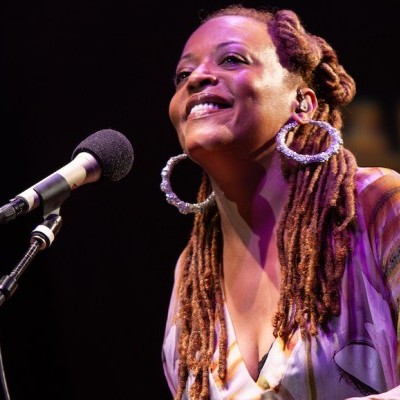
Wilson’s ability to connect to audiences helped her to win two Grammy awards and multiple other accolades. She was named an NEA Jazz Master in 2022.
Sep 3, 2026 10:44 AM
Cassandra Wilson, a singer, songwriter and producer who was one of the most acclaimed and successful jazz vocalists of…
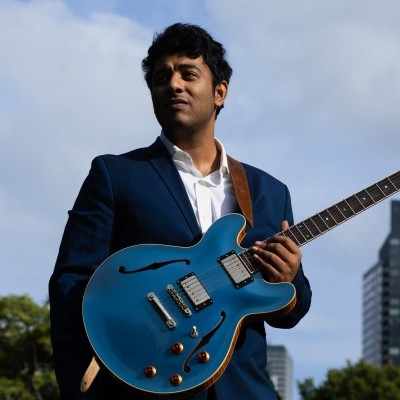
“The love from the jazz and music community restored my faith in humanity,” Walia wrote in an online post upon his release from detention at an ICE facility.
Aug 18, 2026 2:15 PM
Indian jazz guitarist and composer Pritesh Walia has been released after being unexpectedly detained by ICE and taken…
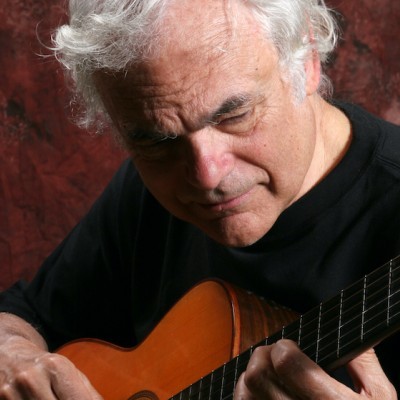
Bertoncini was a specialist and advocate for the nylon-string acoustic guitar, turning down high-profile opportunities that were unsuited to the sound and techniques that he used with that instrument.
Sep 1, 2026 11:06 AM
Gene Bertoncini, an esteemed jazz guitarist, composer, arranger and educator, died Aug. 29 at the Lillian Booth Actors…
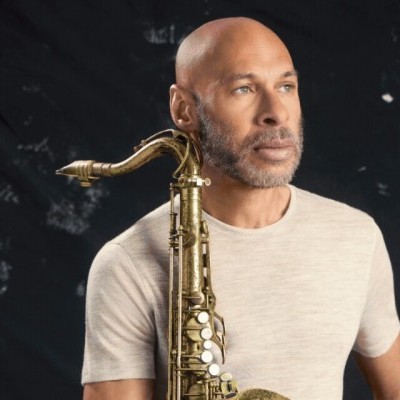
A solo concert by saxophonist Joshua Redman will close the first night of the Hyde Park Jazz Festival on Sept. 26.
Sep 22, 2026 12:26 PM
The Hyde Park Jazz Festival will take place for the 20th time on the final weekend of September 2026. Beginning half…
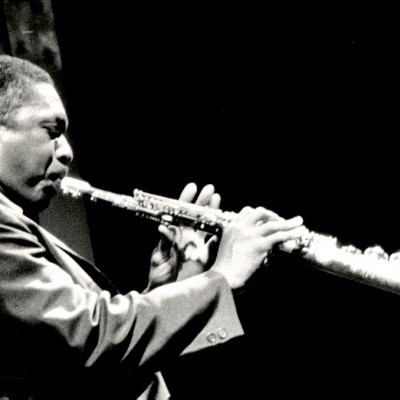
“It was just that suddenly … I could hear it,” Ravi Coltrane said of an epiphany he experienced during his late teens regarding his father’s music. “And it was almost like a calling, like something saying, ‘Hey, man, come on. It’s time to get serious.’ And the first time you really tune in and dial in and focus like that, it can be very life-changing.”
Sep 22, 2026 1:39 PM
Editor’s Note: Tomorrow, Sept. 23, is the 100th anniversary of John Coltrane’s birth. In honor of the tenor and…