Sep 3, 2026 10:44 AM
In Memoriam: Cassandra Wilson, 1955–2026
Cassandra Wilson, a singer, songwriter and producer who was one of the most acclaimed and successful jazz vocalists of…


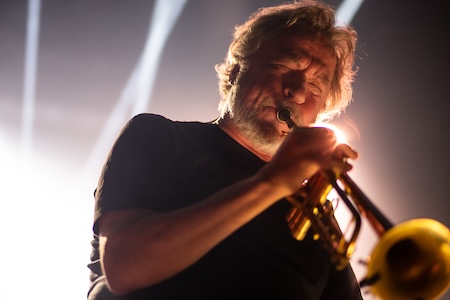
“When I listen to things, I want to be moved, and I don’t need to be impressed,” says Nils Petter Molvær.
(Photo: Anna Rosenlund)“It’s always important to give space, take space and then create together,” Nils Petter Molvær says. “That’s the essence of a collaborative relationship. That kind of interaction and improvisation has existed long before jazz — it’s foundational to our humanity and it’s at the heart of this new record. This is an album about meetings.”
Since releasing Khmer — his electronic-influenced 1997 solo debut — and establishing himself as one of the most formative figures in a new jazz and dancefloor-focused fusion scene, Norwegian trumpeter Molvær has been intimately concerned with that sense of musical space. Pairing the breakbeats and atmospheric electronics of Khmer with a whisper-soft trumpet tone that glides through melody, Molvær has gone on to lend his muted and affecting sound to collaborations with everyone from Indian tabla player Zakir Hussain to Norwegian guitarist Eivind Aarset and reggae instrumentalists Sly & Robbie. Now, he releases his most serene and expansively diverse set of collaborations to date with Be Quiet, an album of duets.
With each of its nine tracks featuring a different guest, from Chinese stringed guzheng virtuoso Chang Jing to Led Zeppelin bassist John Paul Jones to Berlin electronic producer Alva Noto, the cumulative effect of Be Quiet’s entirely improvised music is to instill a sense of deep, introspective calm produced by the meeting of two musical cultures. Italian sound artist Martux_m’s gently twinkling synth arpeggios undulate beneath Molvær’s reverb-laden, drawn-out notes on “Rome,” for instance, and Jing’s pitch-bent notes on “Bangkok” create a meditative mood that interweaves with Molvær’s searching lines. Each composition straddles differing ambient textures, veering from the earthy rumble of Marilyn Mazur’s percussion on “Copenhagen” to the metallic swells of Imogen Heap’s processed vocals on “London-Hackney,” yet the effect is a consistent and pensive tranquillity.
“I wanted to interact with musicians from different places who each had a different relationship to improvisation,” Molvær explains of the record’s origins. “I wanted to meet them where they were, hire a studio, go in and see what happens. Thankfully, everyone I asked said yes.”
Largely choosing artists he had previously collaborated with on one-offs, those who had left a lasting impression, as well as those like Japanese artist Miki Yui and German cellist Anja Lechner who he had long admired from afar, Molvær spent two years traveling from his home in Oslo to Bangkok, London, Rome, Copenhagen and beyond to amass collaborative material.
“I have around 40 minutes of music with each person, and each session is influenced by the space we were in, from Soheil’s small Amsterdam flat to Alva Noto being in Hansa Studios where David Bowie recorded,” Molvær says. “The essence always, though, is the space between the notes: listening to what the other person has to say and being quiet. I’ve always loved the quiet, so it was either that as the title or Shut The Fuck Up. You can choose!”
Growing up on the western Norwegian island of Sula, Molvær began learning the trumpet when he was just 5 years old. Going on to study jazz in the Norwegian college town of Trondheim, Molvær soon met bassist Arild Andersen, drummer Jon Christensen and saxophonist Tore Brunborg, with whom he would go on to co-found the Nordic jazz group Masqualero. Recording four albums from 1983 to 1991, the sextet established a deep-swinging and intricately modernist melodic sound that would dominate the identity of Norwegian jazz for the 21st century to come.
“When I was in Masqualero at the beginning, I was playing hard like Freddie Hubbard and Woody Shaw, trying to get a powerful sound out of the trumpet,” Molvær says. “We became part of a whole wider, Northern European scene. But towards the end of the group, I started to get really tired of the trumpet and that aggression. I started to listen to different kinds of music from the Middle East, Japan, India and beyond instead, and my sound began to change.”
Pursuing a new voice for the trumpet that was shaped by the gentle woodwinds of the ney, bansuri and shakuhachi flutes that Molvær had been listening to, he eventually came to the sound that has defined his solo work to date. “I was thinking about a purity to the trumpet and wanting it to feel warm with lots of oxygen in the sound,” he says. “It needed to have a breathy, flute-like quality and use lots of dynamics. The sound is related to who you are as a human being, as it’s only a bit of metal between yourself and your own voice, so this development happened naturally over time.”
Debuting this new musical identity on Khmer, Molvær soon had what he describes as a “good shock” when the record became upheld as the harbinger of a fresh electronic fusion and catapulted his solo career into global notoriety. Celebrating the 30th anniversary of the album’s release next year, Molvær has recently been revisiting the record live across a series of shows, while he also continues to explore new frontiers in electronics and signal processing..
“Every time my band plays the Khmer record it’s different, and all of the electronics I use develop as new colors to wrap the trumpet sound in,” he says. “When we made Khmer, the technology was stone age; you could only sample four seconds of material. Now, it’s developed so fast I need to take lessons and explore further where I could go next.”
Citing Norwegian trumpeter Kristina Fransson as a next-generation pioneer of trumpet and electronics, Molvær has plans to spend time learning new techniques in her studio, while he also has a new trio project recorded and ready for release later in 2027.
“That record is totally different from Be Quiet because I like diversity. To me, the idea of genre is claustrophobic — I only either like music or it doesn’t speak to me,” he says. “When I listen to things, I want to be moved, and I don’t need to be impressed. That’s what I want to pursue in my own work, too. It’s that constant desire to make space and see what emotion comes out.” DB
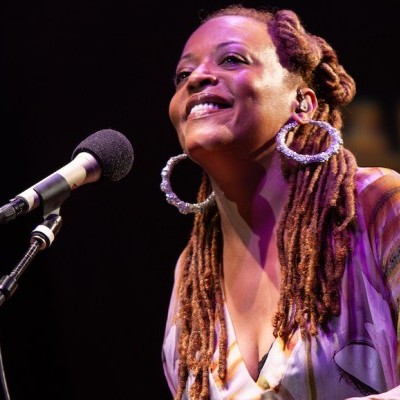
Wilson’s ability to connect to audiences helped her to win two Grammy awards and multiple other accolades. She was named an NEA Jazz Master in 2022.
Sep 3, 2026 10:44 AM
Cassandra Wilson, a singer, songwriter and producer who was one of the most acclaimed and successful jazz vocalists of…
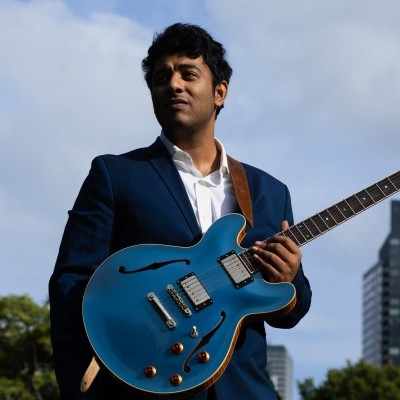
“The love from the jazz and music community restored my faith in humanity,” Walia wrote in an online post upon his release from detention at an ICE facility.
Aug 18, 2026 2:15 PM
Indian jazz guitarist and composer Pritesh Walia has been released after being unexpectedly detained by ICE and taken…
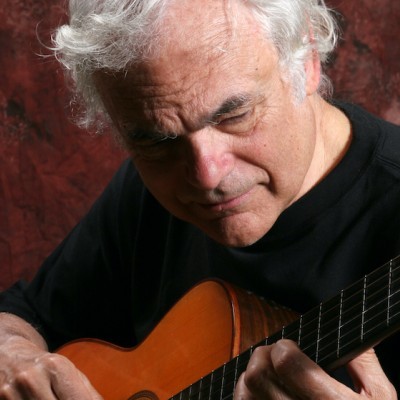
Bertoncini was a specialist and advocate for the nylon-string acoustic guitar, turning down high-profile opportunities that were unsuited to the sound and techniques that he used with that instrument.
Sep 1, 2026 11:06 AM
Gene Bertoncini, an esteemed jazz guitarist, composer, arranger and educator, died Aug. 29 at the Lillian Booth Actors…
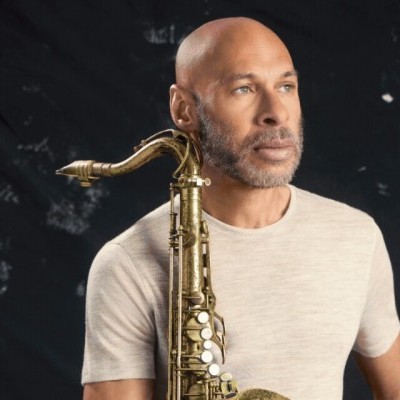
A solo concert by saxophonist Joshua Redman will close the first night of the Hyde Park Jazz Festival on Sept. 26.
Sep 22, 2026 12:26 PM
The Hyde Park Jazz Festival will take place for the 20th time on the final weekend of September 2026. Beginning half…
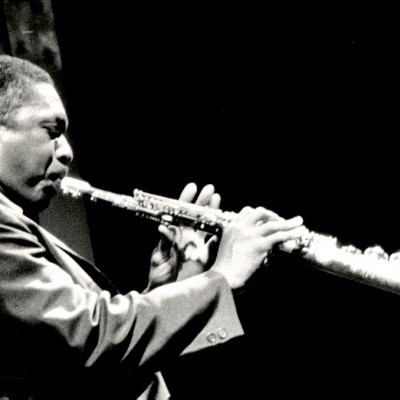
“It was just that suddenly … I could hear it,” Ravi Coltrane said of an epiphany he experienced during his late teens regarding his father’s music. “And it was almost like a calling, like something saying, ‘Hey, man, come on. It’s time to get serious.’ And the first time you really tune in and dial in and focus like that, it can be very life-changing.”
Sep 22, 2026 1:39 PM
Editor’s Note: Tomorrow, Sept. 23, is the 100th anniversary of John Coltrane’s birth. In honor of the tenor and…