Sep 3, 2026 10:44 AM
In Memoriam: Cassandra Wilson, 1955–2026
Cassandra Wilson, a singer, songwriter and producer who was one of the most acclaimed and successful jazz vocalists of…


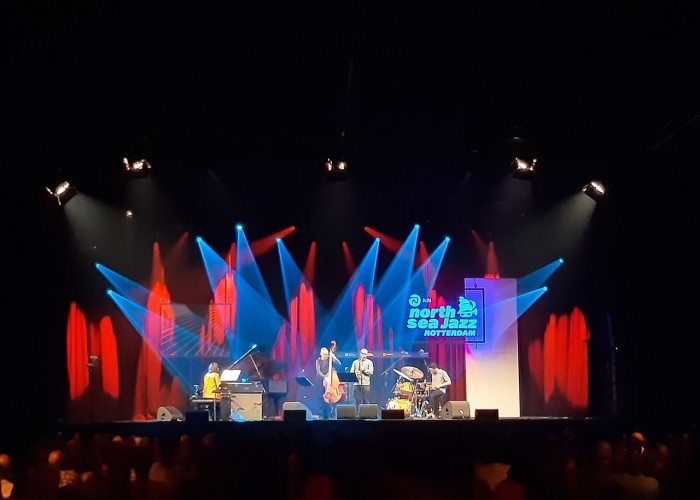
“The goal was never just scale, but density: to offer a complete, panoramic overview of jazz and related art forms in a single weekend,” says Irene Peters, North Sea’s director.
(Photo: Courtesy North Sea Jazz)This July, North Sea Jazz — officially known as NN North Sea Jazz Festival — joins the elite club of jazz festivals that have crossed the half-century mark. In some sense, it’s almost surprising that the fest hasn’t already achieved that milestone, having long been considered an anchoring centerpiece of the European summer jazz festival circuit. It has bragging rights as seasoned yet finger-on-the-pulse royalty among jazz fests, hosting a Who’s Who — and who is poised to become a who.
North Sea has a strong and ongoing reputation as a gathering place for jazz culture of all stripes, packed under one massive roof for a dense weekend in the town of Rotterdam in the Netherlands. To be precise, the site is the Ahoy, with programming packed into an overlapping grid on 17 stages. Other notable numbers: The festival hosts up to 1,300 artists and draws up to 90,000 people over the big weekend.
Visitors contend with an embarrassment of riches and possibilities — even to the point of option anxiety. Hopping from show to show, or portions thereof, is part of the ritual here.
Current director Irene Peters explains that “reaching 50 years is a powerful affirmation of a concept that was groundbreaking from day one — an indoor, multistage festival presenting the past, present and future of jazz under one roof. That original vision by [founder] Paul Acket — combining artistic depth with broad appeal — is still our foundation today.
“What we offer is timeless: connection, surprise, wonder and the joy of music. It’s remarkable to have enjoyed the trust of visitors and artists for so long. Our audience is incredibly loyal, and artists are open to collaborations, making it a shared experience. With this anniversary, we’re celebrating what North Sea Jazz stands for and where it’s headed. The genre is always evolving, and we’re moving with it.”
This summer’s grand 5-0 affair offers special points of attention. “This anniversary year, we will welcome game changers from the past 50 years,” Peters says, “from Steve Coleman to Robert Glasper, esperanza spalding and many others. Pat Metheny will perform his 1976 album Bright Size Life in a new format, featuring the younger Tyn Wybenga and his Brainteaser Orchestra.”
Also on the program is the Sun Ra Arkestra, which appeared in the inaugural festival in 1976, a stylistic outlier alongside such artists as Dizzy Gillespie, Sarah Vaughan, Stan Getz and Count Basie.
Peters is entering only her second year at the helm as director after being tangentially involved as an intern at age 26, 30 years ago. She is the festival’s third director, after founder Acket and Jan Willem Luyken, who presided over the festival for 20 years, helping its upward evolution after a move from the Hague to Rotterdam in 2006.
“From the very first edition in 1976,” Peters notes, “Acket designed an indoor festival with multiple venues and a continuous flow of people, where visitors could move freely between the stages and shape their own experience. This concentrated design — now 17 stages under one roof — has always been essential to our identity. The goal was never just scale, but density: to offer a complete, panoramic overview of jazz and related art forms in a single weekend. Artist residencies and composition commissions gave artists the opportunity to develop new work specifically for the festival.”
Although the festival taps into selective and compatible pop acts on the bigger stages, balance remains key. “Even in the early years,” says Peters, “avant-garde icons graced the program alongside mainstream legends like Ray Charles and James Brown. This conscious balance between art and entertainment still forms the foundation of our programming, which typically consists of 70% to 80% jazz, with the remainder carefully selected crossovers.
“It remains true to the concept of founder Paul Acket, who called it the sandwich formula: a program featuring every conceivable jazz style, with big and small names, emerging talent and established artists, and space for both tradition and innovation.”
Returning artists tend to have strong sentiments about the experience and culture of the festival. Guitarist Bill Frisell, who will appear this year with his trio plus Greg Tardy, has an especially personal connection to the festival. Soon after he met his wife Carole D’Inverno while living in Belgium, they drove to the 1978 festival to hear one of Frisell’s heroes, Ornette Coleman. “I’d never heard anything like that,” Frisell recalls. “Blew my mind.” He later bumped into Coleman on the grounds and spoke to him.
Frisell, a superstar whose humility becomes him, says, “If you had told be back then that someday I might actually get to play at this festival, I never would have believed you. So many memories. So much music I’ve heard there.”
A newer arrival on the roster is acclaimed pianist-composer-conceptualist Kris Davis, who has been booked here for 15 years now in various settings, as leader and side person. In 2022, she was granted the festival’s prestigious Paul Acket Award for her lavishly received “Diatom Ribbons” project. This year, Davis will appear with her trio, with drummer Johnathan Blake and bassist Robert Hurst.
Davis enthuses, “Whenever I come to North Sea, I feel like I’m standing at the center of the jazz world — hearing music everywhere, running into old friends, meeting rising star artists and sometimes literally walking past and sharing meals with musical heroes. I had a chance to sit with Herbie Hancock and share my admiration of his music the last time I was there.
Yet fresher to the festival’s roster of artist is 34-year-old Brazilian pianist Amaro Freitas, whose appearance will be “a tribute to the Amazon and the legends of northern Brazil, a connection to the deepest, most vibrant and pulsating Brazil.”
Freitas observes that “North Sea is definitely one of the festivals that offers the largest number of simultaneous shows or shows with short intervals between them. Despite the short time for soundcheck, everything worked perfectly. It’s a festival organization of the highest level.”
Peters notes that “the festival programs everything from recognizable to experimental styles, therefore artistically occupying the middle ground between the various extremes found in Europe. In addition, we can present big names to the audience. The scale of the event offers unprecedented freedom in programming: Talented artists are given the opportunity to present themselves early and build their own following.”
At root, she asserts, “finding an audience for jazz is a major goal of the festival, as among the young talent are the legends of the future.” DB
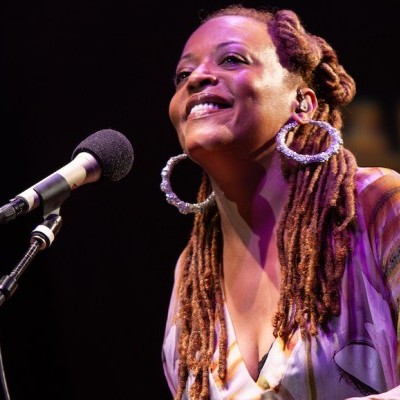
Wilson’s ability to connect to audiences helped her to win two Grammy awards and multiple other accolades. She was named an NEA Jazz Master in 2022.
Sep 3, 2026 10:44 AM
Cassandra Wilson, a singer, songwriter and producer who was one of the most acclaimed and successful jazz vocalists of…
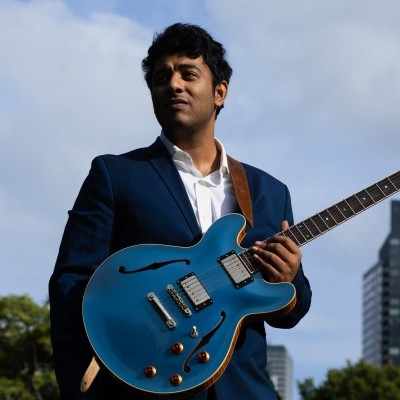
“The love from the jazz and music community restored my faith in humanity,” Walia wrote in an online post upon his release from detention at an ICE facility.
Aug 18, 2026 2:15 PM
Indian jazz guitarist and composer Pritesh Walia has been released after being unexpectedly detained by ICE and taken…
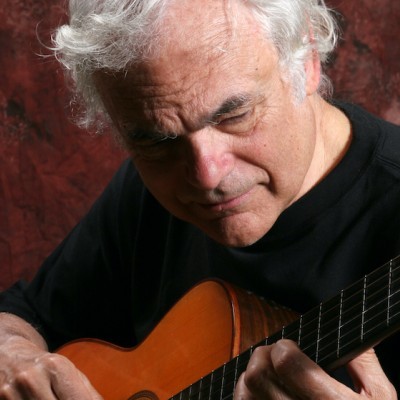
Bertoncini was a specialist and advocate for the nylon-string acoustic guitar, turning down high-profile opportunities that were unsuited to the sound and techniques that he used with that instrument.
Sep 1, 2026 11:06 AM
Gene Bertoncini, an esteemed jazz guitarist, composer, arranger and educator, died Aug. 29 at the Lillian Booth Actors…
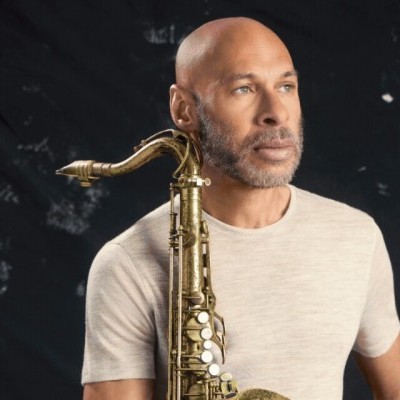
A solo concert by saxophonist Joshua Redman will close the first night of the Hyde Park Jazz Festival on Sept. 26.
Sep 22, 2026 12:26 PM
The Hyde Park Jazz Festival will take place for the 20th time on the final weekend of September 2026. Beginning half…
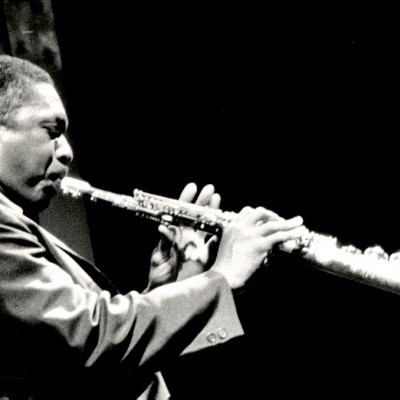
“It was just that suddenly … I could hear it,” Ravi Coltrane said of an epiphany he experienced during his late teens regarding his father’s music. “And it was almost like a calling, like something saying, ‘Hey, man, come on. It’s time to get serious.’ And the first time you really tune in and dial in and focus like that, it can be very life-changing.”
Sep 22, 2026 1:39 PM
Editor’s Note: Tomorrow, Sept. 23, is the 100th anniversary of John Coltrane’s birth. In honor of the tenor and…