Sep 3, 2026 10:44 AM
In Memoriam: Cassandra Wilson, 1955–2026
Cassandra Wilson, a singer, songwriter and producer who was one of the most acclaimed and successful jazz vocalists of…


This year’s Reykjavík Jazz Festival runs Aug. 25–30 in Iceland’s Capital Region.
(Photo: Courtesy Reykjavík Jazz Festival)In late August, when skygazers across Reykjavík, Iceland, begin glimpsing the Aurora Borealis, the Nordic island’s capital welcomes another beloved tradition: The Reykjavík Jazz Festival. A critical platform for hyperlocal musicians, the weeklong celebration, running Aug. 25–30 in the Capital Region, serves as an incubator for Icelandic artists, many who’ve graced its stages for a decade or more.
“It’s a lot of fun,” says General Manager Pétur Heimisson, whose small but mighty team works to create a culturally immersive experience for ticket holders. “The festival is based around all the talent in Iceland. … I think it’s very important to keep [it] going.”
Showcasing a variety of styles and expressions, and an expanding program of European acts, the six-night event includes multiple record releases from emerging and established artists, such as hist og, the three-time Icelandic Music Award-nominated trio featuring Eiríkur Orri Ólafsson, Róberta Andersen and Magnús Trygvason Eliassen; pianist Ingi Bjarni Skúlason, whose past albums have received four IMA nominations; and cellist and composer Þórdís Gerður Jónsdóttir, who has been playing the festival for nearly 13 years.
Its structure is at once sprawling and intimate. A walking city, Reykjavík provides a navigable environment for festivalgoers to attend sets at multiple main stages, and inside some less conventional venues, adding quirks to its charm. “Each night, we have an evening program,” said Heimisson. “For example, Tuesday, Wednesday, Thursday from 7 to 10, you see three acts. And we have it in four different locations.” During the day, venues tend toward a more eclectic atmosphere. “There’s a concert in a food hall. There’s a concert at the national park. So you can really see a lot of music in six days.”
This year, the festival also offers free events at Hafnartorg Gallery, Alliance Française, Þingvellir and Hannesarholt. And, according to Heimisson, the city itself provides a number of opportunities to experience the island’s coastal culture. “During the day, you can have sight-seeing, you can go for really nice food in Reykjavík and the towns around, you can go to all the spas that are now available. And at night, you can witness some really nice music.”
Many larger festivals have potential to leave ticket holders mad-dashing from one venue to the next before the set even breaks. By its very design, RJF aims to mitigate that particular consequence of fomo. “On the first night, it’s only in one location,” said Heimisson. “You can see concerts back to back. On Wednesday, the food hall is next to Harpa. So you can listen to music, have dinner, then go to Harpa for the whole evening. … We try to keep it in the same area. For example, on Saturday we have a concert at 3 o’clock downtown, then we have the evening program about a 10- or 15-minute walk from there.”
The festival seeks to create a warm, community-centered experience for audiences, but how does that energy translate to the artists? “Actually, this festival has been a very welcoming thing in my life for a long time,” said Jónsdóttir, who celebrates the release of her forthcoming album Hljóð í ljóði on Aug. 29 at Austurbær (Reykjavík City Center). “As soon as I started studying how to improvise and play jazz, I felt really welcome to this festival; it was probably like 12 or 13 years ago. Then it was very different. The way it was organized, students could play at like 3 o’clock in some very small place, and you would get a pass to the festival. So you felt very included.”
As the event moves toward more international outreach and booking — last year hosting Cécile McLorin Salvant’s band as a headliner, and this year inviting artists from France, Germany, Norway and Poland — Jónsdóttir can’t help but feel some nostalgia for those early years. “It was quite different in a way. It wasn’t as structured for the local people, especially the younger musicians who just wanted an opportunity to perform,” she said. “It has its pros and cons, of course. The people who play, they’re a little bit better taken care of. And the fewer people you have, each one gets a bigger slot. But in a way, I miss how it was. So many more venues. It felt more like a hangout for musicians. But I don’t think it’s only this festival, I think it’s just in general, festival events have needed to evolve in this direction.”
Pianist Ingi Bjarni celebrates the release of Hope (Losen Records) a few nights earlier on Aug. 26. An artist who has been performing at Reykjavík Jazz Festival for more than a decade himself, he views its international expansion as a welcome development. “It’s getting a little more attention, internationally,” he says. “And that’s what us Iceland musicians really need because it’s such a small scene here. So that’s very positive … In terms of size and attendance, it’s roughly the same, but I think international recognition is getting [wider], which is positive.”
As for those artists and administrators closest to the city and its surrounding regions, the festival’s ongoing impact is priceless. From Heimisson’s perspective, Reykjavík is alive with creative musical expression, and the hyperlocal event circuit helps ensure these artists have an audience. “I think it’s very important for the jazz scene in Iceland, that there is a platform for all of the talent, to let them shine,” he said. “There’s a lot of things happening in the scene. You can listen to jazz concerts almost every night of the week in Reykjavík or in Iceland, so there is something brewing here.” DB
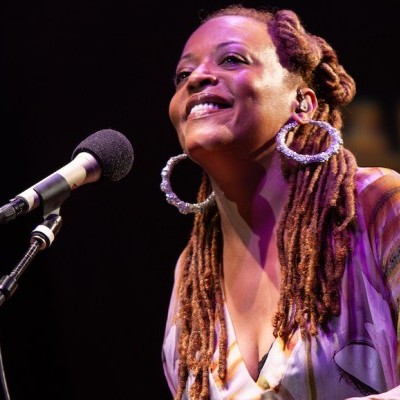
Wilson’s ability to connect to audiences helped her to win two Grammy awards and multiple other accolades. She was named an NEA Jazz Master in 2022.
Sep 3, 2026 10:44 AM
Cassandra Wilson, a singer, songwriter and producer who was one of the most acclaimed and successful jazz vocalists of…
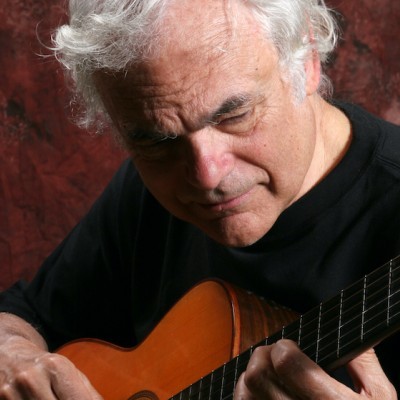
Bertoncini was a specialist and advocate for the nylon-string acoustic guitar, turning down high-profile opportunities that were unsuited to the sound and techniques that he used with that instrument.
Sep 1, 2026 11:06 AM
Gene Bertoncini, an esteemed jazz guitarist, composer, arranger and educator, died Aug. 29 at the Lillian Booth Actors…
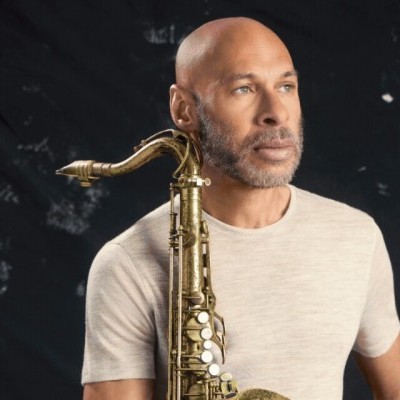
A solo concert by saxophonist Joshua Redman will close the first night of the Hyde Park Jazz Festival on Sept. 26.
Sep 22, 2026 12:26 PM
The Hyde Park Jazz Festival will take place for the 20th time on the final weekend of September 2026. Beginning half…
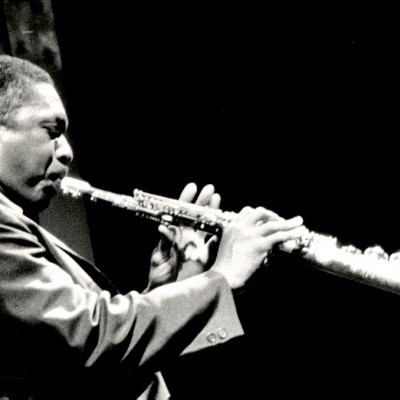
“It was just that suddenly … I could hear it,” Ravi Coltrane said of an epiphany he experienced during his late teens regarding his father’s music. “And it was almost like a calling, like something saying, ‘Hey, man, come on. It’s time to get serious.’ And the first time you really tune in and dial in and focus like that, it can be very life-changing.”
Sep 22, 2026 1:39 PM
Editor’s Note: Tomorrow, Sept. 23, is the 100th anniversary of John Coltrane’s birth. In honor of the tenor and…
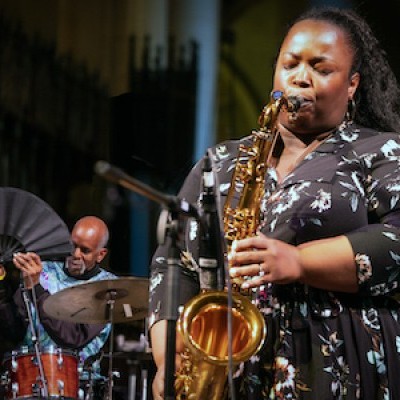
Camille Thurman took to the stage alongside bassist Kenny Davis and drummer Tommy Campbell for a rendition of Johnny Mercer’s “I’m An Old Cowhand” that recalled Rollins’ epochal 1957 trio outing Way Out West.
Oct 6, 2026 1:33 PM
As emcee Mark Ruffin noted at the commencement of an epic tribute to saxophonist Sonny Rollins at the Cathedral of…