Sep 3, 2026 10:44 AM
In Memoriam: Cassandra Wilson, 1955–2026
Cassandra Wilson, a singer, songwriter and producer who was one of the most acclaimed and successful jazz vocalists of…


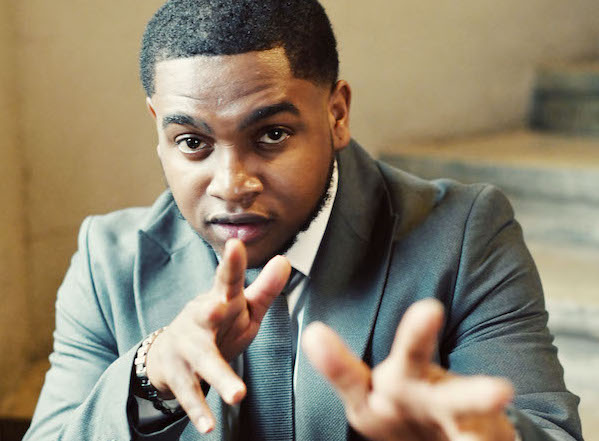
“I’m very proud of the music that I’ve written so far, but I’ve got a lot more work to do,” says drummer/composer Domo Branch.
(Photo: Kasia Idzkowska)It’s wholly appropriate that Dominick “Domo” Branch would be doing a video via Zoom during the week of Thanksgiving. Though the drummer/composer currently lives in New Jersey, he’s back home for the holidays in Portland, Oregon, happily discussing his latest album, Hands Of Gifts (Albina Music Trust).
Released on Halloween, Branch’s sophomore album consists of original compositions largely based on the theme of gratitude plus “Our Man Bogle,” which was penned by Thara Memory, his late high school band director. The spirited opening track “Harlem Nights” pays tribute to the Upper Manhattan neighborhood that has provided him with much inspiration.
The cheery title track, which showcases pianist Tyler Henderson’s elegant extended solo, was written in gratitude for the opportunities that music has provided the composer. Memory gets a second nod with the closing number, “A Memory,” a piece that’s buoyed by saxophonist Abdias Armenteros’ bright tone and Russell Hall’s inspired bass lines.
“I started really writing music my sophomore year of college,” Branch recalled. “I really got into it because I wanted to play sessions, but no one would take the session seriously unless they were reading original music.
“If I would go and play a session trying to learn new standards, people just started BS-ing. But when you bring your chart, or somebody else’s chart is in front of them, they’re going to take their time,” he continued. “They’re going to take it seriously, and then they want to create some real music. There’s more of an investment there.”
Another motivating factor was to overcome a certain stereotype: “I’m a drummer,” he said. “And most people say drummers can’t write, they’re just timekeepers only beating on things. But I have a very musical brain. I can hear harmonies, and I can hear melodies.”
Pianist Sean Mason, who’s had Branch in his quintet and later his trio, agrees with his friend and collaborator’s self-assessment. “Domo can hear the music. Drummers in general can’t hear harmony because they don’t play the piano,” Mason explained, in a phone interview from his home in Charlotte, North Carolina. “That makes it very not fun to play with them, because they can’t hear melodic storytelling. But Domo can hear harmony, and he understands the structure of the melody. So he puts melody first. He memorizes and really knows the melody of each song.”
Mason first met Branch when trumpeter and Juilliard classmate Anthony Hervey assembled a session that also featured bassist Philip Norris. When Mason later had an every-other-Monday residency at Smalls, Manhattan School of Music undergrad Branch was there “almost every time,” Mason marvelled, noting the session’s 1–4 a.m. time slot. “Since he was younger than all of us, he always asked what he should be working on.
“Domo and I also share a comprehensive philosophy,” Mason went on to reveal. “I like to use the entire piano when I play and not stick right in the middle. And he has that similar approach where he likes to use the entire drum kit.”
Branch and Mason spent time together in Catherine Russell’s band. Branch continues to play with the heralded vocalist, including dates welcoming in the new year. And he cherishes the lessons learned from Russell and also her music director, guitarist Matt Munisteri.
“When playing with vocalists, the music isn’t about you,” Branch pointed out. “You have to surrender to the vocals, and you have to surrender to the lyrics or the melody. Also, Catherine’s is a jazz band but with more of a blues and soul and traditional swing sound versus if I’m playing with a new singer like Ekep Nkwelle. That’s a completely different energy.”
As with Russell, Manisteri has been a fount of musical knowledge for Branch. “He’s always teaching me and telling me, ‘Oh, man, listen to this record.’ Or, ‘Check this player out.’ It reminds me of what it would have been, possibly, in the ’60s just from the elder mentorship that I might’ve been able to receive.
“You’re already hanging on the road and everything,” he added. “But they’re always mentoring and teaching, even though they’re not necessarily trying to.”
Having learned invaluable lessons from Manisteri — “He really wanted us to play the music for the music, not for ourselves” — and “big brothers” like pianist Taylor Eigsti and drummer Obed Calvaire, for whom he substitutes in the Jazz at Lincoln Center Orchestra, mid-twentysomething Branch wants to repay the communities that nurtured him. He co-leads a Portland-based big band with producer/keyboardist Charlie Brown III every holiday season. (The Brown Branch ensemble includes trumpeter Farnell Newton and saxophonists Nicole McCabe and Hailey Niswanger.)
“And I led a big band show last year in March at Dizzy’s,” Branch said. “It was a band of many different ages. I had some high school seniors, some college freshmen. The goal for that band was to give some students the opportunity to play in a world-class jazz club.
“You get there on time and are prepared. And I paid them,” he explained. “I gigged a lot when I was growing in Portland, but I didn’t have that kind of opportunity.”
There’s a sense of graciousness and joy when conversing with Branch, and that comes across on Hands Of Gift, too. “Blues For The World,” the album’s sole saxophone trio track, recalls the fun imbued by the Branford Marsalis’ three-piece units of the late ’80s and early ’90s.
“I used to listen to all of those records — even Trio Jeepy (a one-off album that featured Marsalis with bass legend Milt Hinton and drummer Jeff ‘Tain’ Watts). But I’m about to record another album that’s going to be a completely different vibe — a protest album for all of us minorities out here, no matter the race,” he shared. “I’m very proud of the music that I’ve written so far, but I’ve got a lot more work to do.” DB
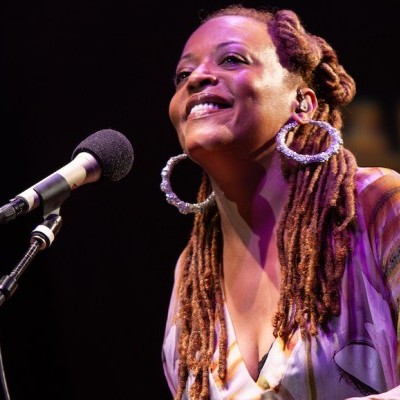
Wilson’s ability to connect to audiences helped her to win two Grammy awards and multiple other accolades. She was named an NEA Jazz Master in 2022.
Sep 3, 2026 10:44 AM
Cassandra Wilson, a singer, songwriter and producer who was one of the most acclaimed and successful jazz vocalists of…
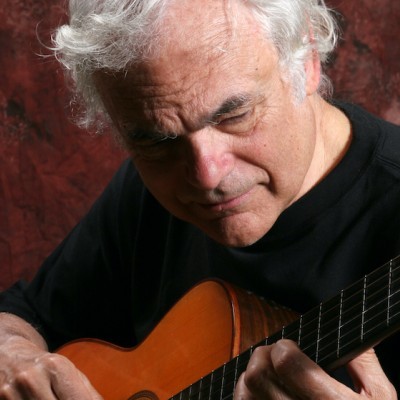
Bertoncini was a specialist and advocate for the nylon-string acoustic guitar, turning down high-profile opportunities that were unsuited to the sound and techniques that he used with that instrument.
Sep 1, 2026 11:06 AM
Gene Bertoncini, an esteemed jazz guitarist, composer, arranger and educator, died Aug. 29 at the Lillian Booth Actors…
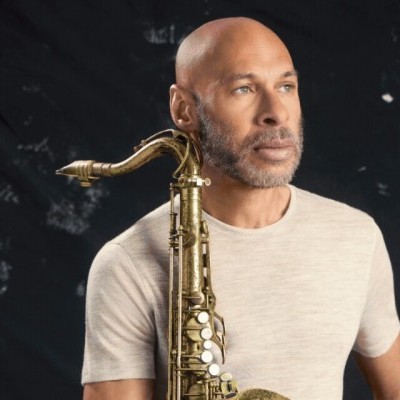
A solo concert by saxophonist Joshua Redman will close the first night of the Hyde Park Jazz Festival on Sept. 26.
Sep 22, 2026 12:26 PM
The Hyde Park Jazz Festival will take place for the 20th time on the final weekend of September 2026. Beginning half…
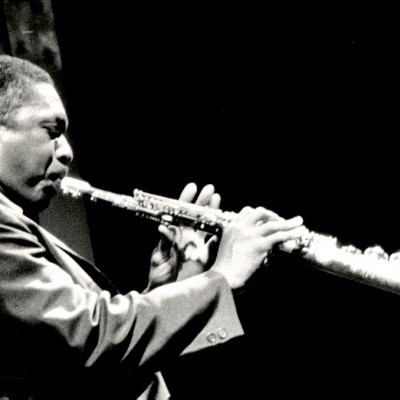
“It was just that suddenly … I could hear it,” Ravi Coltrane said of an epiphany he experienced during his late teens regarding his father’s music. “And it was almost like a calling, like something saying, ‘Hey, man, come on. It’s time to get serious.’ And the first time you really tune in and dial in and focus like that, it can be very life-changing.”
Sep 22, 2026 1:39 PM
Editor’s Note: Tomorrow, Sept. 23, is the 100th anniversary of John Coltrane’s birth. In honor of the tenor and…
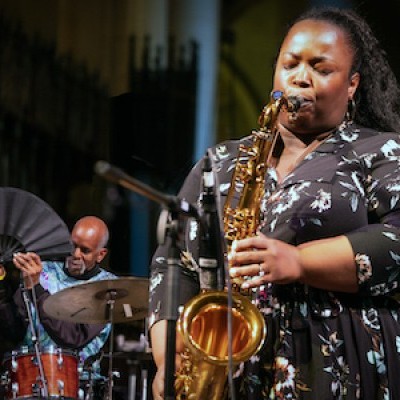
Camille Thurman took to the stage alongside bassist Kenny Davis and drummer Tommy Campbell for a rendition of Johnny Mercer’s “I’m An Old Cowhand” that recalled Rollins’ epochal 1957 trio outing Way Out West.
Oct 6, 2026 1:33 PM
As emcee Mark Ruffin noted at the commencement of an epic tribute to saxophonist Sonny Rollins at the Cathedral of…