Sep 3, 2026 10:44 AM
In Memoriam: Cassandra Wilson, 1955–2026
Cassandra Wilson, a singer, songwriter and producer who was one of the most acclaimed and successful jazz vocalists of…


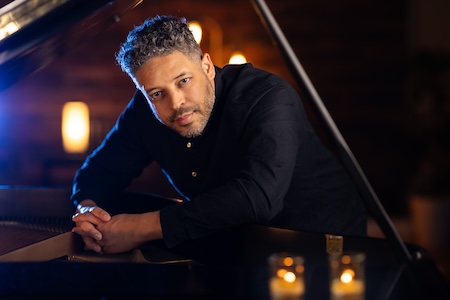
“I wanted it to be bare,” says Zaccai Curtis of his new album. “I didn’t want to have a ton of overdubs.”
(Photo: Cedric Pilard)Not so long ago, Zaccai Curtis would take long drives through southern New England. COVID had raised the rigor of his teaching schedule, and often he’d be on the road for 10- and 12-hour stretches. During these drives, the Grammy-winning pianist and composer created a playlist to suspend him in a groove and buoy him onward. Most of the songs were ’70s hits.
“I started to ask myself, ‘Do I really love this time period that much?’” he says. “And I think I did.” What came next was an idea teased out to a concept. “I dug into my past charts and said, ‘Well, why don’t I try to make music that I really love, that I never really ‘knew’?” From that moment, Curtis began conceiving an original release inspired by ’70s groove elements that’s also deeply personal, inclusive of all the styles he loves, and those that have shaped his sound over the last two decades of his career.
Since Cubop Lives! (TRR Collective, 2024) earned him his first Grammy win as a leader, Curtis has been focused on his own music in a way that feels brand new for an artist whose name appears in countless album credits. His resume includes pivotal tours and recordings as a core collaborator for Cindy Blackman Santana; Donald Harrison; Mambo Legends; Chief Adjuah, then-credited as Christian Scott; his mentor, the late Eddie Palmieri; and other style-makers across many sounds and genres. He’d make time for his own projects, which include Zaccai Curtis Quintet and Sonido Solar, typically when he could steal those moments.
“I’d be up 3 a.m., working on my own craft, working on my own recordings, editing my own music,” he says. “After the Grammy nomination and into the Grammy win, the focus now could be my own music.”
With solemn encouragement from Palmieri, who told Curtis shortly before his passing, “Now, everything you do has to be better than what you did before,” the Hartford-based artist sketched out a plan. Eight original songs arranged for quintet would become Sonoluminescence Vol. 1 (TRR Collective), an album that de-centers genre and spotlights master soloists developing narratives over thick, swaddling grooves. Borrowing its title from the physical phenomenon of sound waves creating light, Sonoluminescence, released in August, illuminates a meticulousness of craft from a composer whose influences span styles and generations.
“It sounds pretentious,” says Curtis with a laugh. “[But] I thought that was so cool, creating light with sound. I thought I could have a whole project based on that. I love this concept.” Leaning into the metaphor, he engages a number of musical devices that quietly shimmer, creating a surreality at once transportive and almost undetectable, the latter being his goal.
“I wanted it to be bare,” says Curtis. “I didn’t want to have a ton of overdubs. For the most part, I wanted the album to be grooving and down to the point, but feature the soloists. My biggest inspirations for music like that is Roy Ayers, Idris Muhammad, Hubert Laws. [I thought,] let’s try to create music that people can listen to, not really focus on it from a cerebral perspective, but more, ‘Let the music sink into their heart and relax.’”
For Sonoluminescence to work, Curtis sought players who are as technical as they are intuitive, who could tap into the concept of creating light from sound and fully embrace it. They also had to be comfortable delivering compelling solos without shying away from long-arc storytelling. For the quintet, he called Craig Handy on tenor, Joe Dyson on drums and Brevan Hampden on congas and percussion, with Mike Boone and brother Luques Curtis sharing bass responsibilities. Guest artists Aurélien Budynek on guitar and Julie Acosta on vocals complete the album’s aesthetic.
“Craig Handy is one of my favorite soloists of all time,” says Curtis, who met the Oakland native through another of his mentors, the late Ralph Peterson. “He’s very percussive. His ideas go on forever and he doesn’t repeat himself.” Later in his career, Curtis played a few gigs with Boone and fell in love with his pocket. “Mike [has] such a groove,” he says. “And Joe Dyson, that’s who I used to play with in Donald Harrison’s band. All of the grooves [on Sonoluminescence] except for one or two, those are Joe’s grooves. So I got the core trio, and then I put Craig to be the lead voice.”
As he worked through the music with his bandmates, Curtis unveiled certain intentions that would inform the Sonoluminescence sound; a hallmark, its distinct interpretation of those ’70s hits he loves so much, with a focus on percussion. “It’s always there, but it’s not featured,” he says. “It’s not in the forefront … [I decided to] make the percussion a little more prevalent in the music. And then that allowed me to bring a little more of the Latin jazz element into the music of the ’70s. That kind of made it slightly different.” To elevate that theme, he composed a series of Afro-Cuban rhythms typically written for drums, and layered them in the bass.
Another dynamic on Sonoluminescence is the melodic lock-in between Curtis and Handy. “I love that sound,” he says, “piano doubling with tenor sax — particularly tenor sax. … Piano seems to get in the way of the alto. But tenor, for some reason, it just has this really nice quality. … We double most of those melodies.”
Throughout the album, Curtis inverts the traditional piano-Rhodes split, playing piano in his right hand and Rhodes in his left. He began experimenting with that technique when he started playing with Blackman Santana, drawing initial inspiration from Bill Evans. “He did something similar with the two pianos,” says Curtis. “But there’s not a lot of people putting the Fender Rhodes in the left hand … I just love having that cushion of the Rhodes sound while I go for it on the piano. … So there are these little elements that I would switch around just from my compositions. But I didn’t want the listener to think about any of that. … I really just want you to sink into the music.”
These and other devices bond with each solo gesture to create a listener’s escape. Sections become chambers, with interludes that pivot, often dramatically. For Curtis, that’s the vibe. “It’s so cool to add these different elements to your music. Maybe most people never notice, but I love it,” he says.
“A Patient Resolve” delivers a lyrical piano solo, voice-like in its bebop language, before an Ayers-informed break hairpins into a montuno. The image Curtis hopes the song conjures is a lake before dusk. “The sun’s setting over the lake. But you gotta relax and just wait for the sun to set,” he said. “That’s why I named it ‘A Patient Resolve.’”
“Message” superimposes kinetic energy over potential, with drums and bass operating at the edge of restraint around Budynek’s ungovernable guitar. “Energy was the idea,” says Curtis. “And I was focused on creating that groove based on that rhythm. Super simple. And even the chords are simple. But when you start playing it, it’s not as simple.”
For certain beats, including the one on “Message,” Cutis draws inspiration from the xennial generation’s golden age of hip-hop. “I never went past the ’90s and probably never will,” he says. “My big ones — I’m a Busta Rhymes fan, Biggie, Big Pun and then of course Nas.” A sample from the Illmatic icon even made its way onto Algorithm, Curtis’ 2019 release co-led with brother Luques. “I like good music regardless of the time period. I’m also a big doo-wop fan.”
The album’s groove disruptor begins and ends with “Mayci’s Dream,” an original blues with plenty of elasticity. To create the feeling of the artists drifting out together, connecting with and playing off each other’s internal pulses, then returning to tempo, Curtis admits to borrowing a technique from Ray Vega’s arrangement of John Coltrane’s “Africa.”
“It’s an illusion of time,” says Curtis. “We’re all thinking ‘this pulse.’ So when we get to the turnaround part of the blues, the pulse disperses and you get suspended. And it’s like in slow motion. Then we go back into the time. But in order to do it, we all have to keep a pulse to our head. If you listen to Joe, he brings us back in … and we have to do that while we play sporadically and make it feel like it’s just up in the air.”
Through music, Sonoluminescence explores the concept of creating light from sound. But Curtis has been leaning into this metaphor across his entire career — in particular, through the creation and radical development of TRR Collective, his indie record label that operates in partnership with artists so they can remain in control of their music. Recent clients include Eva Cortez, Donald Harrison, Jen Allen, Little Johnny Rivero, Kalí Rodriguez-Peña and Mambo Legends. Sonoluminescence, Vol. 1 is the label’s 100th release.
“I think it’s an incredible situation [laughs],” says Curtis, who shared his gratitude for the different artists who have assisted in label operations over the years, including Darryl Yokley and brother Luques. But the most recent structural lift TRR has received comes from his father Ted Curtis.
“He’s a computer programmer,” says Curtis. “He has a lot of skills with making spreadsheets and all that … he deals with things like the financial part, so I don’t have to. That’s really when the label started to blossom and create a nice home for artists where they still have ownership over their music.”
When a friend inquired about the label coming up on 100 releases, Curtis considered his options. After some thought and a few conversations with friends and clients, he decided Sonoluminescence would be a meaningful milestone, particularly as an ode to open genre and the varied styles that have shaped his sound. “This is kind of back where I started — in quintet form [laughs],” he says.
And TRR has much to celebrate. Cubop Lives! earning its Grammy proved to Curtis the power of the people retaining control over their own ideas. He hopes that win inspires other artists to join indie labels instead of signing contracts with major ones. “An independent record label getting recognition like that is important,” he says. “And it’s great that other record labels understand that it’s achievable. Maybe I’ll get myself in trouble here, but you don’t have to go to the majors. You don’t have to sign with a major label and give up everything for 10 years.”
While indie labels can offer their clients unbound creative freedom and often a dedicated team of like-minded artists, Curtis admits to certain limitations. “It’s hard to get that fame level on an independent label,” he says, “but they can put out music that they love and they can get recognition,” adding, “I’m especially grateful to the artists who trust us with their music. I’m honored in that respect. We have a lot of great artists on the label. They’re all my friends. They’re my people.”
Thinking back on Palmieri’s words, Curtis believes he’s taken that wisdom to heart. “As much as I was scrutinizing it before, now I’m heavily critical of my own playing, my own time, my own music,” he says. “And I feel like I’ve been able to push my music to the forefront of what I’m doing. I wasn’t able to do that before. So I feel very appreciative to be able to do something like that. And that’s where my focus is, trying to get my new band, my new creations, my new ideas [together], and not waste any time.” DB
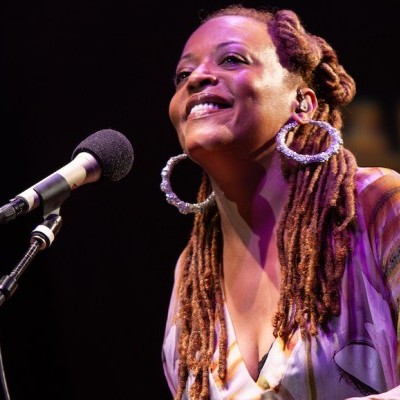
Wilson’s ability to connect to audiences helped her to win two Grammy awards and multiple other accolades. She was named an NEA Jazz Master in 2022.
Sep 3, 2026 10:44 AM
Cassandra Wilson, a singer, songwriter and producer who was one of the most acclaimed and successful jazz vocalists of…
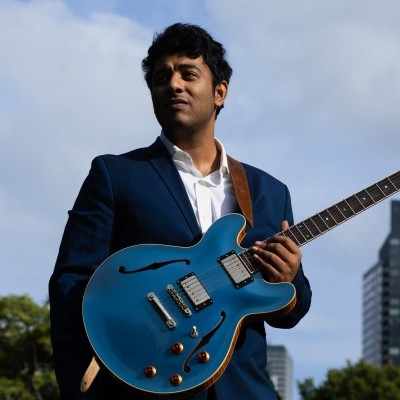
“The love from the jazz and music community restored my faith in humanity,” Walia wrote in an online post upon his release from detention at an ICE facility.
Aug 18, 2026 2:15 PM
Indian jazz guitarist and composer Pritesh Walia has been released after being unexpectedly detained by ICE and taken…
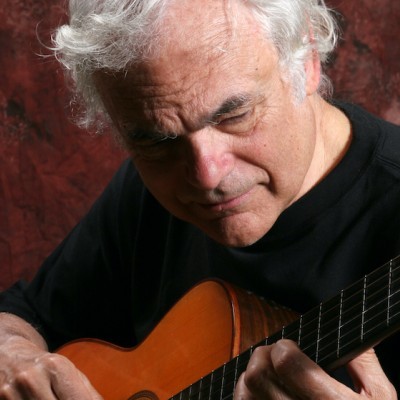
Bertoncini was a specialist and advocate for the nylon-string acoustic guitar, turning down high-profile opportunities that were unsuited to the sound and techniques that he used with that instrument.
Sep 1, 2026 11:06 AM
Gene Bertoncini, an esteemed jazz guitarist, composer, arranger and educator, died Aug. 29 at the Lillian Booth Actors…
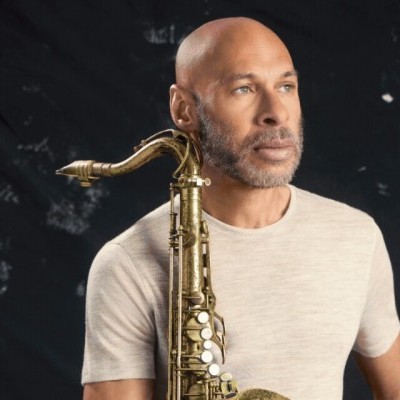
A solo concert by saxophonist Joshua Redman will close the first night of the Hyde Park Jazz Festival on Sept. 26.
Sep 22, 2026 12:26 PM
The Hyde Park Jazz Festival will take place for the 20th time on the final weekend of September 2026. Beginning half…
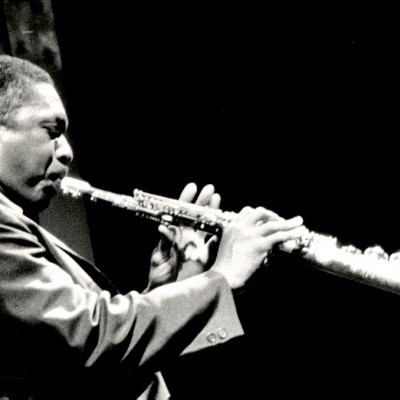
“It was just that suddenly … I could hear it,” Ravi Coltrane said of an epiphany he experienced during his late teens regarding his father’s music. “And it was almost like a calling, like something saying, ‘Hey, man, come on. It’s time to get serious.’ And the first time you really tune in and dial in and focus like that, it can be very life-changing.”
Sep 22, 2026 1:39 PM
Editor’s Note: Tomorrow, Sept. 23, is the 100th anniversary of John Coltrane’s birth. In honor of the tenor and…