Sep 3, 2026 10:44 AM
In Memoriam: Cassandra Wilson, 1955–2026
Cassandra Wilson, a singer, songwriter and producer who was one of the most acclaimed and successful jazz vocalists of…


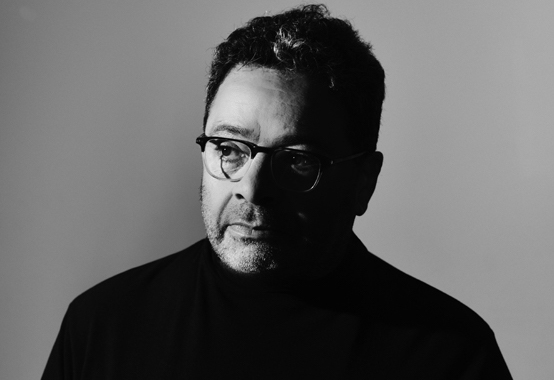
“The idea that music is a way to erase denomination, political affiliation, political ideology labels and gender labels is a way to bypass everything,” says O’Farrill. “We get to the currency of love and truth.”
(Photo: Courtesy Arturo O’Farrill)In 2015, renowned pianist, bandleader and mover-shaker Arturo O’Farrill released the album Cuba: The Conversation Continues, a celebration of the Cuban-American musical accord of which he is a vibrant arbiter. His famed composer-arranger father, Chico, was born in Cuba, ending up in New York. The album enjoyed serendipitous timing, as then-President Obama was making headway in easing U.S.-Cuban tensions.
In some way, a decade later, the album title remains relevant, as O’Farrill’s Cuban conversation — and Afro-Latin music more broadly — continues in new ways. Last year served as a banner year for the 65-year-old O’Farrill, who released personally ingrained tribute albums, featuring his Afro Latin Jazz Orchestra, to the late Carla Bley (Mundoagua: Celebrating Carla Bley) and The Original Influencers: Dizzy, Chano & Chico (Live At Town Hall). The “influencers” in question were Latin jazz trailblazers Dizzy Gillespie, Chano Pozo and his father, Chico, in a tradition for which the younger O’Farrill boldly carries the torch. And now, through O’Farrill’s gifted sons, drummer Zack and trumpeter Adam, the continuation moves forward.
O’Farrill pays respects to his elders — literally and culturally — and the significance of the Afro Latin cultural cause he inherited from his father (also the founder of the Afro Latin Jazz Orchestra, before his son took over in 1990). But he also abides by the importance of pushing the music and the jazz art form forward. “I am not a nostalgist,” he insists, “and I have no issues with people who are. I am so grateful to Bud Powell, but I’d be remiss as a human being if I thought replicating Bud Powell was the purpose of art. It’s about looking at music, and especially jazz, as revolutionary music that must follow its creed of creating change and progress.”
That creed also relates to the musical legends in the Latin jazz and Afro Latin realms, the focus of The Original Influencers. They were also revolutionaries in their time period, O’Farrill says. “My father came to New York and was a starving composer-arranger. Norman Granz gave him an opportunity to write a record for Machito. Chico could have turned in ‘Mambo Number 183,’ and instead he turned in the Afro-Cuban Jazz Suite, which revolutionized the world for all of us.”
Speaking of Cuba, at the time of this early January interview, O’Farrill had been “putting out fires” before connecting, wrestling with arrangements for his annual trip to the Havana Jazz Festival in the fragile aftermath of the Venezuelan military strike by the U.S. “I’ve been going to Cuba sometimes four and five times a year,” O’Farrill commented. “I’ve developed very tight relationships with musicians and friends and family down there, and I’m devastated.”
But the show goes on, and it deepens and widens for an artist who spearheaded a major upward evolution of his idealistic non-profit organization Belongó. What began as a humble-but-passionate concept in 2007 — championing education, performance, creation of new music and U.S.-Cuban exchanges — has amassed a vast archive of scores, presented close to 900 performances and given free education to more than 20,000 students in New York schools, among other achievements.
Next up on the Belongó agenda: the creation of a massive 19-story Casa Belongó in East Harlem, which will combine a 34-unit affordable housing project with a cultural center for education, performances and other community connections. The ambitious project has been made possible through help from the city of New York through an affordable housing mandate the people of East Harlem requested. “A bid for proposals went out and the company engaged us to help,” O’Farrill recalls, “because one of the caveats was a cultural component. I found myself testifying before officials, community boards, council people.”
An inaugural “Belongó Bugalú” gala solidified the latest chapter at New York’s City Winery last November with music, a gala dinner and an award ceremony (honoring David Amram, David Perez and community leader Michelle Cruz).
Regarding the fruition of Belongó, O’Farrill notes, with a laugh, “We are on the cusp of beginning the greatest composition of my life. I created the Afro Latin Jazz Alliance to support the work of teaching Afro Latin music, supporting the work of the Afro Latin Jazz Orchestra and preserving Afro Latin culture, which is just an entry point.
“It is literally the culmination of life’s work as a musician, as an artist, you know, putting forth the idea that music is service.”
The seemingly indefatigable O’Farrill has found himself directing special attention on his fast-growing Belongó brainchild. It connects with a deeper personal philosophy for him. As he says, “You hear a lot of musicians say, ‘It’s all about the music.’ That never fits well with me because it’s not only about the music — it’s about how you treat others.
“For me, music is like this incredible goblet made of the rarest of metals and bejeweled with precious jewels. But it’s not the issue. The issue is the wine inside the goblet that you pass around to others. For me, the idea that music is a way to erase denomination, political affiliation, political ideology labels and gender labels is a way to bypass everything. We get to the currency of love and truth.
“That has become a holy, holy crusade for me. Belongó is a result of my wife and I taking part of the kitchen table for rehearsals and buying water and cookies for those rehearsals. Belongó is the result of going to the meanest, toughest, roughest high school in New York and saying, ‘Can I please teach here?’ Belongó is the result of going to a funder and saying, ‘Can you give us a little bit of money?’
“Everything began small, but it was all built on the premise of music. It’s a goblet that has the rarest of wines. And that wine is the community and love that you build.” DB
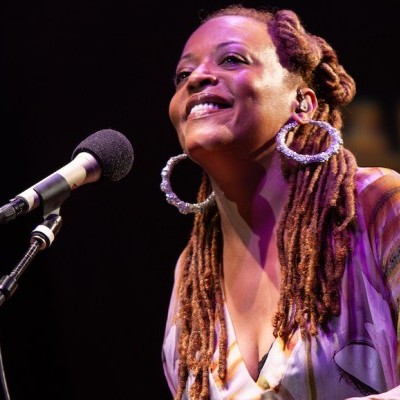
Wilson’s ability to connect to audiences helped her to win two Grammy awards and multiple other accolades. She was named an NEA Jazz Master in 2022.
Sep 3, 2026 10:44 AM
Cassandra Wilson, a singer, songwriter and producer who was one of the most acclaimed and successful jazz vocalists of…
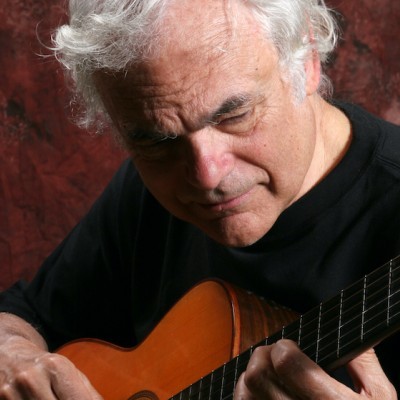
Bertoncini was a specialist and advocate for the nylon-string acoustic guitar, turning down high-profile opportunities that were unsuited to the sound and techniques that he used with that instrument.
Sep 1, 2026 11:06 AM
Gene Bertoncini, an esteemed jazz guitarist, composer, arranger and educator, died Aug. 29 at the Lillian Booth Actors…
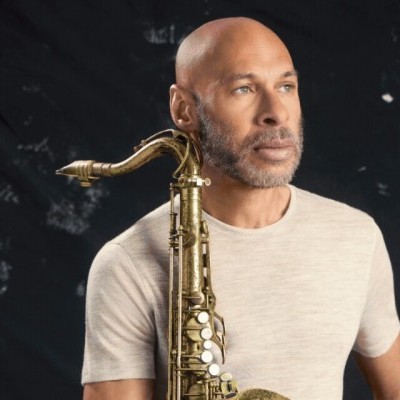
A solo concert by saxophonist Joshua Redman will close the first night of the Hyde Park Jazz Festival on Sept. 26.
Sep 22, 2026 12:26 PM
The Hyde Park Jazz Festival will take place for the 20th time on the final weekend of September 2026. Beginning half…
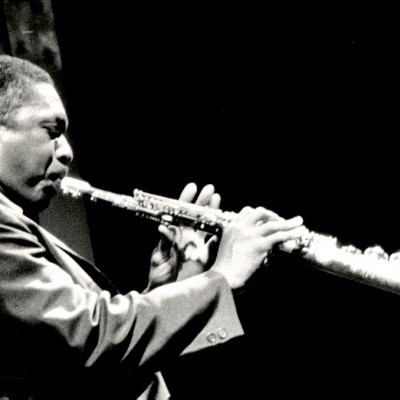
“It was just that suddenly … I could hear it,” Ravi Coltrane said of an epiphany he experienced during his late teens regarding his father’s music. “And it was almost like a calling, like something saying, ‘Hey, man, come on. It’s time to get serious.’ And the first time you really tune in and dial in and focus like that, it can be very life-changing.”
Sep 22, 2026 1:39 PM
Editor’s Note: Tomorrow, Sept. 23, is the 100th anniversary of John Coltrane’s birth. In honor of the tenor and…
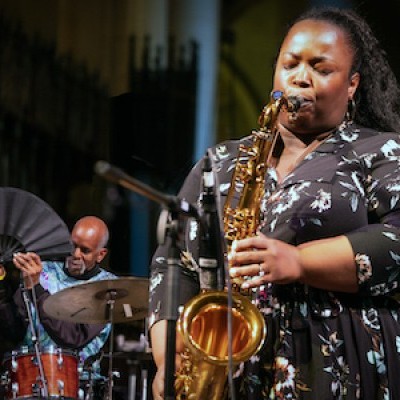
Camille Thurman took to the stage alongside bassist Kenny Davis and drummer Tommy Campbell for a rendition of Johnny Mercer’s “I’m An Old Cowhand” that recalled Rollins’ epochal 1957 trio outing Way Out West.
Oct 6, 2026 1:33 PM
As emcee Mark Ruffin noted at the commencement of an epic tribute to saxophonist Sonny Rollins at the Cathedral of…