Sep 3, 2026 10:44 AM
In Memoriam: Cassandra Wilson, 1955–2026
Cassandra Wilson, a singer, songwriter and producer who was one of the most acclaimed and successful jazz vocalists of…


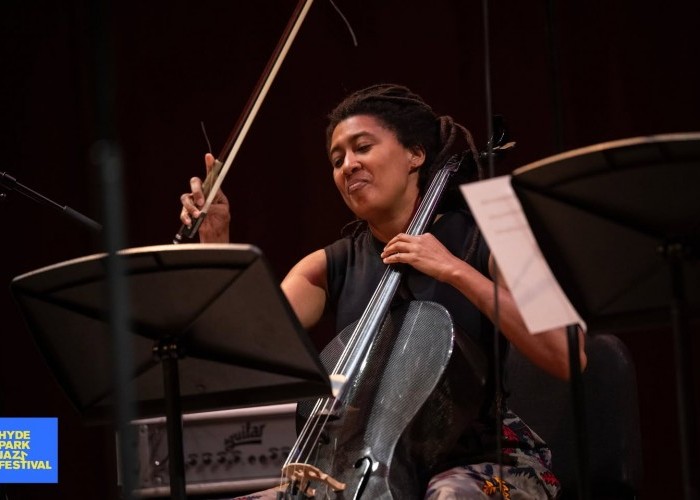
Tomeka Reid’s In Tribute To Ellington could easily have made everyone happy by simply playing Duke’s music, but she took a more challenging route.
(Photo: Marc Monaghan)If you scanned the lineup for the 20th edition of the Hyde Park Jazz Festival, which took place Sept. 25–26, you’d see some names worthy of top-tier festivals around the globe. But when you get up close, it proudly shows its roots as a neighborhood celebration. Most of its staff are volunteers, and many of the people in attendance come from Chicago’s South Side.
Despite some funding insecurity, the festival remains free and open to all, although every event was preceded by a request for a donation. On the first day, many concerts were accessed by walking down Hyde Park’s streets and into its institutions, including local churches, a bank, the DuSable Museum and the Reva and David Logan Center for the Arts, a multidisciplinary facility that is part of the University of Chicago. And on both days music could be heard on two outdoor stages erected on the Midway Plaisance, where one could see the newly complete Obama Presidential Center a few blocks east the Willie Pickens Stage, which was rechristened in honor of the late, local pianist in celebration of the festival’s 20th year.
This year, the weather did its part to contribute to the festival’s success. Shirtsleeve temperatures, blue skies and mild breezes greeted visitors who wanted to wander from venue to venue or toss Frisbees and blow bubbles with their kids on the Plaisance’s lawn, nosh on the offerings of food trucks, or bring folding chairs and pack a picnic. Across two days, the outdoor stages hosted concerts by local performers including the Hyde Park Jazz Festival 20th Anniversary Band, an all-star combo including Makaya McCraven, Junius Paul, Joel Ross and Marquis Hill; octogenarian tenor saxophonist Ari Brown, who earned nothing but appreciation when he serenely played right past the intended finishing time of his set; Bethany Pickens’ Soulful Coalition, which played on the stage newly named for her father; and M.A.D.D. Vibes, a program that presented student jazz tap dancers in collaboration with vibraphonist, composer and educator Thaddeus Tukes’ quintet.
For audiences more eager for edification and a seat indoors, the Logan Center hosted a lecture series with presentations about the late South Side songwriter Oscar Brown, New Orleans’ Black Indian masking tradition and the matter of archiving Chicago’s jazz history. And among the indoors concerts were a specially commissioned program by alto saxophonist Greg Ward that explored jazz’s connection to the music of the Black American church, and examples of the Association for the Advancement of Creative Musicians’ polymorphous musical mixtures led by flute player Nicole Mitchell and cornetist Ben Lamar Gay.
National acts began and ended the festival’s first day. The Kris Davis Trio commenced a tour in support of its new album, Lost In Geneva, with an early afternoon set in the Logan Center’s penthouse, which afforded a view for the festival’s outdoor stages. This group represents a shift away from the formal innovations explored by the pianist’s Diatom Ribbons combo in favor of rigorous but approachable compositions that spotlight the expressive and interactive gifts of each soloist. Bassist Robert Hurst’s poised, unaccompanied introduction to the multi-segmented “Congestion Pricing” set the stage for Davis’ winding thematic elaborations and drummer Blake’s dense but nuanced rhythmic flow. And at the end of a long day, Joshua Redman played a solo concert in the packed, capacious Rockefeller Chapel. He promised a set of tunes associated with his favorite saxophonists. He began with an abstracted “Body And Soul” which he dedicated to Coleman Hawkins. Shifting between mellifluous lines and punctuating multiphonics, he seemed to be sounding out the building’s lively acoustics. He applied that research to Lester Young’s “Lester Leaps In” and Sonny Rollins’ “St. Thomas,” using the space’s long echo to turn fleet runs into cascading waves of sound. The performance’s emotional center was John Coltrane’s “Alabama,” which he presented first with grave simplicity, and then with emotionally wrenching elaborations. “Goodbye Porkpie Hat” turned into a showbiz finale as Redman twice walked the length of the church, quipping that he had to get in his steps.
Of particular note were three sets led by musicians who spend a lot of time outside of Chicago, but have returned to the Hyde Park Jazz Festival again and again. Cellist Tomeka Reid’s In Tribute To Ellington could easily have made everyone happy by simply playing Duke’s music, but she took a more challenging route. The program consisted of her original compositions, which featured certain Ducal sonic gestures, mostly articulated by drummer Mikel Patrick Avery and brass players Taylor Ho Bynum and Jeb Bishop. But these devices were juxtaposed with elements that were pure Reid, particularly springy, pizzicato-propelled rhythms articulated by three strings. One recurring source of pleasure was Reid’s application of Ellington’s compositional rule of thumb to set the musicians up to do what they do best, for example by showcasing lute and saxophone player Anna Webber’s penchant for texturally appealing but sugar-free coloration.
The set by Rob Mazurek’s Prismatic Trio was a salutary combination of sound and architecture. The concert took place in the Augustana Lutheran Church, whose apse lures one’s gaze upwards towards a ceiling one can’t quite see. Mazurek played to the ascending space, launching brief, lyrical phrases using a sequence of three different trumpets. His playing rose on the surging updrafts generated by two vibraphonists, Jason Adasiewicz and Victor Vieira-Branco, applying their mallets with abandon. If one listened deep into the sound, it was evident that they were often playing the same fairly simple phrases. But instrumental volume and stone walls turned their playing into a sublimely immersive presence.
Trumpeter and vocalist Amir ElSaffar, who grew up in nearby Oak Park, Illinois, has come at the convergence of jazz and Iraqui maqam (a millennium-old musical method in which players may improvise on modes) from several angles over the past two decades. His New Quartet, which includes microtonal pianist Tania Gianouli, tenor saxophonist Ole Mathison and drummer Tomas Fujiwara, is an especially flexible and potent vehicle for applying the tones between the notes of equal temperament to expressive ends. They opened with a sequence of long tones and unfamiliar harmonies that retuned the listeners’ ears. The point of this unusual sound world is not novelty, but deep expression and improvisational flexibility. DB
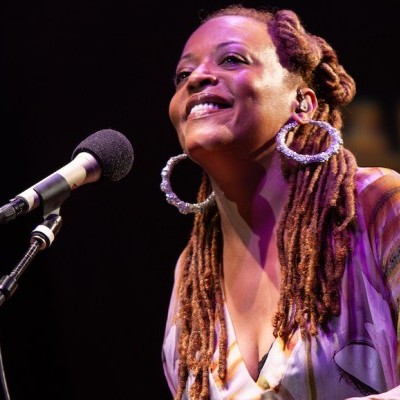
Wilson’s ability to connect to audiences helped her to win two Grammy awards and multiple other accolades. She was named an NEA Jazz Master in 2022.
Sep 3, 2026 10:44 AM
Cassandra Wilson, a singer, songwriter and producer who was one of the most acclaimed and successful jazz vocalists of…
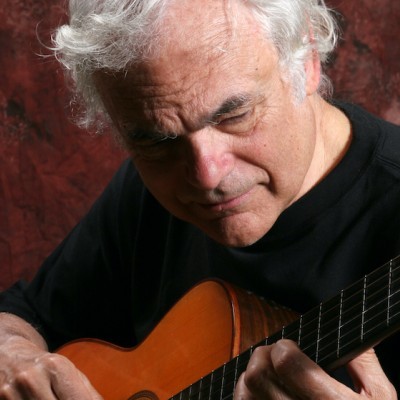
Bertoncini was a specialist and advocate for the nylon-string acoustic guitar, turning down high-profile opportunities that were unsuited to the sound and techniques that he used with that instrument.
Sep 1, 2026 11:06 AM
Gene Bertoncini, an esteemed jazz guitarist, composer, arranger and educator, died Aug. 29 at the Lillian Booth Actors…
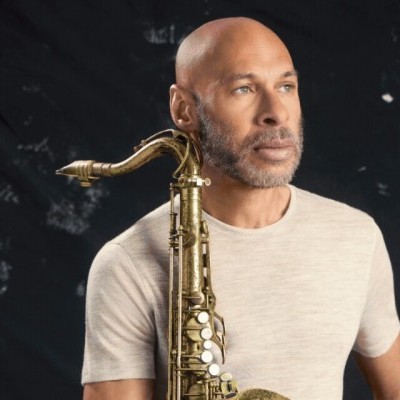
A solo concert by saxophonist Joshua Redman will close the first night of the Hyde Park Jazz Festival on Sept. 26.
Sep 22, 2026 12:26 PM
The Hyde Park Jazz Festival will take place for the 20th time on the final weekend of September 2026. Beginning half…
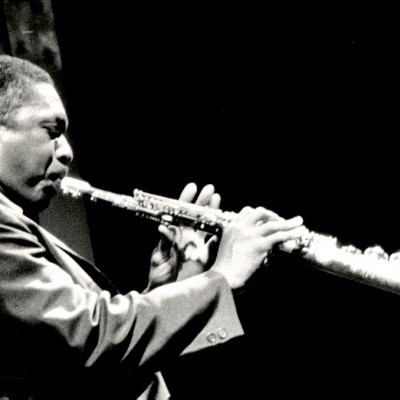
“It was just that suddenly … I could hear it,” Ravi Coltrane said of an epiphany he experienced during his late teens regarding his father’s music. “And it was almost like a calling, like something saying, ‘Hey, man, come on. It’s time to get serious.’ And the first time you really tune in and dial in and focus like that, it can be very life-changing.”
Sep 22, 2026 1:39 PM
Editor’s Note: Tomorrow, Sept. 23, is the 100th anniversary of John Coltrane’s birth. In honor of the tenor and…
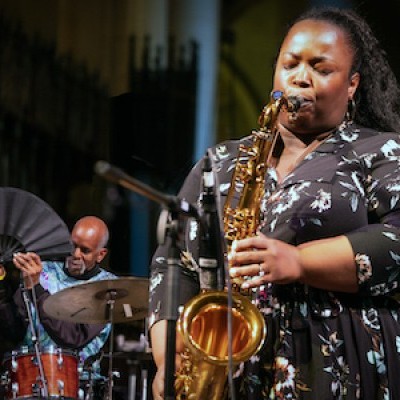
Camille Thurman took to the stage alongside bassist Kenny Davis and drummer Tommy Campbell for a rendition of Johnny Mercer’s “I’m An Old Cowhand” that recalled Rollins’ epochal 1957 trio outing Way Out West.
Oct 6, 2026 1:33 PM
As emcee Mark Ruffin noted at the commencement of an epic tribute to saxophonist Sonny Rollins at the Cathedral of…