Sep 3, 2026 10:44 AM
In Memoriam: Cassandra Wilson, 1955–2026
Cassandra Wilson, a singer, songwriter and producer who was one of the most acclaimed and successful jazz vocalists of…



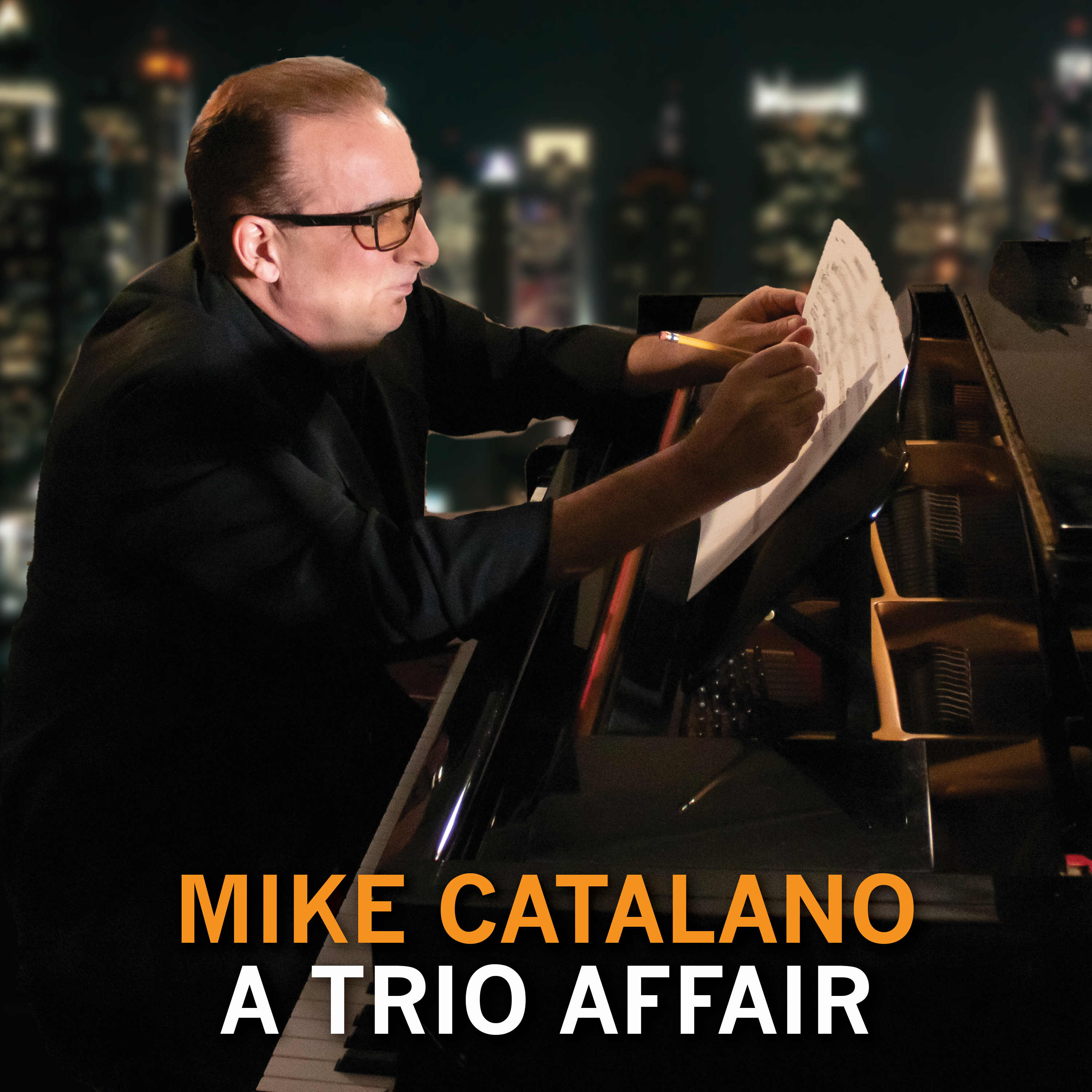
“I love compositions by jazz musicians,” says vocalist Samara Joy. “There’s a different touch, a different foundation.” She put lyrics to a song each from Brian Lynch (right) and Charles McPherson for Torch Bearers.
(Photo: Leiko Napoli)In the fall of 2024, trumpeter Brian Lynch hired writer Ted Panken to draft the booklet, vinyl notes and PR materials for his first-ever collaboration with alto saxophonist Charles McPherson — that after 44 years of friendship between the two musicians. The album, Torch Bearers, dropped on Lynch’s Hollistic MusicWorks imprint. Panken delivers an insider’s look into the project.
The Interview
At 6 p.m. on Nov. 20, after embedding at an efficient Midtown Manhattan rehearsal space, two morning commutes from Lynch’s downtown loft to Van Gelder Studio in New Jersey, and a just-concluded two-day, 17-hour recording session that generated nine tracks, including three new tunes by Lynch and McPherson, I was interviewing them in the VGS control room for video vignettes that eventually constituted the pre-release ballyhoo. Substituting for McPherson 20 minutes later was Samara Joy, who’d spent the afternoon singing her original lyrics for a bespoke tune each by the co-leaders. A few months earlier, on the same premises, Lynch had served as Joy’s co-producer on Portrait, her 2026 Grammy-winning album, for which she conjured narratives in response to Charles Mingus’ “Reincarnation Of A Lovebird” (McPherson played on the original 1960 recording), which opens with her breathtakingly vertiginous a cappella vocalese prelude and Barry Harris’ ruminative ballad “Now And Then” from Harris’ obscure 1972 trio album, Variations.
“I love compositions by jazz musicians,” Joy said. “There’s a different touch, a different foundation.” McPherson’s ballad “Joy Of Love,” which evokes Mingusian and Ellington-Strayhorn vibrations, “sounded sad and reflective, so I went in the opposite direction of the title, thinking how it feels to lose the love of your life.” For Lynch’s “Pursuit Of A Dream,” with “a vastly different harmonic structure, form and feel,” she “thought about a dream of sharing love with someone I haven’t met yet in a way that’s so close, it feels almost real. The melody was challenging, to say the least, but so melodic and beautiful, and the harmony ...” She paused. “Not all songs written for vocalists sound like that. It’s beautiful to be able to write a new story on songs like these.”
A flight delay at the end of a European tour had kept Joy from the rehearsal, so neither elder saw the lyrics until she walked into the studio at noon. In an email 16 months later, she recalled initially “overthinking, trying to find the perfect words to fit the story of the melody,” and felt satisfied that “the lyrics meshed and complemented the songs” only after “spending time away from multiple rough drafts.”
Both veterans expressed their delight with the end result. “Samara sings with tremendous conviction,” McPherson said. “You hear her understanding of the language of the singers she’s checked out, like Sarah Vaughan, and her gospel background. At the same time, you hear Barry Harris’ bebop influence. She’s mixing all these languages the way Brian and I might do it. Everything is put in the pot and every nuance is manifest. She’s a beautiful soul.”
Joy wrote that interacting with Lynch — who self-produced his own Grammy-winning Simpatico (2006) and The Omni-American Book Club (2019) on Hollistic — “was a reminder that the process of making music requires full preparation as well as surrender to your creative instincts. ‘Joy Of Love’ had a clear roadmap, so we could have just ‘read down’ the tune. But while we were recording the song, Brian took a moment to express a spontaneous idea for how to end it. Several times during my album, he came up with a single phrase that completely changed everyone’s perspective.”
Her pathway to Lynch came from trumpeter Jason Charos, his former student and teaching assistant at Frost Conservatory of Music, “when I was looking for the perfect co-pilot, who could help steer the ship while still allowing us to be free in our interpretation and style.” After a phone call and a coffee date, they started rehearsals. “We got right into it as if we’d worked together for years.”
Like McPherson (born in 1939) and Lynch (born in 1956), Joy (born in 1999) had spent extensive time absorbing Barry Harris’ charismatic pedagogy. “I spent six hours with him every Tuesday for a year-and-a-half, for $15,” she wrote. “Having the opportunity to see the individuality of his style, his unique approach to the piano, to be on a first-name basis with him and to put lyrics to compositions he wrote way before I was born was a beautiful experience. Singing his songs shows that his music is alive.”
“I was one of Barry’s first students, while Samara was among the last,” McPherson observed, suggesting that the common through line engendered creative sparks. He was a 14-year-old Charlie Parker acolyte already doing small gigs in his West Detroit neighborhood with trumpeter Lonnie Hillyer in 1953 when he met Harris at the Bluebird Lounge, a corner bar with a major league music policy down the block from his house that featured Harris and Elvin Jones in the house rhythm section, fueling Motor City luminaries like Yusef Lateef, Thad Jones, Pepper Adams and Kenny Burrell.
“We’d stand outside to listen, but the owner let us sit in if we brought our parents,” McPherson recalled on a January video call with Lynch. “Barry heard me and said, ‘You need to learn your scales.’” He and Hillyer began to beeline to Harris’ house after school “for lessons in harmony and theory that helped me understand what Bird was doing, so I could find my own notes and not copy his solos. Barry also imparted values of taste and discretion — always try to be musically honest; use emotions along with analysis; technique is a means to facilitate your conception, not the end-all and be-all.”
Learning the Principles
Toward the end of 1959, after five years of immersive lessons, McPherson and Hillyer moved to New York. Not long thereafter, via Yusef Lateef’s introduction, Charles Mingus hired them to replace Eric Dolphy and Ted Curson. McPherson remained until 1972, developing his signature voice-like tone as he addressed Mingus’ demanding, novelistic corpus. His 14 leader albums between 1964 and 1978 (seven with Harris) for Prestige, Mainstream and Xanadu, almost all high quality, trace his evolution to grandmaster status. Then McPherson relocated to La Jolla, California, to keep an eye on his aging mother.
Two years later, Lynch, who’d just graduated from Milwaukee’s Wisconsin Conservatory of Music, decided to preface his New York transition with a sojourn to San Diego, where his parents had moved in 1975. He’d heard McPherson’s albums with Harris as he learned bebop nuances on engagements with local eminences like Buddy Montgomery and guitarist Manty Ellis and “came under Barry’s spell” on visits to his workshops during several preparatory New York fieldwork expeditions.
“Learning the principles of the things you’re already playing was a revelation,” Lynch said. “You can systematically practice in a way that lets you correct your aim mid-flight, because you aren’t playing anyone’s licks.”
On Lynch’s first Sunday in San Diego, he visited several local jam sessions and immediately encountered McPherson and pianist Rob Schneiderman (who shares the piano chair with Orrin Evans on Torch Bearers). In short order, he was hanging out at McPherson’s house, playing tunes, and listening to and discussing his choicest cuts — Sonny Stitt and Bud Powell playing “All God’s Children” in 1949; Stitt and Sonny Rollins tenor-battling on “The Eternal Triangle” in 1957. “Charles started using me on gigs along with Rob three nights a week,” Lynch said. “Playing with him that often on the bandstand — and all the discussions — was as significant an apprenticeship as I had later with Horace Silver or Art Blakey.”
To be specific, Lynch was referencing his respective tenures with Silver (1982–’85) and the Jazz Messengers (1988–’90), when he began to claim his niche in the trumpet pantheon of hardcore jazz, while also assimilating the codes of clave on gigs with salsa icon Hector Lavoe and sui generis maestro Eddie Palmieri, who regarded Lynch as more a colleague than a sideman during their two-decade association.
“I immediately recognized Brian’s talent and how he might grow,” McPherson recalled. “Good ears, very musical, played the horn well, and you could hear his connection to the past. Brian continually added contemporary harmonic and rhythmic information to bebop language, mixed it up, and grew into the master he is today. Bebop is a jumping-off point. Everyone Brian was listening to then — McCoy Tyner, Coltrane, Woody Shaw — developed whatever they developed because they knew the bebop language so thoroughly.”
He added: “We’ve always had a spiritual symbiosis, too. Through the years, I played gigs where Brian’s mom was singing. I knew his dad. When he started dealing with their aging, we’d talk about it, because I’d been through it with my mom. We like to talk about quantum mechanics, because we know it’s frozen music. We know that everything is connected, that music is a metaphor for life, that music is the Esperanto, the nonverbal language of the soul.”
Composing & Recording
As if to prove the point, the old friends covered what Lynch called “the real fine points of music” — overcoming the stress element of a record date; the psychology of consciousness in relation to entering the alpha state when improvising; the contrasting rhythmic and phrasing templates of Charlie Parker and Sonny Stitt; the nuances of playing bass quarter notes “like a heartbeat” in 4/4 meter; the blues elements and different surprising root movements that can be deployed when playing “I Got Rhythm”; the artistry of Lonnie Hillyer; and “the many styles that can be satisfied under the umbrella we call bebop.”
“In 1980, I’d never heard anyone speak that way,” Lynch said. “We can talk about this stuff for years.” He expressed delight that, after years of “one thing or another always forestalling” his efforts “to find an opportunity for us to do something together,” the stars had aligned to facilitate a document of their ongoing conversation. “Being around Samara and the younger people in her band who are in sync with searching for the meaningfulness in music that Charles represents — and Samara’s connection with Barry — made me think there might be an opportunity.”
“It’s a well-thought-out, well-rounded record, with a beautiful singer,” McPherson said. “People who like bebop or something more stretched out harmonically and rhythmically would like it.” He referred to Lynch’s “Luck Of The Draw,” which toggles between dark Eddie Palmieri-esque chords phrased in clave to an affirmatively swinging, Silver-esque refrain, and “Kyle’s Dilemma,” a simmering swinger booby-trapped with below-the-surface gnarly chords, key changes, sly melodies, insinuating hooks, slick turnarounds and harmonic curveballs. “Brian’s a great writer,” he said. “His tunes are challenging, but it all makes sense.”
“Thinking of my own influences as a jazz tune writer, it depends on the style, of course, but I’ve got to give it to Tadd Dameron, Kenny Dorham, Benny Golson and Charles,” Lynch riposted. “His pieces contain lots of drama and feeling, they tell a story, and they’re always fun. They’re challenging, yet not abstruse.” That remark nails “The Juggler,” a medium-up 12-bar blues with Monkish octave leaps that catapult McPherson into a turbulent, compact solo that profoundly refracts Bird’s essence, provoking Lynch to signify upon the Jazz Messengers trumpet lineage with the precision and ferocity that makes his voice stand out among contemporary trumpet practitioners.
Lynch and McPherson played with equivalent focus, fire and invention throughout multiple takes of each instrumental piece. “I’m happy with how the music sounds,” Lynch said. “I’m even happy with myself! It was inspiring to hear Charles play so freely.”
McPherson summed up with a declamation on the “elusive art of writing.” “Good writing has to have some dissonance, melodicism and venturesomeness. It needs something novel and still cover all the musical bases, and also cohesive melodic content that somebody would actually remember after they left the date. You need a balance. Therein lies the four-dimensional chess.”
“I’ve had the opportunity to play a lot of your music over the years,” Lynch said. “‘Horizons’ can still kick my ass.”
“Me, too,” McPherson replied. “It definitely has some challenges. Good writing has no date on it.”
“Like Jimmy Heath said, what was good, is good,” Lynch cosigned.
“That’s right,” McPherson responded, ending the discussion — at least for the moment. DB
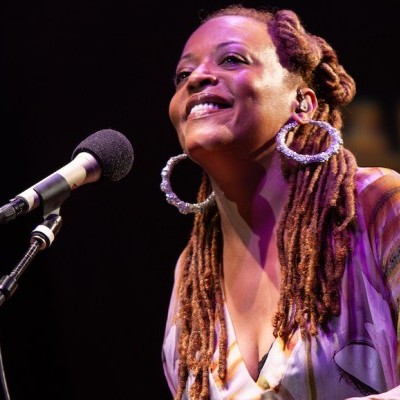
Wilson’s ability to connect to audiences helped her to win two Grammy awards and multiple other accolades. She was named an NEA Jazz Master in 2022.
Sep 3, 2026 10:44 AM
Cassandra Wilson, a singer, songwriter and producer who was one of the most acclaimed and successful jazz vocalists of…
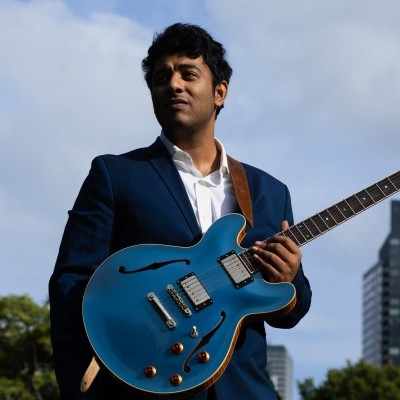
“The love from the jazz and music community restored my faith in humanity,” Walia wrote in an online post upon his release from detention at an ICE facility.
Aug 18, 2026 2:15 PM
Indian jazz guitarist and composer Pritesh Walia has been released after being unexpectedly detained by ICE and taken…
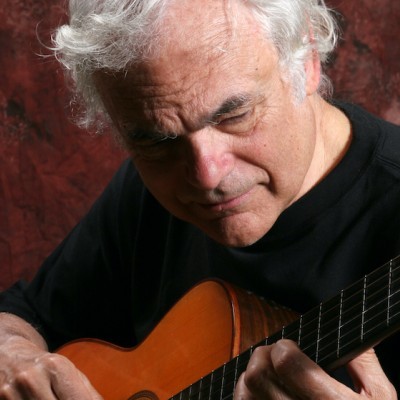
Bertoncini was a specialist and advocate for the nylon-string acoustic guitar, turning down high-profile opportunities that were unsuited to the sound and techniques that he used with that instrument.
Sep 1, 2026 11:06 AM
Gene Bertoncini, an esteemed jazz guitarist, composer, arranger and educator, died Aug. 29 at the Lillian Booth Actors…
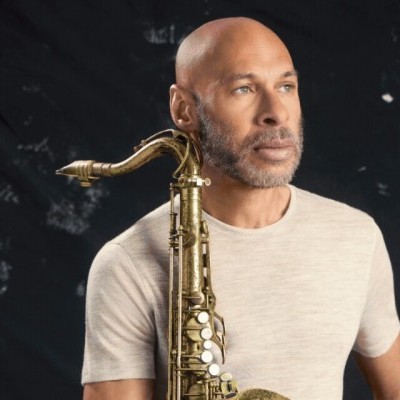
A solo concert by saxophonist Joshua Redman will close the first night of the Hyde Park Jazz Festival on Sept. 26.
Sep 22, 2026 12:26 PM
The Hyde Park Jazz Festival will take place for the 20th time on the final weekend of September 2026. Beginning half…
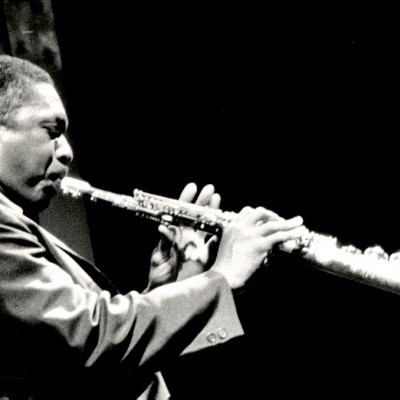
“It was just that suddenly … I could hear it,” Ravi Coltrane said of an epiphany he experienced during his late teens regarding his father’s music. “And it was almost like a calling, like something saying, ‘Hey, man, come on. It’s time to get serious.’ And the first time you really tune in and dial in and focus like that, it can be very life-changing.”
Sep 22, 2026 1:39 PM
Editor’s Note: Tomorrow, Sept. 23, is the 100th anniversary of John Coltrane’s birth. In honor of the tenor and…