Sep 3, 2026 10:44 AM
In Memoriam: Cassandra Wilson, 1955–2026
Cassandra Wilson, a singer, songwriter and producer who was one of the most acclaimed and successful jazz vocalists of…


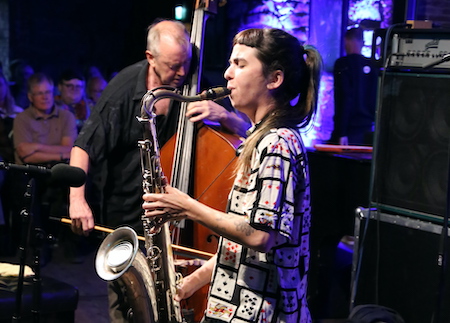
“I do like having a balance of both worlds, and connecting them,” Camila Nebbia says of the intersection of composition and improvisation.
(Photo: Lise Marrethe Nilsen/Kongsberg Jazz Festival)The Berlin tenor saxophonist Camila Nebbia has been rising to eminence on the adventuring jazz and improvisation scenes. Now favored for her articulate and expressive playing, she also possesses other advantages: a vivid conceptual sense, gliding from full freedom to thoughtful composition and an enthusiastic embracing of fresh playing situations, as she moves around the roiling creative scene of the venue-filled Berlin.
Nebbia’s awareness of international improvising connections has led to a prolific recorded output, balancing regular band situations with one-off meetings. This is also the case on the live touring front, as Nebbia is now a frequent presence around the European festival run. Her primary label relationship is with Relative Pitch, the New York outfit that devotedly maintains a release schedule of four albums each month. Here, Nebbia has released a trio disc with pianist Marilyn Crispell and drummer Lesley Mok (A Reflection Distorts Over Water), as well as a pair of solo sessions. In early 2026, Nebbia will also have records on the way with drummer Chris Corsano (Six Or Seven Ways Towards Becoming Undone) and The Hanged One (Nebbia’s Berlin sextet). She clearly has a fixation on the trio form, with Exhaust (Kit Downes, Andrew Lisle) on the Swiss label Intakt, set to release the band’s second album, and the recent Presencia.
“I started playing alto and soprano saxophones. Then several years later, when I got more into jazz, tenor was always my favorite, so then I stopped playing alto,” she says. “I just felt that the tenor was my voice, it made sense with me ... the essence was the range. I felt connected to it.
“When I was studying, I was learning classical saxophone, so slowly I started getting into jazz, as it’s connected so much to the instrument, and I started discovering and loving it, then I switched to the jazz conservatory in Buenos Aires, so that deepened my research. My love for more freely improvised music came from Ornette Coleman. He has this beautiful album, Ornette On Tenor, that I totally love. It’s fantastic. I also heard his Crisis album, with his son, Denardo. “Broken Shadows” blew my mind! I was asking, ‘What is this? What is happening?’ It was so intriguing and haunting.”
Known for her free improvisation work, Nebbia has also become active as a composer; “I do like having a balance of both worlds, and connecting them,” she says. “Sometimes in the same piece of music. But I also love having projects where it’s my own compositions, and there’s also a place for improvised sections. In my life I need both, because they give me different outcomes and different inputs.”
In Berlin, Nebbia became immersed in improvisation, since she moved there from Stockholm. She says that it felt just right when she relocated, despite appreciating the beauty of that Swedish capital. “The Berlin community is so open, people want to get together, want to create things, so it was very accessible.”
Nebbia soon met the English bassist James Banner (who himself had one foot in the moderne classical scene), and he brought in drummer Max Andrzejewski to form the Presencia trio. “It was a beautiful process, because we all composed music for the album, and we worked really well together. It felt very natural, as we all had similar approaches to both composition and improvisation, so it was a really nice match.”
Presencia gave one of the best performances at the recent Jazztopad festival in Poland. Spontaneity was welcome, but the pieces usually held a poised formation, as reeds, bass and drums sensitively negotiated planned harmonies and structures, sonically arrayed in a very visual manner.
Nebbia didn’t know so many folks upon arriving in Berlin, but connections have accumulated quickly. “People come and go here, a lot, that’s also inspiring, to always be in contact with new people. In more improvised situations I love the people I’m playing with, not only musically, but as humans. That, for me, is important. Sometimes I just meet people from one gig, because festivals put together a band, or someone invites you to a one-time event. It’s challenging to play with somebody for the first time, to connect, so I love that situation. Then, when I do more composed music, I think about what the ensemble requires.”
Nebbia is also well-versed in the visual sphere, having provided cover artwork for many of her releases.
“I studied film at the same time as I was attending the music conservatory, going in the evening. It was stressful, but I loved it. It gives you a lot of other inputs and knowledge about art, and maybe the music conservatory doesn’t go to those places, those subjects. My images are based on frames of Super 8 that I paint. Film takes a lot of time.” DB
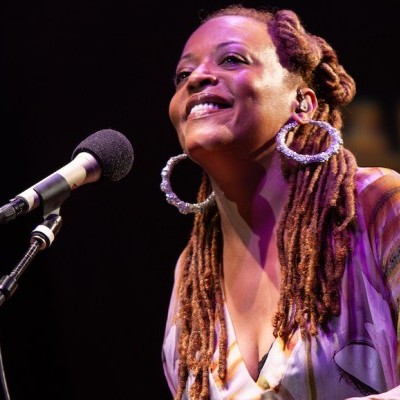
Wilson’s ability to connect to audiences helped her to win two Grammy awards and multiple other accolades. She was named an NEA Jazz Master in 2022.
Sep 3, 2026 10:44 AM
Cassandra Wilson, a singer, songwriter and producer who was one of the most acclaimed and successful jazz vocalists of…
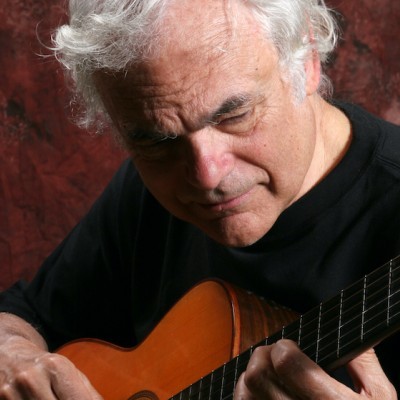
Bertoncini was a specialist and advocate for the nylon-string acoustic guitar, turning down high-profile opportunities that were unsuited to the sound and techniques that he used with that instrument.
Sep 1, 2026 11:06 AM
Gene Bertoncini, an esteemed jazz guitarist, composer, arranger and educator, died Aug. 29 at the Lillian Booth Actors…
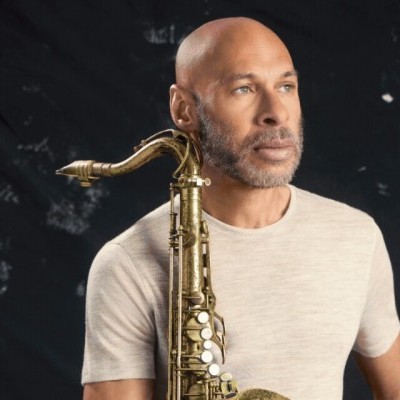
A solo concert by saxophonist Joshua Redman will close the first night of the Hyde Park Jazz Festival on Sept. 26.
Sep 22, 2026 12:26 PM
The Hyde Park Jazz Festival will take place for the 20th time on the final weekend of September 2026. Beginning half…
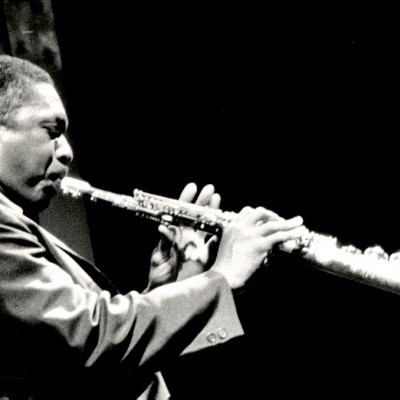
“It was just that suddenly … I could hear it,” Ravi Coltrane said of an epiphany he experienced during his late teens regarding his father’s music. “And it was almost like a calling, like something saying, ‘Hey, man, come on. It’s time to get serious.’ And the first time you really tune in and dial in and focus like that, it can be very life-changing.”
Sep 22, 2026 1:39 PM
Editor’s Note: Tomorrow, Sept. 23, is the 100th anniversary of John Coltrane’s birth. In honor of the tenor and…
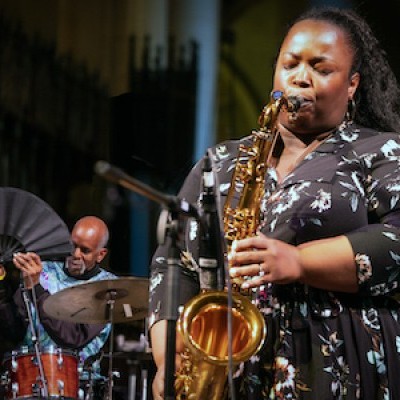
Camille Thurman took to the stage alongside bassist Kenny Davis and drummer Tommy Campbell for a rendition of Johnny Mercer’s “I’m An Old Cowhand” that recalled Rollins’ epochal 1957 trio outing Way Out West.
Oct 6, 2026 1:33 PM
As emcee Mark Ruffin noted at the commencement of an epic tribute to saxophonist Sonny Rollins at the Cathedral of…