Sep 22, 2026 12:26 PM
Hyde Park Jazz Fest on Chicago’s South Side to Present 20th Edition
The Hyde Park Jazz Festival will take place for the 20th time on the final weekend of September 2026. Beginning half…


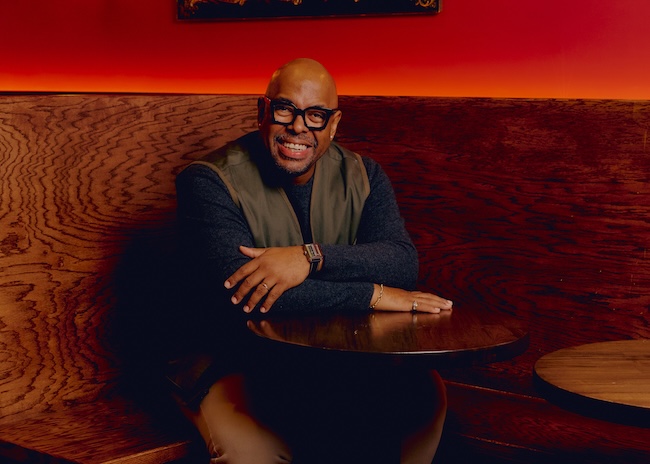
“When you're making music together on stage, who cares about age?” muses Christian McBride.
(Photo: Evelyn Freja)Sipping a bracing beverage in the green room at Ronnie Scott’s in London, Christian McBride was all smiles. And little wonder: The weather outside was balmy for early October, and inside the club the atmosphere was even warmer with a sold-out room and a steady stream of friends paying tribute to the bassist and bandleader.
It didn’t hurt that he had been named Artist of the Year for the second year in a row in DownBeat’s Readers Poll. He was also named Arranger and Producer of the Year and placed in several other categories. In short, the readers love him.
It also didn’t hurt that McBride had just finished an intoxicating set with his quintet, Ursa Major. The set drew liberally from the group’s debut album, Points Of Light (Mack Avenue), the somewhat belated, eagerly awaited documenting of McBride and his hand-picked coterie of younger musicians. Over the past four years, the band had become his working unit.
Given the vagaries of the music business, the players’ unwavering dedication to the project is uncommon, and serves as both a tribute to McBride and a response to the impertinent few who might question whether a group of players decades his junior, no matter how gifted, can sustain the standards of a musical man for all seasons like him. Truth be told, the cheers at Ronnie’s seemed response enough.
“When you’re making music together on stage, who cares about age?” McBride asked, rhetorically, kicking back and taking another sip of his drink.
Summoning the confidence in himself and trust in his players implied by that response has been a process. When in the pre-pandemic years McBride began thinking of forming a genre-agnostic band, he knew he had to populate it with younger players. He needed the skepticism they typically brought to idiomatic siloing. And he needed the commitment they could afford to make to the project.
At the same time, McBride, then pushing 50 years old, recognized that, in employing strictly younger musicians, he would have to bridge a generation gap made wider by the outsized authority he had accrued on bandstands and in boardrooms. The prospect, he understood, could prove challenging for him—and for his recruits.
Speaking in a late-night, late-September Zoom chat from Noto, Japan, where Ursa Major was concluding the Asian leg of a global tour that would take them to London and the European Continent before heading back to the United States, McBride, ebullient as ever despite the hour, framed the issue as one of respect and responsibility.
“I think naturally when you get younger musicians in the band, they’re going to treat you with some reverence. They’re not going to question anything. They’re going to be a little nervous. And that’s cool, that’s healthy. But it’s up to me to let them know, ‘Hey, we can’t make music together if we can’t communicate as equals onstage. I didn’t hire you so you could do what I tell you to do. I want you to give me some ideas, I want you to feed me.’”
Sporting a T-shirt emblazoned with the names of his favorite funk groups, he explained that, in seeking to draw out his bandmates’ ideas, he tapped into his own experience. He recalled the 19-year-old Christian, who, having left Philadelphia for New York and Juilliard only two years earlier, found himself assigned a spot playing with McCoy Tyner at a 1991 Jazz at Lincoln Center tribute to John Coltrane. And he remembered how, four years later, he leveraged his growing reputation to enlist Chick Corea as a guest on his second album, Number Two Express. Both pianistic titans were relaxed and regardful toward the starstruck McBride.
“They knew I was in awe,” he said. “They knew every young musician who was in their presence was in awe. But they were so cool. They were like, ‘Hey, man, forget all that and let’s play.’”
With Corea, in particular, he developed a fruitful personal relationship along with a working relationship that, over 26 years, earned him spots in the Chick Corea Trio, the Five Peace Band, the Freedom Band and the tribute band Remembering Bud Powell. But even as he and Corea grew closer onstage and off, that sense of awe never really left him.
“Every time we took the stage,” he said, “I couldn’t help but look to my right and say, ‘That is friggin’ Chick Corea.’”
Now that McBride is the awe-inspiring figure—“I was warned that the table would turn,” he said, a hint of resignation coloring the sense of conviction ever-present in his voice—Ursa Major’s members have had a parallel experience. That, at least, was the impression conveyed by Nicole Glover, the band’s saxophonist and, at 35, the senior member of its younger cohort.
“None of us have ever forgotten who Christian is and what he’s done with his career,” she said in a phone call from Athens, Greece, where the band had landed before heading to London. “As close as we may ever get personally or professionally, we would never see ourselves as peers. He might refer to us as colleagues. He’s always made us comfortable. But make no mistake, we look up to him no matter how much playing we do together.”
Beyond being a model for how an artist of stature can relate to younger players, Corea represented for McBride an example of a musician who, without fear or favor, took on a diversity of projects. Like Corea, who traversed the territory from bebop to fusion, McBride has evinced a restlessness of form and format, turning at one time or another to the classic unit of piano, bass and drums (the Trio), a flat-out hard-bop combo (Inside Straight), an acoustic setup sans chordal instrument (New Jawn) and a plugged-in configuration sans drum kit (The Situation).
Just last year, McBride released a long-gestating big band album, Without Further Ado, Vol. 1. A collection of McBride arrangements for 17 pieces, the album was the first from the Christian McBride Big Band in five years and McBride’s fourth winner of the Grammy for Best Large Jazz Ensemble. The album—in his words, “not an easy one to make”—presents different singers in environments ranging from hard swing (McBride on acoustic bass on “All Through The Night” with Cécile McLorin Salvant) to hard funk (McBride on electric bass on “Back In Love Again” with Jeffrey Osborne).
To be sure, the big band represents McBride’s penchant for variety on a wider canvas than Ursa Major’s. But what the small group sacrifices in scope, it makes up for in agility. And that agility is reflected in no small part by the variety in its members’ writing. “That’s where the real legacy is,” McBride said. Invoking the tradition of mentor-bandleaders like Art Blakey, Miles Davis and Roy Haynes, he noted that he solicits original compositions from all band members. Then, referring to his time in the Chick Corea Trio with drummer Brian Blade, he laughingly added: “Chick tried to do that with me and Brian, but we were just too intimidated.”
Glover contributed one song to the album, “Sakura,” a stunning meditation that opened both the album and the second set at Ronnie’s. It was, Glover said, inspired by “Orange Lady,” a tune from Weather Report’s self-titled debut recording, which was chosen Jazz Album of the Year in the 1971 DownBeat Readers Poll. Like “Orange Lady,” “Sakura” eschews overt gestures for small shifts in tone, texture and rhythmic placement, creating a dynamic more powerful for the subtlety with which it achieves its goal.
“It’s just the idea of creating a certain melody that takes its time,” she explained.
Glover’s tenor saxophone, capable of improvisatory flights that attain the highest of altitudes, here stays grounded, delivering a lightly embellished melody around which others enter and depart at will, mixing, matching and ultimately coalescing in a dreamlike soundscape that contrasts sharply with the high-voltage funk of guitarist Ely Perlman’s “Cows,” the acoustic overdrive of pianist Mike King’s “Two Check” and the smooth propulsion of drummer Savannah Harris’ “Same Folks.”
“Each one of these songs that the band has contributed, they touch on a lot of different points,” McBride said, “but it’s all filtered. That’s when the bandleader’s vision takes precedence. This all gets filtered through the idea I had for this band. We can play music from all different types of places. If you want to go fusion, we can do that. If you want to go straightahead, we can do that. But it’s all going to come through my bass.”
McBride may be understating the case. In his hands, the bass, on that October night at Ronnie’s, was a force that animated every aspect of the presentation. In arco or pizzicato mode, on the acoustic or electric instrument, walking or soloing—and his improvisations were as lyrically astute as those of any horn player—he hit his marks dead-center, without ever losing that infectious Philly soul. And he did so despite the distractions of an admittedly fragmented life as a podcaster, producer and advisor to jazz organizations and students alike.
“No matter how much is going on,” he said, “first things first is the bass. I’ve got to make sure I take care of what brought me to the dance.” DB
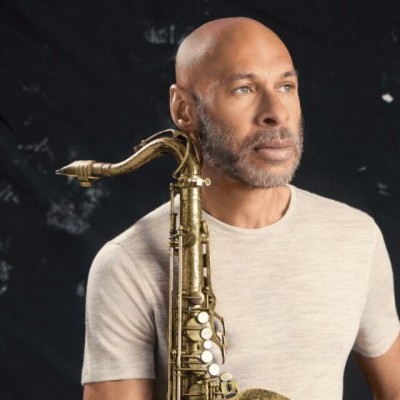
A solo concert by saxophonist Joshua Redman will close the first night of the Hyde Park Jazz Festival on Sept. 26.
Sep 22, 2026 12:26 PM
The Hyde Park Jazz Festival will take place for the 20th time on the final weekend of September 2026. Beginning half…
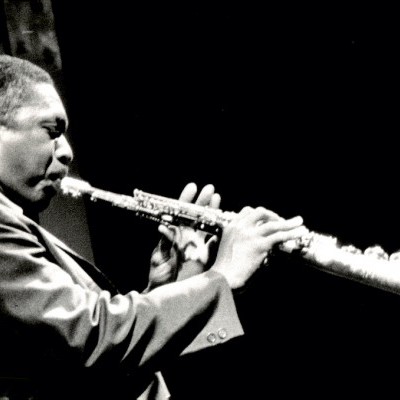
“It was just that suddenly … I could hear it,” Ravi Coltrane said of an epiphany he experienced during his late teens regarding his father’s music. “And it was almost like a calling, like something saying, ‘Hey, man, come on. It’s time to get serious.’ And the first time you really tune in and dial in and focus like that, it can be very life-changing.”
Sep 22, 2026 1:39 PM
Editor’s Note: Tomorrow, Sept. 23, is the 100th anniversary of John Coltrane’s birth. In honor of the tenor and…
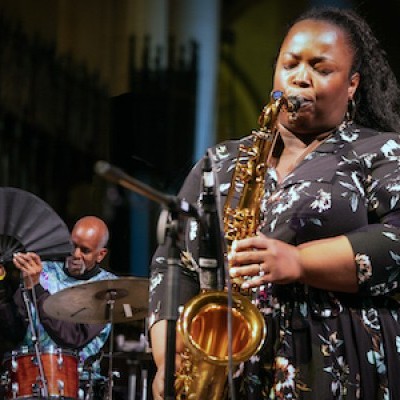
Camille Thurman took to the stage alongside bassist Kenny Davis and drummer Tommy Campbell for a rendition of Johnny Mercer’s “I’m An Old Cowhand” that recalled Rollins’ epochal 1957 trio outing Way Out West.
Oct 6, 2026 1:33 PM
As emcee Mark Ruffin noted at the commencement of an epic tribute to saxophonist Sonny Rollins at the Cathedral of Saint…
Record producer Bob Thiele’s classic photo that became the cover of John Coltrane’s landmark album A Love Supreme.
Sep 22, 2026 1:36 PM
A tribute to John Coltrane is one thing, but there is much more to the iconic saxophonist’s 100th anniversary…
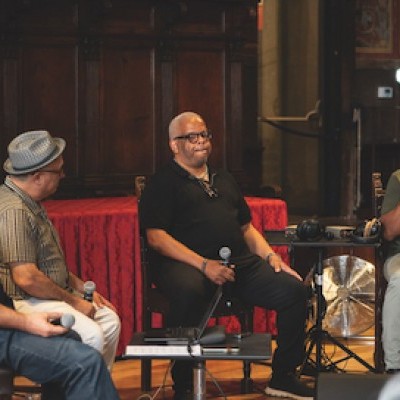
Ravi Coltrane (right) makes a point during a live Blindfold Test at the Umbria Jazz Festival while pianist Greg Burk (far left), journalist Ashley Kahn and trumpeter Terence Blanchard listen.
Oct 20, 2026 12:53 PM
The pairing of Terence Blanchard and Ravi Coltrane was billed as “The Miles/Coltrane Legacy,” a tour celebrating the…