Sep 3, 2026 10:44 AM
In Memoriam: Cassandra Wilson, 1955–2026
Cassandra Wilson, a singer, songwriter and producer who was one of the most acclaimed and successful jazz vocalists of…


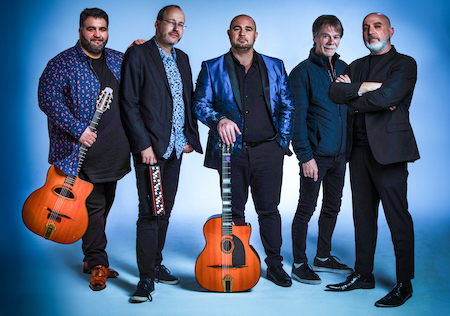
The Allstars, from left, Francko Mehrstein, Ludovic Beier, Samson Schmitt, Pierre Blanchard and Antonio Licusati.
(Photo: RR Jones)Django Reinhardt, the seminal Manouche Romani guitarist who electrified pre-War Paris with his hot gypsy jazz interpretations of American jazz, is an almost mythical figure. In 1928, while traveling in a gypsy caravan wagon, he knocked over a candle and severely burned the ring and pinkie fingers of his left hand, which guitarists use to play the fretboard. But instead of abandoning the guitar, he simply adapted his style and used his other two fingers. By reinventing his fret work, he created a unique style of playing that inspires other guitarists to this day.
Django’s spirit lives on in the Django Festival Allstars, whose latest album, Evolution (Motema), marks the 25th anniversary of the annual Django Reinhardt NY Festival and features all-original tracks of the ensemble’s nouvelle gypsy swing.
Led by Manouche Sinti guitarist Samson Schmitt, son of the Allstars’ legendary founding guitarist Dorado Schmitt, the current lineup features accordion virtuoso Ludovic Beier, who also plays the accordina, an accordion/harmonica hybrid; French violin maestro Pierre Blanchard; bassist Antonio Licusati; and Manouche rhythm guitarist Frankco “Locomotive” Mehrstein, whose nickname captures his propulsive style.
Late last year, Beier, Blanchard and Lucasati spoke with DownBeat, checking in from Paris via Zoom, to discuss the new album. Allstars manager Pat Philips, founding director of the Django Reinhardt NY Festival, joined as well, from New York. The lively conversation covered everything from the group’s Manounche heritage to its mission to bring Reinhardt’s legacy into the 21st century on Evolution.
The conversation has been edited for length and clarity.
Cree McCree: I’d like to start out by clarifying exactly what a Manouche gypsy is.
Ludovic Beier: Manouche means “free man,” and gypsies have been travelers since they migrated west from India to Europe. They travel with a caravan and the world is their hearth. And if you aren’t born into the culture, you’re a gadjo. If you are gadjo, you respect the community and listen carefully to what they play. And once you’ve been accepted, you’re like family for life. When there’s no ego on stage, it’s easy to play with no score and know exactly what to do.
Pierre Blanchard: And it’s not only Manouche. I also have some gypsy roots. My grandfather was also a violin player, and lived the same kind of life and traveled all the time in the same areas as the Manouche gypsy people.
Beier: If Samson were here, he would tell you that the guitar has been part of his life since he was 3 years old, when he started playing rhythm guitar with his father, Dorado Schmitt. For the Manouche community, Django is much more than an idol. He’s part of their culture. Samson was raised in this tradition, but because he is 45 years old, he’s also been influenced by guitarists like George Benson, Pat Metheny and Carlos Santana. So he’s opening the Django tradition in more directions.
Blanchard: Samson is also a fine composer and a very talented arranger of music. They’re all very talented, and put their own take on the original music on the album.
McCree: Evolution is aptly named because it moves Django Reinhardt into the 21st century. It’s also been described as “Django meets Miles, Charlie Parker and Herbie Hancock at the Allstars House Party.” If that actually happened, what would Miles, Charlie and Herbie bring to the mix?
Beier: You should ask Herbie what he thinks about that. [laughs] We all grew up in the jazz tradition, and many of those influences came after Django’s death. It’s a shame that Django never met any of those musicians when he was in New York in the early ’40s. But the music continued to advance and develop, and the title Evolution reflects that progression.
McCree: The great Belgian harmonica player Toots Thielemans was a big influence on you, Ludovic, and you give him a shoutout on one of the tracks.
Beier: Toots wasn’t just a great musician but also a very great person. And when he passed, I decided to write something. “Around Toots” isn’t a tribute from Ludovic to Toots. It reflects all the inspiration that Toots gave to the world.
McCree: I also love the accordina, the accordion/harmonic hybrid you play.
Beier: That instrument was originally created as an alternative to accordion, so players could carry a small instrument to practice on in the train. It was not a big success initially. But 40 years later, after some musicians started to play jazz accordion, it took off and is now being used in lots of different styles of jazz. But my own main influence continues to be Toots, because of what Toots could do with the chromatic harmonica.
McCree: With such a wealth of great original material, how did you decide what tracks you wanted to put on the album?
Beier: It was difficult because everybody composes songs. So we decided to make the album a reflection of what we do onstage live. Pierre has one of the most iconic tunes on the album, “Balkanic Dance,” which we always play live. And we also made sure that everybody liked whatever made the cut.
McCree: Pat, how did the Django Reinhardt NY Festival first come about?
Pat Philips: I started it in 2000 at Birdland in New York City with my late husband, Ettore Stratta, who had worked with Django’s founding violinist Stephane Grappelli for many years. When he passed away we held a memorial concert at Carnegie Hall. We had many great artists, but when the Django Reinhardt trio with (gypsy jazz guitarist) Jimmy Rosenberg appeared onstage, the audience went wild. Backstage, while this was all happening, we said, let’s start a Django Festival. And so we did.
McCree: What can people expect from seeing the Django Reinhardt Allstars Festival tour this year?
Philips: We always have a guest artist with us, and we’ve had so many wonderful ones. This past tour we had Veronica Swift, the great jazz singer, for the first time, and she was a wonderful addition to the program. This fall we will have a different artist every night, which gives the musicians an opportunity to meet them, to be inspired by them. And vice versa. They show up about an hour before the show and go backstage. And Samson may sit down with the guitar and run a few things by them, and voila! They get on the stage and and a certain kind of magic happens.
McCree: What would you most like people to take away from the experience of listening to Evolution?
Beier: I would like people to listen to the album from the first song to the last song, and travel into our music. I remember when I was a kid my parents bought a CD player for me, and I had only one CD to listen to. So I listened to it from the beginning to the end maybe 10 times. And I think today, many people just listen to one song for 30 seconds, and then switch. So my advice is, please, just relax, put the album on and pour a glass of something, whatever it is, and listen to the music from the beginning.
McCree: It’s a journey.
Beier: Yes. It’s a journey, of course. DB
(For more info and a list of Allstars 2026 tour dates, visit djangofestivalallstars.com.)
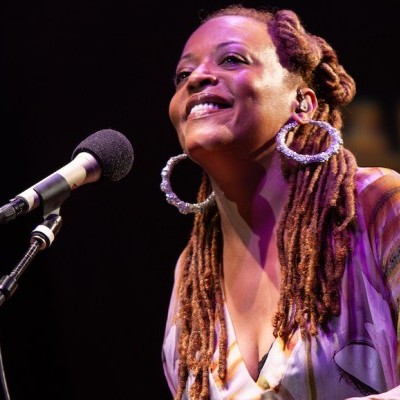
Wilson’s ability to connect to audiences helped her to win two Grammy awards and multiple other accolades. She was named an NEA Jazz Master in 2022.
Sep 3, 2026 10:44 AM
Cassandra Wilson, a singer, songwriter and producer who was one of the most acclaimed and successful jazz vocalists of…
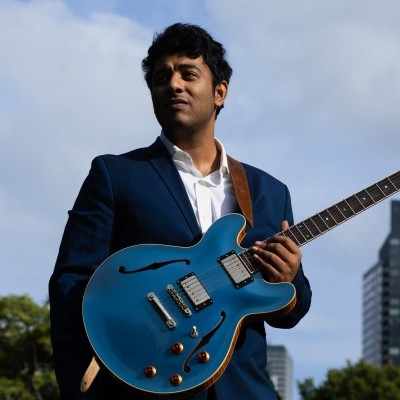
“The love from the jazz and music community restored my faith in humanity,” Walia wrote in an online post upon his release from detention at an ICE facility.
Aug 18, 2026 2:15 PM
Indian jazz guitarist and composer Pritesh Walia has been released after being unexpectedly detained by ICE and taken…
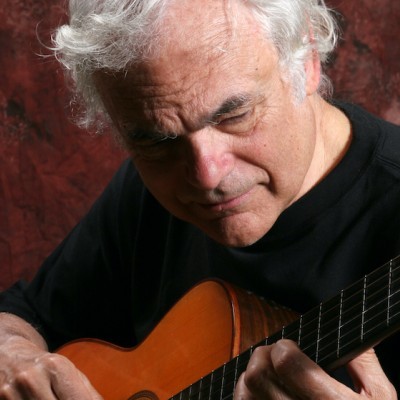
Bertoncini was a specialist and advocate for the nylon-string acoustic guitar, turning down high-profile opportunities that were unsuited to the sound and techniques that he used with that instrument.
Sep 1, 2026 11:06 AM
Gene Bertoncini, an esteemed jazz guitarist, composer, arranger and educator, died Aug. 29 at the Lillian Booth Actors…
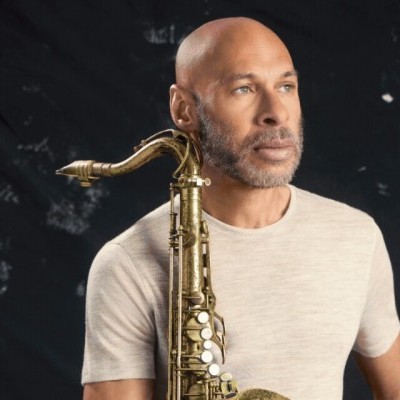
A solo concert by saxophonist Joshua Redman will close the first night of the Hyde Park Jazz Festival on Sept. 26.
Sep 22, 2026 12:26 PM
The Hyde Park Jazz Festival will take place for the 20th time on the final weekend of September 2026. Beginning half…
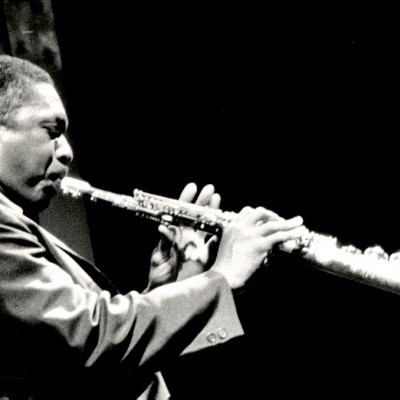
“It was just that suddenly … I could hear it,” Ravi Coltrane said of an epiphany he experienced during his late teens regarding his father’s music. “And it was almost like a calling, like something saying, ‘Hey, man, come on. It’s time to get serious.’ And the first time you really tune in and dial in and focus like that, it can be very life-changing.”
Sep 22, 2026 1:39 PM
Editor’s Note: Tomorrow, Sept. 23, is the 100th anniversary of John Coltrane’s birth. In honor of the tenor and…