Sep 3, 2026 10:44 AM
In Memoriam: Cassandra Wilson, 1955–2026
Cassandra Wilson, a singer, songwriter and producer who was one of the most acclaimed and successful jazz vocalists of…


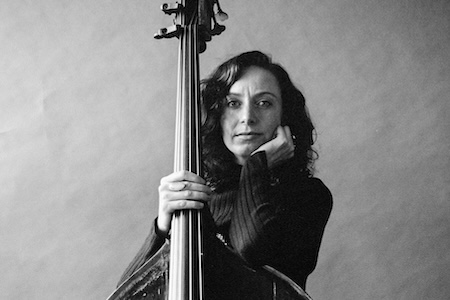
“This was my chance to take everything that I had absorbed in Chicago and try to bring some more complexity,” Emma Dayhuff says of her new album, Mountains.
(Photo: Nathan Dejene)As bassist Emma Dayhuff speaks over Zoom from her parents’ front porch outside of Bozeman, Montana, the open sky and nearby aspen trees seem a world away from the crowded Midwestern jazz clubs where she clocked considerable hours. But solitary walks through the nearby woods shape her new album, Mountains (Division 81), as much as late-night jam sessions.
“When you’re hiking, you’re aware of your surrounding and maybe you see a squirrel, admire some wildflowers, but your mind kind of wanders to other parts of your life,” Dayhuff said. “The album does that a little bit: You’re constantly traversing being present in the moment and observing what’s around you. Then you’re thinking of this other thing in life, and then you come back to the mountain.”
Pastoral and urban evocations flow as seamlessly as her ideas derived from classical composition and jazz improvisation throughout Mountains. Dayhuff evokes the Western landscape through her melodies that seem ethereal at first and gradually develop into vehicles for sharp, shifting dialogues within her quintet.
“I knew the rhythms would bring a lot of complexity regardless of what the harmony was doing. So I knew I could have long swaths of relatively simple harmony without risking the music feeling simple because of the way [drummer] Jonathan [Pinson] plays and the way [saxophonist] Isaiah [Collier] and I play together,” Dayhuff said. “I wanted to feel like I was telling a story through the whole album instead of just throwing a bunch of tracks together. And I also pulled from a lot of different stylistic inspirations and trusted that I had the same musicians on the whole record and would bring these ideas into a cohesive large chunk.”
The album also combines her earlier experiences in Chicago with her current life in California. Dayhuff’s Innovations & Lineage: The Chicago Project from last year was a live recording that honored the city’s distinctive musical culture. Collier, who played on that album, too, returns for Mountains and Chicago-based trumpeter Corey Wilkes also brings his spacious lyricism to the group. Pianist Paul Cornish is based in Los Angeles, as is Pinson.
“This was my chance to take everything that I had absorbed in Chicago and try to bring some more complexity to the compositions as well as some more modern elements that I knew Jonathan and Paul would be able to execute,” Dayhuff said. “It was just people that I feel a strong musical connection to. But also Corey and Isaiah understand my musical phrasing and instincts from a Chicago standpoint, so I felt I could rely on them to understand how I play and how I write. And Jonathan and Paul could push all of us into this more modern musical place with how they play.”
That combination turned into a fun musical conversation for the album track “Horsefeathers (Hey Paul).” The piece originated with Dayhuff’s immersion in jazz history but transformed what she envisioned through a call-and-response with the group.
“‘Horsefeathers’ was my attempt to try to take some of the bebop language I was absorbing through studying its melodies and shift where they’re placed rhythmically and then put them over the top of an ostinato bass part and try to create a modern take on a bebop tune,” Dayhuff said. “Jon brought that double-time, stretch music approach to how he accompanied the bass line. There’s an unserious nature to that tune because it was kind of an experiment.”
With Mountains, Dayhuff also took another look at her own work and revised her composition “Capricorn,” which she had recorded on the Esthesis Quartet’s Sound & Fury in 2025. She devised the piece while listening to such free-thinking bassists as Charnett Moffett and Malachi Favors Maghostut, and she started sketching it on Chicago’s beachfront.
“I wanted to manipulate the bass line to reflect the bass players I was studying in a way that reflected where I’m going as a bass player, and so I wanted the bass line to be a different kind of statement than it was on the first recording,” Dayhuff said. “And I wanted to bring more freedom to the song, so I made the piano solo a more open solo and flow into the next tune so the composition shifted slightly. It came to me, rather than coming from me.”
Dayhuff’s tone in her version of Bill Lee’s “Jesus Is A Lonely Man” echoes the arco lines of his colleague Richard Davis, who Dayhuff got to know while she was working on her doctoral dissertation at the University of Wisconsin–Madison. Both Davis and Dayhuff had backgrounds in classical music, and she considered the task of bringing that tradition’s role for her instrument to jazz.
“In a lot of classical music, pulse is if you’re accompanying a soloist and they slow down, you slow down with them. If they speed up, you speed up with them,” Dayhuff said. “But in African-based music, the pulse always stays consistent and if someone playing the melody wants to slow down or speed up they have to make up the difference elsewhere. Classical music is different in the approach for the most part to rhythm, and I absorbed that really young. It presented some challenges for me to get used to a pulse that doesn’t move, but I also think there’s a melodic sense I get from classical music.”
Along with recording and performing, Dayhuff serves as assistant professor of jazz studies at Loyola Marymount University in Los Angeles. She noted that a big reward in being a teacher is the pathway it provides for her own learning.
“Teaching a jazz history class has forced me to go deeper in the swing era and listen to bandleaders who were active at that time, and that’s been exciting to me,” Dayhuff said. “I’m a bit of a history buff, but when you’re teaching a class it forces you to go into more detail. There’s always more.” DB
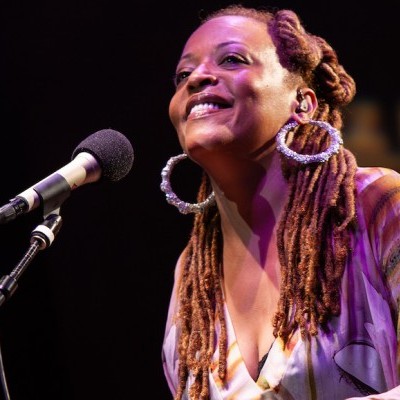
Wilson’s ability to connect to audiences helped her to win two Grammy awards and multiple other accolades. She was named an NEA Jazz Master in 2022.
Sep 3, 2026 10:44 AM
Cassandra Wilson, a singer, songwriter and producer who was one of the most acclaimed and successful jazz vocalists of…
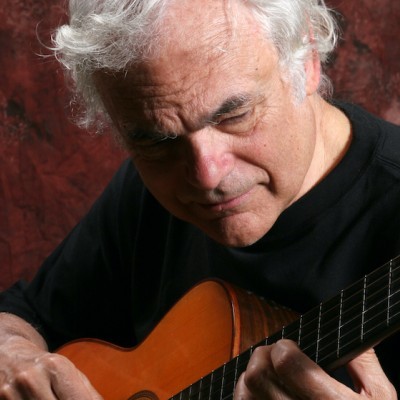
Bertoncini was a specialist and advocate for the nylon-string acoustic guitar, turning down high-profile opportunities that were unsuited to the sound and techniques that he used with that instrument.
Sep 1, 2026 11:06 AM
Gene Bertoncini, an esteemed jazz guitarist, composer, arranger and educator, died Aug. 29 at the Lillian Booth Actors…
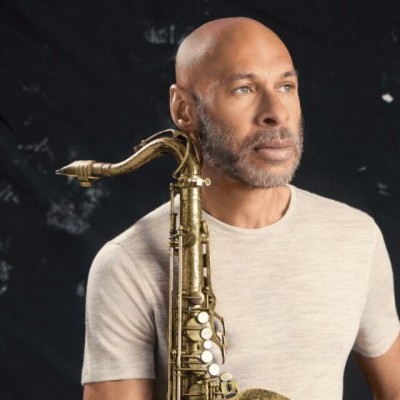
A solo concert by saxophonist Joshua Redman will close the first night of the Hyde Park Jazz Festival on Sept. 26.
Sep 22, 2026 12:26 PM
The Hyde Park Jazz Festival will take place for the 20th time on the final weekend of September 2026. Beginning half…
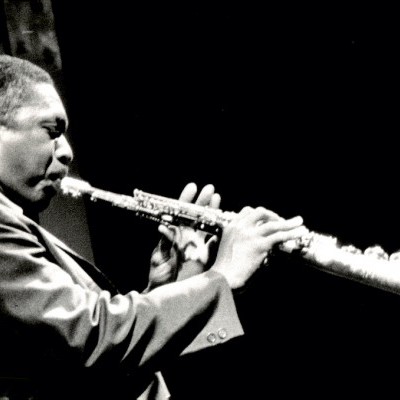
“It was just that suddenly … I could hear it,” Ravi Coltrane said of an epiphany he experienced during his late teens regarding his father’s music. “And it was almost like a calling, like something saying, ‘Hey, man, come on. It’s time to get serious.’ And the first time you really tune in and dial in and focus like that, it can be very life-changing.”
Sep 22, 2026 1:39 PM
Editor’s Note: Tomorrow, Sept. 23, is the 100th anniversary of John Coltrane’s birth. In honor of the tenor and…
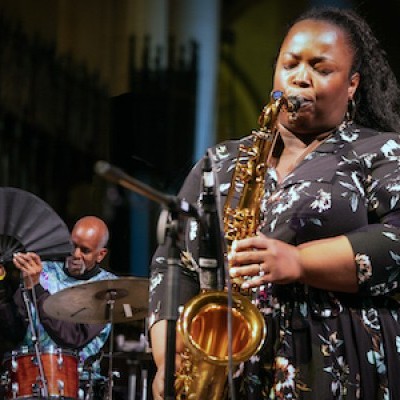
Camille Thurman took to the stage alongside bassist Kenny Davis and drummer Tommy Campbell for a rendition of Johnny Mercer’s “I’m An Old Cowhand” that recalled Rollins’ epochal 1957 trio outing Way Out West.
Oct 6, 2026 1:33 PM
As emcee Mark Ruffin noted at the commencement of an epic tribute to saxophonist Sonny Rollins at the Cathedral of…