Sep 3, 2026 10:44 AM
In Memoriam: Cassandra Wilson, 1955–2026
Cassandra Wilson, a singer, songwriter and producer who was one of the most acclaimed and successful jazz vocalists of…



In 1955, Urtreger released a landmark recording among European interpretations of the bebop literature, René Urtreger Plays Bud Powell.
(Photo: Wikipedia)René Urtreger, perhaps the leading exponent of unreconstructed bebop among French pianists in postwar Paris — and, most famously, part of a quintet Miles Davis formed to improvise a soundtrack to director Louis Malle’s 1958 film debut Elevator to the Gallows — died on July 16. A native Parisian, he was 92.
Writing in the liner notes to a 1960 album, critic Raymound Mouly declared Urtreger to be a musician “on par with any of the great American jazzmen” whose “most apparent quality, clear to see at any point in this album, is his swing.” The quote both defined Urtreger’s approach and distinguished him from the latter-day avant-garde and his pianistic peers, like Bernard Peiffer and Martial Solal, whose swing could swerve into abstraction.
“I remain faithful to the fundamentals set out by Duke Ellington: ‘It don’t mean a thing if it ain’t got that swing,’” he told the French publication Jazz Magazine in 2014, at the age of 80. “I love and always will love this approach to jazz, and I regret that this music often takes another direction.”
Urtreger found in bop a brand of swing to match his temperament. As a Jewish boy living under Nazi occupation who saw his mother deported to the concentration camp at Auschwitz, where she perished, he developed an emotional hard edge he found reflected in beboppers’ uncompromising attitude.
“This atmosphere of pain and tears that accompanied my youth provoked in me a violent rejection of all self-pity,” he said. “I see a consequence of this in my immediate love of bop, where I found a refusal of sentimentality.”
As a teenager in the early 1950s, he insinuated himself at every opportunity in clubs along the left bank of the River Seine. In 1953, he won a high-profile amateur contest against some admittedly more advanced competitors. That caught the attention of Peiffer, who recommended him for a gig as part of an orchestra playing the Club Saint-Germain. Soon he was gigging around town with his own group, building a reputation that he parlayed into a recording contract. In 1955, he released what is now regarded as a landmark among European interpretations of the bebop literature, René Urtreger Plays Bud Powell.
Like other top talent among the young French players crowding the Paris scene, Urtreger found a friend in American expatriate drummer Kenny Clarke. As artistic director at the Blue Note club, Clarke connected Urtreger to American stars who were spending time in the capital city, among them Stan Getz, Sonny Stitt and Dexter Gordon. The Clarke connection paid off most handsomely when, in 1956, the drummer recruited Urtreger to appear on a record of André Hodeir arrangements that included “’Round Midnight.” The appearance helped solidify his status as Paris’ go-to bebop pianist.
But it was the events of the next year that made his name across the Atlantic. Davis, who found himself in Paris seeking a change of scene as his first great quintet languished in New York, had agreed to a series of dates in which he would be the featured soloist with an Urtreger-led group that included Barney Wilen on tenor saxophone, Pierre Michelot on bass and Clarke.
By all indications, the collaboration went well. In a concert recorded at Paris’ Olympia Theatre on Nov. 30, 1957, the repertoire — from the opener (“Bags’ Groove”) to the closer (“’Round Midnight”) — hovered in or near Urtreger’s bebop comfort zone. While Davis did indeed handle the largest share of the soloing, Urtreger made the most of his moments. On Davis’ bebop-adjacent “Four,” in particular, he rendered a fresh and vibrant solo that generated just enough heat to satisfy the demanding trumpeter.
Four days later, the vibe was distinctly cooler when the same band gathered at Le Poste Parisien studio for the session that would yield the soundtrack to Elevator to the Gallows. In a short video excerpt from the session, Urtreger, Michelot and Clarke are out of camera range while Davis stands before a screen, delivering languorous phrases from his trumpet as the images unfold before him. The entire band is clearly audible, responding in real time.
Malle, interviewed in the studio, said that, while Davis had seen the film and discussed a few ideas with the director, nothing was committed to paper in preparation for the session. Yet Malle deemed it “quite a performance” — one that Davis, in his autobiography, recalled as a “great learning experience.”
Released in the United States in 1958 on an LP paired with another featuring a Michel Legrand-Davis collaboration, the music garnered five stars from critic Ralph J. Gleason, who, in DownBeat, called it “an absolutely fascinating release” with “some of the very best, if not the best, Miles solos.”
In its harmonic economy — pared down to mirror the desolation that actress Jeanne Moreau, in a signature scene, evokes as a lost woman wandering rain-soaked streets — the scoring arguably presaged Davis’ turn toward modal music. Supplying the harmonic ballast, Urtreger could take some credit. Had he been so inclined, the experience might have set him on a different path.
As it turned out, he veered from jazz. He fell into substance use and life as a collaborator with pop singers like Serge Gainsbourg and Claude François. But by the end of the 1970s, he was clean and ready to reenter the fray. After that, he never really left it.
In November 1985, he recorded his first solo album: Jazzman. Featuring contrafacts like “Budomania” (his take on Bud Powell’s “Parisian Thoroughfare”) and “Monkmania” (a nod to Thelonious Monk’s “Ruby, My Dear”) as well as a return to “’Round Midnight,” the effort stands, in its exploration of his bebop roots, as an essential statement of self-expression.
“At more than 50 years old, in full maturity,” he said, now in old age, “I finally dared to go solo, dared to be myself. That’s why I wanted this title, Jazzman. A jazzman, in my eyes, is someone who would not have made music if jazz had not existed, who chose jazz for what it allows for personal expression, because you always play what you are.” DB
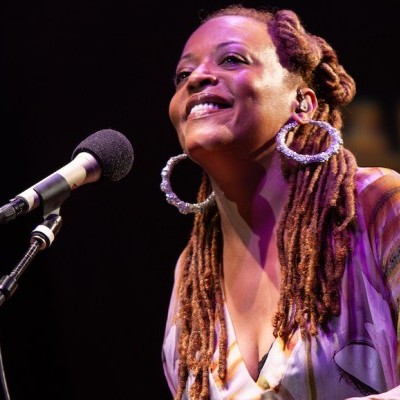
Wilson’s ability to connect to audiences helped her to win two Grammy awards and multiple other accolades. She was named an NEA Jazz Master in 2022.
Sep 3, 2026 10:44 AM
Cassandra Wilson, a singer, songwriter and producer who was one of the most acclaimed and successful jazz vocalists of…
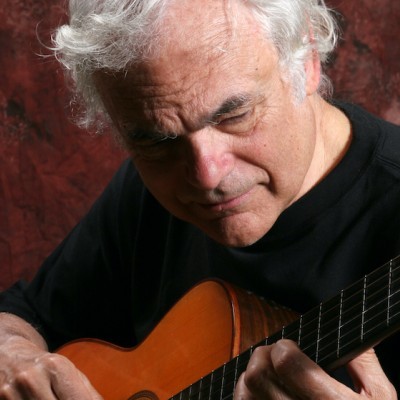
Bertoncini was a specialist and advocate for the nylon-string acoustic guitar, turning down high-profile opportunities that were unsuited to the sound and techniques that he used with that instrument.
Sep 1, 2026 11:06 AM
Gene Bertoncini, an esteemed jazz guitarist, composer, arranger and educator, died Aug. 29 at the Lillian Booth Actors…
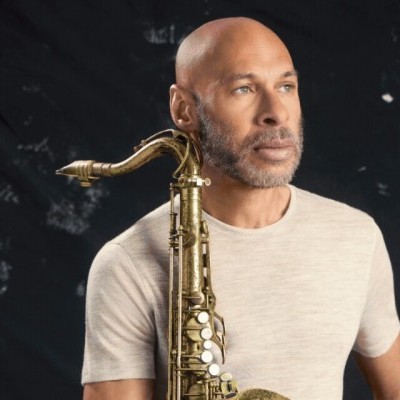
A solo concert by saxophonist Joshua Redman will close the first night of the Hyde Park Jazz Festival on Sept. 26.
Sep 22, 2026 12:26 PM
The Hyde Park Jazz Festival will take place for the 20th time on the final weekend of September 2026. Beginning half…
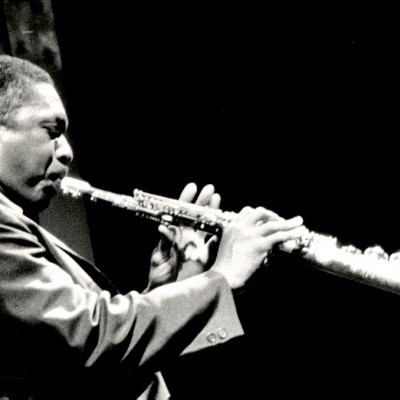
“It was just that suddenly … I could hear it,” Ravi Coltrane said of an epiphany he experienced during his late teens regarding his father’s music. “And it was almost like a calling, like something saying, ‘Hey, man, come on. It’s time to get serious.’ And the first time you really tune in and dial in and focus like that, it can be very life-changing.”
Sep 22, 2026 1:39 PM
Editor’s Note: Tomorrow, Sept. 23, is the 100th anniversary of John Coltrane’s birth. In honor of the tenor and…
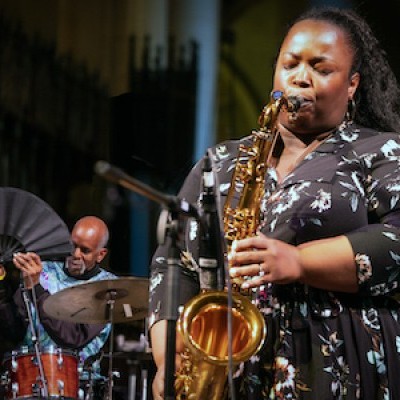
Camille Thurman took to the stage alongside bassist Kenny Davis and drummer Tommy Campbell for a rendition of Johnny Mercer’s “I’m An Old Cowhand” that recalled Rollins’ epochal 1957 trio outing Way Out West.
Oct 6, 2026 1:33 PM
As emcee Mark Ruffin noted at the commencement of an epic tribute to saxophonist Sonny Rollins at the Cathedral of…