Sep 3, 2026 10:44 AM
In Memoriam: Cassandra Wilson, 1955–2026
Cassandra Wilson, a singer, songwriter and producer who was one of the most acclaimed and successful jazz vocalists of…


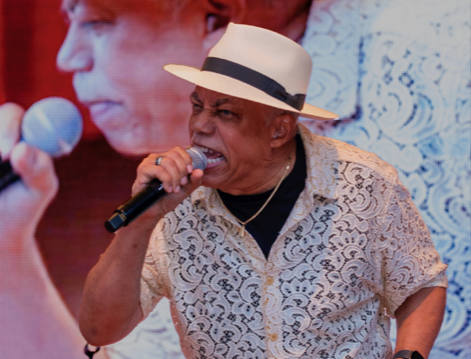
On The Blues Is My Biography, Branch employs far-reaching roots to advance the blues process of observation, reportage, assertion, transcendence.
(Photo: Marc PoKempner)Has the blues world changed very much — or not at all — in the 100-some years since the music was first recorded? In the 1920s bluesmen and women worked plantation parties, backwoods barrelhouses and tent shows, toured segregated circuits and recorded race music for shoestring one-time fees, alone or with a small band. But 21st century Chicago bluesman Billy Branch, the singer-songwriter-bandleader-harmonica virtuoso, has celebrated his 75th year on Earth by fronting a 13-piece ensemble with guest stars, backup singers, horns and a children’s choir, last fall selling out the University of Chicago’s Logan Center auditorium, in June headling the Chicago Blues Festival in Millennium Park and on Aug. 25 capping the summer Tuesdays on the Terrace concert series at Chicago’s Museum of Contemporary Art.
This hat-trick of prestigious local shows is entirely appropriate to the “Harmonica Man,” as Branch calls himself on his extravagantly produced latest album The Blues Is My Biography. With equal command of the concert stage and recording studio, he proves the blues is a truly relevant, contemporary art form via a breadth of style and vision, devotion to the music’s past and commitment to expanding upon it, up-close identification with his audiences and acceptance of today’s challenges, taken as they come.
“It’s scary, man,” Branch got right into it during a Zoom interview. “We’re living in the future. I mean, with AI about to make an incursion, an intrusion on everything. AI-assisted recordings, that can sound better than the real thing — but you know that unreleased, say, Big Mama Thornton album isn’t hers, because the sound quality is so superior than would have been available. I’ve gotten adept at spotting the fakes. But I’m sure as it develops, AI’s products are going to be indistinguishable from the real thing.
“I’m a sci-fi addict, And you know, everything sci-fi predicted is coming to pass. That’s what we’re seeing.”
Still, it seems impossible AI could create a program comparable to the 11 tracks on Branch’s new album, for instance, without benefit of a 50-some-year career like his — launched in 1969 when songwriter-bassist Willie Dixon heard him blow and hired him to replace virtuosic harp man Carey Bell, who was going on his own. Branch toured with Dixon for seven years, leading him to abandon plans to become a lawyer (he’d graduated with a political science degree from University of Illinois, Chicago Circle campus) and establish the Sons of the Blues, initially with Bell’s son Lurrie on guitar and Dixon’s son Freddie on bass. On Biography, Sons of the Blues second-generation guests include Ronnie Baker Brooks, son of Lonnie Brooks, and Shemekia Copeland, daughter of Johnny Copeland. To put that cast, which also includes longtime Branch collaborators guitarist Giles Corey, pianist Sumito Aryoshi, drummer Dionte Skinner and bassist Ari Seder, in perspective: The rollicking opening song, “Hole In Your Soul,” spotlights the wisdom, harp and vocals of 92-year-old Bobby Rush.
“I did put a lot of thought and effort into this record,” Branch says without false modesty. “I’ve done a fair amount of recording over the decades. I’ve been called maybe the most recorded blues harp player of this era, because I collaborated with so many of the greats and some of the not so greats. Well, my wife, Rosa, and I decided that the title of this one would be The Blues Is My Biography, because even though every song does not contain a specific biographical reference, every song reflects my personal musical identity. I mean, even though I’ve taken the time to master the traditional styles of Little Walter Jacobs, Sonny Boy Williamson [Rice Miller], James Cotton, Junior Wells and Big Walter Horton, my general style always reflected my musical upbringing.
“You know, we came up in the ’60s” — Branch and I are contemporaries — “and during that time we heard everything, from Peter, Paul and Mary to James Brown to the Rolling Stones to Frank Sinatra to ‘Puff The Magic Dragon,’ ‘Hang Down Your Head, Tom Dooley’ and the New Christy Minstrels, and it was fine. We enjoyed it all.
“People that don’t know me well are surprised. ‘Oh,’ they say, ‘I didn’t know you listen to the white music.’ Well, It’s not white or Black, it’s music, man. You know, music, good music. Even the Beach Boys. I grew up in Los Angeles [he’d been born in Chicago, but moved with his family at age 5, not returning until college] and once won a Beach Boys album from a department store raffle. Yeah, I had to be kind of low key about it because it wasn’t cool for the brothers to be listening to the Beach Boys. But I think a lot of those various elements contribute to my individual style.”
The style Branch alludes to is open, collaborative, exploratory. He uses his rigorous study of harp forebears to craft solos that often veer from Little Walter’s sax-like single-note melodies to Sonny Boy II’s trademark under-the-breath huffs. On the impromptu instrumental “Return Of The Roaches” Branch sounds like War’s Lee Oskar one moment, Big Walter forcing a high-pitched distortion the next, while the chattering rhythm accompaniment and tight horn choruses are akin to Fela Ransome Kuti’s Nigerian Afrobeat.
“I enjoy all forms of harmonica,” he says, “from country to classical to jazz, of course, to Stevie Wonder.” Furthermore, “I’ve done a lot of cross-collaboration, with African artists, like Vieux Farka Touré, with the Mali desert band Tinariwen, Carnatic Indian music with the veena master Saraswathi Ranganathan, I’ve worked with Sones de México in Chicago and Son de Madera of Veracruz and Susana Baca, who’s a Peruvian national treasure. Because I’m so deeply rooted in the blues, I feel comfortable in all of those musical environments. Just like Miles Davis had the song ‘All Blues,’ that’s how I feel. It’s all blues. I can hear the blues in all of it.”
So Branch employs far-reaching roots to advance the blues process of observation, reportage, assertion, transcendence. He updates Lou Rawls’ gritty 1967 hit “Dead End Street,” throws down on his own reggae-based “Ballad Of A Million Men” (written in 1995, to commemorate an African-American protest march on Washington), wails on the anthemic “Begging For Change,” is querulous on his title track — arguably a callback to Louis Armstrong’s “(What Did I Do To Be So) Black And Blue” — and spookily calls for an account on “How You Living?” with its slinky groove and spoken lyrics.
While there are also songs treating the typical blues theme of twisted romance (“Call Your Bluff,” “Real Good Friends” and “Toxic Love”), it’s clear that the bluesman’s attention is more focused on social than personal problems. Which stands to reason, as he’s happily married, with a grown daughter, and as he asserts: “Politics is such a dominating factor in our lives today. More artists are expressing their music through social commentary right now because the times we’re living in demand it. The entire planet really is ‘begging for change,’” alluding to his project’s most overtly political statement.
Past blues musicians sometimes dealt with politics. J.B. Lenoir’s “Alabama Blues” and “Eisenhower Blues” suffered radio bans. Big Bill Broonzy sang about racial discrimination and labor woes. Branch cites Nina Simone, Gil Scott-Heron, Marvin Gaye, Curtis Mayfield, Bruce Springsteen and fellow Chicagoans Shemekia Copeland and Mavis Staples as including social commentary in their songs, and adds, “I definitely feel Willie Dixon has been all over these issues right now.
“When we play clubs, such as Rosa’s in Chicago [The Blues Is My Biography is the debut album from Rosa’s Lounge Records], people slow down and listen to these songs. So far they’ve been well received. Of course, there are going to be detractors, given the polarized state the country is living through. There have been a few folks who have been not so pleased at the message, even though we’re not identifying or referencing any political party or political personality.
“I feel ‘Begging For Change’ has the potential to be a universal anthem because globally people are feeling let down by their respective governments. Governments are not addressing the needs — many times the dire needs — of the populace. It just seems so abysmal. Every time you go out to the store, there’s multiple somebodies physically begging for change. And then the homeless situation. We recorded four tracks of My Biography in the Bay Area in Oakland, and it was just mind boggling to see blocks and blocks of people sleeping in their cars, in tent cities. Homeless. That shouldn’t be. We have more than enough money in this country to take care of our own, and yet people are suffering.”
It’s enough to give one the blues. The 21st Century bluesmen and women — Billy Branch, his musicians, his producer Larry Batiste, supportive wife, label and fans — believe there’s an answer. Look at the problems frankly. Express yourself, together with others. Don’t give up. Keep on keepin’ on. And the blues will never die. DB
.
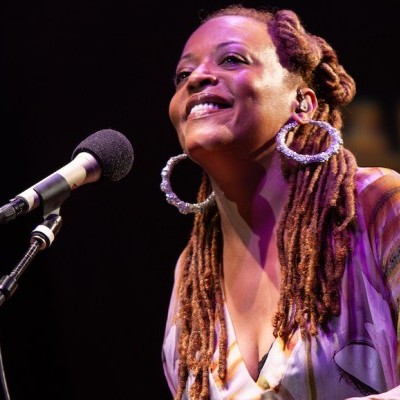
Wilson’s ability to connect to audiences helped her to win two Grammy awards and multiple other accolades. She was named an NEA Jazz Master in 2022.
Sep 3, 2026 10:44 AM
Cassandra Wilson, a singer, songwriter and producer who was one of the most acclaimed and successful jazz vocalists of…
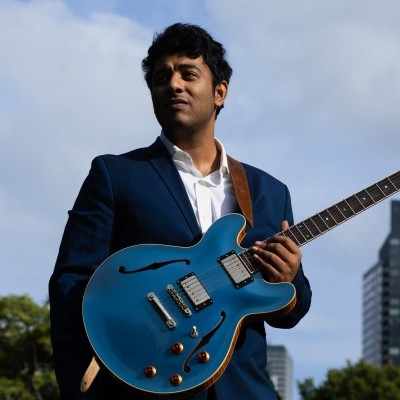
“The love from the jazz and music community restored my faith in humanity,” Walia wrote in an online post upon his release from detention at an ICE facility.
Aug 18, 2026 2:15 PM
Indian jazz guitarist and composer Pritesh Walia has been released after being unexpectedly detained by ICE and taken…
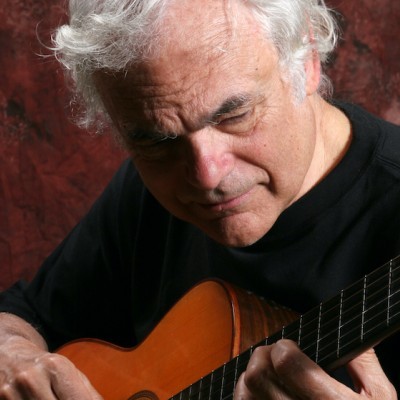
Bertoncini was a specialist and advocate for the nylon-string acoustic guitar, turning down high-profile opportunities that were unsuited to the sound and techniques that he used with that instrument.
Sep 1, 2026 11:06 AM
Gene Bertoncini, an esteemed jazz guitarist, composer, arranger and educator, died Aug. 29 at the Lillian Booth Actors…
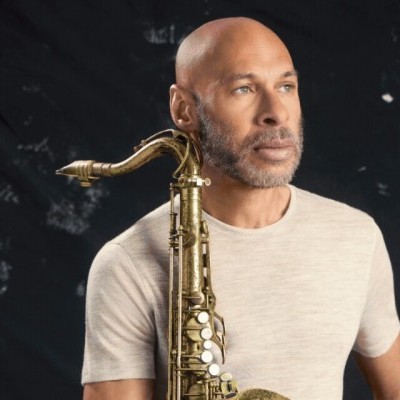
A solo concert by saxophonist Joshua Redman will close the first night of the Hyde Park Jazz Festival on Sept. 26.
Sep 22, 2026 12:26 PM
The Hyde Park Jazz Festival will take place for the 20th time on the final weekend of September 2026. Beginning half…
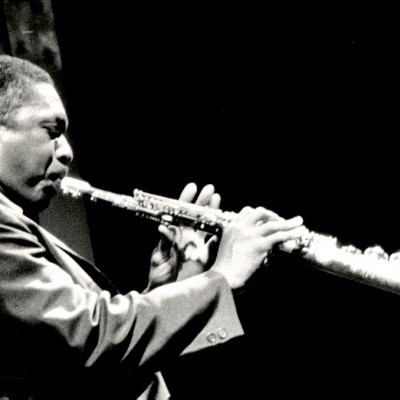
“It was just that suddenly … I could hear it,” Ravi Coltrane said of an epiphany he experienced during his late teens regarding his father’s music. “And it was almost like a calling, like something saying, ‘Hey, man, come on. It’s time to get serious.’ And the first time you really tune in and dial in and focus like that, it can be very life-changing.”
Sep 22, 2026 1:39 PM
Editor’s Note: Tomorrow, Sept. 23, is the 100th anniversary of John Coltrane’s birth. In honor of the tenor and…