Sep 3, 2026 10:44 AM
In Memoriam: Cassandra Wilson, 1955–2026
Cassandra Wilson, a singer, songwriter and producer who was one of the most acclaimed and successful jazz vocalists of…


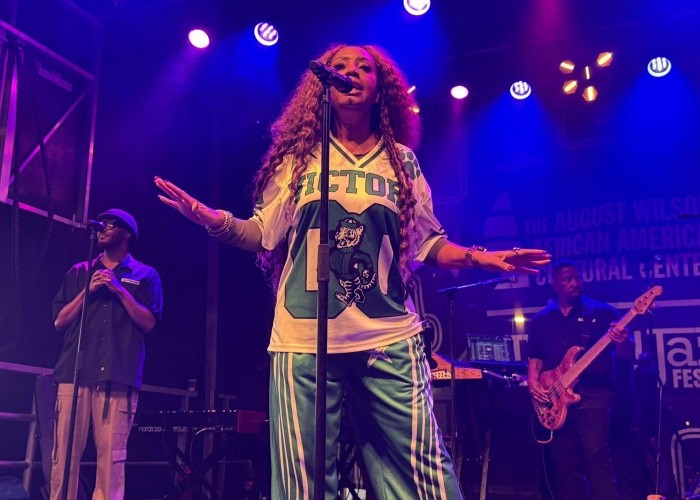
Lalah Hathaway entranced fans at this year’s Pittsburgh International Jazz Festival.
(Photo: Courtesy Pittsburgh Jazz Fest)Reinforcing modern jazz’s interaction with other genres associated with Black American music remains a hallmark of the Pittsburgh International Jazz Festival (PIJF), under the artistic direction of founder, Janis Burley. It’s fitting that its twin outdoor stages are positioned across several blocks in front the August Wilson African American Cultural Center (where Burley is also CEO and president), because the festival celebrates the rich, sophisticated tapestry of Black American culture.
The 16th annual PJIF (Sept. 18–20) offered a well-conceived program that connected the dots between jazz, modern soul, blues, rock, gospel and hip-hop without a hint of pandering.
Sterling vocal performances opened and closed the festival, both of which illustrated the event’s sweeping stylistic range.
The festival kicked off with Samara Joy delivering a delightful concert inside the August Wilson African American Cultural Center. It was the sole ticketed performance in an otherwise all-free event. Fronting a septet that included a four-piece horn ensemble, her rich contralto and lissome phrasing radiated through brilliant interpretations of standards that included Jerome Kern’s “Yesterdays” and Antonio Carlos Jobim’s “Chega de Saudade.” She reached the emotional climax when she paid homage to Steel City’s rich jazz legacy with her mesmerizing medley of Billy Strayhorn’s “A Flower Is A Lovesome Thing” and “Lush Life.”
The incomparable R&B singer and songwriter Lalah Hathaway closed the festival with similar mesmeric charm. She delved into her three-decade-deep discography and entranced fans with everlasting hits that included “Baby Don’t Cry,” “Smile” and “That Was Then.” She also gave the crowd a taste of her forthcoming album, Made In Chicago, with the charging, socially conscious “47th Street” and the gorgeous medium-tempo gem “Can’t Let Go.”
Similar to Joy, Hathaway has a luxurious contralto, but hers is a bit smokier and more haunting. Hathaway is also a master of melodic phasing, especially when she extends a line with her patented melismas and multiphonic flourishes that never overtake the songs. And as evidenced by her spectacular renderings of Anita Baker’s “Angel” and Earth, Wind & Fire’s “Love’s Holiday,” Hathaway too is a master song interpreter. And while her makeovers of those two songs were amazing, no other song in her set brought the house down like poignant reading of Luther Vandross’ “Forever, For Always, For Love.”
Incredible vocal performances were paramount throughout this year’s festival. After Joy’s performance, Pittsburgh’s own Anyah Nancy gave a sumptuous set inside the Cultural Center as part of the festival’s Taste of Jazz Party. Gifted with a piercing soprano that at times recalls Rhiannon Giddens, Nancy offered her own amalgamation of straightahead jazz and neo-soul as she delved into her remarkable debut album, Sounds Like Honey, which contains compelling originals such as “Pure,” “Autumn Blues” and “Timing.”
Other strong vocal performances included Pittsburgh-native drummer Dennis Garner’s tribute to D’Angelo, which featured fellow Pittsburgh-native Cam Chambers handling lead vocals on such neo-soul classics as “Brown Sugar,” “Untitled (How Does It Feel)” and “Another Life.”
Eric Roberson — one of the festival’s two B.U.I.L.D artists-in-residence; the other was hip-hop legend Kid Capri — demonstrated the durability of his own neo-soul discography. Like Hathaway, he drew heavily on his own romantically themed R&B hits such as “Walk Away,” “Starting Over Again” and “Mark On Me,” powering his expressive, crooning tenor in classic soul fashion that would make the likes of Peabo Bryson and Howard Hewitt proud.
Drummer, composer and bandleader Terri Lyne Carrington’s Social Science ensemble also showcased strong vocal performances from Christie Dashiell and rapper Nappy Nina during a kinetic set. Steered by Carrington’s groove-laden yet intricate rhythms, the group centered much on material from Carrington’s gripping, socially conscious album Trip The Night Fantastic, such as the self-affirming “Identity Song,” featuring keyboardist Ian Michael singing lead vocals, “Autonomy Song,” a graceful advocacy for “Feminist Body Freedom Act,” and the somber “Children’s Song,” a call for universal freedom, particularly in South Sudan, Palestine, El Salvador, Somalia, Syria and the U.S./Mexican border. Social Science ventured beyond the new album, too, with bracing renditions of the Alabama Shakes’ “Don’t Wanna Fight” and band guitarist Matthew Steven’s Afrobeat-laden “Take Heart.”
But besides Joy and Hathaway, the most galvanizing vocal performances were from Annie and the Caldwell and Marley Munroe, who goes by the stage name Lady Blackbird. Hailing from West Point, Mississippi, the former is a powerhouse family gospel group fronted by Annie Caldwell and her two daughters, Deborah and Anjessica, and her goddaughter, Toni Rivers. Together with her husband, Willie Sr., on guitar, and her sons, bassist Willie Jr. and drummer Abel, the combo concocted a funky brand of hip-swerving gospel music that leaned more toward the funk-laden sounds of the Staple Singers and the Clark Sisters more so than, say, Kirk Franklin.
On Sunday afternoon, the last day of the festival, Annie and the Caldwell brought church to the festival with gritty songs such as “Wrong,” “Can’t Lose My Soul” and “Dear Lord.” The combination of Caldwell’s Southern-blues vocals and deep-fried vocal harmonies of her daughters with thumping backbeats, thick bass lines and jangly rhythm guitar accompaniments superbly channeled the hypnotic, sweaty, communal spiritualism that Parliament-Funkadelic often stirred in concerts during the landings of its Mothership.
Lady Blackbird, too, proved to be a startling force to be reckoned with as she powered her raspy alto on razor-sharp and deeply soulful renditions of Nina Simone’s “Blackbird,” Pink Floyd’s “Mother,” Bob Dylan’s Knockin’ On Heaven’s Door” and the Beatles’ “Come Together.” Lady Blackbird’s emotive and electrifying vocals, paired with her rock-laden ensemble, enabled her to make all those of those songs sound like pages ripped from her personal diary. Her gut-wrenching rendition of Tim Hardin’s woeful “It’ll Never Happen Again” was a master class for torch-song interpretation. Lady Blackbird also dazzled on originals such as the bruising “Five Foot Tall” and the starry-eyed “Man On Boat.”
The festival also boasted some exhilarating non-vocal performances that absorbed the essence of R&B and hip-hop without sacrificing the improvisational zeal and collective dialogue associated with jazz. Such was case regarding trumpeter Sean Jones’ Saturday afternoon set in which he led Presence, his splendid new sextet.
With Presence, Jones shared the front line with alto saxophonist Tim Green; they both unleashed fast-paced improvisations that often intertwined with each other. The rhythm section of drummer Carroll C.V. Dashiell III and bassist Romeir Mendez propelled the band with swinging ebullience, while organist Terry Brewer helped afford the band a soulful gospel vibe. Showcasing some fetching new originals such the feisty “New Groove,” the mesmerizing ballad “Two And Three” and the soaring “The Three Enoughs In Life,” Jones and Presence struck an accord that recalled Bobby Watson and Victor Lewis’ group Horizon in the manner of delivering hard-swinging modern post-bop, brimming with virtuosic fire, but with melodic and harmonic shades that subtly hinted at R&B.
Pianist Orrin Evans alternated between Thelonious Monk’s repertoire and his own rhythmically invigorating originals with a sensational trio that included drummer Carrington and bassist Robert Hurst. The trio’s set ignited with a prismatic take on Monk’s “Raise Four,” on which Carrington steered with a rhythmic undertow that alternated between being snapping and slippery, while Evans pecked at the capricious melody, pulling it apart like a Picasso-designed jigsaw puzzle then resembling it as Hurst helped keep the momentum pushing forward while also engaging in deft improvisational banter with the other band mates.
Evans’ trio gave Monk’s “Well You Needn’t” a similar treatment as the pianist leaned heavily on riffing motifs and serrated improvisational lines as the rhythm section underscored him backbeats and bouncy bass lines that suggested hip-hop and broken beat. The playfulness and rhythmic ingenuity displayed in Monk’s material also appeared in Evans’ originals such as the prancing “Professor Farworthy,” the head nod-inducing “Don’t Call Me Wally” and the rambling “Don’t Fall Off The L.E.J.”
Drummer Nate Smith shared his affinity for R&B and hip-hop as he led a formidable ensemble that included saxophonist Hailey Niswanger, keyboardist James Francis and bassist Chris Morrisey. Smith often propelled his ensemble with forceful, snapping beats that jostled rhythmic accents associated with hip-hop, rock and R&B while his band mates engaged in playful improvisational lines that sometimes hinted at spunky video-game melodies such as the bouncy “Last Night” and the snazzy “Hop, Skip, Jump.” Also, a joy was the fantastic reimagining of the Pointer Sisters’ ’80s hit “Automatic” on which Niswanger and Francis articulated the song’s melody in a heady, elliptical manner, while Smith kept the groove moving forward with an enticing, Afrobeat-leaning shuffle.
The PIJF’s jammed-packed three-day event also contained performances from Pittsburgh’s legendary jazz drummer Roger Humphries, and luminary R&B drummer Bernard Purdie as well as noteworthy after-hour jam sessions, led by Evans. In all, this year’s edition honored its rich jazz legacy and embodied the essence of the August Wilson African American Cultural Center by presenting the enduring power, elasticity and allure of Black American Music. DB
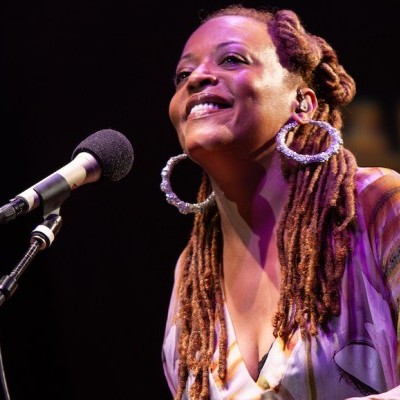
Wilson’s ability to connect to audiences helped her to win two Grammy awards and multiple other accolades. She was named an NEA Jazz Master in 2022.
Sep 3, 2026 10:44 AM
Cassandra Wilson, a singer, songwriter and producer who was one of the most acclaimed and successful jazz vocalists of…
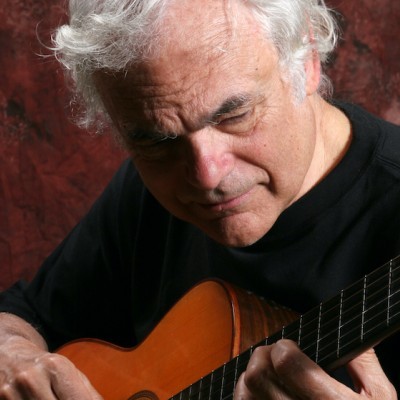
Bertoncini was a specialist and advocate for the nylon-string acoustic guitar, turning down high-profile opportunities that were unsuited to the sound and techniques that he used with that instrument.
Sep 1, 2026 11:06 AM
Gene Bertoncini, an esteemed jazz guitarist, composer, arranger and educator, died Aug. 29 at the Lillian Booth Actors…
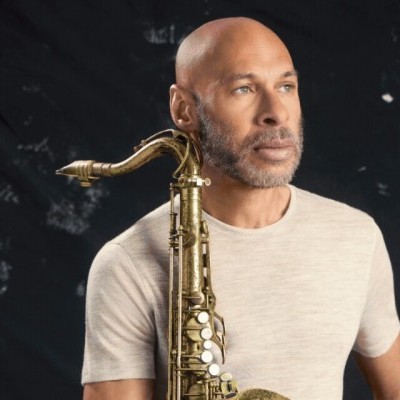
A solo concert by saxophonist Joshua Redman will close the first night of the Hyde Park Jazz Festival on Sept. 26.
Sep 22, 2026 12:26 PM
The Hyde Park Jazz Festival will take place for the 20th time on the final weekend of September 2026. Beginning half…
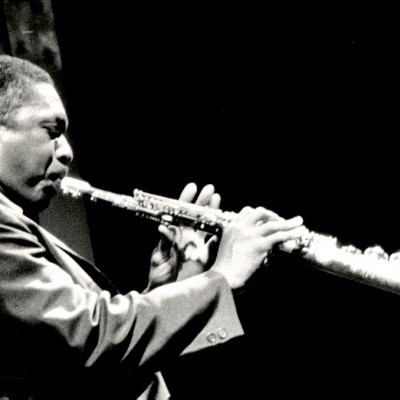
“It was just that suddenly … I could hear it,” Ravi Coltrane said of an epiphany he experienced during his late teens regarding his father’s music. “And it was almost like a calling, like something saying, ‘Hey, man, come on. It’s time to get serious.’ And the first time you really tune in and dial in and focus like that, it can be very life-changing.”
Sep 22, 2026 1:39 PM
Editor’s Note: Tomorrow, Sept. 23, is the 100th anniversary of John Coltrane’s birth. In honor of the tenor and…
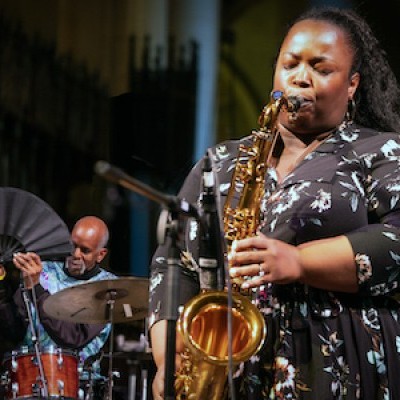
Camille Thurman took to the stage alongside bassist Kenny Davis and drummer Tommy Campbell for a rendition of Johnny Mercer’s “I’m An Old Cowhand” that recalled Rollins’ epochal 1957 trio outing Way Out West.
Oct 6, 2026 1:33 PM
As emcee Mark Ruffin noted at the commencement of an epic tribute to saxophonist Sonny Rollins at the Cathedral of…