Sep 3, 2026 10:44 AM
In Memoriam: Cassandra Wilson, 1955–2026
Cassandra Wilson, a singer, songwriter and producer who was one of the most acclaimed and successful jazz vocalists of…


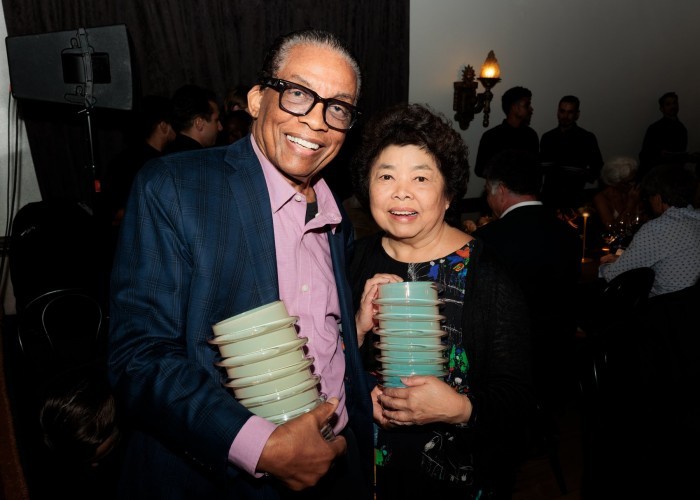
Herbie Hancock and jazz impresario Darlene Chan were honored at a September gala in support of the L.A. jazz club Sam First.
(Photo: Craig Allyn)In 1968, Geordie Hormel purchased the 22,000-square-foot Masonic Temple in West Los Angeles for $125,000. He was the heir to the giant Hormel meatpacking company, yet he had no interest in pursuing the family business. One could hardly blame him; making sausage and Spam was hardly an inspiring endeavor. Rather, the young Hormel was drawn to music, teaching himself piano at age 5 and ultimately pursing a music career against the wishes of his family, who refused to support his creative ventures. But Hormel was able to purchase the sprawling building with money he made through his work on cues for television and for Capitol Records’ Hi-Q music library. Hormel built a recording studio out of that old temple structure, naming it The Villages, a civil refuge from his family’s line of work.
Hormel’s studio would be the scene of some of the most memorable works of the late 20th century; Fleetwood Mac, Steely Dan, Bob Dylan and the Rolling Stones recorded there, Dr. Dre, Lady Gaga, Coldplay and John Mayer more recently. Artists preferred The Villages for its artist-friendly culture, and for its state-of-the-art recording technology from the start as one of the first studios equipped to handle 24-track recording. Hormel also took an early interest in synthesizers, in particular the Fairlight CMI digital sampler, which he first heard at a demonstration at the home and behest of a jazz pianist named Herbie Hancock. I’ll take two,” was Hormel’s instant reaction, purchasing them for his studio and soon becoming the first U.S. distributor for the Australian-made instrument.
Thus, Hancock’s familiarity with Hormel and his studio made perfect sense this past September, when the 14-time Grammy winner was honored at a gala event in support of Sam First, the small but significant jazz club, which took place at Hormel’s Villages Recording Studios.
It’s the second such event for Sam First, who held its inaugural event last year on these same premises. The club has been committed to programing world-class jazz since its doors opened in 2017, but it has expanded its priorities in the past few years to support the next generation of jazz musicians, with regular “University Nights” dedicated to hosting groups from many of the local colleges in Southern California, opportunities for students to be mentored by local jazz artists, and an impending modification of the club’s liquor license to allow it to become an all-ages venue.
In doing so, Sam First owner Paul Solomon and his general manager, David Robaire, are recognizing an upward throughline from the students and younger artists who are beginning their journey in jazz to those who have reached the highest pinnacles of the art form over their lifetimes.
This particular throughline runs through Los Angeles. At last year’s gala, the honorees were pianist Billy Childs and promoter Ruth Price, who was at the helm of the Jazz Bakery since she founded it in 1992 at the Helms Bakery Complex in Culver City. This year, Hancock, who has lived In Los Angeles since 1972, was lauded along with Darlene Chan, the noted jazz impresario who has run innumerable jazz events, including the many iterations of the annual jazz festival at the Hollywood Bowl since 1979. 20 musicians in total lent their talents in support of this year’s bash, all (save one) of them with ties to Southern California, including bassist John Patitucci, who went to college at California State University, Long Beach, and spent the first part of his career in L.A., and Luciana Souza, who sang on River: The Joni Letters, Hancock’s tribute to his folk singer friend, which earned them a Grammy for Album of the Year in 2008.
Many of the other artists were under Hancock’s tutelage at the Herbie Hancock Institute of Jazz (formerly the Thelonious Monk Institute of Jazz), residing on the campus of UCLA for the foreseeable future. The rest either came to Los Angeles to pursue a degree or a career, or were born here like pianist Gerald Clayton, who performed a set of Hancock originals in one of the downstairs studios with his trio featuring bassist Ben Williams and drummer Justin Brown. It was one of three simultaneous performances during the cocktail hour, taking advantage of the numerous sound-isolated studios throughout The Villages. Down the hall, saxophonist Nicole McCabe and pianist Helen Sung were engaged in a duo set, performing Wayne Shorter’s “Diana,” which appeared first on Shorter’s album Native Dancer but later on 1+1, the acclaimed duo album with Hancock. “It feels especially crazy to be here around this exceptional cast of musicians, and to even be a small part of it,” said McCabe, a rising star in Los Angeles who seems to be playing everywhere with everyone. “It’s an extreme honor, especially with Helen to do [our] Herbie and Wayne tribute.”
The end of the hall opened up into a larger studio where another L.A. native, pianist Adam Hersh, led a band of mostly Institute alumni: drummer Jonathan Pinson, bassist Emma Dayhuff, trumpeter Julian Knowles and trombonist Jon Hatamiya. Joining them was saxophonist Seamus Blake, who had performed at Sam First the previous night and had been just added to the lineup. They did admirable justice (with just a short soundcheck to preview the music) to Hersh’s elaborate arrangements of “Jessica,” “Toys” and other selections from Hancock’s oeuvre. “I think I’ve listened to Herbie more than any other artist,” said Hersh, explaining how hard he worked to go above and beyond the request to play Hancock’s compositions, maybe for the maestro himself. “If he comes in and we’re just playing a tune like the record ... because the kind of artist that he is, I just don’t think that would be interesting [to him],” he offered. Hersh is a constant presence at Sam First, performing there often as a sideman as well as with his own groups that represent his own multifaceted musical interests.
Later, upstairs in the cavernous auditorium where nearly 200 attendees had been seated and feted, tributes to Hancock and Chan continued in both verbal and musical form, including vocalist Gretchen Parlato’s clever reworking of “Butterfly,” and a faithful rendition of “I Thought It Was You” by Michael Mayo, whose silky voice needs no vocoder assistance. Billy Childs, last year’s honoree who was now the pianist in the house band for the main show (along with Patitucci and drummer Kendrick Scott), said to the audience that Hancock’s piano playing “was the first thing that actually spoke to me. ... It was like a language that was never taught to me, but that I understood.” He recalled seeing Hancock as a teenager and wanted to meet him afterward, only to be discouraged by the throng of fans between him and the man of the hour. He said he was nearly out the door when “someone taps me on the shoulder, and it was Herbie. He chased me across the floor just to tell a 17-year-old kid thanks for coming to the show.” Bassist and producer Larry Klein, whose credits include Hancock’s Joni Letters, used his speaking time to lightly roast his old friend. He recalled when they began going through Mitchell’s music for that seminal album, the pianist admitted, “I’ve never listened to words in music before.” Klein at the time responded gently, “You’re going to have to start now.”
Klein later strapped on an electric bass to perform with his wife, Luciana. Before they began, Souza introduced the song. “In 1974, Wayne Shorter assembled a group of musicians that included Herbie, and he brought from Brazil the great Milton Nascimento, whom he had met at the time. He made a seminal record, as every jazz musician, every jazz lover in the world adores, and that record is called Native Dancer. And,” she added pointedly, “it was recorded in The Villages Studios.” Afterward, as she and her husband were leaving, she said it had been a perfect “date night” for her and Klein to be out with all their dear friends and to also play together.
Bassist and bandleader John Clayton, who earlier watched his son Gerald perform, offered his own contribution with some words for Chan. He borrowed a few from George Wein, legendary Newport Jazz Festival impresario, telling the audience that Wein himself said Chan was “the greatest producer I know,” and that Chan “had the unique ability to get musicians to do what she wants … and they still love her!”
The highlight was to hear from the guests of honor themselves. Chan stepped up to the podium. She gave thanks to her late parents, “who never stopped me from following a less-than-traditional career path — as young, Asian American girls do not become jazz producers.” She reflected, “I consider myself extremely lucky to be able to travel the world, helping to put on jazz festivals, concerts, television, with legends like Basie, Duke, Miles, Ella, Carmen, Herbie, Wayne and all the amazing artists over the decades, plus new artists today. It’s been a great ride, and I love both work and music as much today, almost to 81 (years old).” She also spoke directly to Hancock, telling him, “After 60 years of friendship I think it’s cool that tonight, I’m your opening act.”
Hancock, when it was his turn to speak, spoke to that six-decades friendship with Chan. “Darlene’s in college, UC Berkeley, back then. And she booked me. She’s like this little kid! Actually, I was playing with Miles. She booked the Miles Davis band. This little girl, right? But it wasn’t just Miles Davis, man. She booked Gil Evans and his orchestra. I don’t think anyone else was able to book Miles and Gil Evans, right?”
“Right,” answered Chan from her seat.
Hancock said that the evening “was a big joy for my life.” And he reserved special praise for all the artists he had heard. “I’ve enjoyed hearing so many musicians tonight, playing their hearts out. I was going to use another word,” he quipped. “And they are all amazing. I can’t describe to you what it’s like. I walk into a place like this, and go from room to room, and all I’m hearing is people doing different arrangements of tunes that I recorded. I’m going on 86 years old, but this is the first time this has happened. … These are real professional musicians that are at the top of their game.”
And so, the throughline had made its way from the ground floor of The Villages, where a new generation of musicians were playing for their hero, up to the auditorium stage where others could personally thank Hancock and Chan for their personal friendships and inspirations, reaching back to the honorees themselves, who could look out and see the legacy of what they have done over their lives. And perhaps somewhere even higher, Geordie Hormel can also look over what his $125,000 investment has wrought over the years into this extraordinary line of jazz villagers. DB
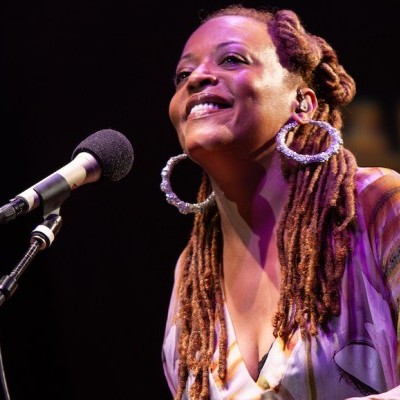
Wilson’s ability to connect to audiences helped her to win two Grammy awards and multiple other accolades. She was named an NEA Jazz Master in 2022.
Sep 3, 2026 10:44 AM
Cassandra Wilson, a singer, songwriter and producer who was one of the most acclaimed and successful jazz vocalists of…
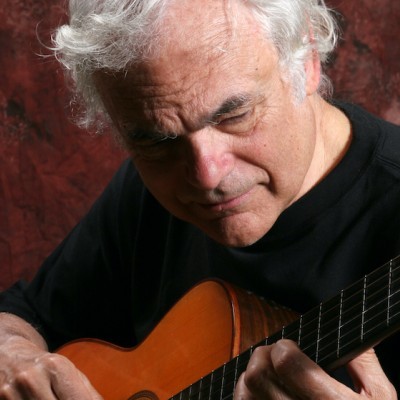
Bertoncini was a specialist and advocate for the nylon-string acoustic guitar, turning down high-profile opportunities that were unsuited to the sound and techniques that he used with that instrument.
Sep 1, 2026 11:06 AM
Gene Bertoncini, an esteemed jazz guitarist, composer, arranger and educator, died Aug. 29 at the Lillian Booth Actors…
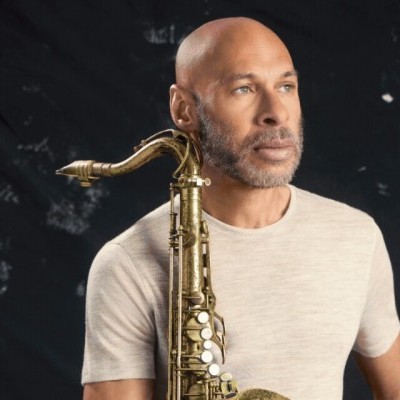
A solo concert by saxophonist Joshua Redman will close the first night of the Hyde Park Jazz Festival on Sept. 26.
Sep 22, 2026 12:26 PM
The Hyde Park Jazz Festival will take place for the 20th time on the final weekend of September 2026. Beginning half…
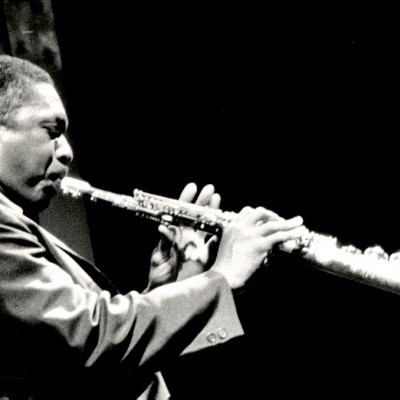
“It was just that suddenly … I could hear it,” Ravi Coltrane said of an epiphany he experienced during his late teens regarding his father’s music. “And it was almost like a calling, like something saying, ‘Hey, man, come on. It’s time to get serious.’ And the first time you really tune in and dial in and focus like that, it can be very life-changing.”
Sep 22, 2026 1:39 PM
Editor’s Note: Tomorrow, Sept. 23, is the 100th anniversary of John Coltrane’s birth. In honor of the tenor and…
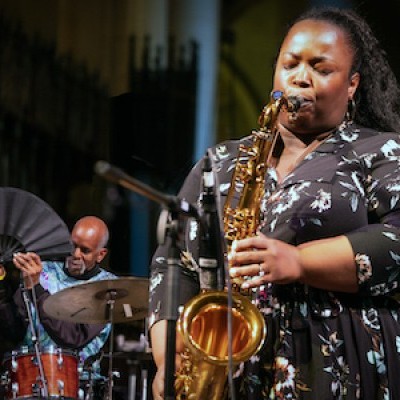
Camille Thurman took to the stage alongside bassist Kenny Davis and drummer Tommy Campbell for a rendition of Johnny Mercer’s “I’m An Old Cowhand” that recalled Rollins’ epochal 1957 trio outing Way Out West.
Oct 6, 2026 1:33 PM
As emcee Mark Ruffin noted at the commencement of an epic tribute to saxophonist Sonny Rollins at the Cathedral of…