Sep 3, 2026 10:44 AM
In Memoriam: Cassandra Wilson, 1955–2026
Cassandra Wilson, a singer, songwriter and producer who was one of the most acclaimed and successful jazz vocalists of…


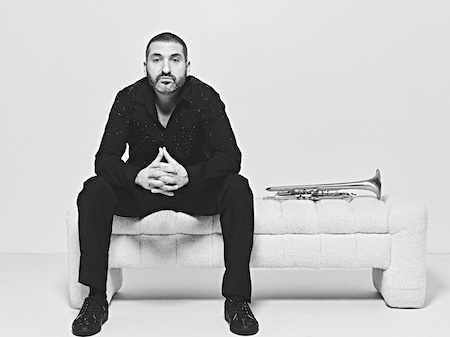
“I’ve always wanted to make something bigger than just my own music and that can relate to my father’s legacy,” Ibrahim Maalouf says of playing his father’s invention, the four-valve trumpet.
(Photo: Arno Lam)For the past 20 years, Ibrahim Maalouf has been on tour. Traveling the world with his celebratory jazz and Arabic-inspired music, the 45-year-old Lebanese-French artist has been on a mission to spread the sound of his unique instrument: a four-valve trumpet designed by his father, Nassim. “I love touring because it makes you feel connected with the entire world and with the basis of humanity in every place,” he says. “It’s a great lab to test out new music in front of people but, more importantly, it’s a way to showcase the beauty of this special instrument and to connect our Western and Arab cultures. It’s bringing the music of the world back to the trumpet.”
While a typical three-valve trumpet is capable of playing full tones and semitones across octaves, Maalouf’s father invented one that allows the brass instrument to play the quarter-tone notes integral to Arabic maqams and thereby opens it up to a range of different musical traditions. Since the release of his 2007 debut Diasporas (Mister Ibé), Maalouf has been exploring the bounds of this unique instrument, incorporating it into everything from hip-hop to West African music and classical orchestrations. With the release of his latest project, the multi-volume Trumpets Of Michel-Ange (Mister Ibé), Maalouf sets out to celebrate the unique trumpet like never before.
“I’ve always wanted to make something bigger than just my own music and that can relate to my father’s legacy,” Maalouf says. “I want to create a project that can make his dream come true of having everyone play this trumpet around the world. That’s why Trumpets Of Michel-Ange is more than just an album; it’s a multi-volume project, it’s an international trumpet academy where I teach people how to play the instrument and it’s the formation of a new brand based on my father’s invention.”
Indeed, Maalouf’s four-valve T.O.M.A trumpet is currently available for sale, and upon purchasing buyers can attend a master class with the artist to learn how to correctly work the instrument. “It’s a completely different way to play and another way to blow and to express each note,” he explains. “It’s the same difference between a trumpeter playing baroque and Louis Armstrong. My father was the first one to play this way, and then I transformed it for myself, and I want that journey to continue.” In terms of the project’s music, the first album of the Trumpets Of Michel-Ange series was released in 2024, featuring collaborations with the late Malian kora player Toumani Diabaté and New Orleans stalwart Trombone Shorty, and the second volume was released this year with nine tracks of ebullient live takes alongside guests pianist Jon Batiste, Palestinian singer Nai Barghouti and Cuban pianist Gonzalo Rubalcaba.
Recorded entirely in live takes with Maalouf’s 10-piece band in the room together for each composition, the result is irrepressibly energetic and freeform, ranging from the New Orleans-style fanfares of opening number “Bring The Light” to the mournful maqam melodies of “Oui, Je Le Veux,” the ululating polyrhythms of “Layla’s Wedding,” the frenetic, folk-influenced phrasing of “Chasing The Sun” and the Indian classical motifs of “Gulham.”
“The concept of these records is that it’s a huge wedding party,” Maalouf says. “The first volume is the wedding and the second is what happens just after you say ‘I do’ — it’s the party. And if the record is going to be an all-night party, I needed my friends there to play with me. It was really important to have everyone live in the room together, rather than a studio session, since it’s the difference between talking to a mirror versus talking to people, and I prefer people. They are the source of all my creativity.”
Growing up in Lebanon with his musician father, Nassim, and pianist mother, Nada, Maalouf was surrounded by music from a young age. “In a musical family, your first language is song, which means that I’ve been composing all my life,” he says. “Ever since I can remember, I’ve been composing music in my head and when there’s a melody that sticks and won’t go away, then I dig into it to flesh it out further.”
First taking trumpet lessons from his father at 7 years old, by age 8 Maalouf was already playing to audiences at weddings and local gatherings. By 16, he was teaching other young students how to play his father’s four-valve trumpet. Initially performing classical repertoire with his father, it was the release of his debut album that saw Maalouf begin to formulate his own modern fusion, drawing together everything from a chromatic version of Dizzy Gillespie’s “A Night In Tunisia” to hip-hop swing on the woozy track “Hashish.”
The record brought Maalouf into international notoriety and upon relocating to Paris, he soon became an in-demand instrumentalist as well as bandleader in his own right, subsequently playing with the likes of Sting, Archie Shepp, Juliet Gréco and Amadou & Mariam. In 2017, he was spotted by Quincy Jones at the Montreux Jazz Festival and went on to be managed internationally by the producer, while in 2022 he became the first Lebanese instrumentalist to be nominated at the Grammy Awards for his collaborative album with singer Angelique Kidjo, Queen Of Sheba. He has released 20 albums under his own independent imprint, Ibé, because “no one wanted to sign me when I needed their help, and when I was already big enough and had people working for me, then they arrived,” he laughs. The Trumpets Of Michel-Ange seek to bring him back to his roots through the lens of his vast experience.
“It’s all in the title, since when I was a child, and I heard stories of my father moving to Paris as a refugee and staying in a little church there, he would tell me about practicing his trumpet in the sacred space and drawing designs for the four-valve version,” he says. “I imagined him like Michelangelo, drawing these beautiful designs across the church as if it was the Sistine Chapel. I realized that was the perfect way to name the instrument and to capture its poetry.”
With a third volume in the works as well as “at least six albums of material” already recorded and awaiting release, it seems there is no slowing down Maalouf on his mission to spread the beauty of his distinct instrument to the world. “My father is 86 years old and he lives in the Lebanese mountains,” he says. “He brought the world’s music back into the capabilities of the trumpet, and so it’s my duty to ensure everyone knows about its existence.”
Up first, though, is the prospect of his largest show to date and one of the largest instrumental jazz shows in history: a headline date at the 45,000-capacity Paris La Défense arena in April 2027. “This show is the result of a lifetime of struggle, since I’ve never been playlisted on mainstream radio and no one has ever said instrumental music could have such a large appeal,” Maalouf says. “But after this show, no one can say that anymore. I had to do something symbolic to show the industry that things have changed. I wish someone like Miles Davis had the chance to play a show this large as it certainly would have encouraged me on my path, but I’m doing it for the people waiting behind me, to encourage them onwards. It’s a message to the world to embrace this music in all its forms.” DB
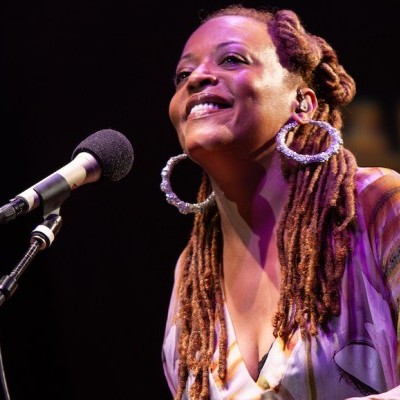
Wilson’s ability to connect to audiences helped her to win two Grammy awards and multiple other accolades. She was named an NEA Jazz Master in 2022.
Sep 3, 2026 10:44 AM
Cassandra Wilson, a singer, songwriter and producer who was one of the most acclaimed and successful jazz vocalists of…
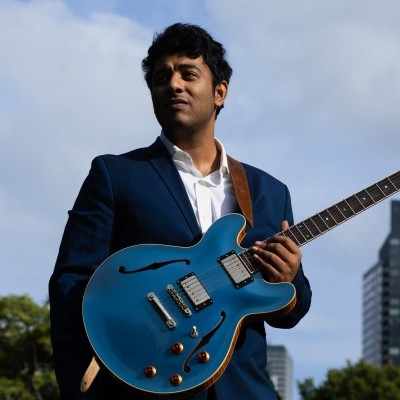
“The love from the jazz and music community restored my faith in humanity,” Walia wrote in an online post upon his release from detention at an ICE facility.
Aug 18, 2026 2:15 PM
Indian jazz guitarist and composer Pritesh Walia has been released after being unexpectedly detained by ICE and taken…
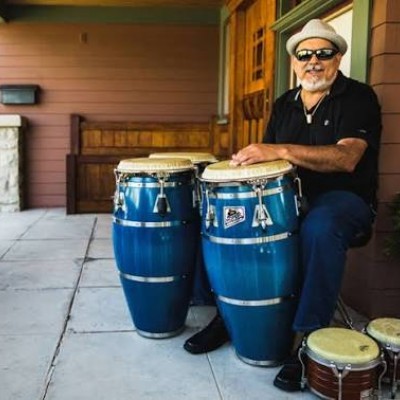
Percussionist Poncho Sanchez was among the artists scheduled to perform at the now-canceled inaugural LA Jazz Festival.
Aug 11, 2026 12:53 PM
The inaugural LA Jazz Festival, originally scheduled to run Aug. 7–23 with dozens of events across Los Angeles’…
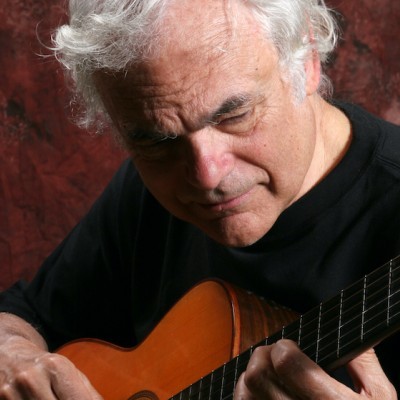
Bertoncini was a specialist and advocate for the nylon-string acoustic guitar, turning down high-profile opportunities that were unsuited to the sound and techniques that he used with that instrument.
Sep 1, 2026 11:06 AM
Gene Bertoncini, an esteemed jazz guitarist, composer, arranger and educator, died Aug. 29 at the Lillian Booth Actors…
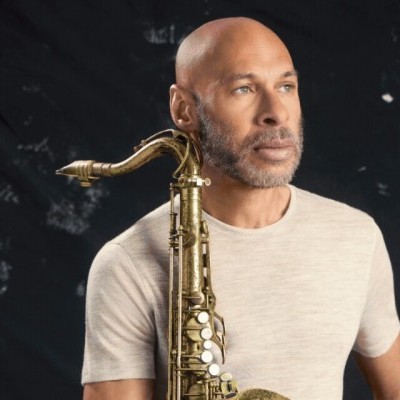
A solo concert by saxophonist Joshua Redman will close the first night of the Hyde Park Jazz Festival on Sept. 26.
Sep 22, 2026 12:26 PM
The Hyde Park Jazz Festival will take place for the 20th time on the final weekend of September 2026. Beginning half…