Sep 3, 2026 10:44 AM
In Memoriam: Cassandra Wilson, 1955–2026
Cassandra Wilson, a singer, songwriter and producer who was one of the most acclaimed and successful jazz vocalists of…


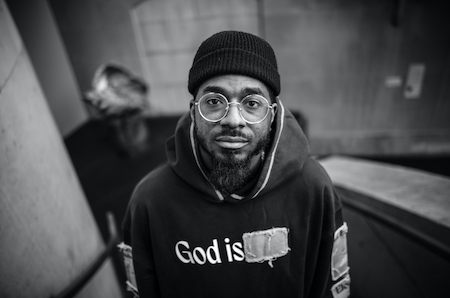
“This is the most explicit and boldest expression of what I believe,” Joel Ross said of his latest album, Gospel Music.
(Photo: Jati Lindsay)On a stormy afternoon in January, Joel Ross led a quartet at the Louis Armstrong House Museum’s small jazz room in Queens, offering a reading of the vibraphonist’s pandemic-era suite Praise In The Midst Of The Storm. The performance was vivid and persuasive. And, given Ross’ beguiling brand of scripture-driven swing, it might, to the 50 rain-soaked souls in attendance, even have seemed divinely inspired.
Sporting a cap emblazoned with “FOLLOW THE WORD NOT THE HERD,” a large cross tattooed on his right forearm, Ross brought his signature moves to the Armstrong House stage: the knowing smile as he approached his instrument, the subtle twirl of a mallet before he struck its tone bars, the bell-like resonance he coaxed from those bars. All of which served a musical sermon so finely wrought and fiercely argued that even skeptics in the pluralistic crowd became converts to the Church of Ross.
But the Armstrong House performance was only a prelude to the main event: a rave that night at the NYC Winter Jazzfest Brooklyn Marathon. There, at a dance hall called Signature Ingredients, a surging crowd of hundreds rocked to the beat of Ross’ working sextet, Good Vibes, as the group mined material from his latest Blue Note album, Gospel Music.
“This is gospel music,” he told the crowd, with lowercase inflection, before launching into the album’s opening tune, “Wisdom Is Eternal (For Barry Harris).” What followed was surely like no such music many had encountered: a singularly sophisticated take on a cliché-susceptible genre, rendered by a band of tireless dedication. As the clock pushed midnight, Good Vibes pushed back, retaining, amid the din, a clarity of execution, depth of emotion and devotion to subject.
Few jazz musicians have built on their gospel foundation with the consistency of the 30-year-old Ross. His 2022 album Parable Of The Poet directly parallels a religious service, while his other four albums are clearly infused with the spirit. And few musicians of any stripe have a produced a document that combines doctrinal fealty and aesthetic originality like Gospel Music.
Ambitiously conceived and painstakingly realized, Gospel Music presents, by Ross’ account, nothing less than a musical trip through the Holy Bible. The album comes complete with liner notes consisting of summarized passages, from Genesis through Revelation. The passages are chosen to match each of the 17 tunes, a diverse lot that blur the boundary between temporal and spiritual themes.
Ross composed the tunes over more than a decade, sometimes without knowing they would be included in a Bible narrative, let alone one of this scope. His father helped him with the Bible passages, the last puzzle piece to be added. Laura Bibbs — Ross’ wife, who sang on one track and played flugelhorn on another — advised him along the way. The band members weighed heavily in each tune’s development. But ultimately, the album’s voice is his. And he is happy to own it.
“This is the most explicit and boldest expression of what I believe,” Ross asserted in a Christmas-week interview.
That Ross had the initiative to pull this off does not surprise those close to him. Vibraphonist Stefon Harris, a friend and mentor back when Ross studied at the University of the Pacific’s Brubeck Institute — whom Ross credited with helping him “become a true artist” — recalled his onetime student as “incredibly courageous and extremely driven. He just went so far beyond what the average person would be willing to do or be inspired to do.”
Ross, born and raised in Chicago, attended the Brubeck Institute in 2014–’15. A year earlier, still in high school, he had met drummer Jeremy Dutton, a Houston native with whom he reconnected in New York. “He was the readiest for New York of anyone I’ve ever seen,” recalled Dutton, the drummer in Good Vibes. “Now I see him refining his identity, getting closer and closer to communicating who he is with the same intensity and attention to detail.”
Intense though Ross may be, his drive is not directed toward mere self-aggrandizement but rather toward developing an expansive view of the artist’s role. “I knew early on this was a special human being driven by values beyond just curiosity about music,” said Harris, now a professor at Rutgers University. “It’s almost impossible to make music on that level that’s not deeply connected to something in the hearts of people.”
Ross’ ability to empathize helps him draw the best from others while maintaining an air of laissez-faire. “The best bandleaders,” he said, “aren’t dictating every single thing that a person does. You’re observing. I study these people. I love these people. And so I care about the way they feel and what angers them, what fatigues them. I pay attention to them, to understand not just how to manipulate, but to know who they are and what’s going to happen and under what circumstances. And then I ask them to trust me. We trust each other in the creative process of making the music.”
As the process unfolds, “We have such an understanding of each other and how we play that nothing has to be said,” explained Japanese-born Good Vibes bassist Kanoa Mendenhall, who grew up in Northern California. “Working with him has been so liberating. His leadership comes through his playing. I trust that everything will come together.”
Using that sense of trust strategically, Ross will employ a kind of benign subterfuge to challenge his musicians. He might structure his compositions to encourage interplay through which deeper structures emerge. He might exploit situational emotions to build energy when it has begun to flag. Whatever the tactic, it typically aims to conjure a creative tension that, in its release, yields a measure of satisfaction — maybe even personal growth — for both audience and artist. The dynamic suggests a metaphor for conflict resolution that could have applications beyond the bandstand.
“Wisdom Is Eternal,” the opener, is a case in point. Like many of Ross’ tunes, that one’s structure is deceptively simple, overtly based on Ross’ elaboration of a note sequence Barry Harris favored in his piano playing and in an exercise for working through the keys. In Ross’ rendering, the sequence has nine beats. Represented on the page by three bars of two beats and one bar of three beats, it yields a feeling of common time with “a little skip” at the end, according to pianist Jeremy Corren, a Los Angeles native who, along with Mendenhall and Dutton, form what Ross termed the “McCoy-Jimmy-Elvin engine” [in reference to Coltrane’s bandmates McCoy Tyner, Jimmy Garrison and Elvin Jones] of Good Vibes.
But when the engine is ignited, the simple setup becomes a potent vehicle for collective embellishment. The sequence repeats over and over, and as it does, layers of interaction begin to shape themselves into an arrangement. Over time, Mendenhall’s bass and Corren’s piano have formed a sort of upstart subunit, introducing an alternate metric structure — a “big 3,” in Corren’s parlance — that seeks to coexist within the 4-with-a-skip frame. The result is a sense of dissonance that begs for resolution. The pattern is pure Ross.
“Joel is interested in trying to project two different kinds of metric, groove-oriented feelings at the same time in a way that you can apprehend both,” Corren said. “Even if there’s a way of relating them to each other, there is some kind of off-kilter feeling, so it creates a feeling of conflict. It puts musicians in a position where they have to adapt and deal with the conflict. By the end of a 10-minute piece, you find that there’s almost a way to reconcile these two things. That’s part of the listener’s experience, too.”
Resolving conflict isn’t always the point. On the traditional spiritual “Calvary,” one of two covers on the album, the conflict is theologically preordained and an end in itself. To achieve the desired effect, the full sextet — rounded out by Josh Johnson and Maria Grand on alto and tenor saxophones, respectively — played the tune in common time on the second and final full day of basic tracking in July of last year. The next day, Ross took to the drum set and added an 11/8 track to the existing 4/4. The clash of meters, he said, represents “warring anxiety. Christ going to Calvary is more than just what was happening on Earth; it is a spiritual war. And I wanted this uneasiness, this fighting thing, represented rhythmically.”
Nowhere on the album is conflict represented with greater intent than on “Hostile.” Ross, who is on his third cover-to-cover reading of the Bible, described the scene he is painting: “After the fall [of Adam and Eve], we were first in relationship with God. But because we decided to go follow our own wisdom instead of His wisdom, we in a way become enemies of God. God is light and we now have introduced darkness into the world, into our hearts. So we are now hostile to God.” The liner notes, summarized from Genesis and Psalms, are graphic: “blood was shed” and “corruption spread.”
Mustering the energy needed to animate the scenario was not a straightforward affair, given that the band had just recorded three tunes requiring intense concentration. So Ross turned to a motivating technique from another art form. “I’m trying to get this thing from them the same way a movie director wants to get their actors agitated right before they film a fight scene. I’m like, ‘Let’s jump into “Hostile.”’ Maybe they want to take a break. And I’m like, ‘No, let’s knock this out.’ Now we’re pushing each other. There is an amount of hostility in the performance to get this point across: There is no relief because we’ve left the place of relief.”
Relief does come, most generously in the lush form of “To The Throne.” Originally called “Shrive,” a reference to confession, the tune at the prepandemic time of its writing represented to Ross a more general take on that act. But as the narrative for the new album came together, Ross said, he found that the tune’s melody-centered suggestion of a minor blues fit well.
“It is,” he said, “the emotional outpouring of what just happened to Jesus dying on Calvary but also him ascending to the throne.”
The catharsis of “To The Throne” opens a gateway to a more transcendent side as the three concluding tunes, in Ross’ words, “look toward eternity.” The change in tone is noticeable; conflict is absent. On “Be Patient,” a restless shifting among five meters sparks a frisson of anticipatory excitement before the tune settles into an extended 4/4 coda. On “The New Man,” the album’s newest tune, sinuous lines cycle buoyantly within metric multiples of 2.
But the most dramatic shift in tone arrives courtesy of the album’s opulent closer, “Now And Forevermore.” Dispensing with the piano, drums and saxophones, the treatment adds Ross’ celeste and mellotron, Brandee Younger’s harp, Bibbs’ flugelhorn and Austin White’s electronics. Mendenhall finally wields her bow. The result — an otherworldly rubato that contrasts sharply with the swing environment in which Ross places the tune in live performance — constitutes, for Mendenhall, something of a revelation. “It’s a whole part of Joel I haven’t heard before,” she said.
By revealing a different side of his character, Ross is essentially marking a milestone on a spiritual journey. It is one mirrored in the particulars of the piece itself, a sonic outlier whose soaring quality he related to an opening up of heaven — a glimpse at “what life looks like from eternity on.”
Like the ancients who assembled the Biblical narrative from different books, Ross said, he was, in organizing disparate tunes into a coherent account, “influenced by the spirits.” How one views that proposition might be a matter of faith. But the music is its own testimony, and, for a vibraphonist who began asking big questions as a small boy playing drums in a church on the Windy City’s South Side, it is also a tool in a lifetime project of self-discovery.
“I put a real focus on not just trying to present an album,” he said. “First and foremost, I want to understand, scripturally, ‘What am I learning here?’” DB
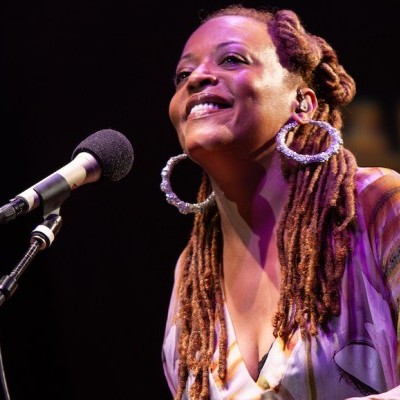
Wilson’s ability to connect to audiences helped her to win two Grammy awards and multiple other accolades. She was named an NEA Jazz Master in 2022.
Sep 3, 2026 10:44 AM
Cassandra Wilson, a singer, songwriter and producer who was one of the most acclaimed and successful jazz vocalists of…
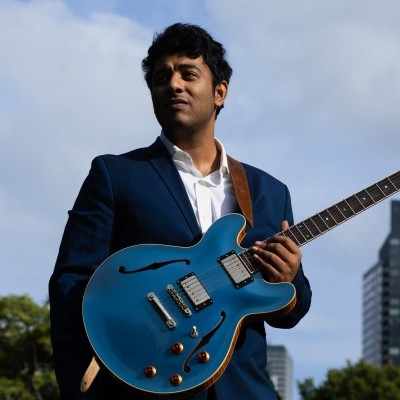
“The love from the jazz and music community restored my faith in humanity,” Walia wrote in an online post upon his release from detention at an ICE facility.
Aug 18, 2026 2:15 PM
Indian jazz guitarist and composer Pritesh Walia has been released after being unexpectedly detained by ICE and taken…
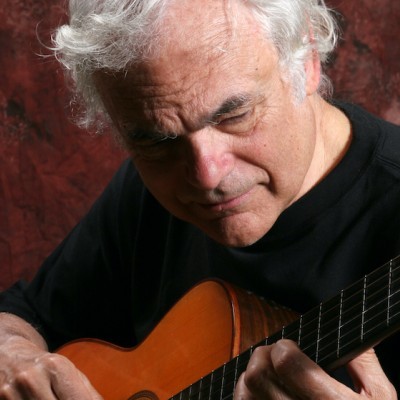
Bertoncini was a specialist and advocate for the nylon-string acoustic guitar, turning down high-profile opportunities that were unsuited to the sound and techniques that he used with that instrument.
Sep 1, 2026 11:06 AM
Gene Bertoncini, an esteemed jazz guitarist, composer, arranger and educator, died Aug. 29 at the Lillian Booth Actors…
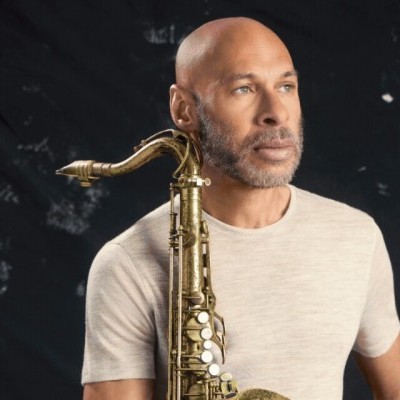
A solo concert by saxophonist Joshua Redman will close the first night of the Hyde Park Jazz Festival on Sept. 26.
Sep 22, 2026 12:26 PM
The Hyde Park Jazz Festival will take place for the 20th time on the final weekend of September 2026. Beginning half…
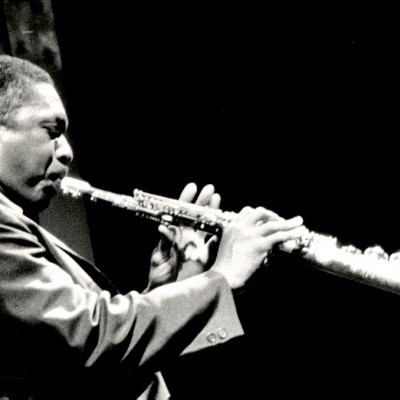
“It was just that suddenly … I could hear it,” Ravi Coltrane said of an epiphany he experienced during his late teens regarding his father’s music. “And it was almost like a calling, like something saying, ‘Hey, man, come on. It’s time to get serious.’ And the first time you really tune in and dial in and focus like that, it can be very life-changing.”
Sep 22, 2026 1:39 PM
Editor’s Note: Tomorrow, Sept. 23, is the 100th anniversary of John Coltrane’s birth. In honor of the tenor and…