Sep 22, 2026 12:26 PM
Hyde Park Jazz Fest on Chicago’s South Side to Present 20th Edition
The Hyde Park Jazz Festival will take place for the 20th time on the final weekend of September 2026. Beginning half…


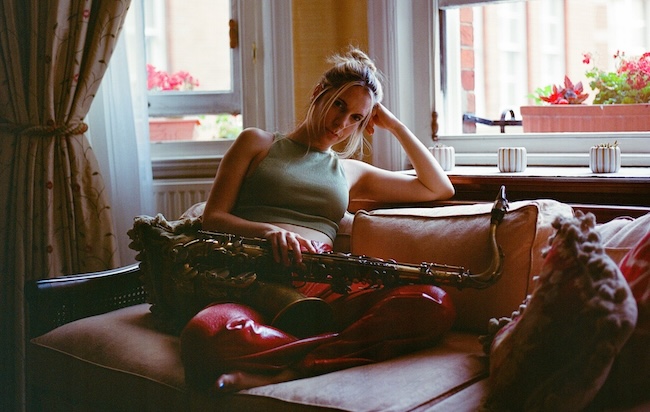
“I don’t know why I chose the sax,” laughs Julieta Eugenio. “I guess it was just like a calling … from somewhere in the universe.”
(Photo: Arie Esiri)For tenor saxophonist Julieta Eugenio, peace is less a destination and more of a space she has learned to construct within herself.
That idea sits at the center of Mi Boathouse, the Argentina-born, New York-based musician and composer’s third album, released on Dox Records. The record draws together nature, spirituality and memory while reflecting Eugenio’s increasing personal relationship with her instrument.
Amid New York’s relentless pace, Eugenio finds inspiration through meditation and quieter corners of Brooklyn, particularly Prospect Park, which is across the street from where she lives. Speaking to Eugenio via Zoom, that connection to nature was apparent, as behind her was a large portrait of a waterfall surrounded by trees.
“I feel like nature has always been a huge part of my life, and it’s always grounded me,” Eugenio says. “With this album, it was kind of like a spiritual process, as well as the last one, Stay. But this one felt more like finding a space of peace within myself and this world.”
She describes that space as a protective area built from her experiences and emotions during her years in New York. The album’s bilingual title combines the Spanish possessive “mi” with “boathouse.” Just as a physical boathouse shelters a vessel from the elements, Eugenio imagines hers as a place that protects the self from life’s turbulence.
At the center of the record are calming timbres mixed with fleeting notes of hope and beauty. That focus is particularly evident in “Mantra” and the title composition, which Eugenio thinks of as suites, each moving through three distinct sections and emotional environments.
The record also captures how Eugenio’s relationship with the tenor has deepened. She remembers returning to the instrument after recording her first album and sensing that something had changed. Today, the separation between musician and horn feels even smaller.
“I’m just one with music,” she says. “Especially with my saxophone, it’s just part of me.”
Mi Boathouse also expands Eugenio’s sonic vocabulary. After establishing a trio with bassist Matt Dwonszyk and drummer Jonathan Barber on Jump (2022) and Stay (2024), she added pianist Glenn Zaleski to create a quartet. Eugenio had been composing more at the piano, and her earlier classical piano training began resurfacing in the process.
She also experimented with pedals on solo pieces, a development that has opened another creative direction. Eugenio says those experiments are already influencing the new material she is writing.
Her desire to find sanctuary through music, however, stretches back much further than Mi Boathouse.
Eugenio grew up in a small Argentinian city roughly five hours south of Buenos Aires. At 10, she asked her mother for piano lessons. Her teacher operated a music institute and eventually invited her to join an ensemble, offering her a choice of instruments. Eugenio chose saxophone.
“I don’t know why I chose the sax,” she laughs. “I guess it was just like a calling … from somewhere in the universe.”
There was no professional musical lineage pushing her toward it. Her father, a doctor, played some guitar and had considered studying piano. Yet Eugenio’s fascination with music appeared early. Her mother remembers that whenever Eugenio encountered a piano, she wanted to touch it. Eugenio calls it “love at first sight.”
By her early teens, she was performing regularly through her music institute. She later discovered jazz giants Charlie Parker, John Coltrane and Sonny Rollins. Hearing Parker for the first time, she remembers thinking, “What is this?” The experience blew her mind.
Eugenio initially played alto, but the tenor’s lower register felt immediately more compatible with her musical personality. Ironically, she originally picked up tenor for a practical reason: doubling on instruments could lead to more gigs. Instead, she discovered the horn that would become her primary voice.
After five years studying in Buenos Aires at the Manuel de Falla Conservatory, Eugenio moved to New York at 23 to pursue a master’s degree at Queens College. The transition was formidable. She arrived alone, essentially making her first major journey outside Argentina, and quickly discovered that studying English was very different from living entirely in the language.
Jazz clubs became her refuge amid the intensity of New York life. Jam sessions gave her somewhere to go when loneliness surfaced while providing an education that continued beyond the classroom.
Her parents expected her to return home after two years. Eugenio soon realized she couldn’t.
“I felt like I had so much to absorb from this city still,” she says. “You breathe music in this city, so I felt like I needed to take my time with it.”
New York also placed the jazz tradition within arm’s reach. Johnny O’Neal invited her to sit in and, later on, to play on gigs. Abraham Burton called her up during sessions. She met Lee Konitz at Mezzrow jazz club, asked him for a lesson and eventually spent hours talking with him at his home.
Then there was Roy Hargrove. One night, while Eugenio waited to solo, Hargrove sat beside her and offered a simple compliment: “I like you because you play pretty melodies.”
“I went to sleep super happy,” Eugenio remembers.
Her formal education was equally important. At Queens College, saxophonist Antonio Hart became a mentor, helping Eugenio dig deeper into jazz tradition. She also pursued private lessons with Mark Turner.
After graduation, rather than rushing toward a career as a bandleader, Eugenio concentrated on practicing and absorbing everything she had learned. She transcribed recordings, developed her technique and gradually devoted more of her practice routine to composition.
That patience was tested by the realities of being one saxophonist among countless exceptional horn players in New York. Eugenio learned not to interpret every missed gig personally or measure her progress against someone else’s career.
“Everyone gets their moment,” she says. “The important thing is to keep your own path.”
That philosophy resonates throughout Mi Boathouse. Its sanctuary isn’t necessarily a retreat from ambition, competition or the instability of a musician’s life. Instead, it represents Eugenio learning how to remain centered within those forces.
As she prepares album-release performances and a European tour while developing her next project, she continues to build from that quieter center. But for all the personal meaning embedded in Mi Boathouse, Eugenio doesn’t want to dictate what listeners should take from it.
“I want to take them on a journey,” she says. “Instrumental music is so open to your imagination and feelings.”
If that journey allows someone else to find a little of the peace Eugenio has learned to create for herself, then Mi Boathouse has done its job. DB
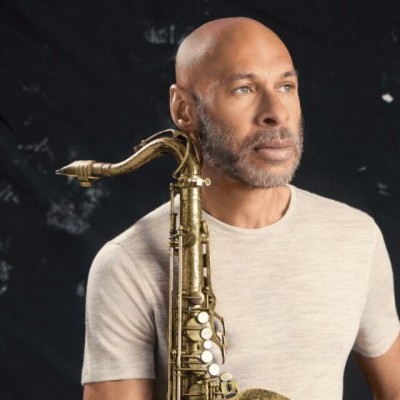
A solo concert by saxophonist Joshua Redman will close the first night of the Hyde Park Jazz Festival on Sept. 26.
Sep 22, 2026 12:26 PM
The Hyde Park Jazz Festival will take place for the 20th time on the final weekend of September 2026. Beginning half…
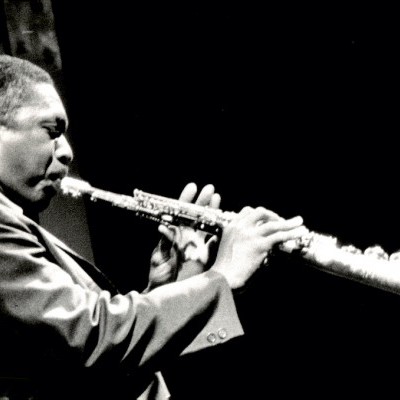
“It was just that suddenly … I could hear it,” Ravi Coltrane said of an epiphany he experienced during his late teens regarding his father’s music. “And it was almost like a calling, like something saying, ‘Hey, man, come on. It’s time to get serious.’ And the first time you really tune in and dial in and focus like that, it can be very life-changing.”
Sep 22, 2026 1:39 PM
Editor’s Note: Tomorrow, Sept. 23, is the 100th anniversary of John Coltrane’s birth. In honor of the tenor and…
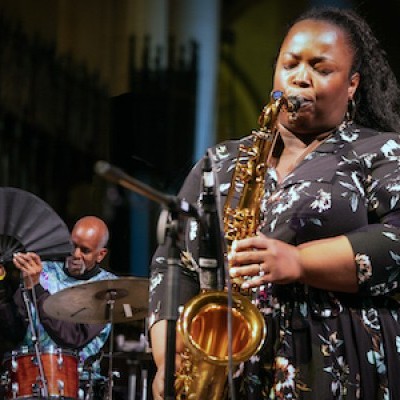
Camille Thurman took to the stage alongside bassist Kenny Davis and drummer Tommy Campbell for a rendition of Johnny Mercer’s “I’m An Old Cowhand” that recalled Rollins’ epochal 1957 trio outing Way Out West.
Oct 6, 2026 1:33 PM
As emcee Mark Ruffin noted at the commencement of an epic tribute to saxophonist Sonny Rollins at the Cathedral of Saint…
Record producer Bob Thiele’s classic photo that became the cover of John Coltrane’s landmark album A Love Supreme.
Sep 22, 2026 1:36 PM
A tribute to John Coltrane is one thing, but there is much more to the iconic saxophonist’s 100th anniversary…
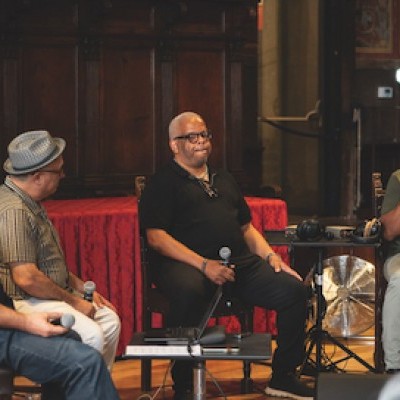
Ravi Coltrane (right) makes a point during a live Blindfold Test at the Umbria Jazz Festival while pianist Greg Burk (far left), journalist Ashley Kahn and trumpeter Terence Blanchard listen.
Oct 20, 2026 12:53 PM
The pairing of Terence Blanchard and Ravi Coltrane was billed as “The Miles/Coltrane Legacy,” a tour celebrating the…