Sep 3, 2026 10:44 AM
In Memoriam: Cassandra Wilson, 1955–2026
Cassandra Wilson, a singer, songwriter and producer who was one of the most acclaimed and successful jazz vocalists of…


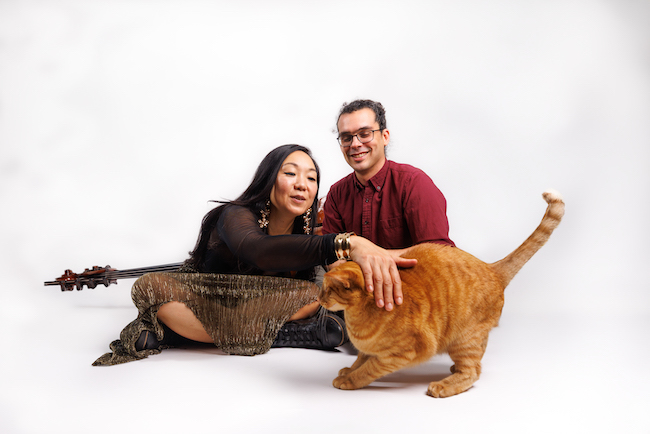
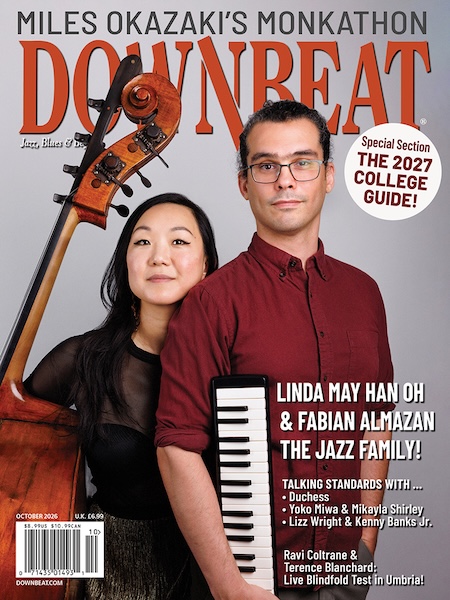
“I specifically remember Linda walking into class every week with 10-page-long new compositions. I was very inspired — you were very capable,” says Fabian Almazan of meeting his future wife when they were students at Manhattan School of Music.
(Photo: Robert Torres)Back in October 2021, bassist/composer Linda May Han Oh began a European tour with her group, beginning with a prestigious jazz residency in Helsinki, Finland. Her band included her husband: pianist and composer Fabian Almazan. After two weeks in Finland, the tour would continue with more dates in Europe, followed by another tour with Vijay Iyer’s group, in which Linda played bass.
By necessity, the tour would also include the couple’s 10-month-old son. “It took a lot of coordinating,” Linda said recently. “Fabian’s mother came along for part of it. It also took a lot of other wonderful people, including promoters who sometimes offered to have groceries ready for our son.”
“I had no gray hairs before that tour,” Fabian said. “All the gray hairs I have now are after that tour.”
Linda and Fabian spoke over tea in the kitchen of their home in Cambridge, Massachusetts, where they moved (from Manhattan) in 2022 so Fabian could pursue a doctoral program at Harvard University, which is within walking distance of their house.
One of the most elite couples in jazz, both have a grounding in classical music. Each is a Grammy nominee, with Fabian nominated twice for his work with Terence Blanchard and Linda winning for her participation in Terri Lyne Carrington’s album New Standards Vol. 1.
They also share a natural curiosity to explore the relationship between music, science and the natural world. Linda has a strong interest in neuroscience that has lately influenced her compositional ambitions. Fabian is a committed environmental activist, made manifest in his composing, his graduate studies and his founding of his environmentally conscious label, Biophilia Records, in 2011.
Born May Han Oh in Malaysia in 1984, her family gave her the anglicized first name Linda at the age of 3 when they moved to Perth, Australia. Starting out professionally as Linda Oh, she more recently added back the “May Han” to embrace her full identity. She was recently voted Jazz Bassist of the Year in DownBeat’s 74th annual Critics Poll and was featured on bass in the 2020 Pixar movie Soul, in which she also served as the life model for the character “Miho.”
With seven albums as a leader, she is highly regarded for the chops, creativity and urgent rhythmic drive she brings to multiple styles of jazz, from bop to jazz/funk to exploratory music that stretches the definition of jazz. She currently teaches at Berklee College of Music, where she also serves on the faculty at the Institute for Jazz and Gender Justice. The school awarded her an honorary doctorate in 2024.
Fabian, 42, fled his native Cuba with his family landing in Miami at the age of 9. After private lessons in Havana and Miami, he studied at the audition-only New World School of the Arts, played in the National Grammy High School Jazz Combo and at the Brubeck Institute in California, and received a master’s degree from Manhattan School of Music. He joined Terence Blanchard’s celebrated band in 2007. His refined playing and complex compositions reflect eclectic influences with electronic and classical music elements.
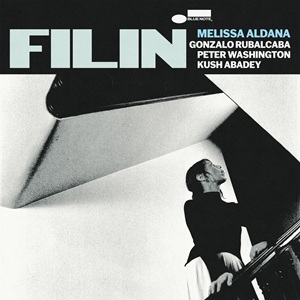
Much of the conversation centered around the fearsome logistics of living the jazz life with a boy of 5 in tow. But the discussion also ranged widely to cover how they met at the Manhattan School of Music; Linda’s scientific interests that led to her recent residency at Columbia University’s Zuckerman Mind Brain Behavior Institute; Fabian’s commitment to climate science, including his current studies at Harvard, where he’s in the fifth year of a Ph.D. program combining music with climate studies; and their latest albums: Linda’s Beneath Lifted Skies, a modern take on the bass/tenor sax duo with Melissa Aldana that revisits classic bebop; and A World Of Wounds, a solo piano album that is explicitly about the climate crisis. Both albums will be released this fall on Biophilia.
The conversation has been edited for length and clarity.
Allen Morrison: Linda, you just played your first leader gig at Newport with Tyshawn Sorey and Ambrose Akinmusire. How did it go?
Linda May Han Oh: I had a lot of fun. I always have an incredible time with Tyshawn and Ambrose. I’m so glad to have done it with them. The two of them have the power to commit 100 percent to the moment. That for me is what really makes that group. I had been there as a side person before but was very proud to be able to bring my own group to Newport this year. It’s such an iconic festival. I remember when I was in Australia watching [the film] Jazz on a Summer’s Day, seeing Anita O’Day on stage and thinking, “Wow, that’s what Newport is.”
Morrison: How did you two meet?
Fabian Almazan: In 2006, at the improv class at Manhattan School of Music.
Oh: That’s right.
Almazan: [turning to Linda] That’s where you first saw me?
Oh: Yeah.
Almazan: And you were smitten right away? [laughs]
Oh: Well, you know, when you [start a new] program, everyone’s like, “Oh, you’ve got to check out this person — he broke his hand.” It was a bit of drama, like, “Oh, no! What’s going to happen?” But, yeah, that was our first meeting.
Almazan: I had a new dolly for my keyboard and amp, and during the previous semester I had shut it on my finger, fracturing it. So, I wasn’t able to do my graduation recital. Instead, I had to do it on the first day of the master’s program, in front of all these amazing musicians.
Oh: We played a lot that year … and after all the classes were done, people were jamming from 5 p.m. right through to midnight. … At that time, it felt like everybody was living up there — Marcus Gilmore, Obed Calvaire, Ambrose Akinmusire, Justin Brown; Gerald [Clayton] and Joe Sanders lived in an apartment together. From MSM up to the 180s, there were just so many musicians. It was constant jamming, then going to Floridita’s Cuban restaurant afterward for Cuban food.
Almazan: I specifically remember Linda walking into class every week with 10-page-long new compositions. I was very inspired: You were very capable.
Oh: Quantity isn’t quality! [laughs]
Almazan: In your case, it was.
Oh: Maybe I just didn’t know how to format charts properly back then.
Almazan: … And I remember seeing it over and over, playing with you with people who didn’t know who you were. I could see that, immediately, they stereotyped you. But then, as soon as you would start playing, everything would change. I saw that happen so many times.
Morrison: Has that been an issue for you, people stereotyping you or not expecting you to play the way you play?
Oh: Yeah, I definitely felt that. Just in the moment, it’s kinda not helpful. You just have to play. But, yeah, there have been moments where I had to sort of sit and smile.
Almazan: And every time you proved yourself — and beyond.
Morrison: You are one of the busiest couples in jazz. How do you combine parenting a 5-year-old son with such busy jazz careers? Do you bring him along?
Oh: In the beginning, when our son was smaller, Fabian’s mother occasionally came to help. The people in Helsinki were fantastic. It felt like a team effort. Since then, we have developed a network of babysitters all around the world. When I was pregnant, I called Ingrid Jensen for advice, and Sara Serpa and Jo Lawry. We got a lot of babysitter contacts through them, even ex-students of mine. The few times we’ve taken [our son] to Japan, we have a student there who babysits for us. Our son now has these relationships all over the world. We have musicians, friends, promoters and festivals that help. I’m glad to be a part of this community. It’s a juggling act, though.
Morrison: Fabian, your parents live nearby?
Almazan: Yes, they live eight blocks away. [Moving to Boston from Miami] was a big change for them and for us, but I love having them close by, and it’s been beautiful to see them get to spend time with their grandson. Grandparents are important.
Morrison: If you book a tour overseas, do you try to book a tour together?
Oh: It depends. If I’m booking my group, Fabian’s my pianist, so we try and have Fabian on as much as we can, unless he’s got another gig. If we play in New York, we just come straight back.
Almazan: Having our son travel with us has actually given me hope in humanity because it does feel like, throughout the world, when someone is given a child to take care of, the vast majority of people genuinely care. There’s this instinctual thing that they care about our son; they’re very loving with him.
Oh: And it’s widened his world and community. He’s got so many uncles and aunties now. He doesn’t have an idea just who he’s meeting … “Auntie Terri Lyne Carrington.” [laughs] It’s really wild who he gets to meet and hang out with.
Intergenerational connection is so special. I just toured with Kenny Barron. It is so important to talk with people who are much older than you are, and people who are much younger than you are. I was filling in after, unfortunately, his bass player, Kiyoshi Kitagawa, passed away. We did some festivals [like] North Sea Jazz and, at the La Spezia Jazz Festival in Italy, I did my “bucket list” gig of playing duo with Kenny Barron.
Morrison: I would love to have heard that. Speaking of duos, do you guys play much as a duo?
Oh: We do. We’ve been talking about doing an album. We’ve done quite a few duo gigs, including tours in Ireland and Japan.
Morrison: How old were you when you discovered jazz? Linda, I know you played piano originally, then bassoon.
Oh: I was around 15 when I really started playing jazz. My uncle gave us a family electric bass. And I had a garage band that I played in with some friends. I also played in the school jazz band, reading chord charts and not really knowing how to improvise but feeling my way. Also, around this time, my sister was listening to a lot of different music. She exposed me to so much. She was listening to everything from Meshell Ndegeocello to Bitches Brew.
Morrison: You’ve said that when you heard Ray Brown play with Oscar Peterson, that’s what sold you on becoming a bass player. What was it about Ray Brown’s playing that made such an impression on you?
Oh: The beat, the sound — such a rich, round sound — the facility on the instrument, the feel. There was just something undeniable about it that was like, “I need to figure out how to do this.”
Almazan: I grew up in Cuba, but I have a bit of a rebellious streak in me, so in Cuba I was doing classical music. I didn’t grow up playing Cuban music. It felt like it was just too easy and all around me. … The Soviet Union had a relationship with Cuba, so there was the Russian school of piano. I started [at] the conservatory there in first grade. But I also loved Oscar Peterson very early on. [In my teens] I remember going back home to Miami one summer and borrowing my parents’ car to drive around, listening to WDNA, the jazz station, and they announced that Oscar Peterson had died. It’s the only time I’ve ever pulled over and just cried. Because Oscar Peterson … there’s just something so honest and joyous about the way he played.
Morrison: Linda, I hear your love of danceable grooves sometimes even in your most complex compositions. It’s there in spades on your new album with Melissa Aldana, Beneath Lifted Skies. Does that kind of groove have a central role in your playing?
Oh: I feel like so much is just embedded in how I want it to feel. Things don’t necessarily have to be simple, straight-up 4/4 in order for it to swing or groove. It can be complex or asymmetrical. But there’s a lilt to it that I think is important to capture the groove element, especially when you’re playing with other people and just hook up rhythmically.
Morrison: Fabian, you’re in the fifth year of a rather unusual doctoral program at Harvard that combines “creative practice and critical inquiry.” Tell me about it.
Almazan: The program is different for every student. My focus is primarily on climate change and our connection to nature as human beings. Embedded in Afro-Cuban musical traditions is a deep relationship to the natural world; that connection and how it permeates through Cuban society at large is what I’m studying.
Morrison: Your next album, A World Of Wounds, combines compositions for solo piano and electronics with interviews with environmental and political activists.
Almazan: The title comes from Aldo Leopold, the American naturalist. One of the things he says is that when you start learning about how natural systems work, you see a world of wounds [caused by] humanity. Having a son has made me even more concerned about the state of the world.
I had to have pretty serious surgery a year-and-a-half ago. … There were a few difficult moments, and I kinda needed to do this as a solo album to get these feelings out.
Morrison: How did you get into climate science?
Almazan: It comes from growing up in the Caribbean, where there’s life everywhere around you. [As children], we would go out and look for lizards. I’ve always just cared for the well-being of living things. I feel a responsibility to follow it through my life.
Morrison: What led you to found Biophilia Records?
Almazan: I wanted to bring together a community of like-minded musicians that cared about the state of the environment. It started with just me putting out my own album in 2011. It wasn’t until 2017 that it became a full-fledged label with other artists. [Biophilia now boasts a diverse and growing roster that includes Oh, tenor saxophonist María Grand, vocalist Sara Serpa and trumpeter Adam O’Farrill.]
Morrison: Linda, you recently completed a turn as the jazz artist-in-residence at Columbia’s Zuckerman Institute, one of the nation’s leading brain research centers. Your predecessors in that role included Miguel Zenón, Terri Lyne Carrington, Helen Sung and Anat Cohen. What did you do there?
Oh: Dr. Michael Shadlen created the jazz artist-in-residence program there: He has an incredible mind. He’s a neuroscientist who studies decision-making — and a good jazz guitarist, too. I had wonderful conversations with … brilliant theoreticians who model what’s going on in the brain, and with other scientists who examine neurons and synapses in the brains of fruit flies. There was one scientist who was working with zebra finches and how they learn songs. The male zebra finches learn the songs from their fathers. [They found that] if the male finches make a mistake while they are practicing, their dopamine level dips a lot more than it does if they make a mistake while actually [courting] the female. [The scientists] purposely distort a syllable while the birds are practicing. Then they measure if there’s a drop in dopamine.
There are so many parallels in music. … To me, it’s very similar to playing music, because when you’re playing, you really can’t afford to let a mistake bother you. You’ve got to just keep going, that fake-it-till-you-make-it kind of thing.
They are [also] trying to figure out what is happening when [African] elephant-nose fish communicate. [She describes how the fish navigate and communicate using weak electrical signals, from which the scientists derive data that contain rhythmic pulses.] These fish have very large cerebellums in relation to their bodies. The scientists measure their electric signals. … Another scientist in Oregon transformed the electric signals into MIDI notes, and I put that into music.
Morrison: So, you’re finding patterns in their communication that are musical.
Oh: Yes. We took a snapshot of that data, and we performed this at Columbia.
Morrison: You recently were awarded a Guggenheim fellowship. Will you continue this work under that grant?
Oh: The idea with the Guggenheim is to translate scientific work into an emotional narrative and essentially tell stories using scientific work and data. I want to examine the idea of science and how it relates to us as humans. And how it can be brought to humans in a way that has more of an approachable emotional content than something that seems so far away or complex for us to grasp.
Morrison: Both of you studied classical music and incorporated elements of it in your composing. How does your knowledge and love of classical music inform your composing and arranging today?
Almazan: [Classical and jazz] are just different modes of communication. They have different mannerisms within the genres. But, to me, the end goal is the same: to find an outlet for all these abstract emotions that we experience. It’s not difficult for me to connect them together, in the same way that I am Linda’s husband and my father’s son — I’m still the same person.
Oh: I agree. I mean, it’s nothing new in the sense that, in the history of “jazz” or Black American Music, there’s already been so much intertwining, whether it be Coltrane and Slonimsky or the many jazz musicians who admired Stravinsky. It’s all music. Not everybody has to do classical music, but it opened up my world. My goal is to play what I’m hearing. Classical music has helped me write what I want to say. DB
Wilson’s ability to connect to audiences helped her to win two Grammy awards and multiple other accolades. She was named an NEA Jazz Master in 2022.
Sep 3, 2026 10:44 AM
Cassandra Wilson, a singer, songwriter and producer who was one of the most acclaimed and successful jazz vocalists of…
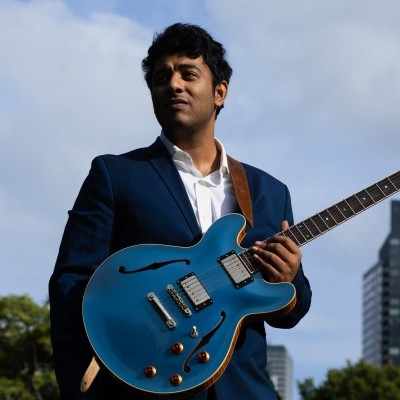
“The love from the jazz and music community restored my faith in humanity,” Walia wrote in an online post upon his release from detention at an ICE facility.
Aug 18, 2026 2:15 PM
Indian jazz guitarist and composer Pritesh Walia has been released after being unexpectedly detained by ICE and taken…
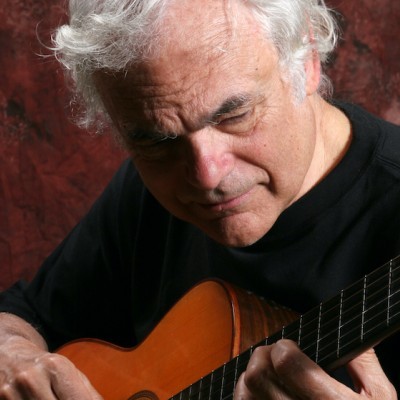
Bertoncini was a specialist and advocate for the nylon-string acoustic guitar, turning down high-profile opportunities that were unsuited to the sound and techniques that he used with that instrument.
Sep 1, 2026 11:06 AM
Gene Bertoncini, an esteemed jazz guitarist, composer, arranger and educator, died Aug. 29 at the Lillian Booth Actors…
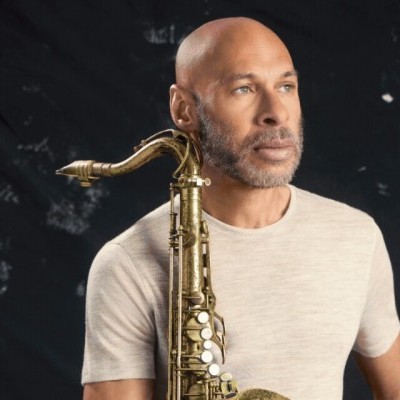
A solo concert by saxophonist Joshua Redman will close the first night of the Hyde Park Jazz Festival on Sept. 26.
Sep 22, 2026 12:26 PM
The Hyde Park Jazz Festival will take place for the 20th time on the final weekend of September 2026. Beginning half…
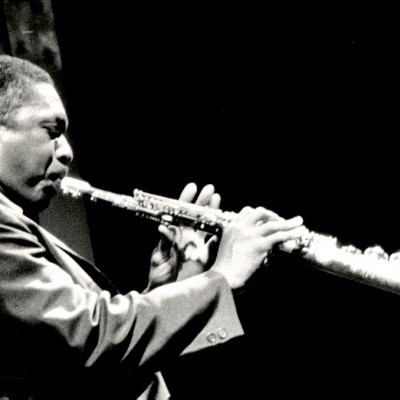
“It was just that suddenly … I could hear it,” Ravi Coltrane said of an epiphany he experienced during his late teens regarding his father’s music. “And it was almost like a calling, like something saying, ‘Hey, man, come on. It’s time to get serious.’ And the first time you really tune in and dial in and focus like that, it can be very life-changing.”
Sep 22, 2026 1:39 PM
Editor’s Note: Tomorrow, Sept. 23, is the 100th anniversary of John Coltrane’s birth. In honor of the tenor and…