Sep 3, 2026 10:44 AM
In Memoriam: Cassandra Wilson, 1955–2026
Cassandra Wilson, a singer, songwriter and producer who was one of the most acclaimed and successful jazz vocalists of…


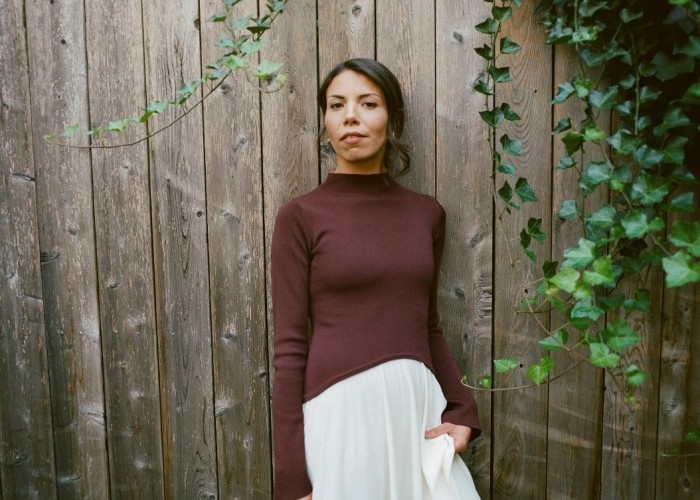
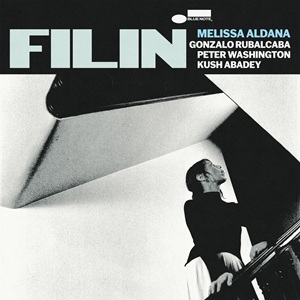
“I wanted to get into the real feeling,” Melissa Aldana says of studying the work of singers from Cuba’s filin tradition in preparation for her collaboration with pianist Gonzalo Rubalcaba.
(Photo: Travis Bailey)Melissa Aldana is an investigator. She’s not comfortable resting on what she knows, instead seeking to learn more and explore further. At 37, the saxophonist and composer has released eight leader albums to international acclaim and collaborated on countless others. With each project, she excavates more layers of herself and, in doing so, fosters a deeper, more nuanced connection to the nature of sound.
“I always wonder: What is my identity?” says the New York-based artist from Santiago, Chile. On past releases, including 12 Stars (Blue Note, 2022) and Visions (Motéma Music, 2019), Aldana has interrogated her relationship with archetypes, inheritance and modalities of consciousness. She doesn’t hide from herself and walks toward whatever frightens or confuses her. Being vulnerable has become part of her practice. And in recent years, she began considering a ballads record in the tradition of her musical heroes and their seminal releases, including John Coltrane’s Ballads from 1963. “Having to play a ballads album,” says Aldana, “which is something very revealing for a saxophone player, would help me to question some new aspects of how to go deeper into sound.”
Before launching her investigation ahead of the recording, Aldana sought guidance. She consulted one of her living heroes, four-time Grammy-winning artist Gonzalo Rubalcaba, with whom she’d been eager to collaborate for many years. After hearing her intentions, he suggested she center the album on filin, a music tradition developed in his native Cuba between the late 1940s and early 1960s that, according to the legendary pianist and composer, “created a dialogue between traditional Cuban trova, the bolero and jazz, redefining Cuban musical identity.”
Aldana was new to filin. She’d certainly never explored the standard repertoire. Another saxophone player pursuing a ballads record might have been daunted, opting instead to curate an album of tunes they’d been playing for years. Not Aldana. She jumped at the chance to get inside a tradition of music entirely unknown to her — and she’s grateful for the meaningful discoveries filin has helped her make about her own identity.
Once she began exploring the repertoire, the project, titled Filin, “became something much deeper” for Aldana. The concept itself was a revelation. She began transcribing songs directly from the singers who interpreted them. “It was the first time I could relate to the music as a person that speaks Spanish, find my identity within that sound, within that music,” she says. “Even though I’m not from Cuba, the mother language is the same. So it helped me to go deeper in ways that I wasn’t even expecting.”
Having performed so many standards in so many contexts throughout her career, attempting to memorize and internalize the English lyrics, Aldana felt a sense of liberation in filin. Each singer’s meticulous approach to the material left her awestruck, but also grounded her in a profound connection to the work. “Understanding the lyrics in Spanish took it to the next level of how deep you can go into the music,” she says. And working with Rubalcaba for the first time was a meditative experience for her. An artist whose devotion to detail drives her expression, she found his approach to minutiae almost otherworldly. “It’s in another galaxy,” she says. “Just to play in the same room [with him] was a master class. … When you experience that right next to you, that is a lesson.”
Throughout the creation of the record, the music became her other mentor. Alongside fellow artists Peter Washington, Kush Abadey and Cécile McLorin Salvant (who appears on two songs), Aldana studied every small moment from every filin singer. “I wanted to get into the real feeling,” she says. Immediately she noticed the level of extreme care each singer would give just to the movement from one note into the next. “The lyrics have a lot to do [with it] but also the sound, how the intonation moves, how every note lasts in relation to the harmony — how the band is playing. That is something I wanted to capture, as the person that’s going to be playing those melodies.”
On the album, the artists honor repertoire from composer and singer Marta Valdés, filin architect Cesar Portillo de la Luz, Frank Domínguez and other celebrated songwriters. The songs are emotional. Derived from “feeling,” the term serves the romantic, at times lamenting sophistication of the music. Arcs develop through layers of harmony. Lyrics advance the form. The songs’ aching humanness invites personal connection, but Aldana takes a discerning approach to their interpreting. Before heading into the studio, she spent months internalizing the vocal melodies she transcribed. “It’s not about bringing my own voice,” she says. “It’s about completely serving what the music needs: How can I transcribe Marta Valdés in a way that I can absorb every single detail of what I’m listening to?”
For many years, Aldana has held the perspective that voice is illusory — that the sound’s the thing. Transcribing masterwork solos from Freddie Hubbard, Miles Davis and Herbie Hancock early in her career, she made a singular discovery that would inform her approach to playing music for the rest of her life. “Through those transcriptions, I realized the instrument is just a vessel but the sound is a frequency,” she says. “So, how can I find the frequency that Herbie’s playing, that is different from when Gonzalo plays? What is that frequency? I can’t play piano, but there is something about that frequency that is part of the sound of that person.”
On Filin, each arrangement receives detailed consideration in service of the music. Portillo de la Luz’s “Dime Si Eres Tú” features a brief and tender moment when Rubalcaba interludes in octaves, between fluid solo gestures from Aldana, and concludes on a fade of brushwork from Abadey. In fact, the drum parts across Filin are deliberate and exacting.
“If I feel that brushes are the sounds we need for this piece, it’s not casual,” says Rubalcaba. “It’s something that I’ve been thinking of and imagining and working around for a while — or sticks, or mallets, or specific rides or cymbals that I want to use for this part of the tune. Details. And I think that makes a difference sometimes.” He arranges with plenty of room for spontaneity and enrichment of what’s printed on the page, but, at times, he admits wanting the drummer to reproduce exactly what he’s written: “That’s the reason some of the drummers hate me [laughs].”
Though Aldana had committed herself open-heartedly to learning repertoire that was brand new to her, as the album came together she had moments of apprehension and self-doubt. Shortly before the studio date, she called Rubalcaba to ask if they could change keys on some of the songs. “I think I had four or five tunes already done in terms of arrangement and reharmonization, so it was really difficult to redo everything with the time we had [left],” he says. “But on the other hand, it was not about time. I was totally convinced that those keys would work with her tone, with her instrument. And the key would help to build the spirit, the sound, the mood of each piece.” Fortunately, Aldana’s determination — and trust in her mentor — prevailed, and they moved ahead with the established arrangements. “Every key produces frequencies and tones and connections that are totally different,” says Rubalcaba. “So I was lucky that Melissa didn’t insist.”
The voicings, too, prompted Aldana to confront her nerves. On “Little Church” in particular, every square inch of harmony was measured out on the page. “That was one of the hardest songs to record,” she says. “It’s a lot of information and I felt like, ‘I don’t even know how to approach this.’” Ultimately, she got out of her head and played. Once she did, the music and the moment overtook the trepidation.
Incidentally, that song would become emblematic of another theme present on Filin; as the artists worked through the repertoire together, the project’s cross-cultural identity became undeniable. In addition to six songs from Cuban composers, “Little Church” and “Las Rosas No Hablan” (“As Rosas Não Falam”) flex a Brazilian influence from composers Hermeto Pascoal and Cartola, respectively, compelling a translation from Portuguese lyrics to Spanish. As they constructed the album, both artists felt these songs had an uncanny connection to filin. “I don’t know if Cartola was aware of this movement in Cuba, of filin,” says Rubalcaba, “but there’s a huge connection between his song and the rest of the pieces we chose.”
Globally, the tradition itself is cross-cultural. According to Rubalcaba, during the years of social and political repression in Cuba, many artists, including filin founders like José Antonio Méndez, would leave the country for Mexico. There, they found the freedom they sought to advance their artistries, often releasing new music on Mexican record labels. “It’s impossible not to mention, when we talk about filin, how much it [was] affected [by] the political scenario in Cuba in the ’50s, in the ’60s in the ’70s,” says Rubalcaba. “Almost every recording we got as a reference of those songs we selected for the album were recorded in Mexico. Three or four of the composers on this album used to live [there]. Some of them never came back to Cuba. They found that Mexico gave them the right place at the right moment, and the freedom to develop that way, musically.”
After months of research, discussion and Aldana’s own private investigating, the album came alive in the studio. With Don Was in the producer’s chair and Aldana’s longtime friend James Farber engineering, she felt uniquely supported to experiment with each song and explore a tradition of music that, even now, feels new to her. “Having Don being there — just supporting, bringing the best out of everyone, being part of that energy, that momentum — was meaningful to me,” she says. “And there was no one more perfect [than James] that could capture the sound of what we wanted to create together with this music.”
McLorin Salvant’s vocal on “Las Rosas” proffers yet another perspective for the project’s pluralistic identity. A multi-lingual artist herself, McLorin Salvant approached the Spanish translation of Portuguese lyrics ahead of the studio date with care, respect and her signature devout research. Almost conversational, yet doleful and self-reflective, her lyric rises in intensity as the story unfolds in the music. “She went so deep into these songs,” says Aldana.”
To “No Te Empeñes Más,” whose original lyric is in Spanish, she brings an introspection at once wistful and matter of fact. “I was impressed with her Spanish pronunciation,” says Rubalcaba. “It’s not about how clear every word is in Spanish. It’s the intention. And the intention is the right one in every sentence, every word. … Cécile, I think she understood everything from the beginning. We didn’t have to talk. Actually, we didn’t talk [laughs]. She was very quiet. She was observing every detail, and I think she got the picture. And the next day, magic.”
With a catalog of acclaimed albums in her discography, Aldana continues to seek new perspectives and elevated understandings. Filin is only an example of how she integrates ideas into her expression and her investigation of sound: “I still feel like I’m 6 years old, trying to learn this Michael Brecker solo and just trying to get through it. And I’m always going to feel like that, it doesn’t matter how old I am. … I’m grateful to [Gonzalo] for allowing me to get to know more about myself though the filin, and to understand more of my heritage as a jazz musician, as a Latin person.” DB
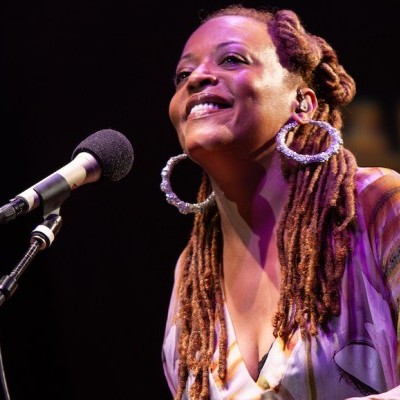
Wilson’s ability to connect to audiences helped her to win two Grammy awards and multiple other accolades. She was named an NEA Jazz Master in 2022.
Sep 3, 2026 10:44 AM
Cassandra Wilson, a singer, songwriter and producer who was one of the most acclaimed and successful jazz vocalists of…
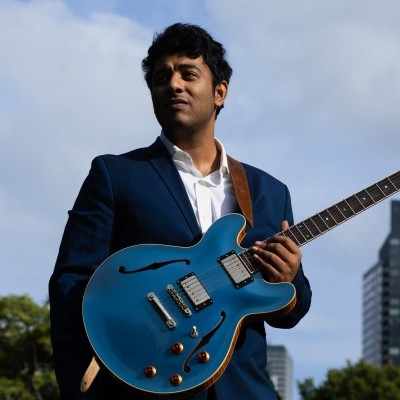
“The love from the jazz and music community restored my faith in humanity,” Walia wrote in an online post upon his release from detention at an ICE facility.
Aug 18, 2026 2:15 PM
Indian jazz guitarist and composer Pritesh Walia has been released after being unexpectedly detained by ICE and taken…
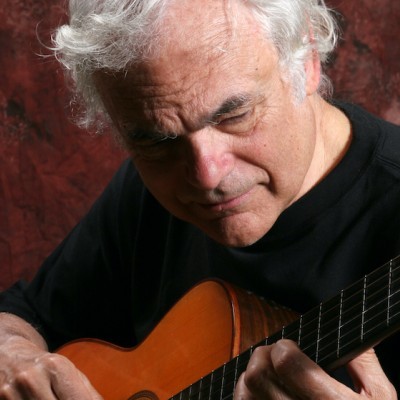
Bertoncini was a specialist and advocate for the nylon-string acoustic guitar, turning down high-profile opportunities that were unsuited to the sound and techniques that he used with that instrument.
Sep 1, 2026 11:06 AM
Gene Bertoncini, an esteemed jazz guitarist, composer, arranger and educator, died Aug. 29 at the Lillian Booth Actors…
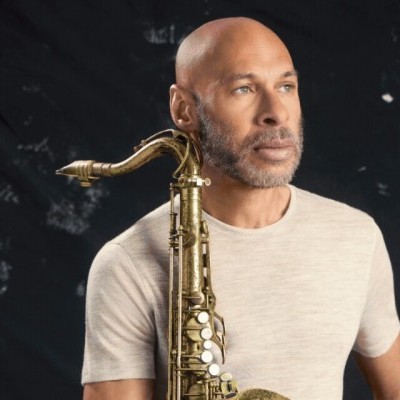
A solo concert by saxophonist Joshua Redman will close the first night of the Hyde Park Jazz Festival on Sept. 26.
Sep 22, 2026 12:26 PM
The Hyde Park Jazz Festival will take place for the 20th time on the final weekend of September 2026. Beginning half…
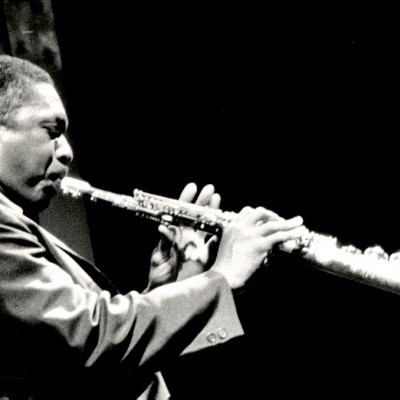
“It was just that suddenly … I could hear it,” Ravi Coltrane said of an epiphany he experienced during his late teens regarding his father’s music. “And it was almost like a calling, like something saying, ‘Hey, man, come on. It’s time to get serious.’ And the first time you really tune in and dial in and focus like that, it can be very life-changing.”
Sep 22, 2026 1:39 PM
Editor’s Note: Tomorrow, Sept. 23, is the 100th anniversary of John Coltrane’s birth. In honor of the tenor and…