Sep 3, 2026 10:44 AM
In Memoriam: Cassandra Wilson, 1955–2026
Cassandra Wilson, a singer, songwriter and producer who was one of the most acclaimed and successful jazz vocalists of…


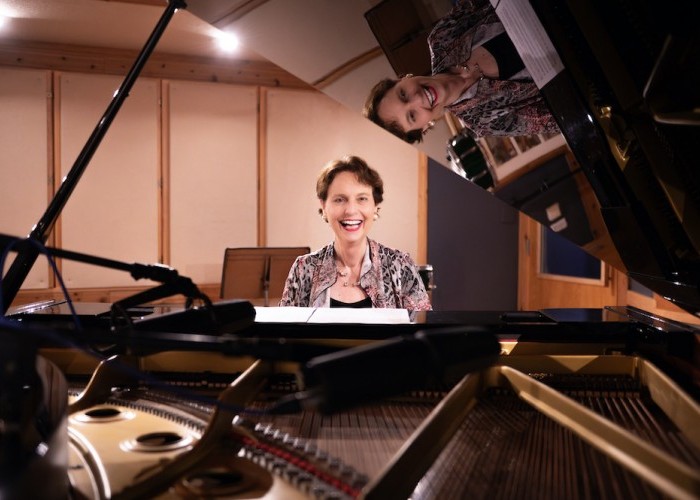
“I can talk from the perspective of other parents and what it would be like,” Monika Herzig notes of advocating for her transgender son through music. “So let me do that. That’s the voice I can share.”
(Photo: Sarah Slover)German-born pianist, composer and educator Monika Herzig has always placed advocacy and humanitarianism at the center of her work. Over her three-decade career, she has released dozens of records, authored books and performed at major festivals, but she is most proud of her social justice musical efforts. So, it wasn’t surprising that her latest recording, Transparent, highlighted the real struggles within the transgender community.
As anti-transgender rhetoric has intensified across the United States and debates surrounding gender identity increasingly make headlines, Herzig found herself confronting the issue from a deeply personal perspective as the parent of a transgender son. Instead of just watching the hate unfold, she chose to tell her story through music rather than activism alone.
“At the beginning, that’s how it came about: to put it from the parents’ perspective, too,” says Herzig from her home in Vienna. “Because my first inclination was, let’s just do some awareness raising and help the community.
“And then one of my friend’s sons who is in the gay community, I talked to him about the ideas, and he said, ‘Sometimes we’re a little tired of the old white ladies coming in and shouting with a loud voice.’ I get it, I get it. It’s not authentic. I’m not part of it. So, I thought about what my authentic voice is, what I can contribute. And that’s where I was thinking, I was part of the journey as a parent. I can talk from the perspective of other parents and what it would be like. So let me do that. That’s the voice I can share.”
Transparent, perhaps Herzig’s most personal project to date, addresses transgender identity, family, acceptance and transformation through the lens of instrumental jazz.
Herzig devoted time exclusively to composing, supported by a 2025 Jazz Road Creative Residency sponsored by South Arts, as well as funding from the Doris Duke Foundation and the Mellon Foundation.
For a musician accustomed to balancing performance, teaching, recording and administration, the experience proved to be transformative, she says. Instead of writing songs between obligations, Herzig immersed herself completely in a single creative vision.
The themes within the record came about through a series of focus groups Herzig organized with parents of transgender children. She listened carefully as families shared stories about identity, transition, fear, growth and acceptance.
What emerged surprised Herzig. She expected to hear about the experiences of transgender children. Instead, she discovered how the experience changed the parents. “The stories were similar,” she says. “But what became clear was that the parents go through a transformation just as much [as the children do]. We learn, we adapt and we change.
“It was more finding this community sense, that this is not an outlier, it’s just like nature, this one percent of the population where your genes are just turned around in your brain in terms of what your brain thinks your gender is and what your body looks like. So, I mean one notion that’s pretty clear, is this is not a choice in a fashion.”
That realization ultimately shaped the entire project. The compositions each focus on a specific aspect of the transgender journey. The opener, “Look Out,” reflects the force of a strong personality emerging into the world. The upbeat “Melody Erased” explores the emotional complexity of a name change. “Etch-A-Sketch” takes inspiration from a metaphor shared during one of the focus groups, comparing transition to shaking an Etch-A-Sketch clean and beginning again.
Herzig composed all the music except for an intimate version of Elton John’s “Your Song,” one of her son Zachary’s favorite vocalists. Herzig pulls heartfelt blues into this gift to her child.
The project was also deeply collaborative as guitarist Peter Kienle, Herzig’s husband of nearly 40 years, played a critical role in shaping the arrangements. While Herzig brought the compositions to the piano, Kienle helped refine them through experimentation.
The reaction has been positive. Focus group members attended the album release concerts, and Herzig’s son played a role, performing aerial silks routines inspired by the music.
Rooted in advocacy, Herzig has spent much of her career creating greater opportunities for women in jazz. Her acclaimed Sheroes project, an all-female band formed in 2014, emerged from experiences navigating a jazz world with few women in leadership roles.
In 1987, Herzig came to the U.S. from Germany. The pedagogical institute in Weingarten, Germany, awarded her a scholarship for a one-year exchange program at the University of Alabama. She stayed in the States, completed a doctorate in music education and jazz studies at Indiana University, and taught there for 30 years.
When Herzig started playing professionally, female instrumentalists were rare. She was often the only woman on stage and quickly learned she had to create her opportunities.
“The stereotyping is really deep in us, where we have a certain picture of how a jazz band should look on stage. You have the singer in front and then the boys,” she says. “Part of the work is changing those perceptions.”
The success of Sheroes has helped spotlight a generation of female jazz musicians and contributed to broader conversations about representation in the music. Herzig says the rise of bands like Artemis proves the music continues to evolve.
Today, whether composing, teaching, performing or advocating, Herzig approaches work through a similar lens. For her, music is communication, community and, most importantly, an opportunity to contribute meaningfully to the evolution of jazz.
“Music is a way of putting a mirror in front of your face and saying, ‘Look what it looks like. Look what it feels like,’” she says. “Especially with instrumental music, you’re reaching people in a unique way.” DB
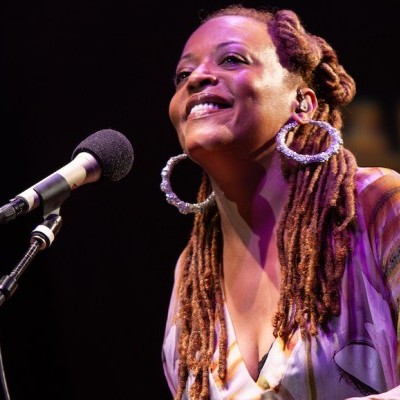
Wilson’s ability to connect to audiences helped her to win two Grammy awards and multiple other accolades. She was named an NEA Jazz Master in 2022.
Sep 3, 2026 10:44 AM
Cassandra Wilson, a singer, songwriter and producer who was one of the most acclaimed and successful jazz vocalists of…
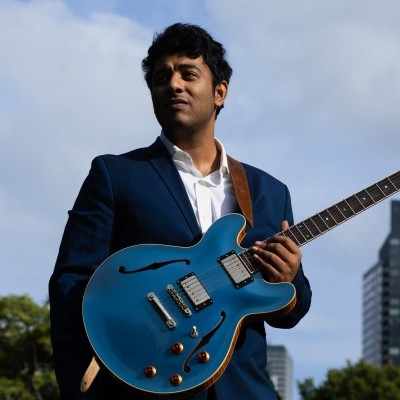
“The love from the jazz and music community restored my faith in humanity,” Walia wrote in an online post upon his release from detention at an ICE facility.
Aug 18, 2026 2:15 PM
Indian jazz guitarist and composer Pritesh Walia has been released after being unexpectedly detained by ICE and taken…
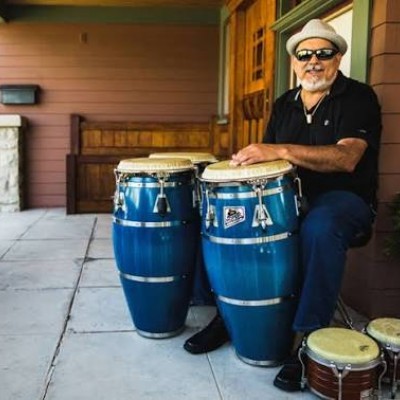
Percussionist Poncho Sanchez was among the artists scheduled to perform at the now-canceled inaugural LA Jazz Festival.
Aug 11, 2026 12:53 PM
The inaugural LA Jazz Festival, originally scheduled to run Aug. 7–23 with dozens of events across Los Angeles’…
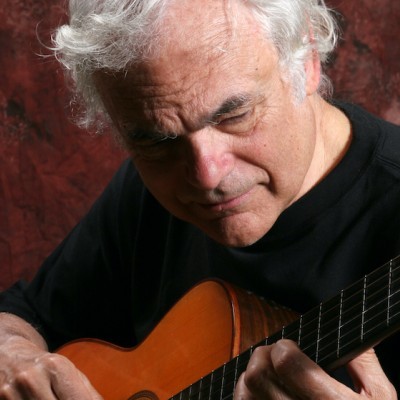
Bertoncini was a specialist and advocate for the nylon-string acoustic guitar, turning down high-profile opportunities that were unsuited to the sound and techniques that he used with that instrument.
Sep 1, 2026 11:06 AM
Gene Bertoncini, an esteemed jazz guitarist, composer, arranger and educator, died Aug. 29 at the Lillian Booth Actors…
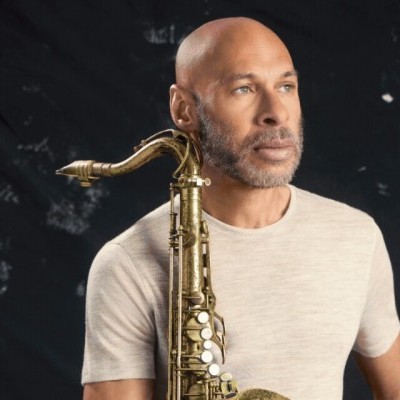
A solo concert by saxophonist Joshua Redman will close the first night of the Hyde Park Jazz Festival on Sept. 26.
Sep 22, 2026 12:26 PM
The Hyde Park Jazz Festival will take place for the 20th time on the final weekend of September 2026. Beginning half…